Melbourne has a chip on its shoulder about Sydney — the rivalry is affectionate, relentless, and entirely genuine. Melburnians know their city is different in important ways: cooler (literally — the climate is more European, with distinct seasons), culturally more layered, better for coffee, better for sport, and built on creativity, independent thinking, and the kind of urban life that comes from people who have chosen the city they love rather than one that inherited the harbour. The truth is that both cities are extraordinary in different ways — but Melbourne’s particular pleasures are among the most distinctive anywhere.
The Laneways: Melbourne’s Most Original Contribution
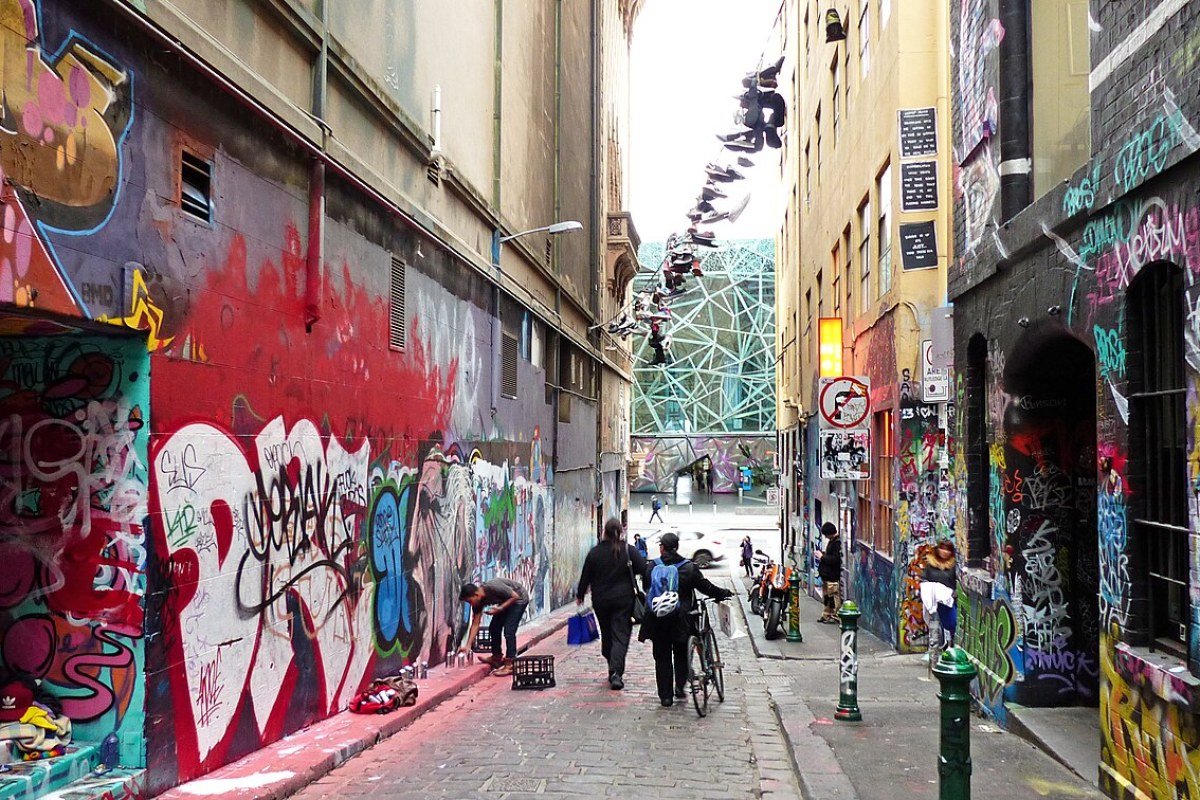
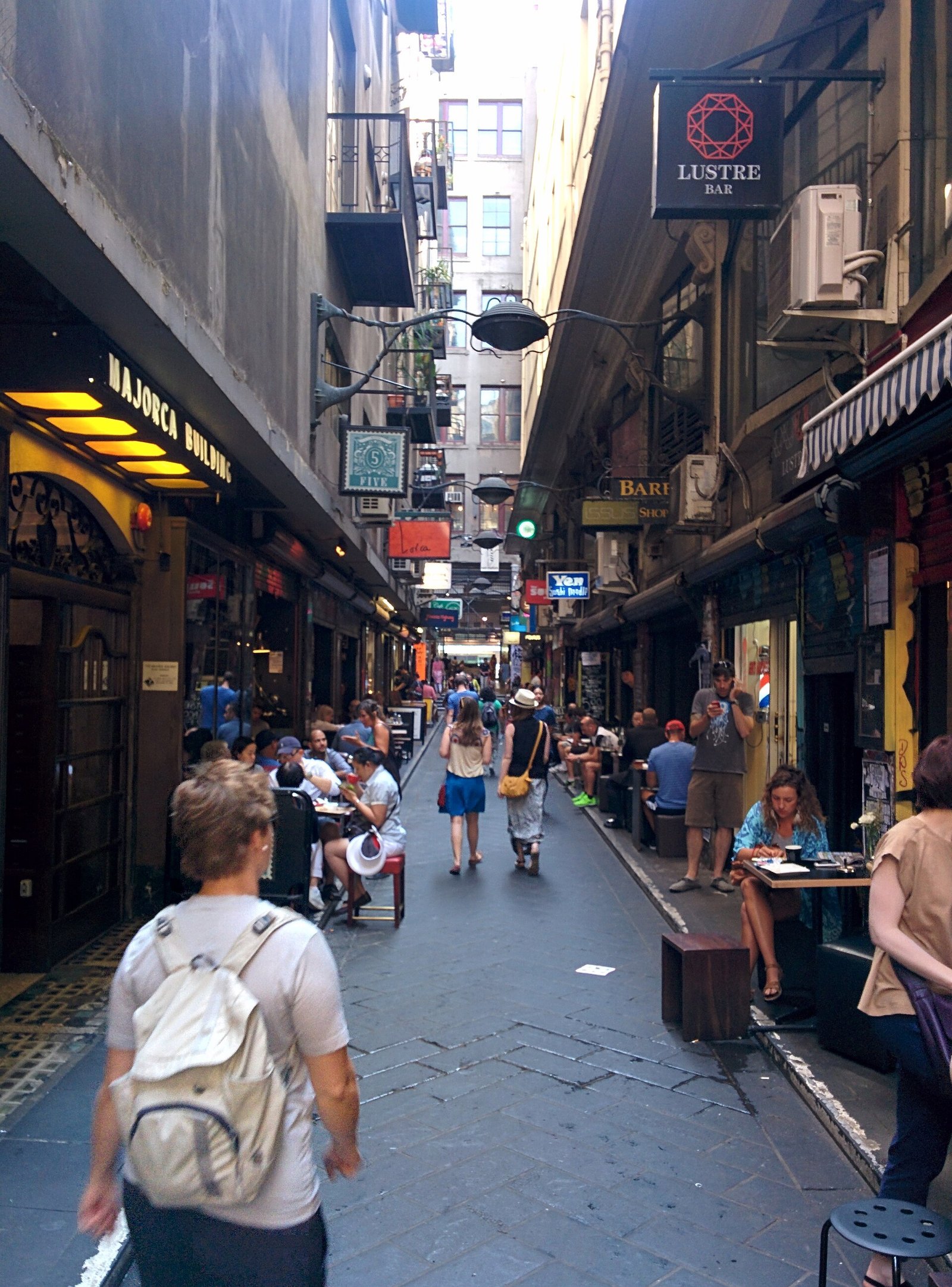
Melbourne’s laneway culture is one of the city’s defining characteristics — a network of narrow alleyways threading through the central Hoddle Grid that have been colonised by cafés, bars, boutique restaurants, fashion designers, and street artists. Hosier Lane is the most photographed for its constantly refreshed street art, a legal painting surface reworked again and again by artists from around the world. Degraves Street is lined with the tiny, atmospheric espresso bars that justify Melbourne’s coffee reputation. Centre Place connects the main city blocks with good casual dining and independent retail. Hardware Lane fills with outdoor dining in the warmer months. AC/DC Lane (off Flinders Lane, renamed in 2004 for the Melbourne-formed rock band) is wrapped in murals; it was long the home of Cherry Bar, the city’s most storied rock room, which moved a few hundred metres away to Little Collins Street in 2019. Wandering these laneways with no particular destination is one of Melbourne’s great pleasures.
The Coffee Culture: Why Melbourne Owns the Flat White
No city in the Southern Hemisphere takes coffee more seriously than Melbourne — and many would argue the English-speaking world. The city’s Italian immigrant community established a culture of espresso excellence in the 1950s and 60s that has only deepened with later waves of migration and the rise of specialty roasting. The flat white — espresso with micro-foamed, silky steamed milk in a 5–6oz cup — has contested origins across Australia and New Zealand in the 1980s, but no city has made it more its own than Melbourne, where it remains the standard order. Seven Seeds in Carlton, Patricia Coffee Brewers in the CBD, Proud Mary in Collingwood, and ST. ALi in South Melbourne rank among the finest roasters and cafés in the country. Melbourne’s baristas train hard for the job, and the gap between a Melbourne coffee and one made anywhere else in Australia is real and immediately obvious.
Museums, Galleries, and Cultural Life
No other city in Australia invests this heavily in its cultural life. The National Gallery of Victoria (NGV) — founded in 1861, Australia’s oldest and most visited art museum — has two buildings: NGV International on St Kilda Road (free permanent collection spanning ancient Egyptian art to contemporary design) and The Ian Potter Centre: NGV Australia at Federation Square (free permanent collection of Australian art). Both reward a long visit. Federation Square (opened October 2002) is itself a civic gathering space of striking architecture — a fractalised glass and zinc facade anchoring the city at the corner of Swanston and Flinders Streets. The Australian Centre for the Moving Image (ACMI) is the place for film, digital culture, and the moving image. The Melbourne Museum in Carlton holds a deep permanent collection on Australian natural history, including the mounted hide of the champion racehorse Phar Lap (his skeleton is in Wellington and his heart in Canberra). The Melbourne Theatre Company, Australian Ballet, Opera Australia, and the Melbourne Symphony Orchestra all perform to international standards. The annual Melbourne International Comedy Festival, Melbourne International Film Festival, and Melbourne Fringe Festival keep the cultural calendar relentlessly active.
The Food Scene: Australia’s Best
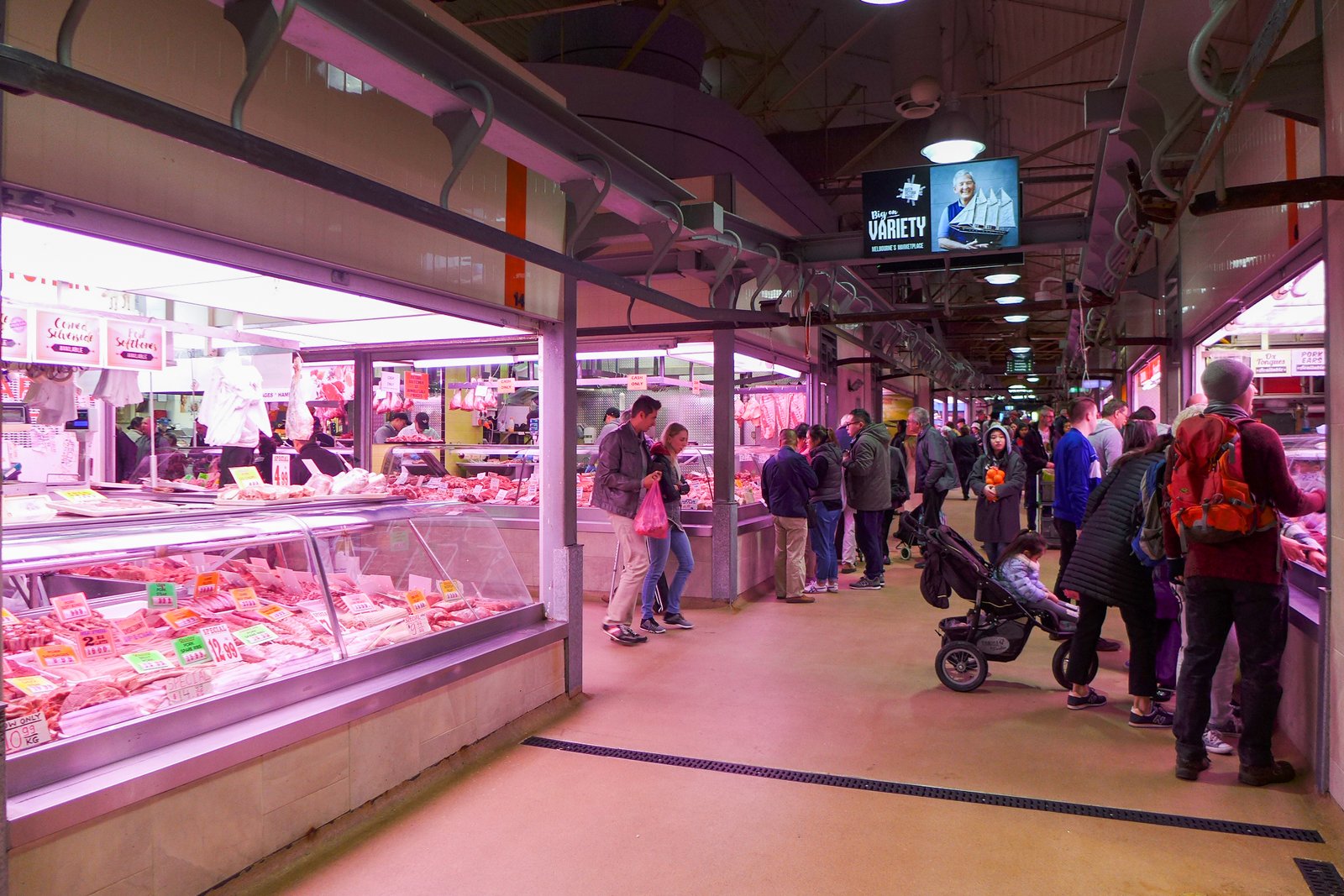
Melbourne’s food scene is widely considered the finest in Australia — a product of its extraordinary diversity (Vietnamese, Greek, Italian, Lebanese, Sri Lankan, Ethiopian, and Japanese communities all have significant presences across the metropolitan area) and a culture of fearless food adventurism. Victoria Street in Richmond is the heart of Melbourne’s Vietnamese food scene — bánh mì, pho, broken rice, and fresh spring rolls at prices that barely cover the ingredients. Fitzroy (Smith Street and Gertrude Street) holds the city’s most interesting new independent restaurants. Carlton (Lygon Street) is the Italian precinct, reliable for pasta and pizza. St Kilda (Acland Street, Fitzroy Street) has fine cafés, Jewish-style dessert shops (Monarch Cakes), and a Sunday market. The Queen Victoria Market (Tuesday–Sunday) is Melbourne’s beating food heart — its deli halls (European continental sausages, aged cheeses, smoked fish, pickled everything) are the richest in Australia. Healesville Sanctuary, 45 minutes north-east, is the best wildlife park in Victoria; the drive out through the Yarra Valley wine region makes for a memorable full day.
Sport: Melbourne’s Secular Religion
Few cities wear their sporting identity like Melbourne, Australia’s self-declared sports capital — and the claim is backed up by the calendar. The Australian Open (January, Melbourne Park) is the first Grand Slam of the tennis year and takes over the city for two weeks. The Melbourne Cup (first Tuesday of November, Flemington Racecourse) is a horse race that stops every office in Australia — the Melbourne Cup Day sweep is a national ritual. The AFL (Australian Rules Football) season (March–September) produces some of the most passionate sporting culture anywhere — an AFL Grand Final at the MCG (capacity 100,000) is a spectacle few sporting events can match. Melbourne’s own clubs — among them Melbourne, Carlton, Collingwood, Richmond, Essendon, and Hawthorn — play their home games at the MCG or Marvel Stadium in Docklands. The Formula 1 Australian Grand Prix (March, Albert Park) opens the Formula One season.
Day Trips from Melbourne
- The Great Ocean Road (2 hours west): The Twelve Apostles limestone stacks, the Otway Ranges rainforest, Lorne and Apollo Bay, and 243km of coastal scenery — ideally a 2–3 day trip. (See the full Great Ocean Road guide for details.)
- Phillip Island (1.5 hours south-east): The Penguin Parade (little penguins returning from the ocean at sunset — genuinely magical, book in advance) and the Cape Woolamai walking trail.
- The Yarra Valley (1 hour north-east): Victoria’s premier wine region (Pinot Noir, Chardonnay, sparkling wine), with Healesville Sanctuary’s wildlife park and standout farm-to-table restaurants.
- The Mornington Peninsula (1.5 hours south): Peninsula Hot Springs and Jackalope’s cellar door, wineries turning out fine Pinot Gris and Pinot Noir, and surf beaches at Portsea and Sorrento.
Getting There and Practical Information
Melbourne Airport (Tullamarine) is Australia’s second busiest, with direct connections from Asia, the Middle East, Europe, and New Zealand. The SkyBus (from about AU$25.90 one way in 2026) runs to the CBD in 30–50 minutes depending on traffic; the long-planned Melbourne Airport Rail link is under construction and not due until the early 2030s. Within the city, Melbourne runs the world’s largest operating tram network — 250km of double track — and it is free inside the City Circle and the CBD’s Free Tram Zone, making central exploration effectively cost-free. A Myki card covers trams, trains, and buses beyond the free zone. Best time to visit: October–April for warm weather; mid-January for the Australian Open; March–September for AFL football.
Frequently Asked Questions
What is Melbourne’s laneway culture and how do you experience it?
Melbourne’s laneway culture is one of the city’s defining characteristics — a network of narrow alleyways threading through the central Hoddle Grid colonised by cafés, bars, restaurants, fashion designers, and street artists. Hosier Lane is the most photographed for its constantly refreshed street art, a legal painting surface reworked again and again by artists from around the world. Degraves Street is lined with tiny, atmospheric espresso bars that justify Melbourne’s coffee reputation. Centre Place connects the main city blocks with good casual dining and independent retail. Hardware Lane fills with outdoor dining in the warmer months. AC/DC Lane (off Flinders Lane), renamed in 2004 for the Melbourne-formed rock band, is wrapped in murals and was for years home to the legendary Cherry Bar before it relocated to Little Collins Street in 2019. Wandering these laneways with no particular destination — ducking into a bar for a drink, discovering a gallery behind an unmarked door — is one of Melbourne’s great pleasures and cannot be matched in any other Australian city.
Why is Melbourne considered the coffee capital of Australia?
Melbourne is the coffee capital of the Southern Hemisphere — and many would argue the English-speaking world. The city’s Italian immigrant community established a culture of espresso excellence in the 1950s and 1960s that has only deepened with later waves of migration and the rise of specialty roasting. The flat white (espresso with micro-foamed, silky steamed milk in a 5–6oz cup) has contested origins across Australia and New Zealand in the 1980s, but no city drinks it more seriously than Melbourne, where it is the standard order. Seven Seeds in Carlton, Patricia Coffee Brewers in the CBD, Proud Mary in Collingwood, and ST. ALi in South Melbourne rank among the finest roasters and cafés in the country. Melbourne’s baristas train hard for the job, and the gap between a Melbourne coffee and one made anywhere else in Australia is real and immediately obvious. The culture here extends to the cup, the roaster’s sourcing, the milk texture, and the whole ritual of the café visit.
What are Melbourne’s best museums and cultural attractions?
The National Gallery of Victoria (NGV), founded in 1861, is Australia’s oldest and most visited art museum, with two buildings — NGV International on St Kilda Road (free permanent collection spanning ancient Egyptian art to contemporary design) and The Ian Potter Centre: NGV Australia at Federation Square (free permanent collection of Australian art). Federation Square (opened October 2002) is itself a civic gathering space of striking fractalised glass-and-zinc architecture at the corner of Swanston and Flinders Streets. The Australian Centre for the Moving Image (ACMI) at Federation Square is the place for film and digital culture. The Melbourne Museum in Carlton holds a deep collection on Australian natural history, including the mounted hide of the champion racehorse Phar Lap. The annual Melbourne International Comedy Festival, Melbourne International Film Festival, and Melbourne Fringe Festival run across the cooler months. The Melbourne Theatre Company, Australian Ballet, and Melbourne Symphony Orchestra perform to international standards year-round.
What is Melbourne’s food scene like and where should visitors eat?
Melbourne’s food scene is widely considered the finest in Australia — a product of extraordinary diversity (Vietnamese, Greek, Italian, Lebanese, Sri Lankan, Ethiopian, and Japanese communities all have significant presences) and genuine food adventurism. Victoria Street in Richmond is the heart of Melbourne’s Vietnamese food — bánh mì, pho, broken rice, and fresh spring rolls at prices that barely cover the ingredients. Fitzroy (Smith Street and Gertrude Street) holds the most interesting new independent restaurants. Carlton (Lygon Street) is the Italian precinct, reliable for pasta and pizza. St Kilda (Acland Street, Fitzroy Street) has fine cafés, Jewish-style dessert shops (Monarch Cakes), and a Sunday market. The Queen Victoria Market (Tuesday–Sunday) is Melbourne’s beating food heart — its deli halls (European continental sausages, aged cheeses, smoked fish, pickled everything) are the richest in Australia. Healesville Sanctuary (45 minutes north-east) is the best wildlife park in Victoria.
What are the best day trips from Melbourne?
The Great Ocean Road (2 hours west) — the Twelve Apostles limestone stacks rising from the Southern Ocean, the Otway Ranges rainforest, and Lorne and Apollo Bay as overnight stops — is ideally a 2–3 day trip along 243km of coastal scenery. Phillip Island (1.5 hours south-east) has the Penguin Parade (little penguins returning from the ocean at sunset — genuinely magical, book in advance) and the Cape Woolamai walking trail. The Yarra Valley (1 hour north-east) is Victoria’s premier wine region (Pinot Noir, Chardonnay, sparkling wine), with Healesville Sanctuary’s wildlife park and standout farm-to-table restaurants. The Mornington Peninsula (1.5 hours south) has Peninsula Hot Springs, wineries turning out fine Pinot Gris and Pinot Noir, and surf beaches at Portsea and Sorrento. Melbourne’s tram network (250km, the world’s largest operating network) is free within the City Circle and the CBD’s Free Tram Zone.