Wales is one of Europe’s most underrated travel destinations — a country of striking natural beauty, an ancient Celtic culture that has survived intact into the 21st century, a living language spoken by roughly 538,300 people (17.8% of the population at the 2021 census, and understood by many more), and a density of medieval castles that no other country in Europe comes close to matching. It’s also among the easiest and most affordable parts of Britain to reach, and the welcome — visitors say it again and again — is hard to beat anywhere in the UK. If you’ve been to London but never crossed the border into Wales, you’ve missed one of the standout experiences in British travel.
Cardiff: A Small Capital With Big-City Range
Cardiff has remade itself over the past two decades, from a declining industrial city into a confident European capital that knows exactly what it is. The regenerated Cardiff Bay — the old docklands that once handled the world’s coal trade — is the clearest sign of that change: the Senedd (Welsh Parliament), a bold wood-and-glass building designed by Richard Rogers, faces the Wales Millennium Centre, a slate-and-bronze arts complex that hosts Welsh National Opera and touring productions. The waterside restaurants and bars of Mermaid Quay make Cardiff Bay genuinely pleasant to spend an evening in.
The city centre is compact and walkable. Cardiff Castle — built on a Roman fort and converted into a Victorian Gothic fantasy by the eccentric Marquess of Bute, who spent his coal-trade fortune decorating its interiors with Byzantine mosaic, Moorish arabesque, and medieval heraldry — outshines almost any building in Britain. The covered Victorian arcades (the Royal Arcade, Morgan Arcade, and others) give Cardiff a shopping quarter with a character most British city centres have lost. The Principality Stadium, where Wales plays rugby with an intensity that makes other countries’ home matches seem half-hearted, sits in the middle of it all.

Snowdonia: The Roof of Southern Britain
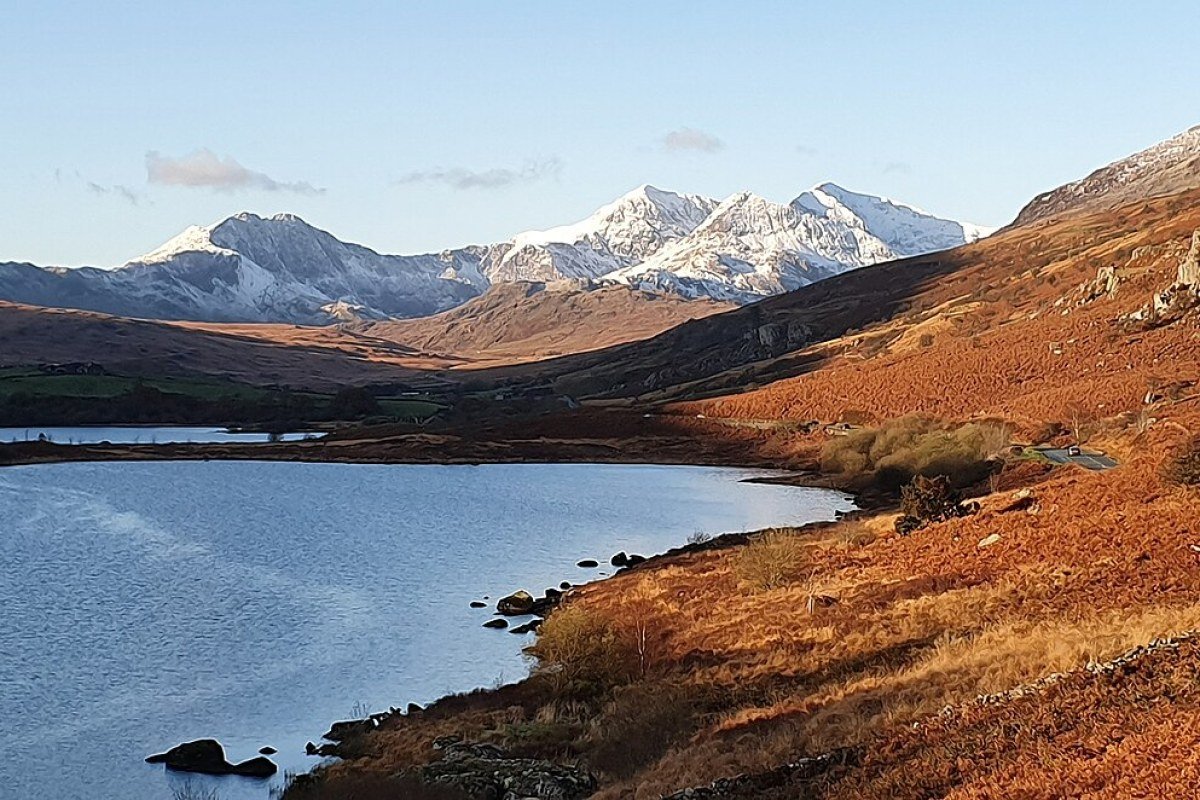
Snowdonia National Park (Eryri in Welsh) covers 823 square miles of northern Wales, and the mountain scenery here is the wildest in England and Wales. Mount Snowdon — Yr Wyddfa, 1,085 metres, the highest summit in either country outside Scotland — can be climbed by several routes of varying difficulty. The Llanberis Path is the gentlest; Crib Goch, by contrast, is a knife-edge scramble that ranks among the most exhilarating ridge walks anywhere in the country. The Snowdon Mountain Railway (the UK’s only public rack-and-pinion railway) runs from Llanberis to the summit between late March and October — book in advance in summer.
Beyond Snowdon, the park packs in far more than walking: the Zip World network of zip lines (Velocity 2 at Penrhyn Quarry is the world’s fastest zip line, reaching up to 125 mph / 200 km/h), the slate caverns at Llechwedd (underground zip lines and an underground lake), and Portmeirion — an eccentric Italianate fantasy village built by architect Clough Williams-Ellis between 1925 and 1976, and the filming location for The Prisoner TV series. The Llŷn Peninsula, jutting into the Irish Sea from Snowdonia’s western edge, has fine beaches and a remote, quiet character that feels a world away from the well-trodden parts of the national park.
The Castles: 600 Fortresses in One Country
Wales has more castles per square mile than any other country in Europe — over 600 in total. The best known are Edward I’s “Iron Ring,” built in the late 13th century as military and political domination made architectural: Conwy (still ringed by its original town walls, a UNESCO World Heritage Site), Caernarfon (where Prince Charles was invested as Prince of Wales in 1969, its banded polygonal towers overlooking the Menai Strait), Harlech (a clifftop fortress with views across Cardigan Bay to the mountains of the Llŷn Peninsula), and Beaumaris on Anglesey (never finished, yet rated by military historians as the most technically perfect concentric castle ever designed).
Beyond the Iron Ring, Raglan Castle in Monmouthshire, Powis Castle (a Norman fortress converted into a country house, with extraordinary formal gardens maintained by the National Trust), and Kidwelly Castle in Carmarthenshire are all worth seeking out. Welsh castles are generally excellent value for admission compared to English heritage sites — many are managed by Cadw (Welsh historic monuments) with reasonable day-pass options.

The Pembrokeshire Coast
The Pembrokeshire Coast National Park in southwest Wales holds 186 miles of National Trail coastline — coastal walking as fine as any in Britain. Tenby is a beautifully preserved medieval walled town built on a headland with beaches on three sides; its colourful Georgian houses and Norman castle set it apart from any other British seaside resort. St Davids, at the tip of the St Davids Peninsula, is technically a city (cathedral, therefore city) in the body of a small village, and its magnificent 12th-century cathedral, tucked into a valley below the main square, ranks among the most atmospheric religious buildings in Wales.
Barafundle Bay, on the Stackpole Estate managed by the National Trust, is accessible only on foot from a car park at Stackpole Quay and is consistently named among the best beaches in the UK — and justifiably so. Blue Lagoon at Abereiddy is a former slate quarry now flooded with startlingly blue-green seawater, which has hosted stages of the Red Bull Cliff Diving World Series. The whole southwest Wales coastline benefits significantly from the Gulf Stream, which keeps sea temperatures warmer than you’d expect at this latitude.
The Brecon Beacons
The Brecon Beacons National Park (Bannau Brycheiniog) in south Wales is the easiest mountain country to reach for visitors based in Cardiff — the highest peaks (Pen y Fan, 886m) are 45 minutes by car from the capital. The park was one of the first International Dark Sky Reserves in the world, making it an excellent destination for stargazing, particularly in autumn and winter when the air clarity is best. The village of Crickhowell, at the park’s eastern edge, is a charming market town with excellent independent shops and restaurants, and the Monmouthshire and Brecon Canal provides gentle canal boat and cycling experiences at lower levels.
Getting Around Wales
A car is essential for exploring Wales outside Cardiff, Swansea, and the rail-accessible coastal towns. The A470 (the “Main Road of Wales”) runs north-south through the country; the A487 coastal road through mid-Wales rivals any scenic route in Britain. Flights to Cardiff from international destinations connect through Bristol Airport (about an hour from Cardiff by road) and Birmingham (2 hours). Direct rail from London Paddington to Cardiff takes under 2 hours on the fastest services. Rail connections within Wales are improving but remain slow — for Snowdonia, the Cambrian Coast line from Birmingham through Shrewsbury to Aberystwyth is gloriously scenic but unhurried; most visitors to North Wales drive.
Frequently Asked Questions
What makes Wales worth visiting for travellers who have already seen London?
Wales offers what England’s major cities cannot — a living Celtic culture with a language (Welsh/Cymraeg) spoken by roughly 540,000 people and heard daily on the streets of Caernarfon and Aberystwyth, more castles per square kilometre than any other country in Europe (600+ fortresses, many open for remarkably modest admission), mountains that rise to 1,085 metres and offer some of Britain’s best walking through glaciated valleys and cwms, and a warmth of welcome that visitors contrast favourably with the more transactional tourism of the big English cities. Cardiff is under 2 hours from London Paddington by direct train; the Welsh border is within 2 hours of Birmingham by car.
What can visitors do in Cardiff?
Cardiff has transformed from an industrial port city into a confident European capital built around Cardiff Bay (the regenerated docklands housing the Senedd/Welsh Parliament designed by Richard Rogers, the Wales Millennium Centre arts complex in Welsh slate and bronze, and the Victorian Pierhead Building), Cardiff Castle (a Roman fort converted by the eccentric Marquess of Bute into a Victorian Gothic fantasy of Byzantine mosaic and Moorish arabesque), and the covered Victorian arcades (the Royal and Morgan Arcades) that give Cardiff’s shopping a character most British city centres have lost. The Principality Stadium (73,000 capacity, retractable roof) hosts Welsh rugby internationals that are among the great sports atmosphere experiences in the world. St Fagans National Museum of History (free) is one of Europe’s finest open-air heritage museums.
What does Snowdonia offer and how do you climb Mount Snowdon?
Snowdonia National Park (Eryri, 823 square miles of North Wales) contains the highest mountains in England and Wales, led by Yr Wyddfa/Snowdon (1,085m) with several routes of varying difficulty. The Llanberis Path is the most straightforward ascent; the Crib Goch ridge is technically demanding and a ridge walk few in Britain can match; the Pyg Track and Miners’ Track from Pen-y-Pass are the most popular routes (5–7 hours return). The Snowdon Mountain Railway (the UK’s only public rack-and-pinion railway) runs from Llanberis to the summit between late March and October — book in advance in summer. Beyond Snowdon: Zip World’s Velocity 2 at Penrhyn Quarry (world’s fastest zip line, over 160km/h), the Llechwedd slate caverns, and Portmeirion (the Italianate fantasy village filming location for The Prisoner TV series).
What is the Pembrokeshire Coast and the Brecon Beacons?
The Pembrokeshire Coast National Park (southwest Wales) holds 186 miles of National Trail coastline — some of the finest coastal walking in Britain, connecting Tenby (a beautifully preserved medieval walled town with beaches on three sides), St Davids (Britain’s smallest city, with a 12th-century cathedral in a valley below the main square), and Barafundle Bay (accessible only on foot, consistently rated among the UK’s finest beaches). The Brecon Beacons National Park (Bannau Brycheiniog, 45 minutes from Cardiff) provides the most accessible mountain walking from the capital — Pen y Fan (886m) and the surrounding ridges — and was one of the world’s first International Dark Sky Reserves, making it an exceptional stargazing destination in autumn and winter.
What are Edward I’s Iron Ring castles and why are they significant?
Edward I’s “Iron Ring” — Conwy, Caernarfon, Harlech, and Beaumaris — are a UNESCO World Heritage Site and represent the most ambitious military castle-building programme in medieval history, constructed in the late 13th century to cement English conquest of Wales after 1282. Conwy is surrounded by its original town walls (1.3km, almost entirely intact) in the finest walled town circuit in Britain. Caernarfon — where Prince Charles was invested as Prince of Wales in 1969 — has massive polygonal towers and two-tone stone banding of extraordinary architectural ambition. Beaumaris on Anglesey (considered by military historians the most technically perfect concentric castle design ever conceived, though never completed) and Harlech (with views across Cardigan Bay to the Llŷn Peninsula) complete the four sites. Cadw day-passes provide affordable access across Welsh heritage sites.