


Wales — Cymru in Welsh — is one of Europe’s most unexpected travel discoveries: a small country (20,779km², 3.2 million people) that contains more castles per square kilometre than any other country in Europe (over 600, including Edward I’s ring of medieval fortresses in the north), the highest mountain range in southern Britain (Snowdonia, with Snowdon/Yr Wyddfa at 1,085m), the Pembrokeshire coast (one of Europe’s finest coastal paths), a living Celtic language (Welsh, spoken as a first language by 30% of the population and taught in all schools), and a capital city (Cardiff) that has undergone one of Britain’s most complete urban regenerations since the 1990s. Wales is also one of Britain’s most physically accessible countries — Birmingham is 2 hours by car, London 3 hours — making it one of England’s favourite weekend escape destinations and a place where the density of London can be exchanged for mountains, sea, and the extraordinary acoustic of a Welsh choir in a matter of hours.
Cardiff: The Young Capital
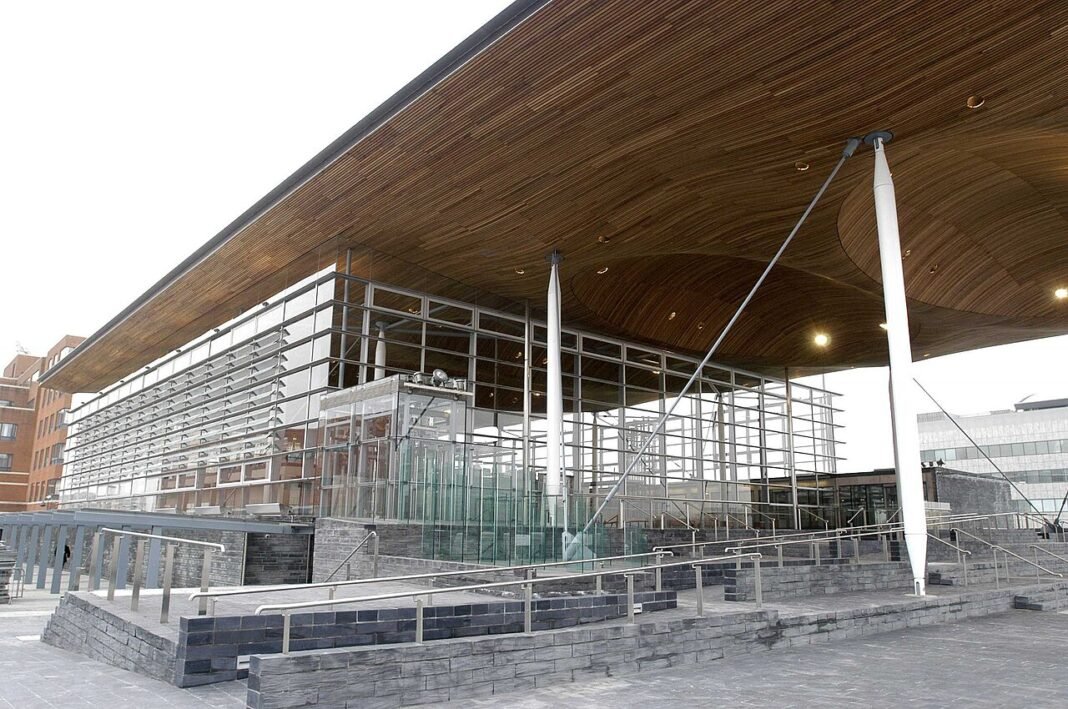
Cardiff (370,000 residents) became Wales’s capital city only in 1955 — making it the youngest capital city in the British Isles — and has spent the subsequent 70 years building the infrastructure and identity of a genuine capital. The Cardiff Bay regeneration (the former coal and iron export docks, now a modern waterfront district housing the Welsh Parliament/Senedd, the Wales Millennium Centre arts complex, the Norwegian Church arts centre, and the Pierhead building) is one of Britain’s most successful urban regeneration projects. Cardiff Castle (the Roman fort and Norman castle at the city centre, with the Victorian Gothic extravagance of the Marquess of Bute’s castle apartments) and the Civic Centre’s Edwardian baroque architecture provide a historical anchor for a city that combines Welsh cultural pride with the energy of a young university city (Cardiff University, Cardiff Metropolitan, and the Royal Welsh College of Music and Drama).

- Wales Millennium Centre: The home of Welsh National Opera, the National Dance Company Wales, BBC National Orchestra of Wales, and multiple resident arts organisations — an architectural statement in Welsh slate and bronze that has become Cardiff Bay’s defining building
- Cardiff Castle: The Norman fortress transformed by the Marquess of Bute (the world’s richest man in the 1860s) into a Victorian Gothic fantasy — the Clock Tower, the Banqueting Hall, and the Arab Room (decorated in 12th-century Moorish style) are Burges’s Victorian Gothic interiors at their most theatrical
- Principality Stadium: Wales’s national stadium (73,931 capacity, retractable roof) hosts the Welsh rugby internationals that define Welsh national culture — the atmosphere of a Wales vs England or Wales vs New Zealand test match is regularly cited as one of the great sports experiences in the world. Cardiff also hosts major concerts; the closed-roof configuration creates extraordinary acoustics
- St Fagans National Museum of History: The open-air museum (free entry, like all Welsh national museums) in the grounds of St Fagans Castle assembles over 40 historic buildings relocated from across Wales and reconstructed — a Celtic roundhouse, an Elizabethan farmhouse, a Victorian ironworker’s row of cottages, a 1940s prefab — creating a physical walk through Welsh social history
Snowdonia (Eryri): Wales’s Mountains
Snowdonia National Park (Eryri, 2,132km², North Wales) — recently renamed to reflect the Welsh language name, with “Eryri” meaning “eagle country” — encompasses the highest mountains in Wales and England (Yr Wyddfa/Snowdon at 1,085m, Glyder Fawr at 1,001m, Tryfan at 917m, Cadair Idris at 893m) in a compact highland landscape of glaciated valleys, volcanic ridges, and the lakes (llyns) that give Wales its particular aquatic beauty. Snowdon is the most climbed mountain in Wales and one of the most climbed in Britain — the Pyg Track and Miners’ Track from Pen-y-Pass are the most popular routes (5–7 hours return); the Snowdon Mountain Railway provides a mechanised alternative from Llanberis. The Glyderau (Glyder Fach and Glyder Fawr) and the Tryfan scramble (the rock summit that requires use of hands to reach the top — climbers traditionally leap between the “Adam and Eve” summit rocks) provide more demanding experiences for those with scrambling skills.

The Pembrokeshire Coast: Wales’s Atlantic Shore
The Pembrokeshire Coast National Park (620km²) is the only coastal national park in Wales — 186 miles of some of Europe’s finest coastal scenery, from the limestone arches of the south Pembrokeshire coast (the Stackpole Estate, Barafundle Bay, the Green Bridge of Wales) through the surfing beaches of Tenby and Saundersfoot to the dramatic headlands of St Davids Head and the Strumble Head lighthouse. The Pembrokeshire Coast Path (186 miles, one of Britain’s National Trails) traces the whole length of the park, headland after headland, and ranks among the finest coastal walks in Britain. St Davids — the smallest city in Britain (population 1,800, cathedral city status since the 6th century) and the birthplace of the patron saint of Wales — is the cultural and spiritual heart of the Pembrokeshire landscape.
Castles: Wales’s Defining Heritage
Wales has more castles per area than any other country in Europe — the legacy of centuries of Welsh-English conflict, Norman conquest, and Edward I’s 13th-century “Iron Ring” of northern Welsh castles (Conwy, Caernarfon, Harlech, Beaumaris) built to contain Welsh resistance after the conquest of 1282. The CADW castles (Welsh government historic monuments) include some of Britain’s finest — Caernarfon Castle (the birthplace of the Prince of Wales, with its distinct polygonal towers) and Conwy Castle (the best-preserved medieval town wall circuit in Britain, enclosing the walled town and the castle in a single fortification) are UNESCO World Heritage Sites. Powis Castle (National Trust, near Welshpool), Raglan Castle (the ruined Renaissance palace), and the dozens of native Welsh castles (Dolwyddelan, Criccieth, Dolbadarn) provide a castle tourism circuit unmatched in density anywhere in the UK.
Getting the Most Out of Your Visit
A few things worth knowing before you go. The national museums — St Fagans, National Museum Cardiff, the National Slate Museum at Llanberis, the Big Pit mining museum at Blaenavon — are all free, which makes a Welsh itinerary unusually cheap to fill. A car is close to essential once you leave Cardiff: the railway hugs the coast and the Cardiff–Swansea corridor, but Eryri (Snowdonia), the Pembrokeshire coast path, and most of the castle circuit sit well off the line. Mountain weather turns fast even in summer, so pack waterproofs and check the forecast before committing to Yr Wyddfa; the Pen-y-Pass car park fills by mid-morning in peak season and now requires pre-booking. Welsh is a living language in the north and west — road signs are bilingual and a “diolch” (thank you) goes a long way — and the big rugby weekends at the Principality Stadium book out Cardiff hotels months ahead.
Frequently Asked Questions
What makes Wales unique among the UK’s nations?
Wales is the only nation in the UK with its own Celtic language actively spoken as a daily first language — Welsh (Cymraeg) is spoken as a first language by approximately 30% of the population and is taught in all schools, making it the most vigorous Celtic language in Europe. The country has more castles per square kilometre than any other in Europe — over 600 surviving castles, the product of centuries of Welsh-English conflict and Edward I’s 13th-century “Iron Ring” of northern fortresses built to contain Welsh resistance after the conquest of 1282. Wales also contains the highest mountains in southern Britain (Snowdonia, with Yr Wyddfa/Snowdon at 1,085m), one of Europe’s finest coastal paths (the Pembrokeshire Coast Path, 186 miles), and a choral tradition (the male voice choir) that defines Welsh cultural identity as distinctively as any tradition in the British Isles.
What is Snowdonia and what can you do there?
Snowdonia National Park (Eryri, 2,132km², North Wales) encompasses the highest mountains in Wales and England — Yr Wyddfa/Snowdon (1,085m), Glyder Fawr (1,001m), Tryfan (917m), and Cadair Idris (893m) — in a compact highland landscape of glaciated valleys, volcanic ridges, and glacial lakes (llyns). Snowdon is the most climbed mountain in Wales; the Pyg Track and Miners’ Track from Pen-y-Pass are the most popular routes (5–7 hours return), while the Snowdon Mountain Railway from Llanberis provides a mechanised alternative. The Tryfan scramble — requiring use of hands to reach the top, with the traditional leap between the “Adam and Eve” summit rocks — provides the most demanding and exhilarating accessible mountain experience in Wales. The Zip World adventure activities (including the world’s fastest zip line at Penrhyn Quarry) and the Surf Snowdonia inland wave pool extend the national park’s activity offer.
What are Wales’s UNESCO World Heritage castles?
Wales contains four of the most significant medieval castles in Europe, designated a UNESCO World Heritage Site in 1986 as “Castles and Town Walls of King Edward in Gwynedd.” Caernarfon Castle — the birthplace of the first English Prince of Wales in 1284 and the site of the investiture ceremony — has distinctive polygonal towers and multi-coloured stone banding of exceptional architectural ambition. Conwy Castle, with the best-preserved medieval town wall circuit in Britain (entirely enclosing the walled town at 1.3km), is the finest example of a concentric fortification and walled town in Europe. Harlech Castle, on a rocky promontory above Tremadoc Bay, and Beaumaris Castle (Anglesey, the most technically perfect concentric castle ever built, though never completed) complete the “Iron Ring” that represents the most expensive military building campaign in medieval English history.
What is the Pembrokeshire Coast and what does it offer?
The Pembrokeshire Coast National Park (620km², southwestern Wales) is the only coastal national park in Wales and one of Europe’s finest coastal landscapes — 186 miles of the Pembrokeshire Coast Path traversing limestone arches (the Green Bridge of Wales, the Stackpole coastline, Barafundle Bay), surf beaches (Whitesands Bay, Freshwater West, Manorbier), and the dramatic headlands of St Davids Head. St Davids — the smallest city in Britain (1,800 residents, cathedral city status since the 6th century) and the birthplace of the patron saint of Wales — is the cultural and spiritual heart of the Pembrokeshire landscape. The town’s Norman cathedral and Bishop’s Palace ruins represent the finest medieval ecclesiastical complex in Wales. The Pembrokeshire coast is also a premier sea-kayaking destination, with Ramsey Island (chough and grey seal colony) and the Stackpole’s marine wildlife providing exceptional marine wildlife access.
What is Cardiff and what should visitors see there?
Cardiff (370,000 residents) became Wales’s capital only in 1955 — the youngest capital in the British Isles — and has since built one of Britain’s most successful urban regenerations. Cardiff Bay (the former coal and iron export docks) now houses the Welsh Parliament/Senedd (Richard Rogers’s striking waterfront building), the Wales Millennium Centre (home of Welsh National Opera and multiple arts organisations, the definitive architectural statement in Welsh slate and bronze), and the Pierhead Building. Cardiff Castle in the city centre — a Roman fort and Norman castle transformed by the Marquess of Bute (the world’s richest man in the 1860s) into a Victorian Gothic fantasy — contains the most extraordinary Victorian Gothic interiors in Britain. St Fagans National Museum of History (free entry) is one of the finest open-air heritage museums in Europe, with 40+ historic Welsh buildings relocated and reconstructed in the grounds of St Fagans Castle.
, the Pembrokeshire coast path, and Edward I's UNESCO castles.)