
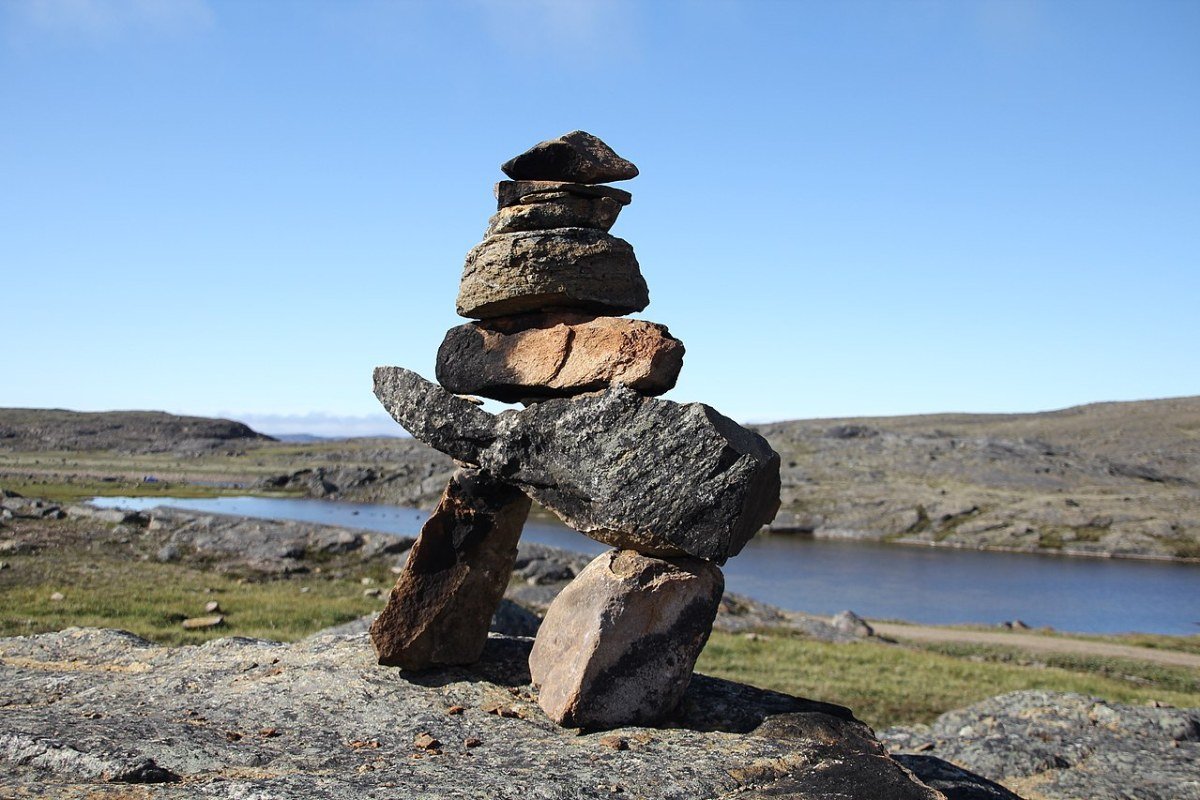
Nunavut is the world’s last great unfenced wilderness — a territory of 2.09 million km² where the industrial footprint is negligible, the wildlife populations are among the largest remaining on earth, and the landscape preserves the raw Arctic character that has shaped human culture and natural history for thousands of years. The territory’s outdoor experiences require more preparation, more expense, and more respect for the environment than anywhere else in Canada — but the encounters they offer are genuinely extraordinary: polar bears on the sea ice, narwhal in the Arctic fjords, barren ground caribou crossing tundra rivers in herds of thousands, and the midnight sun casting its perpetual summer light over landscapes of such scale and stillness that they recalibrate the visitor‘s relationship with wildness itself. Nunavut’s outdoor experiences are not managed or amenitized; they are the real thing.
Polar Bear Viewing: The Hudson Bay Coast
Nunavut‘s western Hudson Bay coastline — from Arviat in the south through Rankin Inlet to Coral Harbour on Southampton Island — is part of the polar bear’s seasonal migration corridor between the inland summer denning areas and the sea ice where they hunt ringed seals in winter. October and November, when the bears congregate on the coast waiting for Hudson Bay to freeze, offer the most concentrated polar bear viewing in the territory — more accessible and less commercialized than the famous Churchill, Manitoba experience, with encounters happening in authentic, unmanaged wild conditions rather than from tourism infrastructure.
- Arviat bear encounters: Arviat (3,000 residents) sits directly on the polar bear migration route; in late October, bears move through the community and the surrounding tundra in significant numbers. Guided polar bear tundra walks and snowmobile tours from Arviat provide wildlife encounters in genuinely wild conditions
- Coral Harbour: Southampton Island’s Coral Harbour (Salliq, 900 residents) is surrounded by one of the highest densities of polar bears per unit area on the Hudson Bay coast; the Coral Harbour area’s dramatic combination of sea ice, tundra, and rocky coastline provides exceptional polar bear habitat and viewing
- Safety: Polar bears are one of the few predators in the world that will actively hunt humans. Nunavut communities manage bear-human conflicts through the Polar Bear Alert programs, and guided wildlife tours are conducted by experienced Inuit guides who understand bear behaviour. Independent travel in polar bear country without a local guide is not recommended
Narwhal and Arctic Marine Wildlife
Nunavut’s Arctic waters host marine wildlife populations of exceptional global significance — the majority of the world’s narwhal population, significant numbers of bowhead whale, beluga whale, walrus, and ringed and bearded seals all occur in Nunavut waters.
- Narwhal: The narwhal — the “unicorn of the sea,” with males carrying a spiralled tusk up to 3 metres long — occurs almost exclusively in Nunavut waters. The largest concentrations are in the northern Baffin Island fjords (Eclipse Sound near Pond Inlet, Admiralty Inlet, and Lancaster Sound) and in the Foxe Basin. Guided narwhal viewing by small boat from Pond Inlet in July and August offers some of the most extraordinary wildlife encounters available anywhere
- Bowhead whale: The bowhead whale (up to 20 metres long, capable of living 200+ years) occurs in Nunavut’s waters in significant numbers; the Baffin Bay population is recovering from commercial whaling decimation. Eclipse Sound and Lancaster Sound are important bowhead feeding grounds in summer
- Walrus: Pacific walrus populations occur in Foxe Basin and the Hudson Bay coast; haul-out sites (where hundreds of walrus rest on beaches and rocky points) are accessible by boat tour from Coral Harbour and other Hudson Bay communities
- Beluga: Beluga whales migrate through Hudson Bay and the eastern Arctic in large numbers in summer; the Cunningham Inlet beluga aggregation on Somerset Island (where hundreds of belugas gather in the shallow waters of a river estuary to rub off parasites and calve) is one of the most remarkable marine wildlife spectacles in Canada
Auyuittuq National Park: Arctic Mountaineering and Hiking
Auyuittuq National Park (19,000km², Baffin Island, UNESCO Tentative World Heritage Site) is Nunavut’s most visited national park — a land of dramatic fjords, glaciated peaks, and the extraordinary Akshayuk Pass hiking route through the park’s central corridor. The park requires floatplane access from Iqaluit (to Pangnirtung or Qikiqtarjuaq) and genuine expedition preparation:
- Akshayuk Pass: The 97km hiking route through Akshayuk Pass traverses one of the most dramatic Arctic landscapes accessible to prepared hikers — the pass runs between the fjord systems of the Cumberland Peninsula, flanked by the Penny Ice Cap’s outwash glaciers, granite walls rising 1,000m+, and the Arctic wildlife (Arctic hare, Arctic fox, snowy owl) that inhabit the pass’s tundra floor. The full pass takes 7–14 days depending on pace; most parties arrange pickup floatplane at the far end
- Thor Peak: The world’s greatest purely vertical cliff face — 1,675 metres of uninterrupted vertical granite, overhanging in places. Thor Peak is accessible only to expeditionary climbers and is considered one of the world’s ultimate big wall climbing destinations
- Penny Ice Cap: The Penny Ice Cap (6,000km² of Arctic ice sheet on the Cumberland Peninsula’s plateau) has calving glaciers visible from the park; its retreat is one of the most studied markers of Arctic climate change
Sirmilik National Park: Bylot Island Birds
Sirmilik National Park (22,200km², accessible from Pond Inlet) encompasses Bylot Island — one of the world’s most important seabird nesting areas — and the Borden Peninsula of northern Baffin Island. The park protects nesting colonies of thick-billed murres (estimated 300,000+ birds), black-legged kittiwakes, northern fulmars, and black guillemots on Bylot Island’s coastal cliffs, along with the tundra habitats of polar bear, musk ox, Arctic fox, and snow geese. Guided boat tours from Pond Inlet navigate Eclipse Sound to Bylot Island in July and August, offering bird colony viewing and wildlife encounters in the spectacular fjord setting.
Quttinirpaaq National Park: The Top of Canada
Quttinirpaaq National Park (37,775km², on Ellesmere Island, the world’s second-northernmost national park after Greenland’s Northeast Greenland National Park) is the most remote national park in Canada — accessible only by charter aircraft from Resolute Bay, at a cost of $5,000–$10,000+ per person for the flight alone. The park’s landscape — ancient glaciers, polar desert, musk ox, Arctic wolf, and the High Arctic ecosystem at its most extreme — is one of the most extraordinary on earth; the lake district around Lake Hazen (the largest High Arctic lake in the world) supports unusual biological diversity in the sheltered thermal oasis of the lake basin. Expeditions to Quttinirpaaq are for serious wilderness adventurers only — it is the most demanding national park in Canada to visit, and one of the most remarkable.
On-the-Land Experiences with Inuit Guides
The most authentic and rewarding outdoor experience in Nunavut is not a national park trek but an on-the-land trip with an Inuit guide — a snowmobile journey to a traditional hunting camp, ice fishing for Arctic char through the sea ice, a boat trip to narwhal feeding grounds, or a visit to a caribou migration crossing. Every Nunavut community has experienced hunters and harvesters who guide visitors onto the land in the manner that Inuit have used for millennia. These experiences — arranged through community tourism coordinators, Nunavut Tourism, or direct community contacts — provide not just wildlife encounters but a window into a living relationship with the Arctic land that is genuinely rare in the modern world.
Frequently Asked Questions
Where is the best place to see polar bears in Nunavut?
Nunavut’s western Hudson Bay coastline — from Arviat in the south through Rankin Inlet to Coral Harbour on Southampton Island — provides the most accessible polar bear viewing in the territory. October and November, when the bears congregate on the coast waiting for Hudson Bay to freeze, offer the most concentrated viewing, with encounters happening in authentic, unmanaged wild conditions rather than from the tourism infrastructure of Churchill, Manitoba. Arviat (approximately 3,000 residents) sits directly on the polar bear migration route; in late October, bears move through the community and surrounding tundra in significant numbers. Guided polar bear tundra walks and snowmobile tours from Arviat provide wildlife encounters in genuinely wild conditions. Coral Harbour on Southampton Island is surrounded by one of the highest densities of polar bears per unit area on the Hudson Bay coast. The standard caution applies: polar bears are one of the few predators in the world that will actively hunt humans. All wildlife viewing in polar bear country should be conducted with experienced Inuit guides who understand bear behaviour.
What makes Nunavut exceptional for narwhal and Arctic marine wildlife viewing?
Nunavut’s Arctic waters host the majority of the world’s narwhal population — estimated at 170,000 individuals — concentrated primarily in the Baffin Island fjords, Lancaster Sound, and the High Arctic waters. The narwhal’s tusk (an elongated left canine tooth, reaching up to 3 metres in males) and its association with Arctic wilderness have made it the most iconic of Arctic cetaceans. Eclipse Sound, Pond Inlet (Mittimatalik), and the Sirmilik National Park area are premier narwhal viewing locations in summer and fall, when the narwhal move through the polynyas and leads in the sea ice. Bowhead whale, beluga, walrus, ringed seal, and bearded seal all occur in Nunavut waters in significant numbers. Floe edge camps — established on the edge of the sea ice where open water wildlife concentrates in spring — provide the most dramatic encounters with multiple Arctic marine species simultaneously and are offered by Inuit outfitters from communities including Pond Inlet and Clyde River (Kangiqtugaapik).
What outdoor experiences does Auyuittuq National Park offer?
Auyuittuq National Park (19,089km² on Baffin Island’s Cumberland Peninsula) takes its name from the Inuktitut for “the land that never melts” — a reference to the Penny Ice Cap, the largest icefield in the eastern Canadian Arctic, which dominates the park’s interior. The Akshayuk Pass — a 97km route through a dramatic glaciated valley between Pangnirtung (Panniqtuuq) in the south and Overlord in the north — is one of the world’s great wilderness hiking corridors, traversing a landscape of soaring granite walls, glacial rivers, and arctic tundra that has been compared to the Patagonian Andes in its scale and drama. Mount Asgard (1,370m, its distinctive twin cylindrical summits recognizable from the opening sequence of the 1977 James Bond film The Spy Who Loved Me) is Auyuittuq’s most photographed summit and a significant mountaineering objective. The park requires advance permits and logistics planning; the Pangnirtung Parks Canada office is the coordination point for access.
What are Nunavut’s caribou migration experiences?
Nunavut is home to several of North America’s most significant barren ground caribou herds — the Qamanirjuaq herd (approximately 400,000 animals, the largest remaining barren ground caribou herd in Canada, ranging across the Kivalliq region and into Manitoba and Saskatchewan), the Beverly herd (Kivalliq/NWT border region), and smaller herds throughout the territory. The annual caribou migrations — spring northward movement to calving grounds and fall southward return — represent one of the great wildlife spectacles remaining on earth, with herds crossing tundra rivers in numbers that stretch to the horizon. Baker Lake (Qamani’tuaq), the only inland Nunavut community, on the Thelon River system, is positioned in the heart of major caribou migration routes and provides the most accessible base for caribou viewing and for experiencing the Thelon Wildlife Sanctuary — one of Canada’s least-visited but most significant wildlife areas. Caribou hunting remains central to Inuit food culture, and Nunavut’s wildlife regulations reflect the importance of subsistence harvesting by Inuit beneficiaries.
What is the midnight sun and aurora borealis experience in Nunavut?
Nunavut’s extraordinary latitude — most of the territory lies north of 60°N, with significant portions north of the Arctic Circle (66.5°N) and the High Arctic communities above 70°N — creates the most extreme seasonal light cycles in Canada. Above the Arctic Circle, the midnight sun (continuous daylight) occurs around the summer solstice: communities like Resolute Bay (74°N) experience approximately four months of continuous daylight from May through August, while Iqaluit (63°N, just below the Arctic Circle) experiences near-continuous twilight and midnight sun for approximately two months. The inverse winter darkness — polar night — falls over the High Arctic communities from approximately November through January, with Resolute experiencing nearly three months of continuous darkness. The aurora borealis is visible from all Nunavut communities during the dark season, but the combination of minimal light pollution and clear Arctic skies makes the territory one of the premier aurora viewing locations on earth. Iqaluit’s position near the auroral oval and its relative accessibility (daily flights from Ottawa) makes it the most practical base for aurora travel in the territory.