Prince Edward Island — “The Gentle Island,” “the Garden of the Gulf” — is Canada’s smallest province and one of the world’s most densely cultivated landscapes: an island of 5,660km² in the Gulf of St. Lawrence where the red iron-oxide soil, the patchwork potato fields, the white clapboard farmhouses, and the red sand beaches of the north shore create a rural landscape of extraordinary orderliness and beauty. The island’s cultural identity is defined by two phenomena that resonate far beyond its roughly 180,000 residents: the Anne of Green Gables heritage (Lucy Maud Montgomery’s 1908 novel, set in the Cavendish farmlands of the north shore, has made PEI a pilgrimage destination for readers from Japan, South Korea, and across the English-speaking world) and the lobster fishery, which gives PEI its economic heart and its most celebrated culinary culture (the island’s lobster suppers — church-hall community dinners at fixed prices, serving whole lobsters with chowder, fresh rolls, and unlimited mussels — are one of the most distinctive dining traditions in Atlantic Canada). The island’s accessibility (connected to New Brunswick by the 12.9km Confederation Bridge since 1997, the longest bridge over ice-covered water in the world), its compact size (driveable coast-to-coast in 90 minutes), and its extraordinary concentration of red-sand beaches and golf courses (more per capita than any other Canadian province) make it one of the most efficiently organized tourism destinations in the country.
Charlottetown: The Birthplace of Confederation
Charlottetown (40,000) — the provincial capital and the “Birthplace of Confederation” where the 1864 conference that led to Canada’s creation was held — is Canada’s most compact provincial capital: a walkable, Victorian heritage city where the Province House National Historic Site (the Confederation Chamber where the Fathers of Confederation met), the Confederation Centre of the Arts (the national memorial to Confederation, housing a theatre, gallery, and the long-running Anne of Green Gables musical, a Charlottetown Festival fixture since 1965 and a Guinness-recognized record-holder for the world’s longest-running annual musical), and the Peake’s Wharf harbour district combine in a downtown small enough to walk across in 20 minutes. The Victoria Row pedestrian street (restaurant patios and shops in the Victorian heritage commercial buildings), the Confederation Landing Park on the harbourfront, and the Charlottetown Farmers’ Market (Saturday mornings year-round, arguably the finest in Atlantic Canada relative to the population it serves) define the city’s daily civic life. The city’s culinary scene is PEI’s most sophisticated: The Table Culinary Studio, Terre Rouge, and Water Prince Corner Shop (for the island’s finest lobster rolls) represent the range of fine dining and casual seafood excellence that has made Charlottetown one of Atlantic Canada’s most compelling food destinations.
Cavendish and the North Shore
The north shore of PEI — the 60km arc from Cavendish east through North Rustico, Brackley Beach, and Dalvay to Souris — is the province’s most visited tourism corridor: the red sand beaches of Prince Edward Island National Park, the Anne of Green Gables heritage sites, and the concentrated family tourism infrastructure of Cavendish make this the island’s summer tourism engine:
- Prince Edward Island National Park: The 60km national park along the Gulf of St. Lawrence north shore protects the province’s finest beach system — Cavendish Beach, Brackley Beach, Stanhope Beach, and the red sand dunes and barrier sandbars of the Greenwich Peninsula; the park’s rip-tidal sandbars and the warm gulf waters (20°C+ in summer) make for some of the warmest ocean swimming in Atlantic Canada; the park’s dune ecology (marram grass, piping plover nesting) is fragile and carefully managed
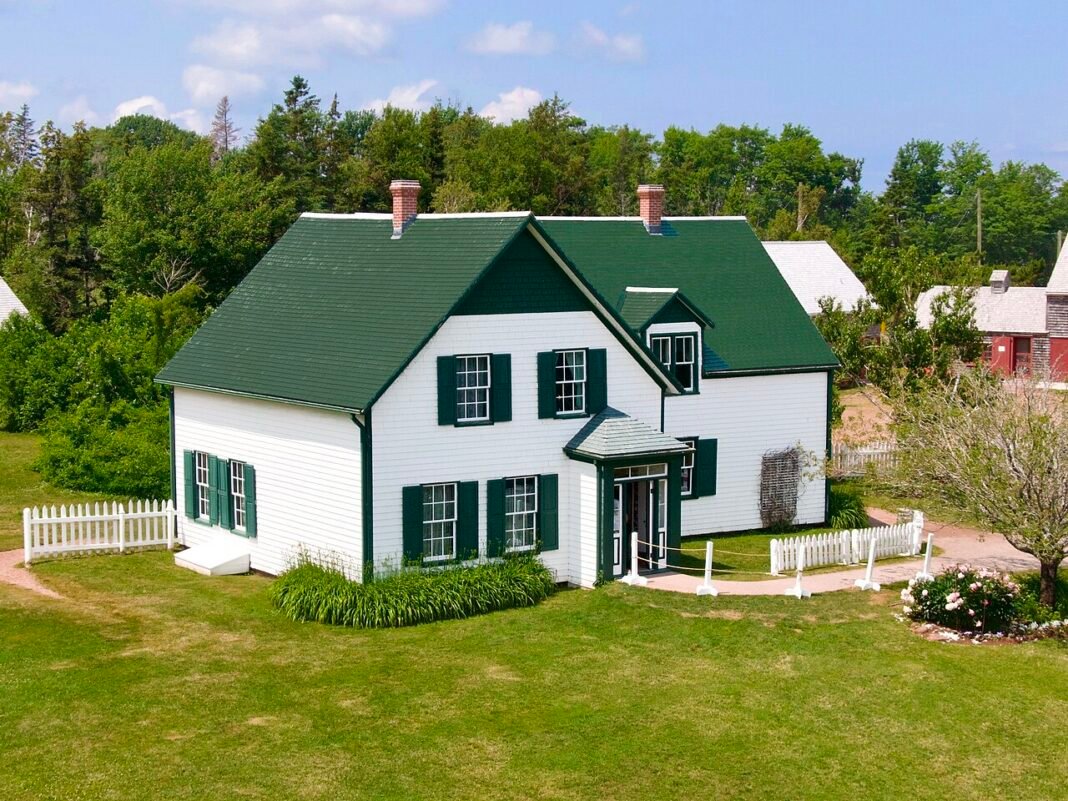
- Green Gables Heritage Place: The Cavendish farmhouse that inspired L.M. Montgomery’s fictional Green Gables farm; the heritage buildings, the Haunted Wood trail, and the Balsam Hollow trail provide the landscape of Montgomery’s imagination as a living heritage experience; the annual Japanese pilgrimage to Green Gables (PEI receives more Japanese visitors per capita than any other province) reflects the global reach of the Montgomery literary tradition
- Cavendish beach amusement district: The concentrated family tourism infrastructure (Sandspit amusement park, mini-golf, waterparks, and the Shining Waters Family Fun Park) provides the family entertainment context that makes Cavendish the province’s most visited summer destination for families with children
- Gulf Shore Parkway cycling: The national park’s Gulf Shore Parkway provides car-free cycling along the north shore with beach access throughout, an easy and scenic ride for families

The Eastern and Western Tips: Beyond the Tourist Corridor
Beyond Cavendish’s tourism concentration, the eastern and western ends of the island provide PEI’s most authentic rural experiences:
- Kings County and East Point: The eastern third of the island — the Kings County farmlands, the Greenwich sand dunes, and the East Point Lighthouse at the island’s eastern tip — preserves the most rural PEI landscape; the Confederation Trail’s eastern extension, the Elmira Railway Museum (terminus of the island’s original railway), and the communities of Souris and Murray Harbour provide a quieter alternative to the north shore’s tourist infrastructure
- Prince County and Summerside: The western end of the island, anchored by Summerside (17,000, the island’s second city), provides the island’s most complete lobster fishing community experience: the Lobster Carnival (July, running since 1956 and among Canada’s longest-established lobster festivals), the College of Piping (the only college devoted to Highland piping and dance in North America), and the Summerside Harness Raceway’s summer racing program create a distinctive western character
- Cedar Dunes and West Point Lighthouse: The western shore’s Cedar Dunes Provincial Park and the West Point Lighthouse Inn (one of Canada’s only lighthouse hotels) provide the island’s most remote beach experience with none of the north shore crowds
- Victoria-by-the-Sea: The tiny south shore fishing village (100 year-round residents) is PEI’s most charming hamlet — the Victoria Playhouse summer theatre, the Island Chocolates shop, and the heritage commercial block on the waterfront create a village-scale cultural experience beloved by Islanders and visitors alike
PEI’s Culinary Identity
Prince Edward Island’s food identity is inseparable from its agriculture and fishery:
- Lobster suppers: The community lobster suppers at St. Ann’s Church (Hope River), New Glasgow Lobster Suppers, and the Fisherman’s Wharf Lobster Suppers in North Rustico are the island’s most distinctive dining institutions — fixed-price, all-inclusive dinners of whole lobster, chowder, mussels, and dessert in church halls and community buildings; a genuinely local tradition rather than a tourist fabrication
- Malpeque oysters: The cold, clean waters of Malpeque Bay on the north shore’s western end produce PEI’s most famous aquaculture product — the Malpeque oyster, considered one of the finest in North America; the Stanley Bridge oyster bars and direct sales from producers make for the island’s best raw bar experience
- PEI potatoes: The island produces roughly 25% of Canada’s potato supply on the red soil farmlands; the PEI Potato Museum in O’Leary (the western county) and the farm stand culture throughout the rural island provide the agricultural context for the province’s most economically significant crop
Frequently Asked Questions
What is Prince Edward Island’s connection to Anne of Green Gables?
Lucy Maud Montgomery’s 1908 novel Anne of Green Gables, set in the Cavendish farmlands of PEI’s north shore, has made Prince Edward Island a literary pilgrimage destination for readers from Japan, South Korea, and across the English-speaking world — PEI receives more Japanese visitors per capita than any other Canadian province, most making the journey specifically for the Montgomery heritage. Green Gables Heritage Place in Cavendish preserves the farmhouse that inspired Montgomery’s fictional Green Gables, with the Haunted Wood trail and Balsam Hollow trail providing the landscape of Montgomery’s imagination as a living heritage experience. The Confederation Centre of the Arts in Charlottetown has staged the Anne of Green Gables musical at the Charlottetown Festival since 1965, and Guinness World Records recognizes it as the longest-running annual musical in history; it now returns to the stage in alternating summers.
What are PEI’s beaches and why are they distinctive?
Prince Edward Island National Park protects the province’s finest beach system along the Gulf of St Lawrence north shore — Cavendish Beach, Brackley Beach, and Stanhope Beach, with the red iron-oxide sand that gives PEI its most iconic visual identity. The warm Gulf of St Lawrence waters reach 20°C+ in summer, making the north shore beaches the finest ocean swimming in Atlantic Canada. The red sand results from iron oxide in the island’s distinctive sandstone bedrock — the same geology that colours the province’s soil, roads, and river banks in shades from amber to deep brick-red. The Greenwich Peninsula’s parabolic sand dunes (within the national park) are among the most ecologically significant dune systems in Atlantic Canada, protecting rare marram grass habitat and piping plover nesting grounds.
What are PEI lobster suppers and why are they a cultural institution?
PEI’s community lobster suppers are one of the most distinctive dining traditions in Atlantic Canada — fixed-price, all-inclusive dinners of whole lobster, chowder, fresh mussels, rolls, and dessert, held in church halls and purpose-built dining rooms across the north shore. The St Ann’s Church lobster supper in Hope River, the New Glasgow Lobster Suppers, and the Fisherman’s Wharf Lobster Suppers in North Rustico are the best-known venues. These are genuine community institutions rather than tourist fabrications — the tradition originated as church fundraisers and remains community-operated. Malpeque oysters from the cold, clean waters of Malpeque Bay on the north shore’s western end are among North America’s finest oysters; the Stanley Bridge area oyster bars provide the island’s best raw bar experience.
What is Charlottetown and what makes it Canada’s smallest provincial capital?
Charlottetown (40,000 residents), the Birthplace of Confederation where the 1864 conference that led to Canada’s creation was held, is Canada’s most compact and walkable provincial capital — the Province House National Historic Site (the Confederation Chamber where the Fathers of Confederation met in 1864) anchors the downtown that can be crossed on foot in 20 minutes. The Confederation Centre of the Arts (the national memorial to Confederation), the Victoria Row pedestrian street, and the Charlottetown Farmers’ Market (Saturday mornings, arguably the finest in Atlantic Canada relative to the population it serves) define the city’s civic life. PEI’s culinary scene is most sophisticated in Charlottetown, where the lobster roll tradition, the oyster bars, and the farm-to-table restaurants of the heritage commercial district make it one of Atlantic Canada’s most compelling food destinations.
How do you get to Prince Edward Island and what is the best way to explore it?
Prince Edward Island is connected to New Brunswick by the Confederation Bridge — at 12.9km the longest bridge over ice-covered water in the world, opened in 1997 and accessible by car (the toll is collected only when you leave the Island, with crossings onto PEI free; the federal government cut the car rate to CAD $20 in August 2025). Northumberland Ferries also links Caribou, Nova Scotia (just outside Pictou) to Wood Islands on the island’s south shore (75-minute crossing, seasonal). The island is compact: you can cross it coast-to-coast in about 90 minutes, and the full circuit (Charlottetown, the north shore national park, and the eastern and western tips) fits comfortably into 4–5 days by car. The Confederation Trail, the former island railway corridor reborn as a 449km multi-use path, runs tip to tip and ranks among the best cycling infrastructure in Atlantic Canada. Peak season is July and August; May–June and September–October offer better value and manageable crowds, with September providing the island’s finest lobster and oyster season.