South Australia‘s outdoor recreation is built on contrasts — the ancient geology of the Flinders Ranges (800-million-year-old Precambrian quartzite ridges that make the Himalayas look young by comparison), the protected wildlife of Kangaroo Island (a continent-within-a-continent where endemic subspecies evolved cut off from mainland predators), the Eyre Peninsula’s white-sand beaches and great white shark encounters, and the Southern Ocean surf of the Fleurieu Peninsula, where the world’s most powerful ocean throws swell onto beaches within 40 minutes of Adelaide’s CBD. The reward goes to travellers who drive further and look past the Adelaide Hills and McLaren Vale day trips — the Flinders interior, the Eyre Peninsula’s far-flung beaches, and the Coorong National Park’s bird-sanctuary coastline have few equivalents anywhere. And through it all, the state delivers the easiest outback in the country: the Flinders Ranges sit four hours from Adelaide, against two days from Sydney.
Flinders Ranges: Hiking the Ancient World
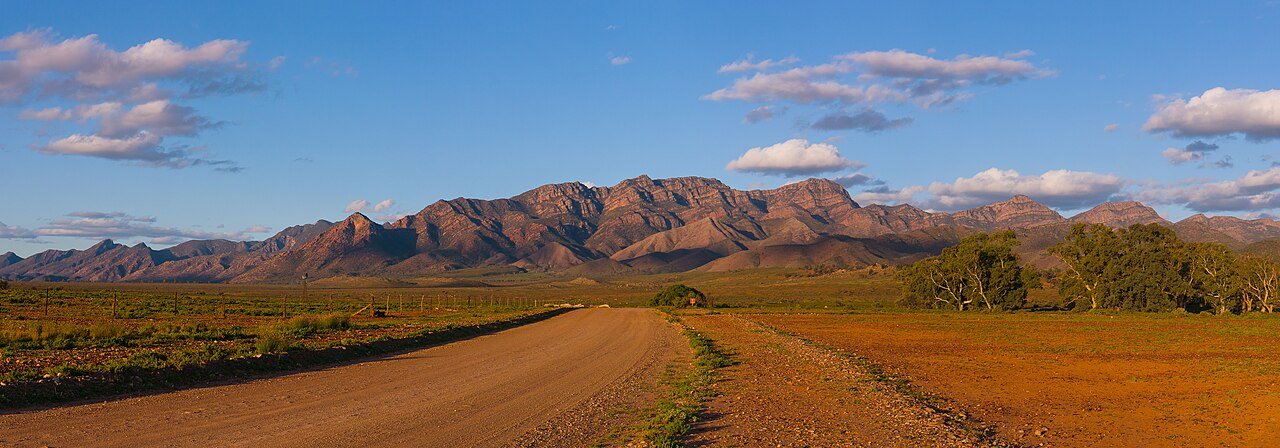
The Flinders Ranges hiking network centres on Wilpena Pound and the Ikara-Flinders Ranges National Park, 450km north of Adelaide. The major walks:
- Wilpena Pound rim walk (about 20km, 2 days): a circuit of the Pound’s inner basin; the St Mary Peak approach from Wilpena Pound Resort opens up the high country’s finest views, though Aboriginal cultural protocols ask that visitors stop at Tanderra Saddle rather than ascend the summit itself (consult the Adnyamathanha Traditional Lands Association for current guidance)
- Heysen Trail: Australia’s longest marked walking trail (1,200km from Cape Jervis on the Fleurieu Peninsula to Parachilna Gorge in the northern Flinders); the Flinders section (some 400km) is its toughest and most rewarding stretch; walk it May–October to dodge the summer heat
- Arkaroola Wilderness Sanctuary: a private conservation reserve in the northern Flinders; the guided 4WD Ridge Top Tour climbs to the highest accessible point in the range for a sweep of outback country, while the on-site astronomical observatory offers some of the country’s clearest stargazing
- Yourambulla Caves: an Aboriginal rock-art site reached by a 2km return walk, with fine panels of stencil work and hand prints
Kangaroo Island: Wildlife and Wilderness
Kangaroo Island’s outdoor scene pairs unusually close wildlife encounters with some of South Australia’s wildest coast:

- Seal Bay Conservation Park: a guided beach walk among Australia’s third-largest Australian sea lion colony (about 800 animals, five per cent of the world population); the sea lions doze within metres of visitors, the closest wildlife encounter the state has to offer
- Admirals Arch: a natural rock arch in the cliff face at Cape du Couedic, home to a colony of long-nosed (New Zealand) fur seals; the boardwalk above it looks straight out across the Southern Ocean
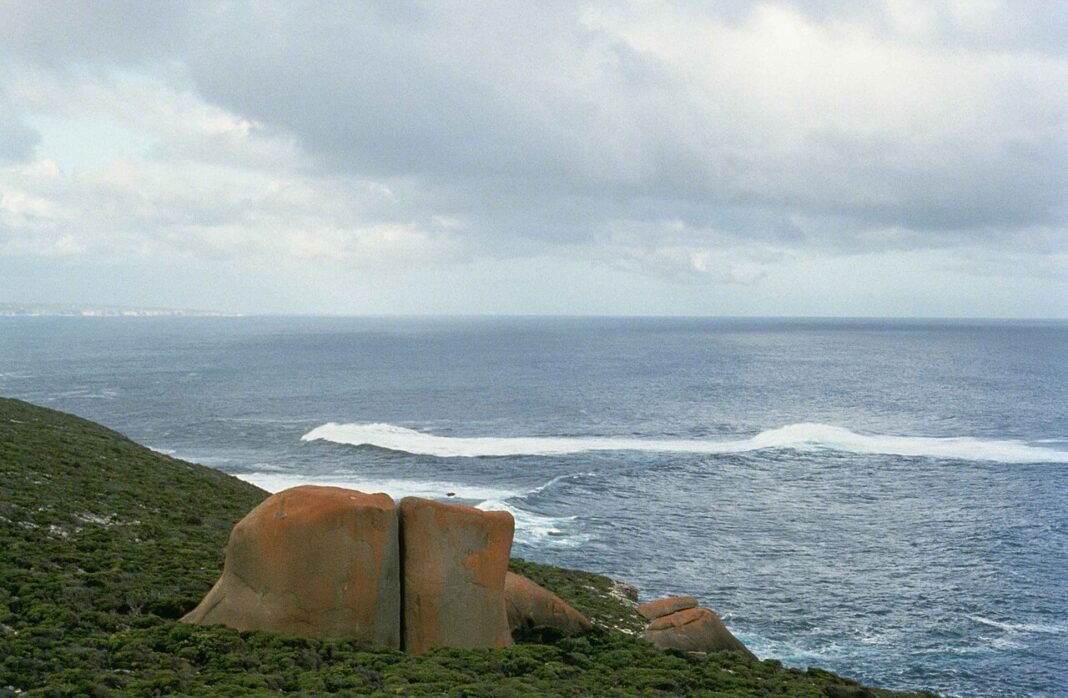
- Remarkable Rocks: granite boulders at Kirkpatrick Point, Flinders Chase National Park; shoot them at sunrise and sunset, when low light turns the sculptured forms a deep orange above the ocean
- Flinders Chase wilderness hiking: the Kangaroo Island Wilderness Trail (66km over 5 days) follows the wild southern coast from Flinders Chase Visitor Centre to Kelly Hill Caves — remote, demanding, and well suited to seasoned walkers
- Surfing: the island’s exposed southern coast holds some of the most consistent and least crowded surf in the country, with quality breaks at Hanson Bay and D’Estrees Bay
Eyre Peninsula: Ocean Encounters
The Eyre Peninsula, 650km west of Adelaide, holds the state’s most remote and powerful stretches of coast:

- Cage diving with great white sharks (Port Lincoln): the Neptune Islands group, 70km offshore, holds one of the highest densities of great white sharks anywhere; two licensed operators — Calypso Star Charters for day trips and Rodney Fox Shark Expeditions for liveaboard — run the world’s most reachable great white encounter
- Coffin Bay National Park: some 30,000 hectares of empty beaches, sand dunes, and coastal heath reached by 4WD; the cleanest sand in the state outside Kangaroo Island, and the home of the Coffin Bay oyster (a Pacific oyster farmed in the clear waters of Coffin Bay Inlet)
- Lincoln National Park: next door to Port Lincoln, with coastal cliffs, hidden coves, and one of the finest walking tracks in SA (Billy Lights Point to Stamford Hill, 8km return)
- Memory Cove Wilderness Protection Area: permit required (collect the access key from the Port Lincoln Visitor Centre), 4WD only, capped at 15 vehicles a day; the wildest coastal pocket on the Eyre Peninsula, with sheltered camping beaches and regular sightings of sea lions, fur seals, and bottlenose dolphins
Clare Valley: Wine and Walking
The Clare Valley, 130km north of Adelaide in the Southern Flinders Ranges foothills, is the state’s standout pairing of wine and walking. The Riesling Trail — a 35km sealed walking and cycling path running through the vineyards between Auburn and Clare — ranks among Australia’s best rail-trail conversions, threading together cellar doors such as Grosset, Tim Adams, and Kilikanoon across a landscape of limestone slopes and scattered native bush. Clare’s Riesling is the clearest case that South Australian wine reaches well beyond the Barossa: the valley’s cool nights yield wines of taut minerality and long cellaring life that many critics rate as the country’s best Riesling outside the Eden Valley.
Planning Your South Australian Outdoor Adventure
Getting the most out of South Australia takes deliberate planning. The major activity zones — Flinders Ranges, Kangaroo Island, the Eyre Peninsula, and the Clare Valley — sit a long way apart, and each warrants its own itinerary. Pick one region per trip: the Flinders Ranges as a 4-night self-drive from Adelaide; Kangaroo Island as a 2–3 night ferry or fly-in wildlife-and-food run; the Eyre Peninsula (Port Lincoln and Coffin Bay included) as a 4–5 night self-drive from Adelaide via the Lincoln Highway. The shoulder seasons — April–May and September–October — bring the best mix of mild temperatures, thinner crowds, and active wildlife across every region.
Practical Preparation
The trips in this guide reward groundwork. For wilderness and protected areas, check trail conditions, permit rules, and seasonal access with the relevant land-management authority before you leave — closures, fire restrictions, and entry quotas can shift fast, and many high-demand parks now take advance bookings that were not needed a few years ago. South Australian weather turns quickly, especially in mountain country and through the shoulder seasons, so a layered kit with a waterproof outer shell makes sense for most pursuits year-round. For anything on the water — paddling, snorkelling, diving, surfing — confirm conditions with local outfitters, who hold the most current information. Leave No Trace principles apply throughout: pack out everything you carry in, keep to marked trails, give wildlife room, and leave natural features as you found them for the next visitor.
Frequently Asked Questions
What makes the Flinders Ranges one of Australia’s most remarkable hiking destinations?
The Ikara-Flinders Ranges National Park (about 95,000 hectares, 450km north of Adelaide) centres on Wilpena Pound — a natural amphitheatre of 800-million-year-old Precambrian quartzite ridges enclosing a basin some 17km long, one of the state’s defining outback landscapes. The Wilpena Pound rim walk (about 20km, 2 days) circles the inner basin; the St Mary Peak approach from Wilpena Pound Resort opens up the finest high-country views in the range, though Aboriginal cultural protocols ask that visitors stop at Tanderra Saddle rather than ascend the peak itself (the Adnyamathanha people hold Ngarri Mudlanha, the St Mary Peak summit, as sacred). The Heysen Trail (1,200km from Cape Jervis on the Fleurieu Peninsula to Parachilna Gorge in the northern Flinders) is Australia’s longest marked walking trail, and its northern sections through the Flinders hold the state’s hardest and most rewarding multi-day hiking. The Cazneaux Tree — a river red gum near Wilpena Pound that Harold Cazneaux photographed in 1937 in an image later retitled “The Spirit of Endurance” — is one of the most visited single trees in the country and a touchstone for landscape photographers.
What wildlife experiences does Kangaroo Island offer?
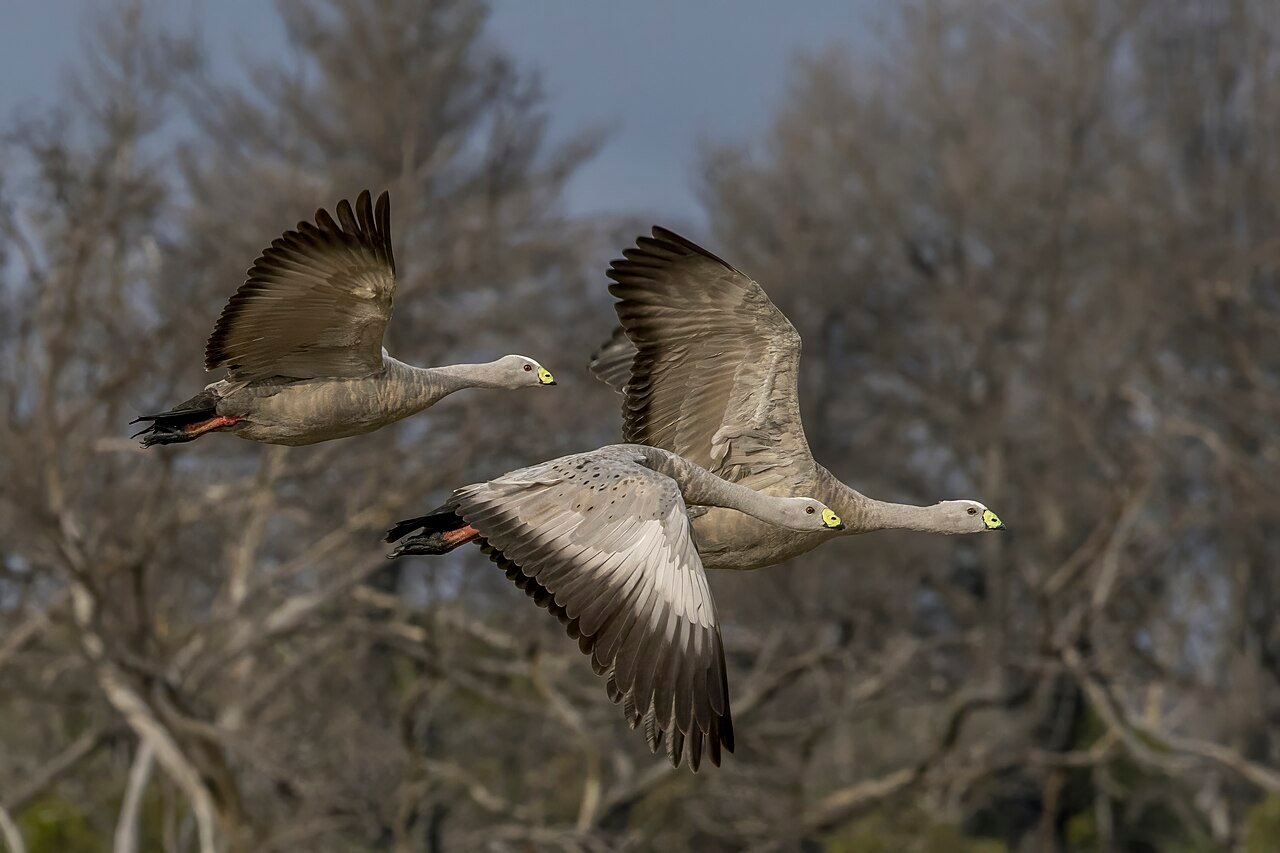
Kangaroo Island — 4,400km², about 110km from Adelaide via the ferry from Cape Jervis — is a continent-within-a-continent: an island that split from the mainland about 10,000 years ago, leaving endemic subspecies to evolve in isolation and keeping mainland predators (foxes, rabbits) out altogether. Seal Bay Conservation Park protects Australia’s third-largest Australian sea lion colony (about 800 animals, five per cent of the world population); guided beach walks among the dozing sea lions — which regard human visitors with serene indifference — are the island’s signature wildlife outing. Flinders Chase National Park (at the western end, 74,000 hectares, recovering strongly since the 2019–20 bushfires that burnt 96 per cent of the park) holds the Remarkable Rocks (granite boulders shaped by 500 million years of weathering into strange forms on a granite dome above the ocean) and Admirals Arch (a natural arch sheltering a long-nosed fur seal colony). The island’s wildlife also includes the KI kangaroo (a distinct subspecies), the Tammar wallaby (extinct on the SA mainland), the glossy black-cockatoo (its most endangered endemic bird), and the Ligurian honey bee (the world’s only pure-strain Ligurian population outside Italy).
What does the Eyre Peninsula offer for marine wildlife and remote outdoor experiences?
The Eyre Peninsula (the triangular landmass running south from Port Augusta to the Great Australian Bight) delivers the state’s biggest marine wildlife encounters and some of its boldest coastline. The Neptune Islands Group Marine Park (reached from Port Lincoln) runs the world’s most carefully managed great white shark cage diving — the Neptune Islands hold one of the highest concentrations of great whites anywhere, and the two licensed operators (Calypso Star Charters for day trips and Rodney Fox Shark Expeditions for liveaboard) have worked the waters for decades with spotless safety records. Port Lincoln is the tuna capital of Australia, and the region’s seafood — Spencer Gulf king prawns, southern bluefin tuna, and Coffin Bay Pacific oysters — counts among the finest wild catch anywhere. Coffin Bay National Park (some 30,000 hectares of white sand, calm bay water, and coastal mallee heath) offers the peninsula’s easiest coastal camping.
What does Kangaroo Island’s wilderness offer for hiking and self-drive touring?
Kangaroo Island works best as a self-drive: its road network (much of it unsealed inland) lets you explore national parks, wildlife sites, and cellar doors at a pace no tour bus can match. Flinders Chase National Park’s 74,000-odd hectares hold the Remarkable Rocks and Admirals Arch, plus the Cape du Couedic lighthouse (the island’s most important historic building), the Kangaroo Island Wilderness Trail (66km over 5 days from Flinders Chase Visitor Centre to Kelly Hill Caves), and nesting Little Penguins and long-nosed fur seals along the south coast. The Ligurian honey bee’s protected status makes the whole island the country’s leading bee sanctuary, its eucalyptus and melaleuca honey drawn from a pure Ligurian strain found nowhere else. The island’s wild-food scene — KI oysters (farmed at American River), free-range lamb, bush honey, and fresh seafood — now rivals wildlife as a reason to visit.
What does South Australia’s Southern Ocean surf coast and Fleurieu Peninsula offer?
The Fleurieu Peninsula (an hour south of Adelaide, between Gulf St Vincent and the Southern Ocean) puts outdoor recreation within easy reach of the city — the Southern Ocean surf at Parsons Beach, Waitpinga, and Petrel Bay sends powerful open-ocean swell onto beaches within 40 minutes of Adelaide’s CBD. The Heysen Trail’s southern sections (from Cape Jervis to the Adelaide Hills) make for the simplest multi-day hiking from town. Victor Harbor and Granite Island (linked by horse-drawn tram across a causeway) deliver Little Penguin encounters and Southern Ocean whale watching (Southern Right and humpback whales, May–October, from Encounter Bay). McLaren Vale (30 minutes south of Adelaide) is the state’s most visited wine region — a warm-climate Shiraz specialist whose deep-coloured, generous wines have gone global. Willunga’s Saturday morning farmers market is rated among the best in the country.