


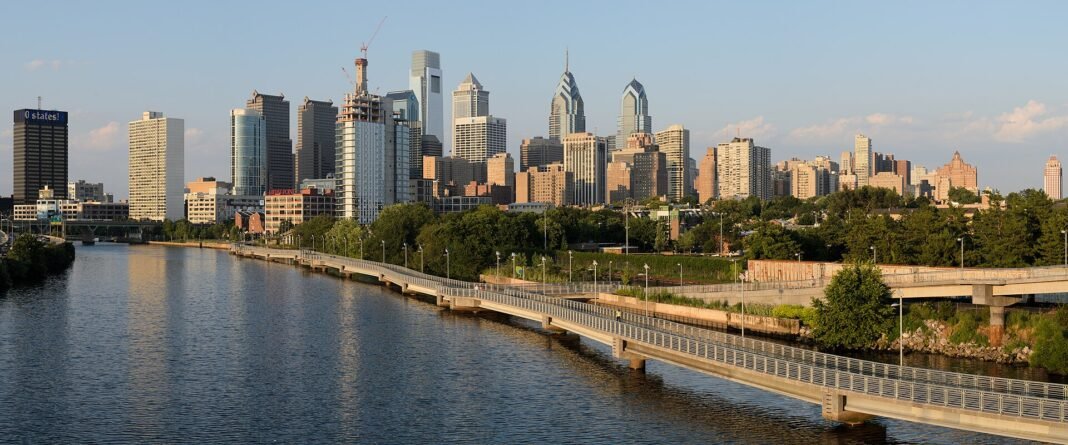
Few states spread their costs as widely as Pennsylvania. Philadelphia and its Main Line suburbs carry costs approaching New York City’s outer boroughs, particularly for housing in the most desirable school districts, while Pittsburgh remains one of the best-value major metros in the country, with housing that buys real quality at prices well below any comparable Eastern city. Between those anchors, the smaller cities of the Lehigh Valley (Allentown, Bethlehem), plus Harrisburg, Erie, Scranton, and Lancaster, offer honest affordability for households willing to accept distance from the major metros. The state income tax is a flat 3.07%, one of the lowest flat rates of any income-tax state, and it applies uniformly. Property taxes are the variable: set locally, they swing widely between municipalities and school districts.

Pennsylvania Cost of Living Overview 2026
- State income tax: Flat 3.07% — one of the lowest flat rates in the country
- Local earned income tax: 1–3% in most municipalities; Philadelphia residents instead pay a 3.74% city wage tax
- Philadelphia city median home price: roughly $220,000 (Zillow home value index)
- Pittsburgh city median home price: roughly $218,000 (Zillow home value index)
- Philadelphia metro (Main Line suburbs): $500,000–$1M+
- State sales tax: 6% (groceries and clothing exempt); 8% in Philadelphia, 7% in Allegheny County
- Philadelphia rent (1BR): $1,600–$2,200 per month in desirable neighborhoods
- Pittsburgh rent (1BR): $1,100–$1,600 per month in popular neighborhoods
Housing: Philadelphia vs. Pittsburgh vs. Everywhere Else
Philadelphia metro housing has appreciated significantly as remote workers from New York City discovered that a $400,000 Philadelphia rowhouse provides comparable urban access to a $900,000 Brooklyn apartment. The city proper’s median sits near $220,000, while the strongest-demand neighborhoods (Rittenhouse Square, Fishtown, East Passyunk, Chestnut Hill) reach $400,000–$700,000 for rowhouses and semi-detached homes. The Main Line suburbs (Bryn Mawr, Ardmore, Wayne, Villanova) carry premiums of $500,000–$1M+ for their school district access and established character. Pittsburgh’s market works on a different scale entirely — citywide prices land around $218,000, and sought-after neighborhoods like Squirrel Hill, Shadyside, Lawrenceville, and Mount Lebanon hold at $250,000–$450,000 for well-kept historic homes. The contrast is stark: a Squirrel Hill Victorian that would fetch $800,000 in Boston trades for about $350,000 here.
Pennsylvania’s Local Tax Complexity
The cost structure new residents most need to understand is the three-layer local tax system: the state income tax (flat 3.07%), a municipal earned income tax (commonly 1% in most townships), and a school district earned income tax (often the largest local levy). Stack all three and residents of many municipalities land at a combined income tax near 4–5%. The two big cities are special cases. Philadelphia does not run on the standard earned income tax; instead it charges a city wage tax of 3.74% on residents (and about 3.43% on nonresidents working in the city as of 2026), one of the steepest local wage taxes in the country. Pittsburgh residents pay a combined 3% earned income tax (1% to the City and 2% to the Pittsburgh School District) on top of the state’s 3.07%. Before locking in a specific Pennsylvania address, check the municipal and school district rates line by line; the spread can swing $1,000–$3,000 a year for a middle-income household.
Utilities and Energy
Pennsylvania’s utility costs are moderate for the Northeast — natural gas heating runs $100–$160 monthly in winter in energy-efficient homes, electricity is priced around the national average, and the state’s heavy energy production (natural gas from the Marcellus Shale formation, nuclear from multiple facilities, and a growing renewable portfolio) lends some pricing stability. The main climate-driven utility cost is heating, because Pennsylvania winters are no joke. Philadelphia averages 22 inches of snow and temperatures regularly below freezing from December through February; Pittsburgh and the northern tier run more severe.
Groceries and Services
Grocery prices in Pennsylvania vary by geography. Philadelphia and its suburbs price at or slightly above the national average, while Pittsburgh and the interior cities price 5–10% below it. Pennsylvania’s sales tax exempts groceries and clothing, two categories that together eat up a sizable share of household spending, so the effective sales tax burden for a typical household runs lower than the 6% headline rate suggests. The headline rate itself is not uniform statewide: Philadelphia adds a 2% local sales tax for an 8% total, and Allegheny County (Pittsburgh) adds 1% for 7%, though the grocery and clothing exemptions apply everywhere. Healthcare costs are below the national average in Pittsburgh (UPMC and Allegheny Health Network provide highly rated care at competitive prices) and approximately at the national average in Philadelphia.
Who Benefits Most from a Pennsylvania Move
New York City households represent Pennsylvania’s most natural in-migration pool — the Philadelphia and Pittsburgh metros deliver real urban access (cultural institutions, restaurant scenes, walkable neighborhoods) at costs meaningfully lower than comparable New York addresses, with Amtrak and highway connections keeping the region within reach. Remote workers from expensive markets can tap Pittsburgh’s housing value while holding their salary levels, which is what makes the city one of the strongest value propositions in the eastern United States. Retirees leaving high-property-tax states can lean on Pennsylvania’s relative property tax moderation in interior communities, though the Philadelphia and Pittsburgh suburbs carry heavier property taxes than many assume. Families with school-age children should put district research first — the gap between Pennsylvania districts is wide and feeds directly into both educational outcomes and housing costs.
Pennsylvania exempts prescription drugs from the sales tax and does not tax Social Security income, providing meaningful relief for retirees and households carrying heavy healthcare expenses. The state’s flat income tax structure (3.07% on all income) means high earners pay the same rate as moderate-income households — an edge for higher-income filers compared with states that use steeply graduated brackets. The Keystone Opportunity Zone (KOZ) program and the Local Economic Revitalization Tax Assistance (LERTA) program provide targeted tax incentives in designated areas that can substantially reduce the tax burden for qualifying businesses and property owners in the state’s legacy industrial cities.
Budgeting Practically for Pennsylvania
Housing dwarfs every other line in a Pennsylvania budget, and the neighborhood you pick does most of the work — the same salary stretches very differently in Squirrel Hill than on the Main Line, even before the local wage tax enters the picture. The fixed costs are the income and sales taxes laid out above; the movable ones are rent or mortgage, heating, and how far you commute. For a household leaving New York or San Francisco, the gap is wide enough to change the shape of a year’s finances rather than trim it at the edges. Use the figures here as a frame, then pull current listings for your target ZIP code, because a hot Lawrenceville block can outrun a statewide average in a single season.
Frequently Asked Questions
Is Pittsburgh affordable to live in?
Exceptionally so for a major metro. Pittsburgh’s citywide median home value sits around $218,000, with well-regarded neighborhoods like Squirrel Hill, Shadyside, and Lawrenceville at $250,000–$450,000. A Squirrel Hill Victorian that would cost $800,000 in Boston trades for about $350,000 here. One-bedroom apartments in those neighborhoods run $1,100–$1,600/month. Pittsburgh is one of the strongest housing value propositions in the eastern United States.
What is Pennsylvania’s income tax rate?
Pennsylvania has a flat state income tax of 3.07% — one of the lowest flat rates of any income-tax state. On top of that, most municipalities levy a local earned income tax (commonly 1%) plus a school district tax. The big cities differ: Philadelphia charges a 3.74% city wage tax on residents instead, and Pittsburgh residents pay a combined 3% earned income tax (1% city + 2% school district). New residents should verify the specific local rates for their target address — the spread can mean $1,000–$3,000/year.
Does Pennsylvania have property taxes?
Yes — and they vary widely by municipality and school district. The Philadelphia metro and Main Line suburbs carry high property taxes driven by school district spending. Pittsburgh and western Pennsylvania run more moderate. Pennsylvania’s base sales tax is 6% (8% in Philadelphia, 7% in Allegheny County), but groceries and clothing are both fully exempt — pulling the effective burden below the headline rate for typical household spending.
How does Philadelphia compare to New York City?
Philadelphia is far more affordable. The citywide median home value sits near $220,000; high-demand neighborhoods (Rittenhouse Square, Fishtown, East Passyunk) reach $400,000–$700,000. One-bedrooms in those areas run $1,600–$2,200/month. Main Line suburbs (Bryn Mawr, Wayne, Villanova) run $500,000–$1M+ for top school district access. One catch for commuters: Philadelphia residents pay a 3.74% city wage tax. Even so, costs sit well below comparable New York outer-borough neighborhoods or New Jersey commuter suburbs.
Is Social Security taxed in Pennsylvania?
No — Pennsylvania does not tax Social Security income. The state also exempts most pension and retirement account distributions from state income tax for retirees, and prescription drugs are exempt from the 6% sales tax. These provisions make Pennsylvania far more favorable for retirees than the flat 3.07% rate alone suggests — the effective income tax burden on retirement income is often near zero at the state level.