Toronto is a city that consistently surprises people who arrive with low expectations. It’s simultaneously the fastest-growing major city in North America, one of the most linguistically diverse cities on earth (over 180 languages spoken), a genuine world-class food destination, and a city with more green space per resident than most comparable metros. International travelers who pass through on the way to Montreal or Vancouver and give it a day and a half typically leave wishing they’d given it three. The CN Tower view is real, the museum is exceptional, the neighborhoods reveal themselves slowly, and the food — particularly if you venture beyond the waterfront tourist strip — is extraordinary. Here’s how to approach it properly.
Getting Around Toronto
Toronto’s transit system (TTC — Toronto Transit Commission) covers the city comprehensively with subway, streetcar, and bus routes. Load a Presto card (available at all subway stations and many retailers) for seamless payment across all modes. The subway is fast for major north-south (Yonge Street line) and east-west travel; the extensive streetcar network covers downtown more finely, particularly along King Street (one of Canada’s busiest transit corridors). The city is increasingly cycleable in its central core, with separated bike lanes on many major streets — the Bike Share Toronto network (docked e-bikes and regular bikes available across the city) is excellent for short trips. Downtown Toronto’s neighborhoods are close enough to each other to walk between with pleasure — Kensington Market to Distillery District, for example, takes about 25 minutes on foot through some of the city’s most interesting streets.
The Neighborhoods
Kensington Market
Kensington Market is Toronto’s most irreverent and most authentically multicultural neighborhood — a dense grid of Victorian rowhouses converted into vintage clothing shops, independent coffee roasters, Caribbean and Ethiopian restaurants, Middle Eastern grocery stores, cheese shops, and the kind of general creative chaos that usually requires a city to be much larger to generate. On Sundays in summer, the area goes car-free for “Pedestrian Sundays” — a street party with food stalls, live music, cyclists, and roller bladers. Adjacent Chinatown (along Dundas Street West) is one of the largest in North America, with excellent dim sum and bubble tea culture running well into the evening.
Distillery District
The Distillery District is a beautifully preserved Victorian industrial complex — the former Gooderham and Worts whisky distillery, built in the 1850s and once the largest distillery in the world — that has been converted into a pedestrianized neighborhood of galleries, boutiques, restaurants, microbreweries, and event spaces. The 40 heritage buildings with their cobblestone lanes and industrial brick architecture are strikingly atmospheric — particularly during the Toronto Christmas Market (mid-November through December), which is one of the best in Canada.
West Queen West and Ossington
West Queen West (from Bathurst to Dufferin) is Toronto’s most concentrated creative district — independent art galleries, boutique clothing designers, excellent cocktail bars, and the city’s best concentration of interesting new restaurants. The stretch of Ossington Avenue north of Dundas has some of the finest independent restaurants in Toronto in a pleasingly unglamorous setting. The adjoining Trinity Bellwoods Park is the social hub of west-end Toronto on sunny weekends — bring a blanket, a wine bottle (technically illegal in city parks, but widely tolerated), and observe the city’s creative class at leisure.
Top Attractions
CN Tower and Harbourfront
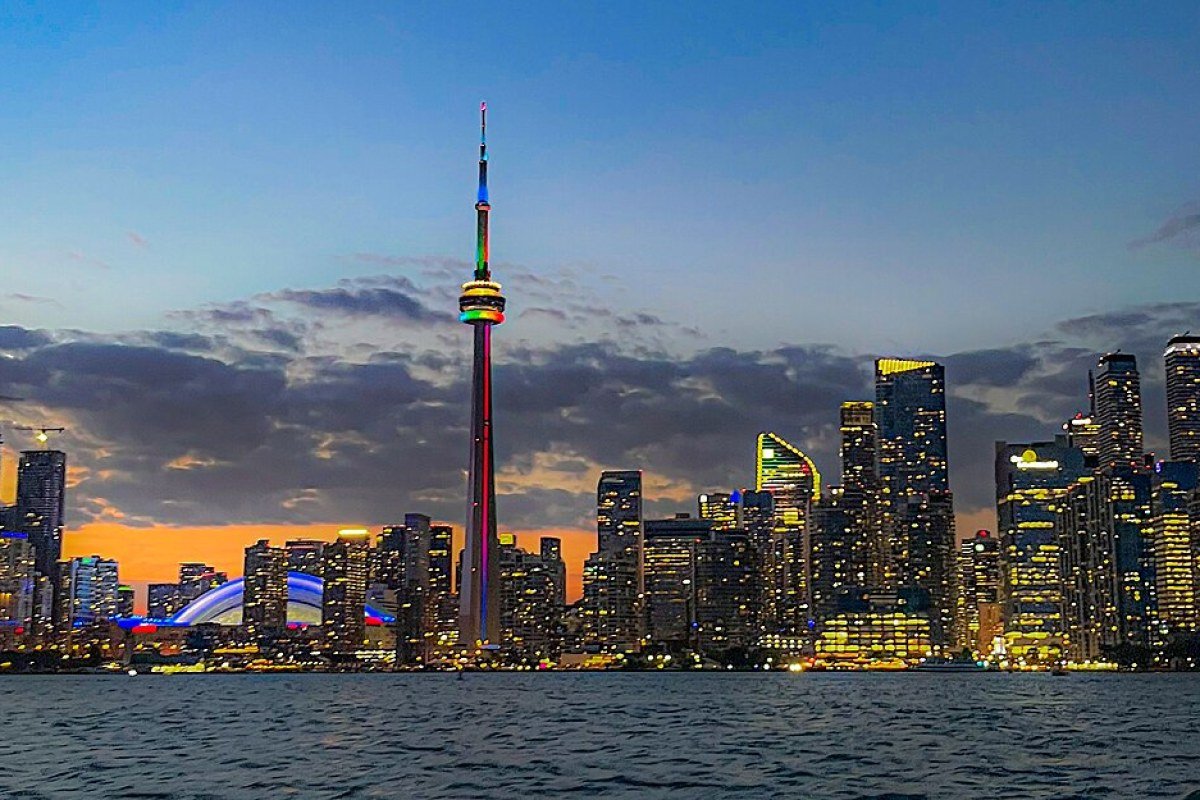
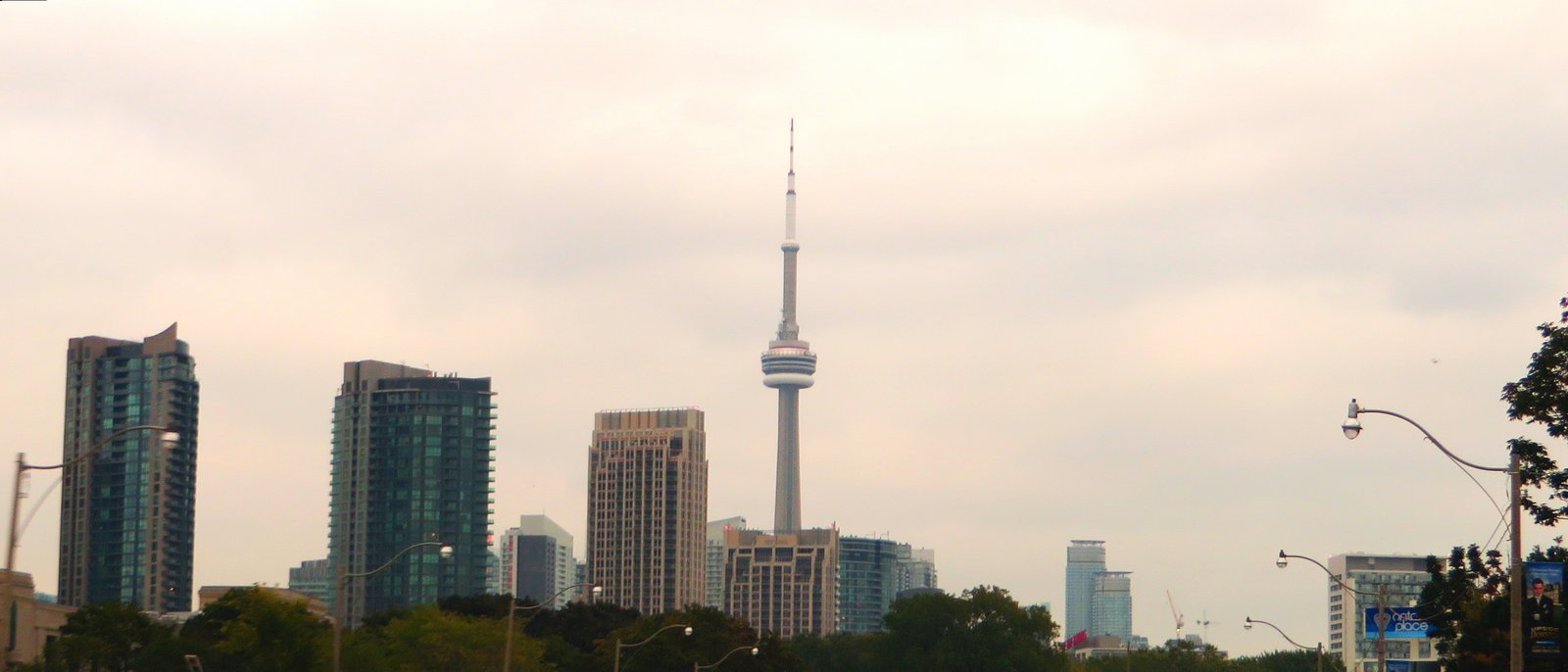
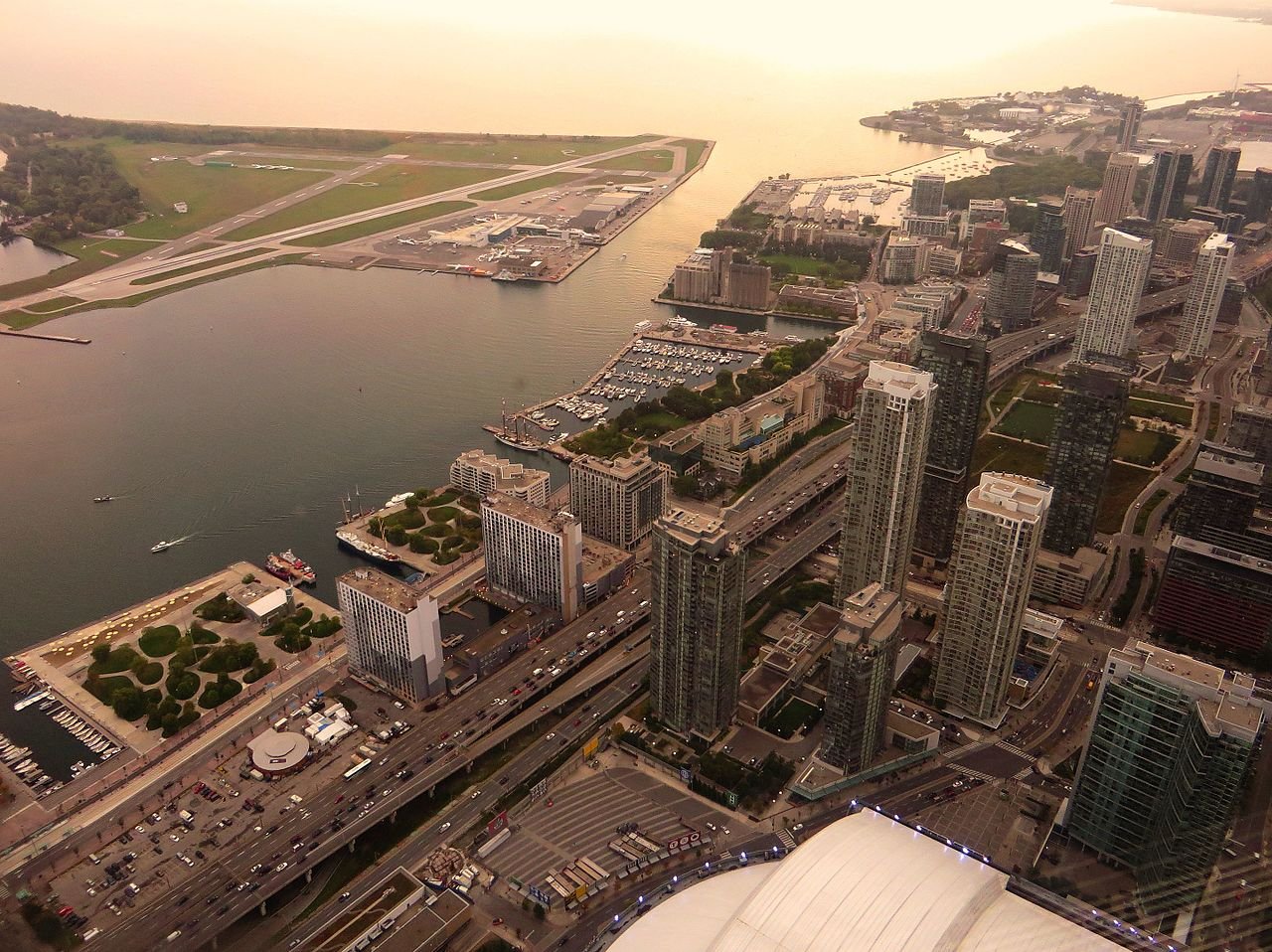
The CN Tower (553m) was the world’s tallest free-standing structure from 1976 to 2007 and remains Toronto’s most recognizable landmark. The LookOut and SkyPod observation levels provide extraordinary views of the city and, on clear days, across Lake Ontario to the United States. The glass floor is deliberately designed to be unnerving; the EdgeWalk (a guided hands-free walk around the outside of the tower’s main pod at 356 meters) is one of the most extreme urban experiences in the world. The Harbourfront Centre, a few minutes’ walk south, is a publicly funded cultural complex on the waterfront with excellent programming in art, dance, theatre, and music — much of it free.
Royal Ontario Museum
The ROM (Royal Ontario Museum) is one of the largest museums in North America — a collection of over 13 million objects covering natural history and world cultures under one roof. The dinosaur galleries (including several T. rex specimens) are among the finest in the world. The Samuel European Galleries (medieval armor, decorative arts, Old Masters paintings), the Chinese collections, the Egyptian and Nubian galleries, and the Natural History galleries housing a massive blue whale skeleton are all excellent. The Michael Lee-Chin Crystal extension — a dramatic series of prismatic crystalline forms that explode through the Victorian and Edwardian main building — is by Daniel Libeskind and worth seeing for the architecture alone.
Toronto Islands
A 10-minute ferry ride from the foot of Bay Street, the Toronto Islands are a cluster of small car-free islands in Lake Ontario with beaches, cycling paths, a small amusement park, and spectacular views of the Toronto skyline. Ward’s Island and Algonquin Island have a small residential community (a few hundred people living in island houses — among the most unusual communities in any major Canadian city). Centre Island has Centreville Amusement Park for families. The Islands are the best urban escape in Toronto — particularly worthwhile on summer evenings when the city skyline is lit up behind you as you face back from the island’s western shore.
Food: The Best Diverse City for Eating in Canada
Toronto’s food scene is perhaps the finest expression of what genuine multiculturalism produces when applied to cooking. The Chinese food (particularly in Scarborough and Richmond Hill) rivals anything outside China. The Ethiopian injera restaurants on Danforth Avenue and in the St. Clair West area are some of the best in North America. Little Portugal on Dundas West has the best pastéis de nata and piri piri chicken outside Lisbon. Greektown on Danforth has reliable souvlaki and lamb chops. The St. Lawrence Market (open Tuesday–Saturday) is the finest covered market in the city — fresh produce, excellent cheesemakers, a superb peameal bacon sandwich stall (a Toronto institution), and good coffee. The Junction, Roncesvalles, and Bloor West Village have the city’s best contemporary independent restaurants — try Edulis (Spanish/European seafood), Canoe (Canadian fine dining with Lake Ontario views from the 54th floor of the TD Bank), and Alo (the finest contemporary French in the city). For exceptional ramen: Raijin on McCaul, Sansotei in the city center. For Korean BBQ: the cluster on Bloor Street West near Christie.
Day Trips: Niagara Falls and Beyond
Niagara Falls (1.5 hours by car or GO/VIA train from Toronto) is one of those natural spectacles that looks better in person than in any photograph — the sheer volume of water (nearly 170,000 cubic meters per minute over the Horseshoe Falls) creates a physical experience of sound, spray, and vertigo that photographs cannot convey. The Journey Behind the Falls tunnel tour and the Hornblower boat tour (formerly Maid of the Mist) are both excellent for getting as close as possible. Avoid the casino and tourist trap strip; stay for the illuminations in the evening. Niagara-on-the-Lake (30 minutes from Niagara Falls), a beautifully preserved Georgian lakeside town with excellent wineries, restaurants, and the Shaw Festival theatre, is an excellent addition. The Thousand Islands (2.5 hours east on the St. Lawrence) and Algonquin Provincial Park (3 hours north, for canoeing and wildlife) are the other main day trip or weekend options from Toronto.