Tennessee Travel Guide 2026: Music, Mountains, and Southern Culture
Tennessee packs a remarkable amount of the American South into one state. The Great Smoky Mountains — the most visited national park in the country, with 12.2 million people in 2024 — sit a few hours east of Nashville’s global music industry. Mississippi Delta blues flows up the river into Memphis, while Appalachian mountain music drifts down from the eastern ridges. In Pigeon Forge, Dollywood ranks among the nation’s best theme parks without losing the mountain heritage that shaped it. The geography alone tells the story: from the Unaka Mountains’ 6,000-foot summits to the western banks of the Mississippi, the state splits into three distinct Tennessees, each with its own landscapes, food, and reasons to come back.
Nashville: The Music City That Became More
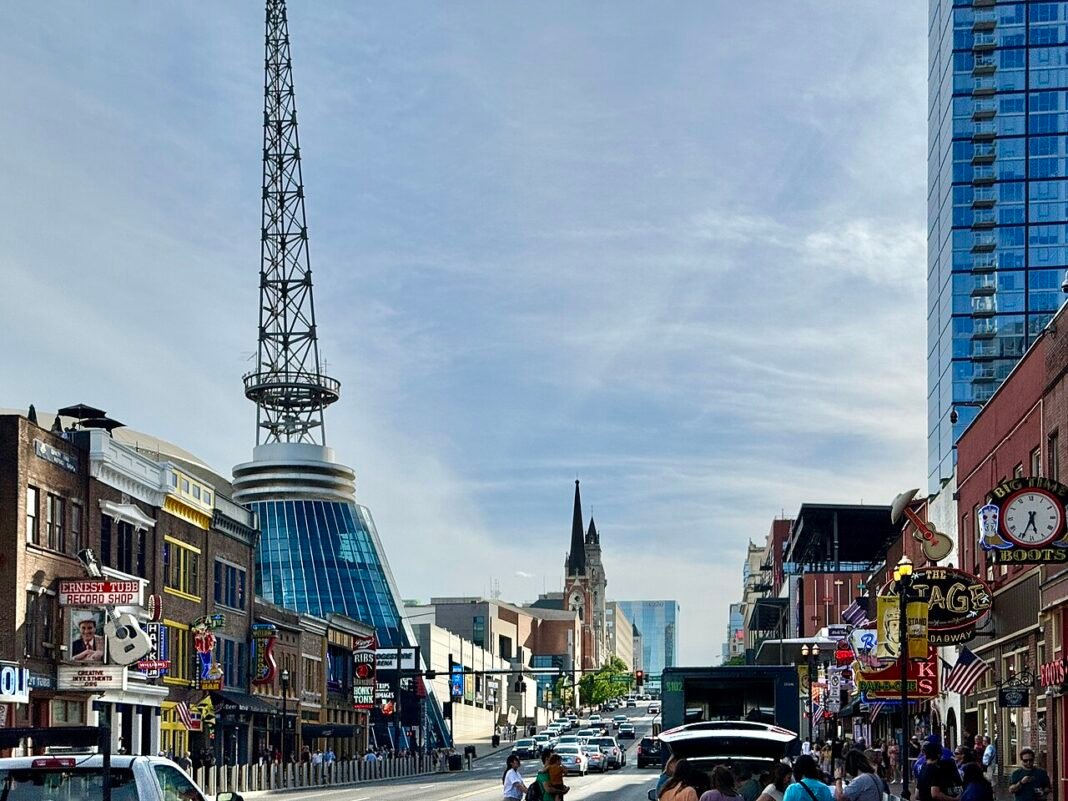
Over the past two decades, Nashville has grown from country music’s capital into one of the South’s busiest destinations, and the heart of it still beats on Lower Broadway. The honky-tonks there — Tootsie’s Orchid Lounge, Robert’s Western World, Layla’s Bluegrass Inn — remain the real thing, with live bands playing from noon until 3 AM for crowds from every state and country. A few blocks away, the Country Music Hall of Fame and Museum explains why all of it matters far beyond Tennessee, tracing the genre from string bands and gospel to international commercial force. For a closer look at individual artists, the Johnny Cash Museum and the Patsy Cline Museum dig into careers that long ago outgrew any single label.

The city has also become one of the South’s best places to eat. Its restaurant scene now stretches from meat-and-three lunch counters — Arnold’s Country Kitchen and Swett’s still set the standard — to a roster of James Beard Award winners assembled over a single decade. The local signature is hot chicken, a Nashville invention that has since gone national. Try it at Prince’s Hot Chicken Shack, the family business widely credited with inventing the dish, or at Bolton’s, where the upper heat levels are not a dare to take lightly.
Great Smoky Mountains National Park
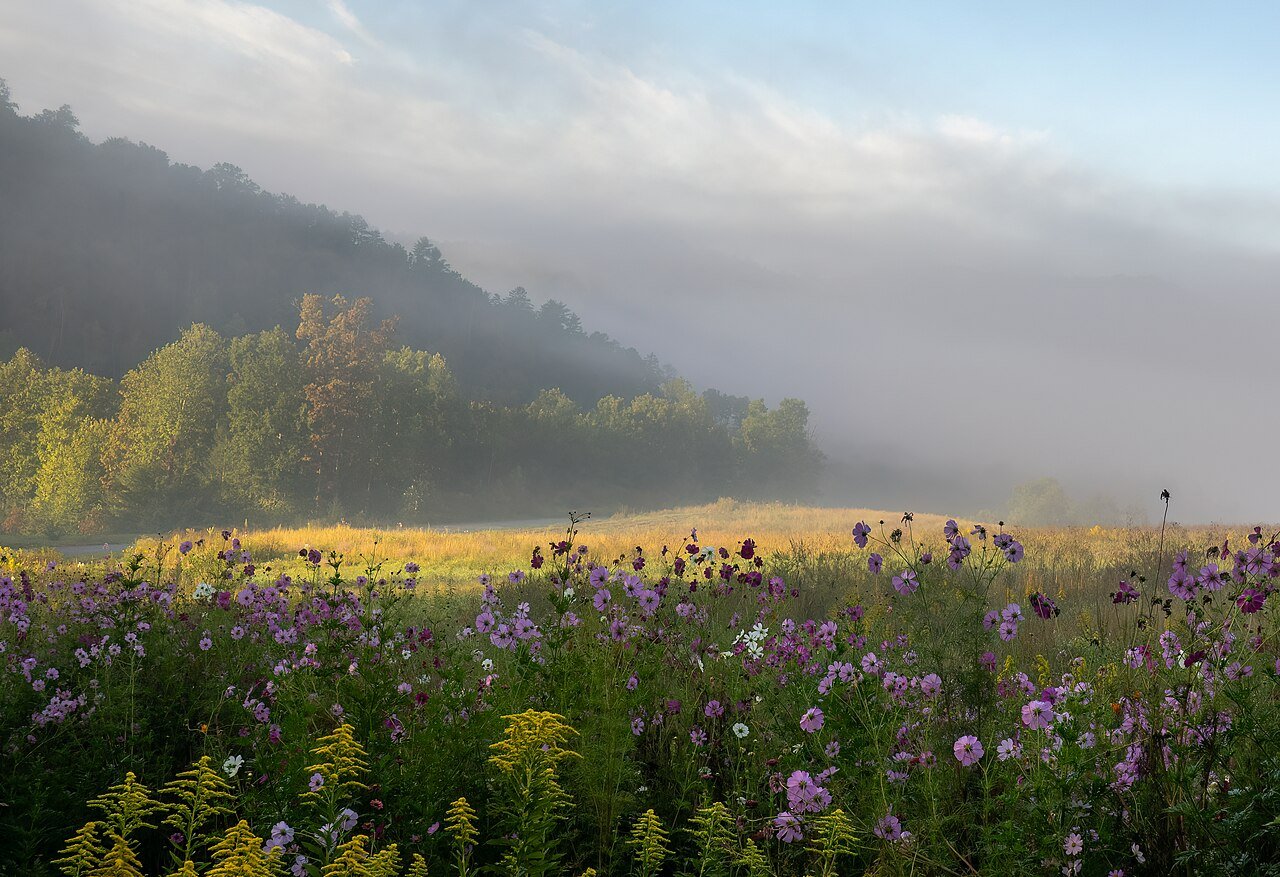
No national park draws more people than the Great Smoky Mountains, which spreads across more than 522,000 acres of Appalachian wilderness along the Tennessee-North Carolina border. Its biodiversity sets it apart: more tree species than all of northern Europe, over 1,500 kinds of flowering plant, and the synchronous fireflies (Photinus carolinus) whose coordinated light show appears here in late May and early June and almost nowhere else. For hikers, the Alum Cave Trail (4.6 miles round trip) is the most photogenic route, climbing past the Alum Cave Bluffs. The popular Chimney Tops Trail still rewards the steep 3.5-mile round-trip push with sweeping ridge views, though the final stretch to the rocky pinnacle has stayed closed since the 2016 fire, replaced by an observation platform. For something longer, the backcountry Appalachian Trail crosses 71 miles of the park, one of the eastern United States’ great multi-day walks. For wildlife, nothing beats Cades Cove, a preserved valley of 19th-century homesteads where white-tailed deer, black bears, wild turkeys, and coyotes turn up regularly along the 11-mile loop road.
Memphis: The Blues Capital of the World
Memphis’s claim as the birthplace of rock and roll and the home of the blues is no exaggeration. The city produced Elvis Presley, B.B. King, Aretha Franklin, Johnny Cash, and dozens of other musicians who shaped American popular music, and the museums that tell their story rank among the best of their kind anywhere. Graceland, Elvis’s home and now a sprawling museum complex, draws roughly 600,000 visitors a year and deserves far more time than most allow. Beale Street has anchored Memphis blues since W.C. Handy built the idiom here in the early 20th century; today’s club strip leans heavily on tourists but still puts real bands on the stage. The Stax Museum of American Soul Music, on the site of the original Stax Records studio, traces soul with a depth that rivals the Rock and Roll Hall of Fame. The barbecue is its own institution — Rendezvous, Central BBQ, Cozy Corner — Memphis’s other gift to the national table.
Chattanooga: The Outdoor City
Chattanooga sits on the Tennessee River in the shadow of Lookout Mountain, and its turnaround is one of the better urban comeback stories in the American South. A city the federal government ranked as America’s worst for particulate air pollution in 1969 has since rebuilt itself around the riverfront and the outdoors. The Tennessee Aquarium, among the largest freshwater aquariums anywhere, anchors that revival. Nearby, the Walnut Street Bridge — a restored 1890 truss span stretching nearly half a mile — counts as one of the world’s longest pedestrian bridges and frames the best view of the skyline. Up on Lookout Mountain, Rock City and Ruby Falls are old-school Southern roadside attractions that still deliver real geological drama. The trail network around Raccoon Mountain has turned the city into a magnet for mountain bikers and trail runners across the Southeast.
Dollywood and East Tennessee
Dolly Parton’s theme park in Pigeon Forge, just outside the Smoky Mountains entrance, lands near the top of national rankings for ride quality and overall experience year after year — no small feat for a park that runs Appalachian craft demonstrations and serious roller coasters side by side. The Lightning Rod, a high-speed hybrid wood-and-steel coaster, and the Wild Eagle, a wing coaster with mountain views, headline the lineup, while Craftsmen’s Valley keeps working artisans at glassblowing, blacksmithing, and wood carving. The Gatlinburg and Pigeon Forge strip around it is thick with tourist infrastructure, but the national park and its quiet ridgelines are only a short drive from the neon.
Practical Information
Nashville International Airport (BNA) is Tennessee’s main hub, with direct connections to most major US airports. Memphis International (MEM) serves western Tennessee; McGhee Tyson Airport (TYS) serves Knoxville. A rental car is recommended for exploring the Smoky Mountains and the rural areas between Tennessee’s cities. Tennessee’s most visited sites can be extremely crowded in summer (June–August) and during fall foliage season (mid-October) — book accommodation 3–6 months in advance for peak periods in Gatlinburg, particularly for cabins near the national park entrance.
Frequently Asked Questions
What makes Nashville’s honky-tonk and music heritage unique among American cities?
Nashville’s Lower Broadway honky-tonk corridor — Tootsie’s Orchid Lounge, Robert’s Western World, Layla’s Bluegrass Inn — has kept the same rhythm since the 1950s: live bands from noon until 3 AM for crowds from every state and country. The Country Music Hall of Fame and Museum supplies the bigger picture, documenting the genre’s path from Southern string-band and gospel roots to an international commercial force, while the Johnny Cash Museum and the Patsy Cline Museum focus on artists whose work outgrew country itself. The city eats well, too: Prince’s Hot Chicken Shack (the family business widely credited with inventing the dish) and the surviving meat-and-three lunch counters (Arnold’s Country Kitchen, Swett’s) now share the map with a James Beard Award-winning restaurant scene of national reach.
What makes the Great Smoky Mountains National Park the most visited national park in the United States?
The Great Smoky Mountains National Park drew 12.2 million visitors in 2024 to more than 522,000 acres of Appalachian wilderness along the Tennessee-North Carolina border — more than any other national park in the country. Its biodiversity has few rivals: more tree species than all of northern Europe, over 1,500 flowering plants, around 100 native trees, and the synchronous firefly (Photinus carolinus), whose coordinated flashes appear only here and draw lottery-controlled crowds to Elkmont in late May and early June. Cades Cove, a preserved valley of 19th-century homesteads on an 11-mile loop road, is the spot for wildlife — white-tailed deer, black bears, wild turkeys, and coyotes show up regularly. The park charges no entrance fee, one of the few that never has, though since 2023 a parking tag (from $5 a day) is required to stop for more than 15 minutes; it is reachable from several Tennessee and North Carolina entrances.
What makes Memphis the birthplace of American popular music?
Memphis earned its title as the birthplace of rock and roll and the home of the blues: the city produced Elvis Presley, B.B. King, Aretha Franklin, Johnny Cash, and dozens of other musicians who built American popular music, and the museums that tell their story rank among the best of their kind anywhere. Graceland, Elvis Presley’s home and now a comprehensive museum complex, draws about 600,000 visitors a year and rewards far more time than most allow. Beale Street has been the center of Memphis blues since W.C. Handy shaped the idiom here in the early 20th century. The Stax Museum of American Soul Music, on the site of the original Stax Records studio in South Memphis, tells the soul story with a depth that rivals the Rock and Roll Hall of Fame. And Memphis barbecue — Rendezvous, Central BBQ, Cozy Corner, Charlie Vergos’ original ribs — is the city’s other great contribution to the national table.
What has driven Chattanooga’s transformation from America’s most polluted city to an outdoor recreation model?
Chattanooga’s turnaround ranks among the great environmental comeback stories in American history. The federal government ranked it America’s worst city for particulate air pollution in 1969, when downtown visibility was measured in city blocks; today it is a model of urban cleanup and outdoor investment. The Tennessee Aquarium, one of the largest freshwater aquariums anywhere, anchors a riverfront revival that also takes in the Walnut Street Bridge — among the world’s longest pedestrian bridges, with the best view of the skyline. On Lookout Mountain, Rock City and Ruby Falls are old-school Southern roadside attractions with real geological drama. The trail network around Raccoon Mountain has made the city a fixture in outdoor-recreation coverage across the Southeast, while EPB’s fiber broadband, one of the first municipal gigabit networks in the country, has fed a growing tech and startup scene.
What makes Dollywood one of the most highly regarded theme parks in the United States?
Dollywood, Dolly Parton’s theme park in Pigeon Forge near the Great Smoky Mountains entrance, lands near the top of US rankings for ride quality, guest experience, and atmosphere year after year — no small feat for a park that runs Appalachian craft programming alongside its coasters. The Lightning Rod (a high-speed hybrid wood-and-steel coaster), the Wild Eagle (a wing coaster with mountain views), and the Thunderhead have all collected industry design awards. In Craftsmen’s Valley, working artisans demonstrate traditional mountain crafts — glassblowing, blacksmithing, wood carving — a nod to the Sevier County community where Parton grew up. Its seasonal lineup, including the Flower and Food Festival, the Harvest Festival, and Smoky Mountain Christmas, ranks among the best-attended in the Southeast.