Scotland is a country of 78,000km² that packs in remarkable variety: an architecturally striking capital, the last great wild mountain country in the British Isles, and an island archipelago of rare beauty and cultural distinctiveness. Its identity — shaped by Gaelic, Norse, and Scots traditions — has produced a literature, a music, a whisky culture, and a scenic mythology out of all proportion to a nation of 5.5 million people. Edinburgh’s medieval Old Town and Georgian New Town, the Highland scenery of Glencoe and Torridon, the island cultures of Skye and the Outer Hebrides, and the genuine warmth of its people add up to a travel experience that draws visitors back again and again — and the country looms far larger on the world’s lists of favourite destinations than its size would suggest.
Edinburgh: Scotland’s Capital
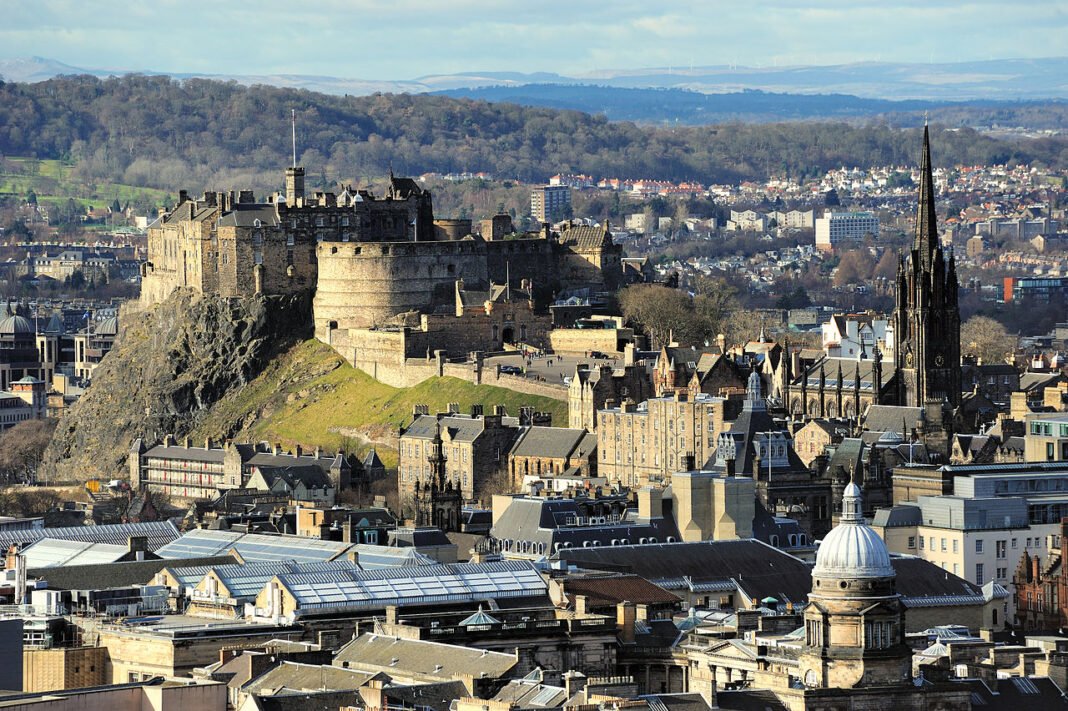
Edinburgh (530,000 residents) is a strikingly handsome capital. The medieval Old Town crowns the volcanic crag of Castle Rock, the Georgian New Town’s elegant crescents and squares descend towards the Firth of Forth, and Arthur’s Seat — an extinct volcano above Holyrood Palace — rounds out a cityscape so dramatic, in both natural and architectural terms, that the whole city centre is a UNESCO World Heritage Site. The capital wears three personalities at once: a city of history (the castle, the Royal Mile, Mary Queen of Scots’ apartments in Holyrood); a city of festivals (the August Edinburgh International Festival, the Festival Fringe, and the Hogmanay New Year celebrations); and a city of contemporary culture (Enric Miralles’ Scottish Parliament building, the National Museum of Scotland, the Scotch Whisky Experience).
- Edinburgh Castle: The fortress at the summit of Castle Rock — occupied since at least the Iron Age, built up over seven centuries of Scottish history — houses the Scottish Crown Jewels (the Honours of Scotland, the oldest crown jewels in the British Isles), the Stone of Destiny (on which Scottish and English kings were crowned), and the One O’Clock Gun (fired daily at 1pm). Perched 80m above the city on three sides of sheer volcanic cliff, it is the defining feature of Edinburgh’s skyline
- The Royal Mile: The medieval street linking Edinburgh Castle to the Palace of Holyroodhouse (the monarch’s Scottish residence) is lined with closes (narrow alleyways burrowing into the Old Town’s medieval residential layers), St Giles’ Cathedral (the High Kirk of Edinburgh, where John Knox preached), the Scottish Parliament building, and the dozens of whisky shops, tartan emporiums, and independent traders that make it the capital’s busiest street
- Arthur’s Seat: The 251m summit of the ancient volcano above Holyrood Park — a 45-minute walk from the city centre — gives the best view of Edinburgh’s roofscape, the Firth of Forth, and, on clear days, the Highland mountains to the north. It is a pocket of wilderness within the city, and the favourite walk for locals and visitors alike
- Edinburgh Festival Fringe: The August Fringe (typically the second to fourth weeks of the month) turns Edinburgh into the world’s largest arts festival — some 3,500 shows across 300-plus venues in a city of 530,000. Theatre, comedy, dance, circus, and spoken word fill every available space from the Usher Hall to pub basements, so booking ahead for popular shows is essential

The Scottish Highlands: Europe’s Last Wilderness
The Scottish Highlands — the mountainous country north and west of the Highland Boundary Fault, taking in roughly half of Scotland’s land area and under 5% of its population — make up the last sizeable wild mountain region in the British Isles, and one of the best in Europe. The Munros (mountains above 914m, of which Scotland has 282), the Atlantic-facing sea lochs of the west coast, the ancient Caledonian pine forests of the Cairngorms and Glen Affric, and a terrain with very few roads and very few people together create an outdoor setting of genuine wild character.
- Glencoe: Scotland’s grandest glaciated valley — a U-shaped trench carved between the Three Sisters of Glencoe (the volcanic ridges of Bidean nam Bian) and the Aonach Eagach ridge — sits 90 minutes from Glasgow and draws more cameras than any other Highland scene. The 1692 Massacre of Glencoe (the Campbells’ slaughter of the MacDonalds, under government orders) lends the valley a historical darkness that the scenery only sharpens
- Loch Ness: The 37km lake in the Great Glen (the geological fault running northeast from Fort William to Inverness) is a global byword — the Nessie legend (the 1933 photograph, the 90 years of monster hunts, the Loch Ness Centre in Drumnadrochit) draws millions to what is, monster or no monster, a genuinely arresting stretch of natural scenery
- Cairngorms National Park: The largest national park in the UK (4,528km²) takes in the high plateau of the Cairngorms (Britain’s only sub-Arctic ecosystem, with genuine tundra habitats above 1,100m), the Strathspey valley’s ancient pine forests and reindeer herd, and the ski resorts of Cairngorm Mountain and the Lecht. Ben Macdui (1,309m, the second-highest mountain in Britain) can be reached from the Cairngorm Mountain car park

Isle of Skye: Scotland’s Most Beautiful Island
Skye — the biggest island of the Inner Hebrides, joined to the mainland by the Skye Bridge since 1995 — has become Scotland’s busiest destination outside Edinburgh, for reasons that are obvious the moment you arrive: the Cuillin (the most technically demanding mountains in Britain, a gabbro ridge of 12 Munros with exposed scrambling and, on several routes, genuine mountaineering), the Trotternish Ridge (the basalt cliffs and pinnacles of the Old Man of Storr and the Quiraing), the quality of the light on Atlantic water, and the island’s living Gaelic culture (still spoken by a fair share of Skye’s 13,000 residents).

Glasgow: Scotland’s Cultural Engine
Glasgow (650,000 residents) is Scotland’s largest city and its liveliest. This is the place that built the Victorian world’s ships in the Clyde shipyards, and that has remade itself since deindustrialisation as one of Britain’s leading cultural cities. The Kelvingrove Art Gallery and Museum (among Scotland’s busiest free attractions, with a collection spanning Rennie Mackintosh, Dalí, and the European masters), the Glasgow School of Art (Charles Rennie Mackintosh’s masterwork, under restoration after fire damage), the Kelvin Hall, the Riverside Museum (Zaha Hadid’s transport museum on the Clyde), and the Barrowland Ballroom (a much-loved live music venue) together mark out a city of real cultural ambition.

Frequently Asked Questions
What makes Edinburgh one of Europe’s most extraordinary cities?
Edinburgh — 530,000 residents, Scotland’s capital — is one of Europe’s handsomest capitals: the medieval Old Town crowning the volcanic crag of Castle Rock, the Georgian New Town’s elegant crescents and squares descending to the Firth of Forth, and Arthur’s Seat’s extinct volcanic summit above Holyrood Palace combine into a cityscape so dramatic, both naturally and architecturally, that the whole city centre is a UNESCO World Heritage Site. Edinburgh Castle (the fortress at the summit of Castle Rock, occupied since the Iron Age, housing the Scottish Crown Jewels — the Honours of Scotland, the oldest crown jewels in the British Isles — and the Stone of Destiny) is the country’s most visited paid attraction. The Royal Mile (linking Edinburgh Castle to the Palace of Holyroodhouse, passing St Giles’ Cathedral, the Real Mary King’s Close, and the closes and wynds of the medieval Old Town) offers the most history-laden street walk in Britain. The capital’s August festival season — the Edinburgh International Festival, the Festival Fringe (the world’s largest arts festival, with 50,000-plus performances at 300-plus venues over 25 days), the Royal Military Tattoo, and the Book Festival — turns Edinburgh into the planet’s leading arts festival city for three weeks each year. The Hogmanay New Year celebrations (one of the world’s biggest New Year’s Eve parties, with street events from 30 December to 1 January) round off the cultural calendar.
What does Glasgow offer that Edinburgh does not?
Glasgow — 650,000 residents, Scotland’s largest city, on the River Clyde — is Edinburgh’s opposite and its complement: where Edinburgh is polished, formal, and tourist-facing, Glasgow is gritty, direct, and proudly working-class in its self-image, with a warmth and humour that many visitors warm to more quickly. Its cultural infrastructure is deep and largely free: the Kelvingrove Art Gallery and Museum (one of the busiest free museums in the UK, with around 1.2 million visitors a year, holding one of the best collections of 19th-century Scottish and European painting in Britain outside London’s national collections), the Riverside Museum of Transport (Zaha Hadid, 2011, a landmark of 21st-century Scottish architecture), and the Hunterian Museum and Art Gallery at the University of Glasgow (the oldest public museum in Scotland, 1807) give the city a cultural weight that rivals the capital. The Merchant City (Glasgow’s regenerated 18th-century commercial quarter, now its dining and nightlife district) and the West End (Byres Road, the Botanic Gardens, Partick) supply the city’s most liveable neighbourhood character. Charles Rennie Mackintosh’s Glasgow School of Art (under restoration after two fires) and the Willow Tea Rooms stand for the Art Nouveau genius that made Glasgow internationally famous in the 1900s.
What do the Scottish Highlands offer as a travel destination?
The Scottish Highlands — the mountain and moorland country north and west of the Highland Boundary Fault, covering roughly half of Scotland’s area but home to only 5% of its population — are Britain’s last great wilderness and rank among Europe’s best mountain landscapes. Glencoe (a glaciated U-shaped valley gouged below the collapsed Glencoe caldera, flanked by the Three Sisters and Bidean nam Bian, 1,150m) is Scotland’s grandest mountain valley and the site of the 1692 Massacre of Glencoe (when government troops under Campbell command killed 38 MacDonald clan members, a betrayal of hospitality that remains the rawest event in Highland memory). The Cairngorms National Park (4,528 square kilometres, the largest national park in the British Isles, with 55 Munros) holds the last true arctic-alpine ecosystem in Britain — a high plateau where ptarmigan, mountain hares, red squirrels, ospreys, and capercaillie hang on. Loch Ness (Scotland’s best-known loch, 37km long, 230m deep, holding more freshwater than all English and Welsh lakes combined) draws visitors to the Great Glen for the Nessie legend, and offers a fine cycle and canoe route via the Caledonian Canal. The North Coast 500 (a 516-mile circular driving route from Inverness around the north and northwest coast) has become Britain’s signature road trip since its marketing launch in 2015.
What do Scotland’s islands offer as travel destinations?
Scotland’s roughly 790 islands, inhabited and uninhabited — scattered across the Firth of Clyde, the Hebrides (Inner and Outer), Orkney, and Shetland — count among Europe’s richest cultural and natural landscapes. The Isle of Skye (80km long, linked to the mainland by the Skye Bridge since 1995) is Scotland’s busiest island: the Cuillin Ridge (Britain’s most dramatic mountain range, a gabbro and basalt complex of jagged peaks that holds the only Munros requiring rock-climbing to complete), the Old Man of Storr (the pinnacle rock formation above the Trotternish Ridge), the Fairy Pools (glacial swimming holes below the Black Cuillin), and Dunvegan Castle (the oldest continuously inhabited castle in Scotland, home of Clan MacLeod since the 13th century). The Outer Hebrides — Lewis and Harris (the largest island, known for Harris Tweed, the world’s only handwoven cloth protected by Act of Parliament), the Callanish Standing Stones (2,900 BCE, older than Stonehenge), and the white sand beaches of the Uists — hold the strongest living Gaelic-speaking community in Scotland. Orkney (the archipelago north of Caithness) preserves the foremost prehistoric landscape in northern Europe: Skara Brae (a Neolithic village occupied 3100–2500 BCE, the best-preserved Stone Age village in Europe), the Ring of Brodgar, the Stones of Stenness, and Maeshowe (a chambered cairn aligned for the winter solstice), together a UNESCO World Heritage Site.
What is Scotland’s whisky culture and why does it define national identity?
Scotland’s Scotch whisky industry — worth around £5.4 billion a year in exports (the UK’s biggest food and drink export by value, with more than 40 bottles leaving the country every second) — is far more than an economic story: it is the country’s best-known cultural export and the liquid expression of its landscape, water, and traditions. The five whisky regions (Speyside, Highlands, Lowlands, Islay, and Campbeltown) each turn out whiskies of distinct character. Speyside (the Spey River valley, home to Glenfiddich, The Macallan, Glenlivet, and 50-plus other distilleries — the densest concentration of Scotch whisky production anywhere) makes the elegant, fruit-forward single malts that lead the premium market; Islay (the island off Argyll, home to Lagavulin, Laphroaig, Ardbeg, and six other distilleries) makes the heavily peated, smoky, medicinal drams at the bold end of Scotch’s flavour range. The Scotch Whisky Experience on Edinburgh’s Royal Mile gives newcomers their introduction, while the Speyside Whisky Trail and the Islay Festival of Music and Malt (Fèis Ìle, May) reward the dedicated. The Macallan’s visitor centre, designed by Rogers Stirk Harbour + Partners and opened in 2018, ranks as the boldest distillery investment in the industry’s history.