
Outdoor Activities in Ohio 2026: Hocking Hills, Lake Erie, and the Appalachian Foothills
Ohio’s outdoor recreation is consistently underestimated — a state associated primarily with flat agricultural landscape and industrial cities actually contains the Hocking Hills’ dramatic sandstone gorges (the most visited state park system in Ohio, attracting more than 4 million visitors annually), the Lake Erie shoreline’s barrier islands and offshore fishing (among the best walleye fishing in the United States), the Cuyahoga Valley National Park (a protected river valley connecting Cleveland and Akron with 125 miles of trails through forest, wetlands, and historic canal corridor), and the Appalachian foothills of southeastern Ohio (an often-overlooked landscape of steep-sided hills, clear streams, and genuine rural character that provides outdoor experiences comparable to neighboring West Virginia or Kentucky at less notoriety and fewer crowds). Ohio’s state park system, with 75 parks and state forests, provides trail access and campground infrastructure across the state.
Hocking Hills: Ohio’s Most Spectacular Scenery
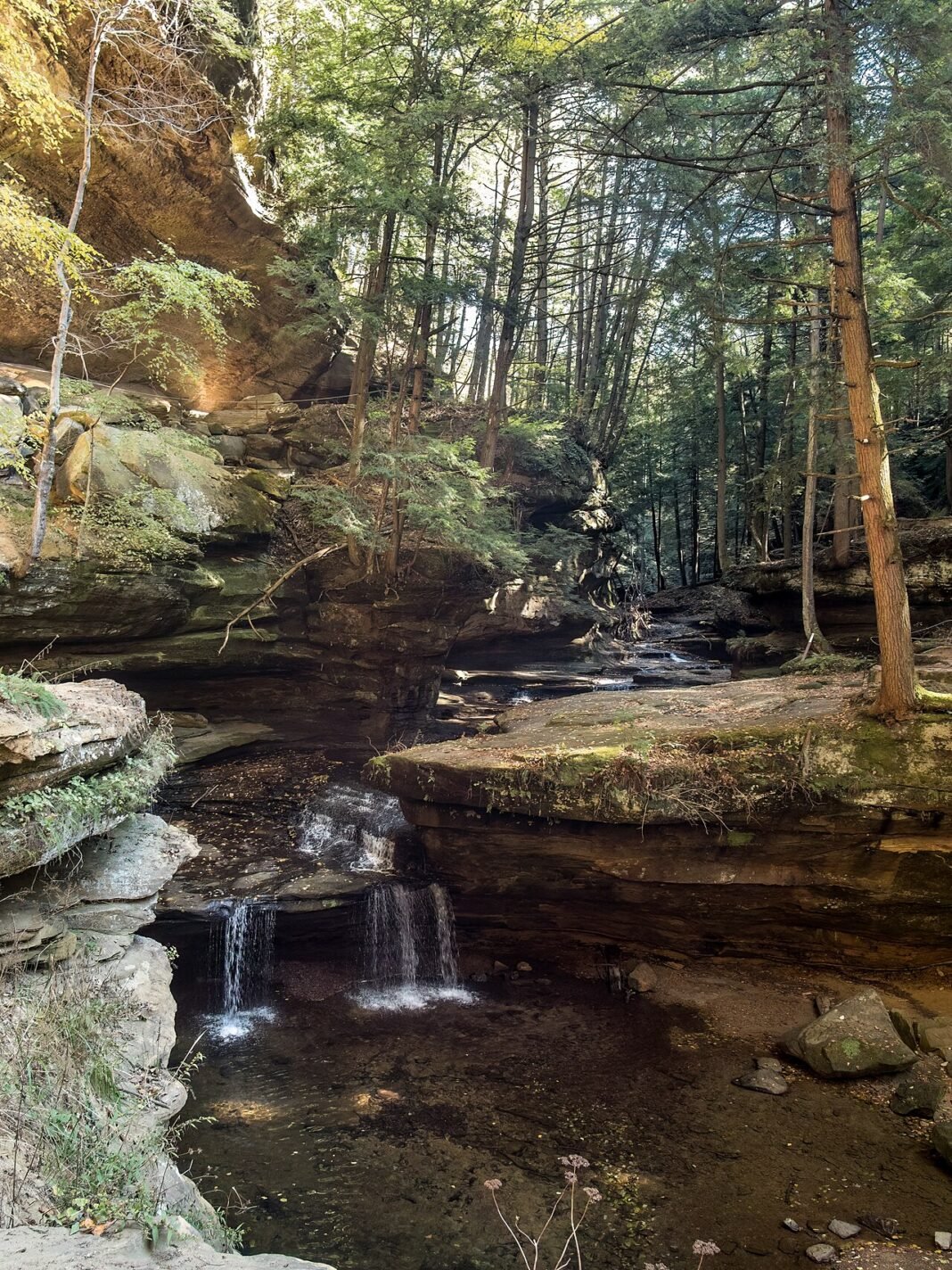
Hocking Hills State Park, in the sandstone plateau of southeastern Ohio, is the state’s premier outdoor destination — a landscape of recess caves, waterfalls, and hemlock-lined gorges carved from the Black Hand sandstone that underlies the Appalachian foothills. Old Man’s Cave, the park’s signature attraction, is a system of recess caves along Queer Creek where waterfalls and the deep gorge create scenery genuinely comparable to the Appalachian destinations of neighboring states. Ash Cave — a single recess cave 700 feet wide and 100 feet deep, the largest recess cave east of the Mississippi — is accessible by a short, level trail and provides one of the most dramatic geological experiences in the state. Cedar Falls, the tallest waterfall in the Hocking Hills system, requires a moderate hike to reach and provides a rewarding destination in all seasons. The Hocking Hills region also supports zip line tours, canoe and kayak rentals on the Hocking River, and rock climbing at Rockbridge State Nature Preserve.
Cuyahoga Valley National Park
Cuyahoga Valley National Park, established in 2000, protects 33,000 acres of the Cuyahoga River valley between Cleveland and Akron — making it the only national park in Ohio and one of the few national parks adjacent to major metropolitan areas in the United States. The Ohio and Erie Canal Towpath Trail, a 20-mile hiking and cycling trail along the historic canal corridor, provides accessible outdoor recreation for the millions of residents in the Cleveland-Akron metropolitan area. The Brandywine Falls — a 65-foot waterfall accessible from a short boardwalk trail — is the park’s signature natural feature. The Cuyahoga Valley Scenic Railroad provides passenger train service through the park from May through October, offering a different perspective on the river valley landscape. The park’s extensive wetlands attract diverse birdlife, and the annual winter hawk watch at Hawk Hill draws birders from across the region.
Lake Erie: Islands, Beaches, and Walleye
Lake Erie’s Ohio shoreline provides water recreation anchored by the Lake Erie Islands — Kelleys Island and South Bass Island (Put-in-Bay), accessible by ferry from Sandusky and Port Clinton, provide summer resort destinations with beaches, boating, and the annual Lake Erie walleye fishing season that draws anglers from across the Midwest. Kelleys Island’s glacial grooves — limestone bedrock scraped by glacial movement into channels up to 35 feet wide and 10 feet deep — provide geological spectacle in a state park setting. The Lake Erie shoreline’s Headlands Beach State Park, east of Cleveland, maintains the longest natural sand beach in Ohio, with good swimming from June through early September. Maumee Bay State Park near Toledo offers excellent bird watching during spring and fall migrations, with access to significant shorebird concentrations.
Wayne National Forest and the Ohio River Hills
Wayne National Forest, Ohio’s only national forest, provides backcountry camping and trail access across three units in the southeastern part of the state — the Ironton, Athens, and Marietta units collectively encompass over 241,000 acres of mixed hardwood forest, stream corridors, and reclaimed mining landscapes. The Vesuvius Recreation Area (Ironton Unit) has a scenic lake and trail system ideal for day hiking and camping. The forest road system provides access to primitive camping throughout the growing season. The adjacent Ohio River hills, particularly in the counties of Lawrence, Gallia, and Meigs, provide rugged terrain and scenic river views that most Ohioans never see.
Cycling and Scenic Byways
Ohio has developed an extensive network of rail-trail cycling routes that make it one of the best cycling states in the Midwest. The Towpath Trail in Cuyahoga Valley (20 miles, paved), the Heritage Rail Trail in Wayne National Forest, and the Little Miami Scenic Trail (78 miles following the Little Miami River from Cincinnati’s eastern suburbs) are among the best multi-use paths in the state. Ohio’s Amish Country in Holmes County provides a distinctive cycling experience through an agricultural landscape largely unchanged from the 19th century — gently rolling hills, working farms, and the distinctive sight of horse-drawn buggies sharing roads with cyclists. The covered bridge country of Ashtabula County in northeastern Ohio makes for excellent fall foliage touring.
Ohio Outdoor Recreation Year-Round
Ohio’s outdoor recreation calendar is four-season — the Lake Erie ice fishing season (January–March, targeting walleye and yellow perch on the frozen western basin), the spring wildflower bloom in Hocking Hills and the Oak Openings Metropark (Ohio’s rarest plant communities), summer paddling on the Mohican River and the Cuyahoga River’s Gorge section, and the fall color migration through the Ohio Appalachian foothills that rivals any Midwest display. The state’s 75 state parks provide consistent access to swimming, camping, and hiking at minimal cost, and the Buckeye Trail’s 1,444-mile loop through the state connects virtually every major natural area. For residents of a state that most outsiders underestimate for outdoor recreation, Ohio’s reality is a landscape of varied and accessible natural assets that reward consistent engagement.
Planning Your Outdoor Adventure
The outdoor experiences described in this guide reward practical preparation. For wilderness and protected areas, check trail conditions, permit requirements, and seasonal access with the relevant land management authority before departure — trail closures, fire restrictions, and entry quotas can change quickly, and many high-demand parks now require advance reservations that were not needed in previous years. Weather in Ohio can change rapidly, particularly in mountain terrain and during shoulder seasons; a layered approach with a waterproof outer shell is advisable for most outdoor pursuits regardless of the season. For water-based activities — paddling, snorkeling, diving, surfing — check current conditions with local outfitters who will have the most accurate and up-to-date information. Leave No Trace principles apply throughout: pack out everything you bring in, stay on established trails, give wildlife space, and leave natural features undisturbed for the next visitor.