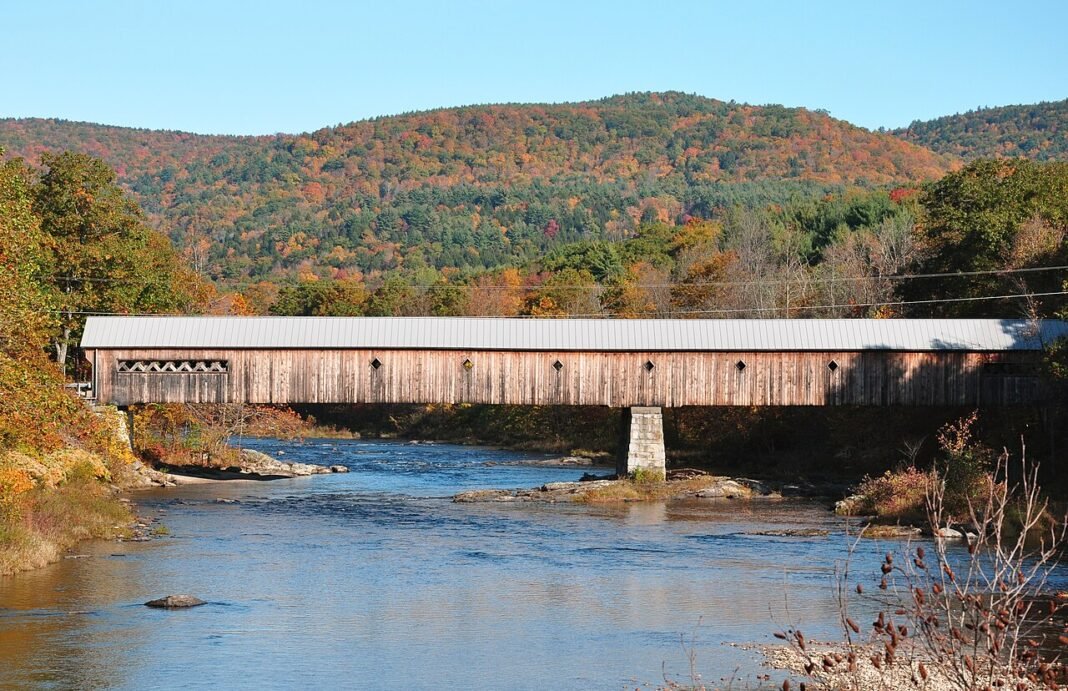
Moving to Vermont is a decision that requires genuine alignment between lifestyle expectations and what the state actually offers — Vermont rewards households seeking outdoor recreation, community character, four-season beauty, and a pace of life distinct from the urban corridor, and it actively disadvantages those expecting urban scale, warm winters, affordable housing relative to coastal alternatives, or the commercial variety of larger states. The state’s Remote Worker Grant Program (up to $7,500 for qualifying relocators) reflects a deliberate effort to attract the demographic most likely to thrive here — remote workers who can bring their income but leave their metropolitan commutes behind. The practical relocation process is straightforward; the cultural and lifestyle adjustment is more significant than the paperwork.

Driver’s License and Vehicle Registration
- License deadline: 60 days after establishing Vermont residency
- DMV locations: Main offices in Montpelier, Burlington, Rutland, St. Johnsbury, and Springfield; appointment recommended
- Required documents: Proof of identity (passport or birth certificate + Social Security card), proof of Vermont residency (two documents: utility bill, bank statement, lease), out-of-state license
- Knowledge test: Required for most new residents; waived for commercial or specialty licenses by reciprocity
- Vehicle registration: Complete within 60 days; Vermont requires a Vermont safety inspection within the first registration year
- REAL ID: Vermont issues REAL ID-compliant licenses — request specifically when applying
Vermont’s Remote Worker Grant Program
Vermont‘s “New Relocating Worker” grant program, funded by the State of Vermont, offers financial incentives for qualifying remote workers who establish Vermont residency:
- Grant amount: Up to $7,500 in the first year (reimbursement of eligible relocation and remote-work expenses)
- Eligibility: Must be employed full-time by an employer outside Vermont OR be self-employed with clients primarily outside Vermont; must establish Vermont residency; must not have lived in Vermont within the previous year
- Eligible expenses: Moving costs, computer equipment, co-working space memberships, broadband installation
- Application: Through the Vermont Agency of Commerce and Community Development; applications accepted on a rolling basis subject to funding availability
- Note: Program funding is appropriated annually and may be limited — apply early in the fiscal year
Heating and Winter Preparation
Vermont winters are among the most severe in the contiguous United States, and winter preparation is a genuine relocation consideration, not a minor detail:
- Heating fuel: Most Vermont homes heat with oil, propane, or wood (cord wood is a Vermont staple); electric heat is increasingly common but expensive given Vermont’s electricity rates; natural gas is available only in Burlington and some Chittenden County communities
- Annual heating costs: $2,500–$4,500 for a typical Vermont home depending on fuel type, home size, and insulation quality; homes built before 1980 often have significant air-sealing needs
- Weatherization programs: Efficiency Vermont (the nation’s first statewide efficiency utility) offers weatherization incentives and rebates for insulation upgrades, heat pumps, and efficient heating systems
- Winter tires: Not legally required but practically essential for Vermont roads from November through April; all-wheel drive is common but does not substitute for winter tires on ice
- Snow removal: Budget for plowing (driveway contracts run $400–$800 per season) or purchase a snowblower for any property with significant driveway
Broadband and Connectivity
Vermont’s broadband infrastructure has historically been the state’s most significant practical limitation for remote workers — the combination of rural density and difficult terrain meant that high-speed internet was unavailable in many desirable communities as recently as 2020. The situation has improved substantially:
- Vermont Community Broadband Board: State-funded initiative deploying fiber to underserved communities through Communication Union Districts (CUDs)
- Burlington and suburbs: Fiber optic service available through Burlington Telecom and private providers; 1Gbps service available
- Rural Vermont: Coverage varies significantly by town; verify specific address connectivity before purchasing rural property — this is essential due diligence for any remote worker
- Starlink: Covers virtually all of Vermont as a backup or primary connection for truly rural locations; $120/month for residential service, appropriate for video conferencing and most remote work
Healthcare Access
Vermont’s healthcare system is anchored by the University of Vermont Medical Center in Burlington (the only Level I trauma center in Vermont and much of northern New Hampshire), with OneCare Vermont as the state’s dominant accountable care organization. The state’s universal primary care initiative (Blueprint for Health) provides good access to primary care in most communities, though specialist access can require travel to Burlington or Boston for complex cases. The Green Mountain Care Board regulates hospital rates, making Vermont’s healthcare pricing unusually transparent. Health insurance premiums through Vermont Health Connect (the state marketplace) are available for remote workers and self-employed individuals; income-based subsidies apply under ACA guidelines.
Employment and Education
Vermont’s employment landscape is anchored by healthcare (the University of Vermont Medical Center and its network of affiliated hospitals and clinics is the state’s largest employer), education (University of Vermont, Middlebury College, Norwich University, and the state college system employ thousands), state government, and the tourism and hospitality industry serving the ski resorts and foliage corridor. Technology and financial services employment is growing but remains thin compared to major metro areas — remote workers bringing established employment relationships have a structural advantage over those seeking new Vermont-based positions. Vermont’s public schools vary significantly by district, with Chittenden County schools (particularly South Burlington, Williston, and Shelburne) ranking consistently among the strongest. The state’s Act 60 education funding equalization system creates unusual uniformity in per-pupil spending statewide, making even smaller rural districts reasonably well-resourced relative to national benchmarks.
Preparing for Your Move
The logistical side of relocating to Vermont follows a familiar sequence regardless of where you are coming from: secure housing before or immediately after arrival, transfer any professional licenses if your occupation requires it, register your vehicle and update your driver’s licence within the timeframe required by local law (typically 30 to 90 days for new residents), and register to vote at your new address. Connecting with community organizations, sports clubs, neighborhood associations, or professional networks early in the process can dramatically accelerate the sense of belonging. In many parts of Vermont that have grown rapidly over the past decade, a significant proportion of the population has relocated from elsewhere, which means that being new to the area is genuinely normal — and that the infrastructure for meeting people and building a life from scratch is well established.
Frequently Asked Questions
What are the driver’s license and vehicle registration requirements when moving to Vermont?
Driver’s license: must be obtained within 60 days of establishing Vermont residency. Requires proof of identity (passport or birth certificate plus Social Security card), two Vermont residency documents (utility bill, bank statement, or lease), and your out-of-state license. A knowledge test is required for most new residents — waived for commercial or specialty license holders under reciprocity agreements. REAL ID-compliant licenses are available; request specifically at time of application. Vehicle registration: complete within 60 days at a Vermont DMV office. Vermont requires a Vermont safety inspection within the first registration year — an annual inspection sticker is required thereafter. Main DMV offices are in Montpelier, Burlington, Rutland, St. Johnsbury, and Springfield; appointments are recommended.
What is Vermont’s Remote Worker Grant Program and who qualifies?
Vermont’s “New Relocating Worker” grant program offers financial incentives of up to $7,500 in the first year for qualifying remote workers who establish Vermont residency. Eligibility requires full-time employment by an employer based outside Vermont, or self-employment with clients primarily based outside Vermont, combined with establishing Vermont residency and not having lived in Vermont within the previous year. Reimbursable expenses include moving costs, computer equipment, co-working space memberships, and broadband installation costs. Applications are processed through the Vermont Agency of Commerce and Community Development on a rolling basis, subject to annual funding availability — applying early in the fiscal year improves the likelihood of receiving the grant before funds are exhausted. This program directly reflects Vermont’s strategy of attracting remote workers whose incomes are earned from outside the state.
What winter heating and preparation costs do Vermont residents face?
Vermont winters are among the most severe in the contiguous United States. Most Vermont homes heat with oil, propane, or cord wood — natural gas is available only in Burlington and parts of Chittenden County. Annual heating costs range from $2,500 to $4,500 for a typical home, depending on fuel type, home size, and insulation quality; homes built before 1980 often have significant air-sealing needs that substantially increase heating costs until addressed. Efficiency Vermont — the nation’s first statewide efficiency utility — offers weatherization incentives and rebates for insulation upgrades, heat pumps, and efficient heating system installations. Winter tires are not legally required but are practically essential for Vermont roads from November through April; all-wheel drive does not substitute for dedicated winter tires on ice. Budget for snow removal: driveway plowing contracts run $400–$800 per season.
How reliable is broadband internet access in Vermont?
Vermont’s broadband infrastructure has been the state’s most significant practical limitation for remote workers, but the situation has improved substantially since 2020. Burlington and suburban Chittenden County have fiber optic service available through Burlington Telecom and private providers, with 1Gbps service options. The Vermont Community Broadband Board is deploying fiber to underserved communities through Communication Union Districts (CUDs) funded by state and federal broadband expansion programs. Rural Vermont coverage varies significantly by specific address and town — verifying connectivity at any specific rural property is essential due diligence before purchasing, not an afterthought. Starlink satellite internet covers virtually all of Vermont and provides a viable primary or backup connection for truly rural locations at approximately $120/month residential, sufficient for video conferencing and most remote work tasks.
What is Vermont’s employment base and top school districts for relocating families?
Vermont’s employment landscape is anchored by healthcare (the University of Vermont Medical Center in Burlington is the state’s largest employer and the only Level I trauma center in Vermont and much of northern New Hampshire), education (UVM, Middlebury College, Norwich University, and the Vermont State University system), state government, and the tourism and hospitality industry serving ski resorts and the fall foliage corridor. Remote workers who bring established employment relationships from outside Vermont have a structural advantage over those seeking Vermont-based positions, as the technology and financial services employment base is thinner than major metro areas. Top school districts: Chittenden County is the strongest region, particularly South Burlington, Williston, and Shelburne school districts. Vermont’s Act 60 education funding equalization creates unusual per-pupil spending uniformity across districts, making even rural districts reasonably well-resourced by national standards.