
North Carolina spans 500 miles from the Atlantic Ocean’s Outer Banks barrier islands to the Great Smoky Mountains — a range that covers three distinct physiographic regions (the Coastal Plain, the Piedmont, and the Mountains), each with its own character and its own kind of travel. Out on the Outer Banks, 200 miles of barrier islands off the northeastern coast, the Wright Brothers made their first controlled powered flights in 1903, and Cape Hatteras National Seashore protects 70 miles of federally managed beaches, dunes, and maritime forest. The result is a beach experience that is uniquely North Carolinian in its mix of natural drama and history. The Blue Ridge Parkway, the 469-mile scenic highway that runs the Appalachian crest from Shenandoah National Park in Virginia to Great Smoky Mountains National Park in North Carolina, passes through Asheville and draws leaf-peepers from across the East every fall. And the Research Triangle of Raleigh, Durham, and Chapel Hill has grown into one of the South’s leading centers for science, technology, and the arts.
Asheville: The Mountain Arts Capital
Asheville, a city of 95,000 in the Blue Ridge Mountains where the French Broad and Swannanoa Rivers meet, has spent the past two decades building a reputation as the leading small arts city in the American South. Craft brewing anchors the scene — more than 40 breweries operate within city limits, giving Asheville one of the highest brewery-per-capita ratios of any US city its size. The River Arts District along the French Broad has turned former industrial buildings into studios and galleries for more than 200 working artists; the Orange Peel and the Grey Eagle rank among the country’s better-known independent music venues, and buskers define the Lexington Avenue corridor. Add the surrounding mountains and the trail access that comes with them, and you have a place that has drawn creative professionals, remote workers, and retirees at a pace that reshaped the city’s housing market over the past decade.
The Biltmore Estate — the 8,000-acre mountain retreat George Vanderbilt built between 1889 and 1895, whose 250-room French Renaissance chateau is the largest privately owned home in the United States — is Asheville’s headline attraction. The house tours, the Frederick Law Olmsted-designed grounds and gardens, the winery (among the most-visited in the eastern US), and the seasonal events keep visitors arriving year-round. Admission runs $80–$130 per adult depending on the season, which is steep, but the scale of the experience earns it for anyone with a real interest in the Gilded Age: the Vanderbilt art collection, the 65 fireplaces, the indoor pool, the bowling alley, and gardens that Olmsted designed to hold up in every season.
The Outer Banks
A 200-mile chain of barrier islands runs from the Virginia border south to Ocracoke Island, and this is North Carolina‘s signature geographic feature, one of the great natural and historical coastal landscapes on the Atlantic seaboard. Cape Hatteras National Seashore, established in 1953 as the first national seashore in the country, protects 70 miles of barrier-island beaches, dunes, and maritime forests between Bodie Island and Ocracoke, the largest stretch of undeveloped barrier island on the East Coast south of Maine. The Cape Hatteras Lighthouse (1870, 198 feet tall, the tallest brick lighthouse in North America) was physically moved 2,900 feet inland in 1999 to save it from shoreline erosion, one of the boldest historic-preservation engineering projects in American history.
.jpg?width=1280)
The history here runs deeper than the lighthouse. Kill Devil Hills, where Wilbur and Orville Wright ran their powered-flight experiments, is preserved as the Wright Brothers National Memorial; the visitor center museum, the life-size reproductions of the 1903 Flyer, and the granite monument on Kill Devil Hill mark the spot where human aviation began on December 17, 1903. The Graveyard of the Atlantic Museum in Hatteras village documents the hundreds of shipwrecks off treacherous Diamond Shoals, where the warm Gulf Stream meets the cold Labrador Current in a zone of fog, wind, and shallow water that made this coast among the deadliest in the world for sailing vessels. For beach recreation, Nags Head, Kill Devil Hills, and the Dare County beach towns north of the National Seashore offer the lifeguarded swimming and beach access that the seashore itself does not.
The Blue Ridge Parkway and Western North Carolina
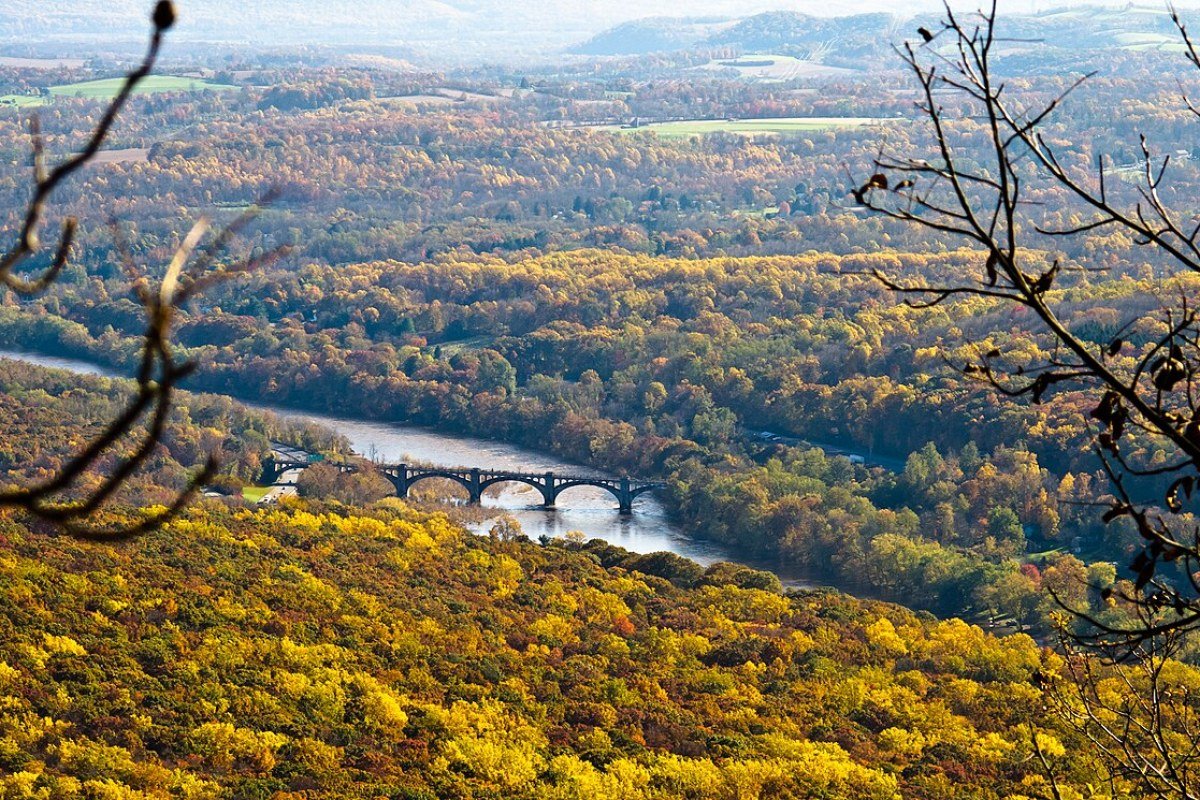
One of the busiest units in the National Park System, the Parkway draws roughly 16 million visitors a year for the overlook views, the fall foliage (peak typically falls in mid-October at the highest elevations and late October lower down), and the trails, waterfalls, and cultural sites along the route. Its North Carolina section, running from the Virginia border south to the park entrance at Cherokee, crosses some of the most rugged mountain terrain in the East; the Grandfather Mountain stretch (milepost 297–305) climbs the Blue Ridge Escarpment, where the mountains drop sharply to the Piedmont foothills and the overlooks open onto the longest views on the road.
One planning note for 2026: Hurricane Helene tore through western North Carolina in September 2024 and damaged long sections of the Parkway. Most of it has since reopened, but about 35 miles remain closed for repairs — chiefly the stretch between Linville Gorge and Mount Mitchell State Park — and park officials expect the full North Carolina route to reopen by the end of 2026. Check the National Park Service road-status page before you drive, and build in a detour or two if your trip runs through that corridor.
Great Smoky Mountains National Park, the most-visited national park in the United States with about 11.5 million recreation visits in 2025, straddles the North Carolina–Tennessee border. The North Carolina entrance at Cherokee opens onto the Oconaluftee Visitor Center, the Mountain Farm Museum (an outdoor collection of pioneer farm buildings relocated to the park), and Newfound Gap Road, which climbs to the Appalachian Trail crossing at Newfound Gap (5,046 feet). The park’s highest point, reached from the Tennessee side, was officially restored to its Cherokee name, Kuwohi, in 2024 (it was long known as Clingmans Dome). A few practical details: parking tags have been required throughout the park since March 2023 ($5 daily, $15 weekly, $40 annual), and the park itself charges no entrance fee. The Cataloochee Valley, in the remote eastern corner of the North Carolina side, is the best place in the eastern United States to watch elk — a herd of roughly 200 animals, descended from elk reintroduced beginning in 2001, grazes the valley meadows at dawn and dusk from September through November.
The Research Triangle: Durham and Chapel Hill
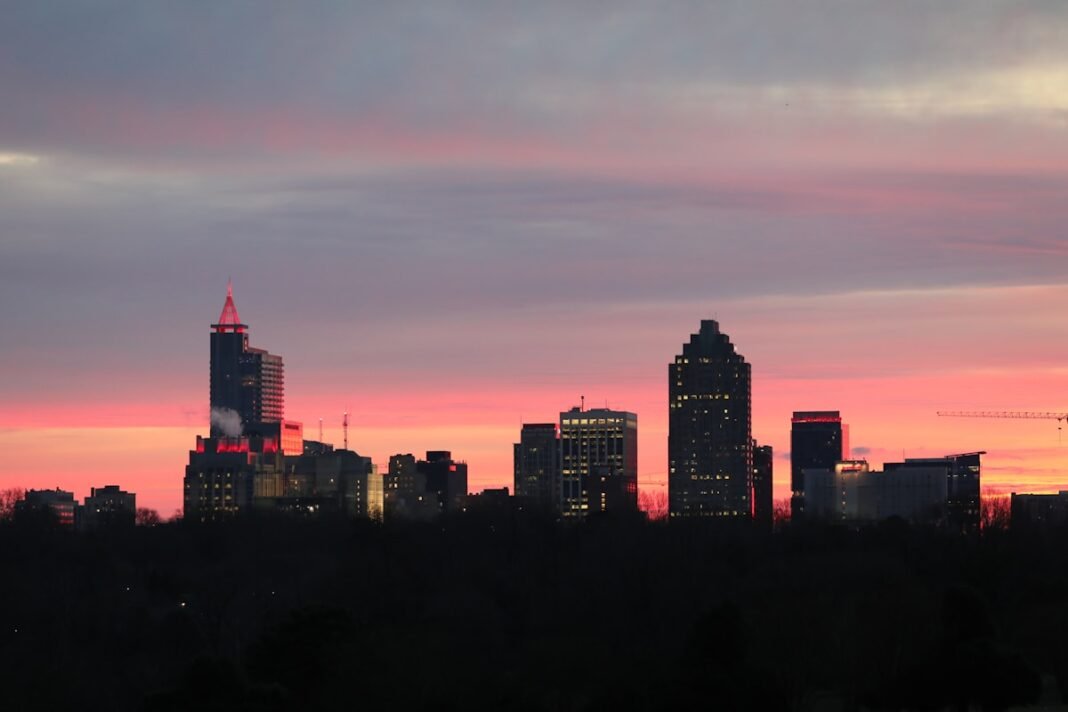
Durham, remade over 40 years from a fading tobacco-manufacturing city into one of the South’s more compelling mid-sized cities, offers the deepest urban experience in the North Carolina Piedmont. At its center sits the American Tobacco Historic District, the former Bull Durham Tobacco factory complex, now a mixed-use development of restaurants, offices, and the Durham Bulls Athletic Park, alongside the Durham Performing Arts Center (DPAC, which has ranked among the country’s top theaters for Broadway touring shows every year since 2011, by ticket sales and attendance), the 21c Museum Hotel, and the emerging Brightleaf district. Chapel Hill, 12 miles west, brings the university-town feel of the University of North Carolina’s flagship campus and the independent restaurants and music venues of Franklin Street. Together with Raleigh’s growing food and arts scene (the Warehouse District, the NC Museum of Art’s 164-acre campus), the Triangle adds up to the broadest metropolitan cultural draw in the Carolinas.
Frequently Asked Questions
What makes Asheville, North Carolina the arts capital of the American South’s small cities?
Asheville, a city of 95,000 in the Blue Ridge Mountains, has built a reputation as the leading small arts city in the American South through: craft brewing (more than 40 breweries within city limits — one of the highest brewery-per-capita ratios of any US city its size); visual arts (the River Arts District along the French Broad River has turned former industrial buildings into studios and galleries for more than 200 working artists); live music (the Orange Peel and the Grey Eagle are nationally known independent venues); and the trail access of the surrounding Blue Ridge. The Biltmore Estate — built between 1889 and 1895 for George Vanderbilt, with a 250-room French Renaissance chateau that is the largest privately owned home in the United States — is Asheville’s headline attraction.
What are the Outer Banks of North Carolina?
The Outer Banks — a 200-mile chain of barrier islands running from the Virginia border south to Ocracoke Island — is the signature geographic feature of the North Carolina coast. Cape Hatteras National Seashore, established in 1953 as the first national seashore in the country, protects 70 miles of barrier-island beaches, dunes, and maritime forests — the largest stretch of undeveloped barrier island on the East Coast south of Maine. The Cape Hatteras Lighthouse (1870, 198 feet tall, the tallest brick lighthouse in North America) was physically moved 2,900 feet inland in 1999 to save it from shoreline erosion. The Wright Brothers National Memorial at Kill Devil Hills marks where human aviation began on December 17, 1903, when Wilbur and Orville Wright made their first controlled powered flights.
Is the Blue Ridge Parkway open in 2026, and when should you visit?
The Blue Ridge Parkway is a 469-mile scenic highway following the Appalachian crest from Shenandoah National Park in Virginia to the entrance of Great Smoky Mountains National Park at Cherokee, North Carolina — one of the busiest units in the National Park System, with roughly 16 million visitors a year. As of 2026, most of the road has reopened after Hurricane Helene (September 2024), but about 35 miles in North Carolina remain closed for repairs — mainly between Linville Gorge and Mount Mitchell State Park — with full reopening expected by the end of 2026; check the National Park Service road-status page before you go. The Grandfather Mountain section (milepost 297–305) offers the best long views on the road, where the mountains drop to the Piedmont foothills. Peak fall foliage usually runs from mid-October at the highest elevations to late October lower down.
What wildlife can you see at Great Smoky Mountains National Park in North Carolina?
The Cataloochee Valley, in the remote eastern corner of the North Carolina side of Great Smoky Mountains National Park, is the best place in the eastern United States to watch elk. A herd of roughly 200 animals — descended from elk reintroduced beginning in 2001 — grazes the valley meadows at dawn and dusk from September through November. The North Carolina entrance at Cherokee opens onto the Oconaluftee Visitor Center, the Mountain Farm Museum (an outdoor collection of pioneer farm buildings relocated to the park), and Newfound Gap Road, which climbs to the Appalachian Trail crossing at Newfound Gap (5,046 feet). Black bears are the park’s most iconic wildlife, with roughly 1,500 living in the park. Parking tags have been required throughout the park since March 2023 ($5 daily, $15 weekly, $40 annual), though there is no entrance fee.
What is the Research Triangle and what cultural experiences does it offer?
The Research Triangle of Raleigh, Durham, and Chapel Hill is one of the South’s leading centers for science, technology, and the arts. Durham has been remade from a fading tobacco-manufacturing city into one of the region’s more compelling cities: the American Tobacco Historic District (former Bull Durham Tobacco factory complex, now restaurants, offices, and the Durham Bulls Athletic Park), the Durham Performing Arts Center (DPAC — ranked among the country’s top theaters for Broadway touring shows every year since 2011), and the 21c Museum Hotel define its character. Chapel Hill (the University of North Carolina’s flagship campus, with independent restaurants and music venues on Franklin Street) and Raleigh (the NC Museum of Art’s 164-acre campus, the Warehouse District food and arts scene) round out the Triangle’s cultural offering.