New Jersey is the most densely populated state in the country — 9.3 million people in 8,722 square miles — and the reputation for density, traffic, and industrial sprawl that this distinction generates obscures a state of unexpected natural and cultural variety. The Jersey Shore, 130 miles of Atlantic coastline from Sandy Hook to Cape May, contains some of the finest barrier island beaches in the northeastern United States and a string of beach towns with characters ranging from the boardwalk commercialism of Wildwood to the Victorian refinement of Cape May to the family-focused community of Point Pleasant. The Pine Barrens — 1.1 million acres of coastal plain forest in the state’s interior — is the largest tract of open space on the Eastern Seaboard between Richmond and Boston, a UNESCO International Biosphere Reserve of pine and oak forest, cedar streams, and carnivorous plant bogs that most visitors to New Jersey never see. The Delaware Water Gap National Recreation Area in the northwest opens up Appalachian Trail hiking and river recreation against a backdrop of the Kittatinny Ridge’s folded geology. And the cultural institutions of Newark, the state’s largest city, complement the museums and markets of the Philadelphia suburbs across the Delaware River. New Jersey rewards visitors who look past the New Jersey Turnpike.

The Jersey Shore
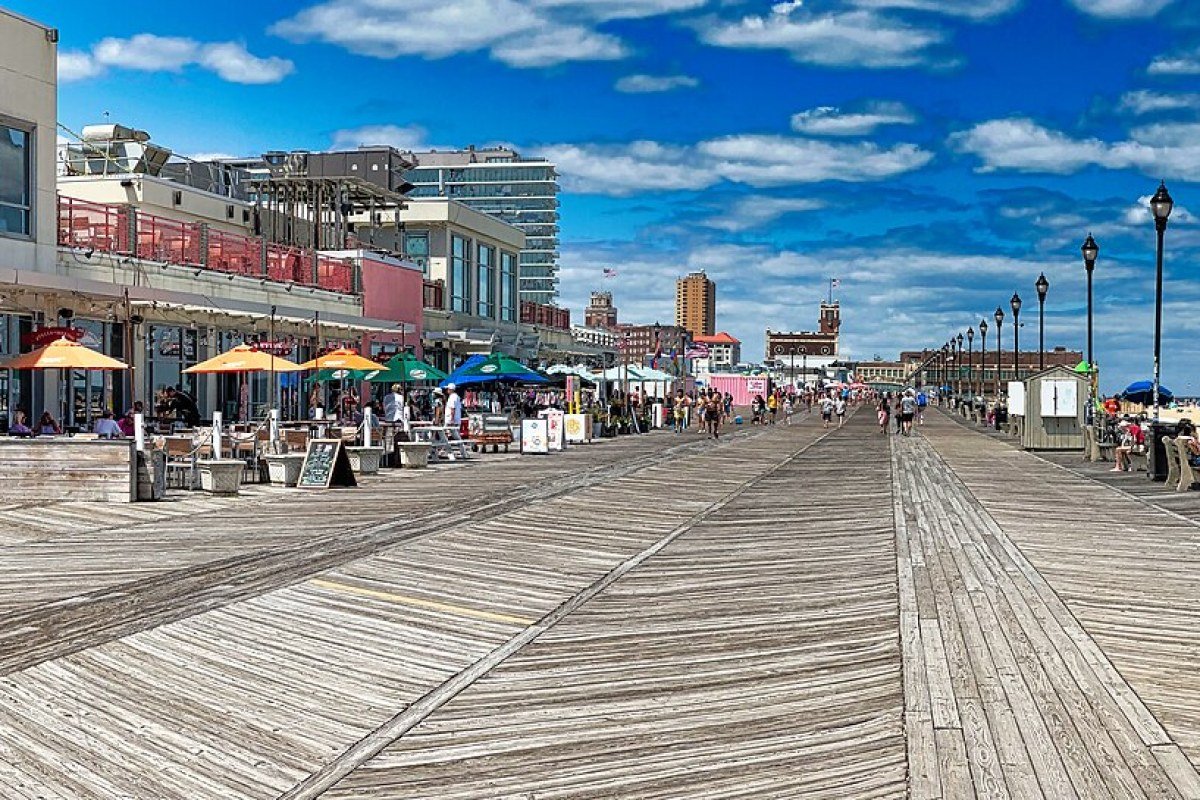
The Jersey Shore’s 130 miles of coastline encompass beaches of genuine quality — hard-packed sand, consistent surf (not Pacific-quality, but adequate for swimming and boogie boarding), and a beach culture that is distinctly northeastern in its energy and traditions. The shore’s character shifts sharply from north to south. Sandy Hook, the barrier peninsula at the northern end of the Monmouth County coast managed as part of Gateway National Recreation Area, offers the finest natural beach experience on the Jersey Shore — an undeveloped barrier spit with 7 miles of ocean beach, New York Harbor views, and the Fort Hancock historic district where 19th-century military fortifications stand at the peninsula’s tip. The Monmouth County shore towns (Sea Bright, Rumson, Long Branch, Asbury Park, Spring Lake, Belmar) each have distinct characters — Asbury Park’s rehabilitation from near-abandonment to a genuine arts and music destination (Stone Pony, the convention hall, the boardwalk’s independent restaurants) is one of the more interesting urban transformations in New Jersey’s recent history.
Ocean City, a dry town (no alcohol sales, by charter since its 1879 Methodist camp meeting founding) on a barrier island between the Atlantic Ocean and the Intracoastal Waterway, is the definitive family shore town — a 2.5-mile boardwalk with amusements, miniature golf, and funnel cake stands, eight miles of beach, and a community culture of vacation home ownership that has sustained the resort since the Victorian era. Wildwood’s boardwalk (two miles, with free beaches unlike the badge-required paid beaches of most New Jersey shore towns) delivers the most aggressively commercial shore experience in the state — the amusement piers, water parks, and motel strip create an environment that is either overwhelming or exhilarating depending on your tolerance for sensory intensity. The Wildwood Doo Wop Preservation Society maintains the Mid-Century Modern motel strip along Ocean Avenue, a collection of 1950s–1960s fantasy architecture (the Starlux, the Singapore, the Lollipop) that has achieved architectural historic significance in its own right.
Cape May: Victorian Resort Town
Cape May, at the southernmost tip of New Jersey where Delaware Bay meets the Atlantic Ocean, preserves the most architecturally coherent collection of Victorian resort buildings in the country — a National Historic Landmark District of more than 600 Victorian-era structures (Italianate, Second Empire, Queen Anne, and Eastlake styles predominate) that have been preserved, restored, and adapted to a contemporary bed-and-breakfast and luxury inn economy that sustains the town year-round. The Cape May Mid-Atlantic Center for the Arts and Humanities organizes walking tours, trolley tours, and Victorian Weekend (an October festival of guided tours and period events) that make the architectural heritage accessible. Cape May’s beaches rank among the best on the Jersey Shore — the town’s position at the tip of the peninsula and the geometry of the shoreline create calmer surf conditions and cleaner water than the barrier island beaches to the north.
Cape May Bird Observatory, operated by New Jersey Audubon, has established Cape May as one of the premier hawk-watching and songbird migration locations in eastern North America — the cape’s position at the end of a peninsula creates a concentration funnel for southbound migrant raptors in September and October that produces daily counts of thousands of sharp-shinned hawks, Cooper’s hawks, ospreys, peregrine falcons, and occasionally rare species that generate excitement throughout the northeastern birding community. Higbee Beach WMA and the Cape May Point State Park hawk watch platform are the observation points that support the annual Cape May Fall Festival, one of the largest birding festivals in the country.
The Pine Barrens
The Pine Barrens — officially the Pinelands National Reserve, established by Congress in 1978 as the first such reserve in the United States — is the most ecologically significant landscape in New Jersey and one of the least-known wilderness areas in the eastern United States. The 1.1 million acres of coastal plain forest covering most of Burlington, Ocean, and Atlantic Counties is underlain by the Kirkwood-Cohansey aquifer, one of the purest freshwater aquifers in the country (17.7 trillion gallons of relatively uncontaminated water, protected by the porous sand substrate that filters surface water before it reaches the aquifer). The cedar streams that flow through the Pinelands — the Mullica, the Batsto, the Great Egg Harbor — are naturally tannin-stained to the color of weak tea by the organic matter of the Atlantic white cedar swamps they drain, running over white sand bottoms through forest that feels closer to coastal South Carolina than suburban New Jersey.

Wharton State Forest, the largest single piece of land in the New Jersey state park system at 122,880 acres, anchors the Pine Barrens recreation infrastructure — the historic Batsto Village (an 18th and 19th-century iron and glassmaking settlement whose preserved buildings are operated as a living history museum), the canoe and kayak route along the Batsto River, and the 53.5-mile Batona Trail (a backpacking trail through the forest’s core) are all accessible from the Atsion Recreation Area and the Batsto Visitor Center. The Pine Barrens supports rare and regionally endemic plant species including native orchids, sundews, pitcher plants, and the rare curly-grass fern found in New Jersey’s pine plains — areas where the forest has been maintained at dwarf height by a historical fire regime that produces a landscape unlike anything else in the eastern states.
Delaware Water Gap
The Delaware Water Gap National Recreation Area, in the northwestern corner of New Jersey where the Delaware River cuts through the Kittatinny Ridge on its way to the coastal plain, holds the state’s most rugged topographic scenery and its best whitewater and hiking access. This is where New Jersey trades suburbs and shore for Appalachian terrain. The gap itself — where the Delaware River cuts a 1,400-foot notch through the ridge — is visible from both the New Jersey and Pennsylvania shores and has been a destination for visitors since the resort hotels of the 19th century made it a fashionable excursion from New York and Philadelphia. The Appalachian Trail crosses the Delaware River at the gap and climbs the New Jersey side of the Kittatinny Ridge, traversing 72 miles through the recreation area and the Stokes State Forest to the north before entering New York. The Dunnfield Creek Natural Area, where a tributary stream drops through a hemlock gorge to the Delaware, offers the most scenic short hike in the recreation area.
Frequently Asked Questions
What makes Cape May the most architecturally significant Victorian resort town in the United States?
Cape May, at the southernmost tip of New Jersey where Delaware Bay meets the Atlantic Ocean, holds the most architecturally coherent collection of Victorian resort architecture in the United States — a National Historic Landmark District of more than 600 Victorian-era structures in Italianate, Second Empire, Queen Anne, and Eastlake styles that have been preserved, restored, and adapted to a contemporary bed-and-breakfast and luxury inn economy. The Cape May Mid-Atlantic Center for the Arts and Humanities organizes walking tours, trolley tours, and Victorian Weekend (an October festival of guided tours and period events) that make the architectural heritage accessible. Cape May’s beaches rank among the best on the Jersey Shore — the town’s position at the tip of the peninsula creates calmer surf conditions and cleaner water than the barrier island beaches to the north. Cape May Bird Observatory has also established Cape May as one of the premier hawk-watching and songbird migration locations in eastern North America.
What is the Pine Barrens and why is it significant?
The Pine Barrens — officially the Pinelands National Reserve, established by Congress in 1978 as the first such reserve in the United States — is 1.1 million acres of coastal plain forest in New Jersey’s interior, covering most of Burlington, Ocean, and Atlantic Counties. The reserve is underlain by the Kirkwood-Cohansey aquifer: 17.7 trillion gallons of relatively uncontaminated freshwater protected by the porous sand substrate that filters surface water before it reaches the aquifer. The cedar streams that flow through the Pinelands — the Mullica, the Batsto, the Great Egg Harbor — are naturally tannin-stained to the color of weak tea by Atlantic white cedar swamps and run over white sand bottoms through forest that feels utterly unlike the surrounding suburban New Jersey context. Wharton State Forest (122,880 acres, the largest single piece of land in the New Jersey state park system) anchors the Pine Barrens recreation infrastructure, including the historic Batsto Village and the 53.5-mile Batona Trail backpacking route.
What does the Delaware Water Gap offer visitors in New Jersey?
The Delaware Water Gap National Recreation Area, in the northwestern corner of New Jersey, holds the state’s most rugged topographic scenery and its best Appalachian hiking and river recreation. The gap itself — where the Delaware River cuts a 1,400-foot notch through the Kittatinny Ridge — has been a visitor destination since resort hotels in the 19th century made it a fashionable excursion from New York and Philadelphia. Mount Tammany on the New Jersey side is the most popular day hike in the recreation area — the roughly 3-mile Red Dot–Blue Dot loop climbs about 1,200 feet to ridge-top views across the Delaware River gorge and the gap itself. Sunfish Pond, a glacial lake preserved on the Kittatinny Ridge, is accessible via the Appalachian Trail from the Dunnfield Creek parking area (about 7.5 miles round trip). The Delaware River below the gap carries 25 miles of Class I–II whitewater paddling, with canoe and tubing outfitters operating from Milford and Delaware Water Gap village.
What makes the Jersey Shore’s character distinct from north to south?
The Jersey Shore’s 130 miles of coastline shift sharply in character from north to south. Sandy Hook at the northern end — managed as part of Gateway National Recreation Area — offers the finest natural beach experience on the Shore: an undeveloped barrier spit with 7 miles of ocean beach, New York Harbor views, and the Fort Hancock historic district with 19th-century military fortifications. Asbury Park, once in severe decline after the 1970 riots, has completed one of the Shore’s most striking rehabilitations — an arts, LGBTQ+ community, and music heritage revival driven partly by the Stone Pony (where Bruce Springsteen’s career took shape) that has made it one of the liveliest small cities on the Shore. Ocean City is the definitive family Shore town — a dry town (no alcohol, per charter since its 1879 Methodist founding) with a 2.5-mile boardwalk and eight miles of beach. Wildwood offers free beaches (unlike most of the badge-required Shore) and the Doo Wop preservation of its 1950s–1960s motel strip.
What cultural heritage and music history does the Jersey Shore offer?
The Jersey Shore’s Asbury Park and the Stone Pony rank among New Jersey’s leading cultural destinations outside its natural areas. The Stone Pony on Ocean Avenue (open since 1974) is the most storied music venue on the Jersey Shore — where Bruce Springsteen’s career took shape alongside Southside Johnny and Steven Van Zandt, and where New Jersey’s rock and roll heritage is most tangibly present. Asbury Park’s Convention Hall complex, a 1930 Art Deco building restored after decades of disrepair, now anchors a boardwalk of independent restaurants, bars, and music venues operating year-round. New Jersey’s cultural legacy extends through Frank Sinatra (born in Hoboken), Jon Bon Jovi, and Whitney Houston (born in Newark), making the state’s music heritage among the richest in the northeastern United States. The Monmouth Park Racetrack in Oceanport (where Thoroughbred racing dates to 1870, with the current track open since 1946 and home to the Haskell Invitational) and Cape May’s MAC Victorian Weekend each October are two of New Jersey’s most distinctive annual events.