New Brunswick Travel Guide 2026: Moncton, Fundy Trail, and the Acadian Coast
New Brunswick — “Canada’s Picture Province” — is a bilingual province of deep cultural complexity and natural variety: the only officially bilingual province in Canada, where French-speaking Acadians (37% of the population) and English-speaking New Brunswickers share government services, cultural institutions, and the physical landscape of a province that contains the world’s highest tides (the Bay of Fundy), the only walled city in Canada north of Mexico (Quebec City is shared with Quebec, but Fredericton’s city walls and Saint John’s colonial heritage are New Brunswick’s defining architectural legacies), and the Fundy Trail — one of Canada’s finest coastal wilderness experiences on the Bay of Fundy cliffs south of St Andrews. The province’s small cities (Moncton at 180,000 the largest, Fredericton as the capital, Saint John as the port city) punch above their weight for arts, music, and community life in a way that reflects the deep provincial pride of a small population that has made its own culture rather than importing it from Toronto.
Moncton: The Bilingual Hub
Moncton, New Brunswick’s largest city (180,000 metropolitan) at the geographic centre of the Maritimes, is the most commercially and culturally dynamic city in the province — the CN rail junction, the Highway 1/Trans-Canada crossing point, and the Petitcodiac River tidal bore (a 30cm wave of the Fundy tide visible from Bore Park on the riverbank) define Moncton’s geography. The Magnetic Hill (an optical illusion road where cars appear to roll uphill), the Magnetic Hill Zoo, and the Moncton Museum anchor the visitor experience; the Main Street Moncton revitalization and the Moncton Coliseum’s concert program provide the urban cultural anchors. The Acadian village of Shediac (the “Lobster Capital of the World”) and the Parlee Beach Provincial Park (the warmest ocean swimming water in Atlantic Canada, up to 22°C in summer) are 30 minutes southeast.
Fredericton: The Capital City
Fredericton (100,000) on the Saint John River is New Brunswick’s most complete capital city experience — a Victorian city of elm-lined streets, the Beaverbrook Art Gallery (the finest collection of 20th-century British art in Canada, bequeathed by Lord Beaverbrook), the Legislative Assembly Building (the most elaborately decorated legislative building in Atlantic Canada), the University of New Brunswick (Canada’s oldest English-language university, founded 1785), and the Officers’ Square summer military ceremony program. The Garrison District’s heritage commercial strip, the Farmers’ Market at the historic York County Gaol, and the Riverfront Trail cycling along the Saint John River provide Fredericton’s most characterful visitor experiences.

Saint John and the Fundy Trail
Saint John (100,000) — New Brunswick’s port city and oldest incorporated city in Canada (1785) — combines a working port heritage (the Reversing Falls, where the Saint John River reverses direction twice daily under the pressure of the Fundy tide), the Victorian Uptown district (the King Street heritage corridor), and the city market (the oldest continuous farmers’ market in Canada, in a 19th-century building) with the gateway to the Fundy Trail Parkway. The Fundy Trail Parkway — 14km of coastal wilderness road and 41km of hiking and mountain biking trail on the Bay of Fundy cliffs southeast of Saint John — provides the finest accessible coastal wilderness in New Brunswick: the Big Salmon River suspension bridge, the Melvin Beach viewpoint, and the Seely’s Beach backcountry camping on the Fundy shore reward the moderate preparation required to access the trail system.
The Acadian Peninsula: Francophone New Brunswick
The Acadian Peninsula in northeastern New Brunswick — the Caraquet, Shippagan, and Miscou Island communities on the Northumberland Strait — preserves the most intact Acadian French culture in Canada outside of Quebec: the Acadian Historical Village near Caraquet (a living history site of 45 restored buildings depicting 18th and 19th-century Acadian life), the Caraquet Festival Acadien (the largest Acadian cultural festival in the world, August), and the fishing village character of the Northumberland Strait communities (lobster, snow crab, and herring from the small-boat fleets that dock at Caraquet and Shippagan) create a cultural experience with no equivalent in anglophone Atlantic Canada.
Fredericton: The Capital City
Fredericton (65,000), New Brunswick’s provincial capital on the upper Saint John River, is the province’s most complete small capital city — the University of New Brunswick (the oldest English-language university in Canada, founded 1785) and St. Thomas University provide the academic anchor; the Beaverbrook Art Gallery (one of Canada’s finest regional galleries, housing a Salvador Dali and the largest collection of work by Cornelius Krieghoff in the world) and the Playhouse Theatre provide the cultural infrastructure; and the Fredericton Farmers’ Market (the longest-running farmers’ market in the Maritimes) provides the Saturday community ritual. The Green (the parliamentary green in the downtown, lined with elms and bordered by the Garrison District’s military heritage buildings) is one of the most characterful urban public spaces in Atlantic Canada. Median house prices in Fredericton: CAD $280,000–$400,000.
Planning Your New Brunswick Visit
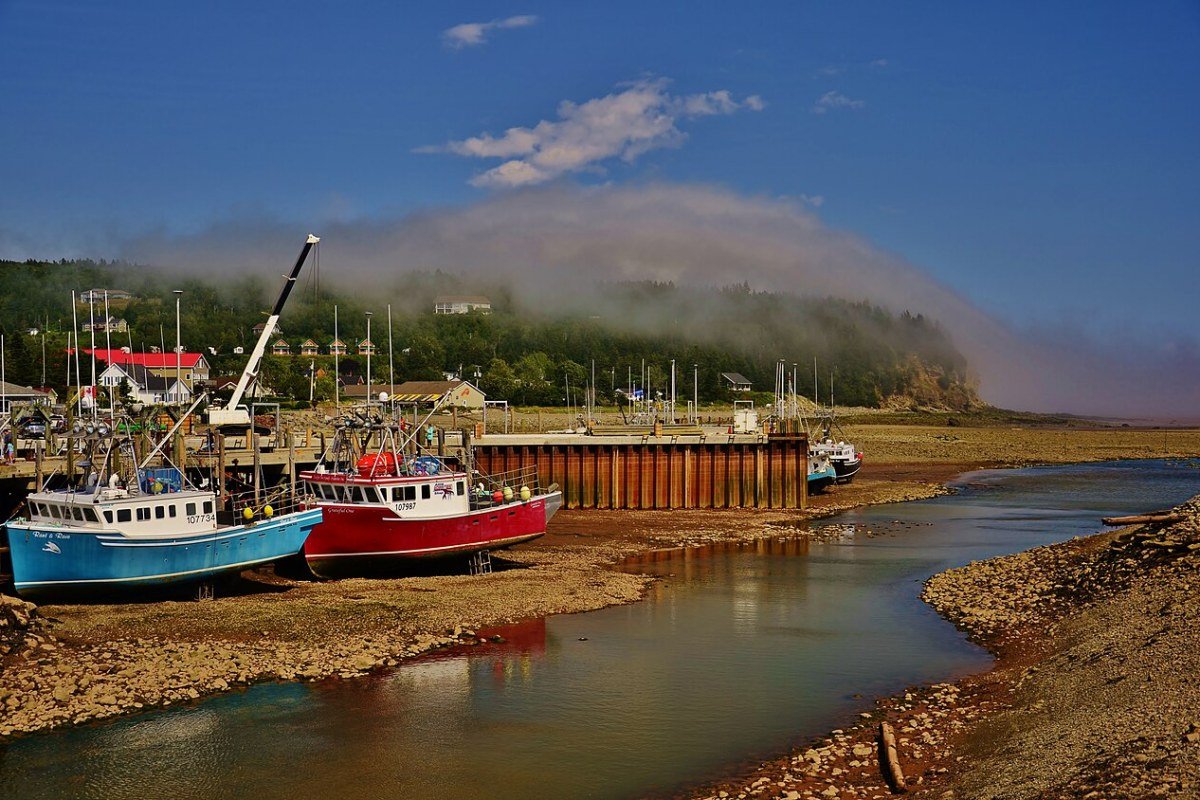
New Brunswick’s circular highway system (the Trans-Canada and the Fundy and Acadian coastal routes forming a loop) rewards a 7–10 day circumnavigation — Moncton as the entry point from Nova Scotia or PEI, southeast through the Fundy Trail and Saint John, north through the Saint John River Valley (the Trans-Canada, with its potato fields and covered bridges) to Fredericton, northeast through the Miramichi and the Acadian Peninsula, and back to Moncton via Kouchibouguac National Park. The Bay of Fundy’s extreme tidal experience is the province’s unique natural asset — timing any Fundy shore visit to coincide with the twice-daily low tide reveals a landscape that is submerged underwater six hours later, which has no equivalent anywhere else in the world.
Getting the Most Out of Your Visit
A few practical points that will improve any trip to New Brunswick. Book accommodation and major attractions — particularly national parks, popular hiking trails, and well-known restaurants — as far in advance as possible; the most desirable options can fill weeks or months ahead, especially in peak season. Having a car provides the most flexibility for exploring beyond the main centers, and most of New Brunswick’s most rewarding experiences are in places not easily reached by public transport. The best local knowledge is often found in regional visitor centers, independent bookshops, and by talking to residents — the most memorable discoveries on any trip are rarely the ones in the guidebooks. Allocate more time than you think you need: New Brunswick consistently rewards travelers who slow down and explore in depth rather than trying to cover maximum ground in minimum time.