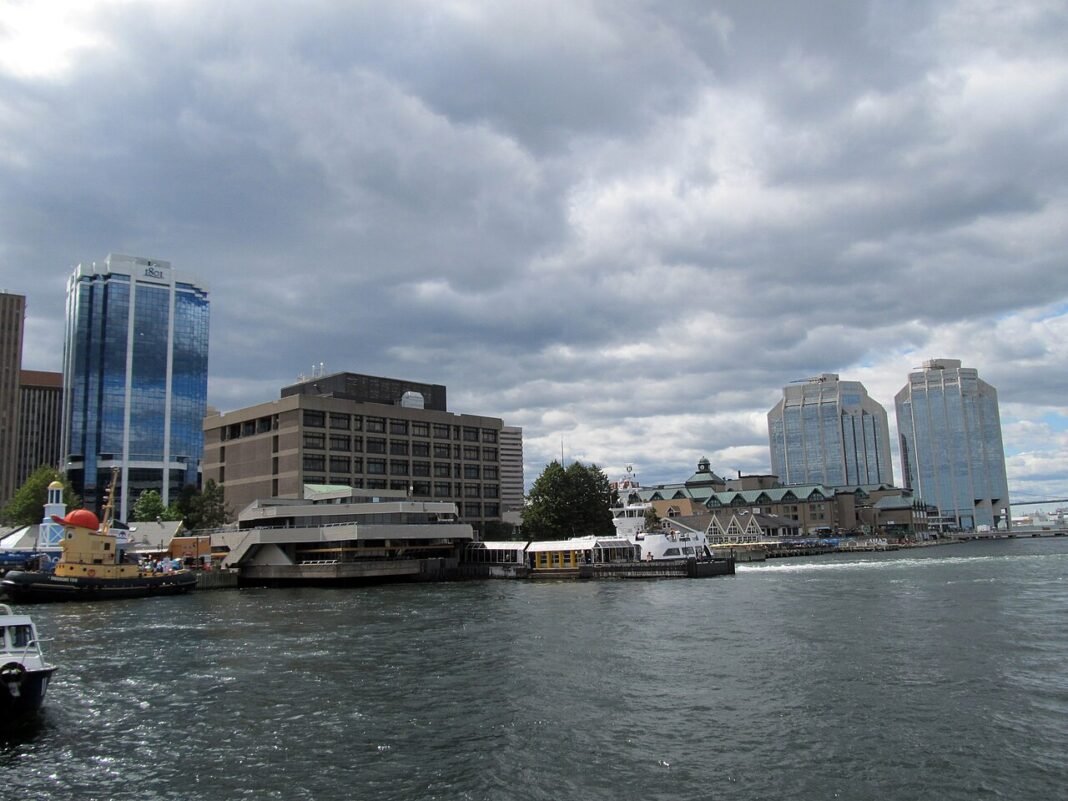
Nova Scotia offers some of the strongest value among Canada’s Atlantic provinces for households chasing a high quality of life without a big-city price tag. Halifax pairs a genuine harbour-city character, a deep Atlantic seafood culture, the Annapolis Valley wine and food country within an hour’s drive, and housing prices (CAD $550,000–$650,000 average in the Halifax Regional Municipality) that run a fraction of Toronto or Vancouver equivalents, making the province one of Canada’s more financially attractive relocation destinations for remote workers, retirees, and professionals in transferable sectors. The honest qualification is that the local labour market — historically dominated by the public sector (government, healthcare, education, the military), the fishing industry, and tourism — does not offer the same private sector salary levels as the larger mainland provinces; households relocating without transferable income will find Nova Scotia’s wages more modest than Ontario or BC.
Nova Scotia Cost at a Glance 2026
- Halifax Regional Municipality average house price: CAD $550,000–$650,000 (benchmark around CAD $570,000; single-family detached averaging near CAD $655,000 in 2026)
- Inner Halifax (North End, South End, West End): CAD $500,000–$750,000
- Dartmouth average: CAD $380,000–$500,000
- Annapolis Valley (Wolfville, Kentville): CAD $280,000–$420,000
- Cape Breton (Sydney): CAD $180,000–$280,000
- Rural Nova Scotia: CAD $150,000–$280,000
- Nova Scotia Power electricity: CAD $1,400–$2,200/year average; Nova Scotia is transitioning from coal to renewable energy; electricity costs are moderate by Atlantic Canadian standards
- Provincial HST: 14% (9% provincial + 5% federal GST), lowered from 15% on 1 April 2025; among the higher sales tax rates in Canada, though below the 15% charged in New Brunswick, Newfoundland and Labrador, and Prince Edward Island, and a cost consideration relative to Alberta’s GST-only environment
Halifax: The Atlantic City Value Proposition
Halifax‘s housing market ranked among Canada’s fastest appreciating in the early 2020s. Remote-worker arrivals from Toronto and Vancouver, together with the Atlantic Loop renewable-energy investment drawing professionals east, have compressed the price gap between Halifax and the larger Canadian cities. The practical neighbourhood picture:
- North End (Agricola Street corridor): Halifax’s most rapidly gentrifying neighbourhood; the Agricola Street café and restaurant strip, independent music venues, the Halifax Seaport Farmers’ Market proximity, and Victorian houses in various stages of renovation; median house CAD $500,000–$700,000; the best value for inner-city character in Halifax
- South End (South Park, Spring Garden): The most prestigious Halifax address; proximity to Dalhousie University, the Public Gardens (one of the finest surviving Victorian gardens in Canada), the Spring Garden Road commercial strip; median detached CAD $650,000–$950,000
- West End and Clayton Park: Established family suburbs west of the Armdale Rotary; good school catchments, Bayer’s Lake retail, highway access; median CAD $430,000–$580,000
- Dartmouth: The City of Lakes across the harbour from Halifax; accessible by ferry (about 15 minutes, CAD $3.00, one of the most affordable harbour crossings in Canada); Alderney Landing waterfront, the Dartmouth Crossing retail, and the Portland Street commercial strip; median CAD $380,000–$500,000 — the most affordable inner-harbour alternative to Halifax proper

The Remote Work Effect
Nova Scotia has been one of Canada’s largest beneficiaries of the remote work revolution — broadband connectivity (the province has invested substantially in rural broadband infrastructure), affordable housing, and quality of life have together attracted thousands of remote workers from Toronto and Vancouver who can maintain their mainland salaries while living at Atlantic prices:
- Relative purchasing power: A Toronto professional earning CAD $120,000 who relocates to Halifax with their salary intact gains the equivalent of a 40–50% raise in purchasing power; a 2-bedroom character house in Halifax’s North End costs approximately what a 1-bedroom condo in Toronto costs
- Broadband availability: Halifax’s fibre-to-the-home network covers the metro area; provincial rural broadband programs have extended high-speed connectivity to the Annapolis Valley, the South Shore, and parts of Cape Breton; connectivity is the enabling infrastructure for the remote work migration
- Lifestyle dividend: The province’s beaches sit within a half-hour drive, Peggy’s Cove about 45 minutes out, the Annapolis Valley wine country roughly an hour away, and Cape Breton a manageable 3.5 hours by car — a weekend range that residents of Toronto or Vancouver reach only on extended holidays
Food and Dining Costs
The food economy is Nova Scotia’s strongest quality-of-life differentiator from inland Canadian cities — local seafood, the Annapolis Valley’s produce, and a restaurant culture that has evolved from the traditional fish and chips to an internationally recognized culinary scene together deliver exceptional food value:
- Live lobster: Lobster season in the southwest Nova Scotia fishing communities (Digby, Yarmouth, Barrington) produces lobster at prices that Halifax residents access at CAD $8–$12/lb; live lobster from the wharf in fishing season is one of the province’s most irreplaceable food experiences
- Digby scallops: The Digby scallop fleet lands some of the best sea scallops in Atlantic Canada; bought at the wharf market, they are among the strongest seafood value in Canada
- Restaurant dining: Halifax’s restaurant scene (Bar Kismet, Edna, Highwayman, and Ratinaud among the North End and downtown anchors) delivers quality comparable to Toronto’s best at 30–40% lower prices
Utilities and Daily Costs in Nova Scotia
Utility costs reflect the province’s ongoing electricity transition from coal to renewables — Nova Scotia Power (the regulated monopoly utility) has historically charged some of the higher residential electricity rates in Canada, though the 2023–2030 renewable energy transition aims to reduce costs as wind and tidal generation capacity expands. Typical household annual electricity costs run CAD $1,800–$2,800; older housing stock (common in Halifax’s older suburbs and rural communities) is often electrically heated, which pushes annual costs higher. Nova Scotia Power’s equal billing programs smooth seasonal variation. Home heating oil remains common in rural Nova Scotia and older urban housing; with oil prices stabilized from their 2022 peak, annual heating oil costs for a typical house run CAD $2,000–$3,500 depending on house size, efficiency, and winter severity.
Budgeting Practically for Nova Scotia
Understanding the cost of living in Nova Scotia is the foundation — the next step is knowing which costs are fixed and which can be optimized for your specific lifestyle. Housing is the largest variable in almost every budget, and choosing the right neighbourhood within Nova Scotia can produce dramatically different monthly costs while still keeping you close to the places and amenities you value most. Utilities, transport, and food costs compound over time, so even small differences per month become significant over a year. The cost advantages of Nova Scotia relative to high-cost cities like New York, San Francisco, or Sydney are real and measurable — many people who relocate report significant improvements in their financial position alongside a better overall quality of life. Use these figures as a starting framework and verify current rental and property prices for your specific target area, since local markets can shift faster than annual cost-of-living studies.
Frequently Asked Questions
Is Halifax affordable compared to Toronto and Vancouver?
Yes — significantly. The Halifax Regional Municipality average sits around CAD $550,000–$650,000 in 2026 (the benchmark is roughly CAD $570,000, single-family detached near CAD $655,000); inner-city Halifax runs CAD $500,000–$750,000; Dartmouth CAD $380,000–$500,000. This is well below Toronto’s CAD $1.3M+ and Vancouver’s CAD $1.8M+ detached benchmarks. Beyond the Annapolis Valley, Digby, and Cape Breton offer further value at CAD $150,000–$280,000 for rural and small-town properties — making Nova Scotia one of the more affordable Atlantic provinces for households relocating from Central Canada.
What is Nova Scotia’s HST rate?
Nova Scotia’s Harmonized Sales Tax (HST) is 14% — a 9% provincial component plus the 5% federal GST — after the province lowered it from 15% on 1 April 2025. That puts Nova Scotia among the higher sales tax rates in Canada, though below the 15% still charged in New Brunswick, Newfoundland and Labrador, and Prince Edward Island. Basic groceries, prescription drugs, and certain children’s items are exempt. The HST is an important factor in day-to-day living costs and should be factored alongside housing and income tax when comparing Nova Scotia to provinces like Alberta (5% GST only) or Quebec (combined ~15% QST + GST, but with offsetting lower electricity costs).
What are electricity and heating costs in Nova Scotia?
Above-average — Nova Scotia Power electricity costs run CAD $1,400–$2,200/year for residential. Many older homes in Halifax and rural Nova Scotia use electric baseboard heating; these homes face CAD $2,500–$4,000/year for heating in cold winters. Households using heating oil pay CAD $2,000–$3,500/year. This is substantially more expensive than Quebec (CAD $900–$1,400/year on Hydro-Québec) and Manitoba. When budgeting for Nova Scotia, energy costs are a more significant line item than in provinces with publicly-owned hydroelectric systems.
Is Nova Scotia a good destination for remote workers from Toronto?
Exceptionally so. A Toronto professional earning CAD $120,000/year and relocating to Halifax gains the equivalent of a 40–50% effective raise in purchasing power — housing costs drop 50–65%, while income remains unchanged (assuming remote work). Halifax has direct flights to Toronto (about 2h 30min), Boston, and New York. The Annapolis Valley wine region, Cape Breton’s Cabot Trail, the Bay of Fundy tides, and a compact, walkable Halifax waterfront deliver a lifestyle premium that is difficult to replicate at Toronto prices. The province’s standing as a top remote work destination in Atlantic Canada follows directly from that math.
What is the food culture and cost of seafood in Nova Scotia?
Nova Scotia offers among the best seafood value in North America. Lobster from southwest Nova Scotia wharves runs CAD $8–$12/lb at source — a fraction of Toronto or Vancouver restaurant prices. Digby scallops, Yarmouth lobster, and Bay of Fundy salmon are local staples. Restaurant dining in Halifax runs 30–40% below comparable Toronto quality. Fine dining at destination restaurants (e.g., The Press Gang, Five Fishermen) costs CAD $80–$130 for two — typically CAD $150–$220+ for equivalent quality in Toronto or Vancouver.