.jpg?width=1200)
Best Places to Live in Louisiana 2026: City-by-City Guide
Louisiana’s residential options span from one of America’s most culturally complex cities (New Orleans) to the Cajun cultural center of Lafayette, the government-and-university city of Baton Rouge, and a range of smaller cities and towns that preserve the particular character of their French, Spanish, African, and American heritages in ways that are specific to their corner of Louisiana. Choosing where to live in Louisiana depends heavily on industry access, tolerance for climate challenges, and the specific cultural environment that resonates most with your priorities.
1. New Orleans — Uptown and Mid-City: Residential Character in an Extraordinary City
New Orleans neighborhoods beyond the French Quarter provide residential quality that is distinct from the tourist core. Uptown, extending from the Garden District upriver along St. Charles Avenue to the Riverbend at Carrollton, is the city’s most enduringly desirable residential neighborhood — a dense urban fabric of double shotgun houses, double-gallery Victorian homes, and live oak trees that arch over the streetcar tracks on St. Charles Avenue to create one of the most beautiful urban tree canopies in the country. The Tulane and Loyola university campuses anchor the neighborhood’s academic character; Magazine Street provides one of the best independent retail and restaurant corridors in the city.
Mid-City, the neighborhood surrounding City Park, has been one of the most active post-Katrina recovery areas — affordable single-family housing, access to the 1,300-acre City Park (which contains the New Orleans Museum of Art, the Sculpture Garden, and multiple sports facilities), and a walkable neighborhood commercial strip on Carrollton Avenue make it attractive for households prioritizing space and park access over proximity to the French Quarter. The Bywater neighborhood, downriver from the French Quarter, has developed as New Orleans’s arts and creative community hub — reclaimed shotgun houses, artist studios, independent coffee shops, and the riverfront access at Crescent Park create a community character that is more Brooklyn than traditional New Orleans.
2. Baton Rouge — Government, Academic, and Petrochemical City
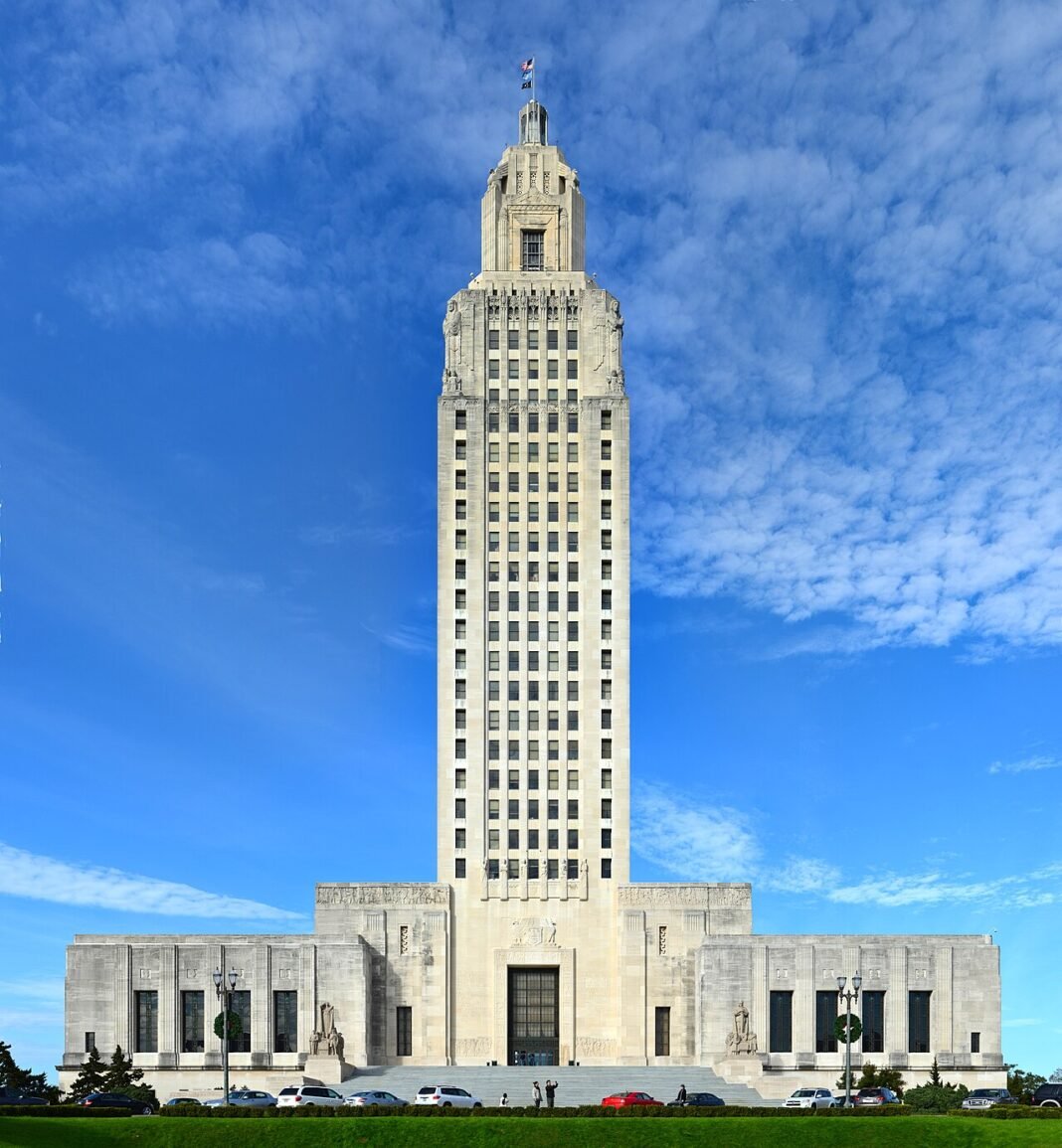
Baton Rouge, Louisiana’s capital and the home of Louisiana State University, is the second-largest city in the state with a metro population of 870,000. The city’s economy is rooted in three foundations: state government (the State Capitol complex and associated agencies employ thousands), petrochemical manufacturing (the ExxonMobil Baton Rouge Refinery and dozens of chemical plants along the Mississippi River corridor constitute one of the most concentrated industrial corridors in North America), and education (LSU, Southern University, and several other institutions). This diversity provides employment stability but also creates a city where the petrochemical industry’s presence defines the landscape and environment in ways that matter for residential quality.
The most desirable Baton Rouge neighborhoods are in the south and east portions of the city — the Garden District (Baton Rouge’s version), Highland Road corridor near LSU, and the Perkins Road neighborhood provide the most walkable and architecturally interesting residential environments. Mid-City Baton Rouge near the Old Goodwood area offers older residential stock at accessible prices. The Prairieville and Gonzales suburbs to the southeast provide newer construction at competitive prices with good school districts. Median home prices in the metro run $180,000–$260,000.

3. Lafayette — Capital of Cajun Country
Lafayette is the capital of Acadiana and the most purely Cajun city in the world — a community of 130,000 (metro 500,000) where French is heard in restaurants, where the accordion-and-fiddle Cajun music tradition is maintained in venues like Prejean’s and the Blue Moon Saloon, where the Saturday morning Rice and Gravy breakfast at the Vermilionville cafeteria is a community institution, and where the food culture is so specific and so consistently excellent that Lafayette has a stronger culinary identity per capita than almost any American city of comparable size.
Lafayette’s economy is historically tied to the oil and gas industry (the Lafayette metro has been the hub of Gulf of Mexico offshore exploration and production services for decades), which creates both employment opportunity and vulnerability — the oil price cycle has driven boom-bust economic dynamics in Lafayette that are less pronounced in cities with more diversified economies. The University of Louisiana at Lafayette (UL Lafayette) provides academic employment and the student community that sustains a vibrant downtown and a restaurant scene that is increasingly attracting national culinary attention. Home prices in Lafayette run $190,000–$250,000, making it one of the most affordable cities with its level of cultural richness.
4. Shreveport — Northwestern Louisiana’s Center
Shreveport, in far northwestern Louisiana near the Texas and Arkansas borders, is a city of 195,000 that provides urban services and mid-sized city character at housing costs of $130,000–$190,000 — among the most affordable in any American city with full metropolitan infrastructure. The Barksdale Air Force Base presence provides stable military employment; the Haynesville shale natural gas production in the surrounding region provides energy sector employment. The Shreveport-Bossier entertainment corridor, along the Red River, includes casino gaming that draws visitors from the region. The R.S. Barnwell Garden and Art Center and the Meadows Museum of Art provide cultural anchors in a city whose arts scene is more developed than its secondary-city profile suggests.
5. Natchitoches — America’s Oldest Town’s Living Heritage
Natchitoches (pronounced NAK-a-tush), established in 1714 as a French trading post and widely recognized as the oldest European settlement in the Louisiana Purchase territory, preserves a remarkable collection of Creole architecture in its National Historic Landmark District along Cane River Lake. The town’s Christmas Festival of Lights (held from Thanksgiving through January 6, the traditional Twelfth Night end of the holiday season) is one of the most elaborate holiday lighting displays in the South, drawing visitors to a downtown that preserves 19th-century commercial and residential buildings in a setting that feels less self-consciously preserved than Natchez, Mississippi or comparable heritage towns. Northwestern State University provides academic employment and community programming.
Louisiana’s best places to live share the specific quality of having been shaped by cultural forces that existed long before the places became “desirable” by any external measure — New Orleans, Lafayette, Natchitoches, and the French Creole communities of the Cane River were built by specific peoples for specific purposes, and their character reflects that specificity in ways that no amount of developer planning can replicate. For residents who value cultural depth over new construction and HOA amenities, Louisiana’s communities offer something that is genuinely irreplaceable.