Canada is the second-largest country on earth, stretching from the Atlantic Ocean to the Pacific and up into the Arctic — a distance of more than 5,500 kilometres coast to coast. Pack that area with one of the planet’s widest ranges of scenery and you get the fjords and iceberg-dotted waters of Newfoundland, the pastoral calm of Prince Edward Island, the cosmopolitan streets of Montreal and Toronto, the high drama of the Rockies, the rainforests and wildlife of British Columbia, and the empty, glacier-scoured wilderness of the Yukon and Northwest Territories. Here are the twelve places that best capture the country’s range.
Indigenous Heritage Across Canada
Long before European arrival, the lands now called Canada were — and remain — home to more than 50 First Nations, Inuit, and Métis peoples, whose living cultures are inseparable from any honest portrait of the country. Haida Gwaii, an archipelago off British Columbia’s north coast, is the heart of the Haida Nation, where the SGang Gwaay UNESCO site preserves weathered mortuary poles and the Haida Heritage Centre at Kay Llnagaay interprets a continuous maritime tradition. In Quebec, the Huron-Wendat community of Wendake, just outside Quebec City, runs the Hôtel-Musée Premières Nations and welcomes visitors to its longhouse and cultural programming. Manitoulin Island in Ontario — the world’s largest freshwater island — hosts the Wikwemikong unceded territory and the annual Wikwemikong Cultural Festival, while Nunavut and Wood Buffalo National Park offer further opportunities to engage with Inuit and Dene heritage on their own terms.
1. Banff and the Canadian Rockies
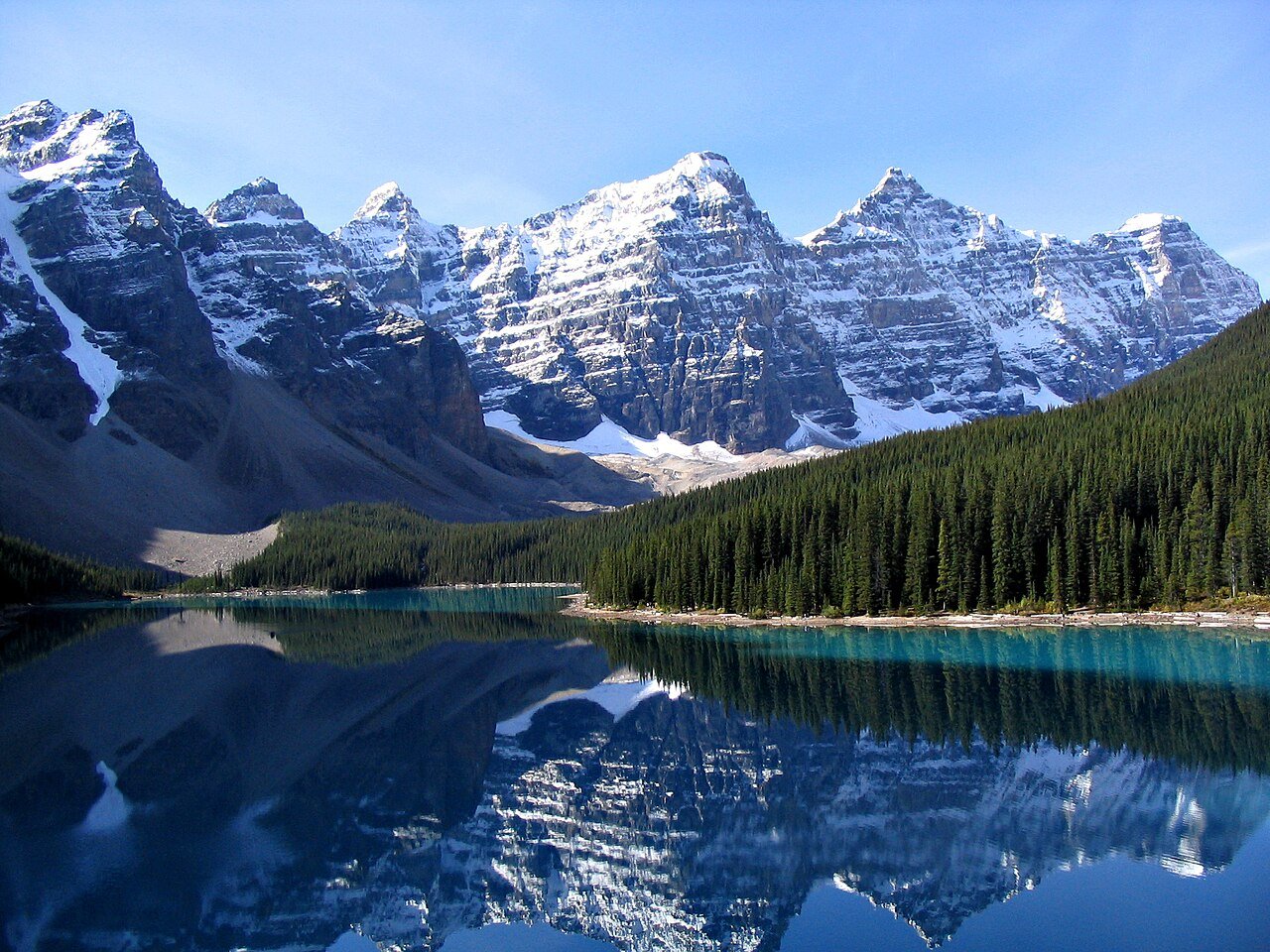
The Canadian Rockies rank among the most arresting mountain landscapes anywhere. Banff National Park — Canada‘s oldest — is the crown jewel, with turquoise glacially-fed lakes (Moraine Lake and Lake Louise really do look the way they do in the photographs), serrated peaks, first-rate hiking, world-class ski resorts, and a healthy population of grizzly and black bears, elk, bighorn sheep, and mountain goats. The Icefields Parkway (Highway 93) between Banff and Jasper turns up on nearly every list of the world’s great scenic drives.
2. Vancouver
Vancouver ranks year after year among the most liveable cities on earth, and a single visit makes the case. The setting does much of the work — mountains to the north, ocean to the west, the islands of the Georgia Strait offshore — and the food, culture, mild climate (by Canadian standards), and outdoor recreation within minutes of downtown do the rest. Stanley Park (1,000 acres of forest and seawall on a peninsula in Burrard Inlet), the Granville Island Public Market, the Capilano Suspension Bridge, and the deep Asian food scene around Richmond’s “Golden Village” are the places to start.
3. Quebec City
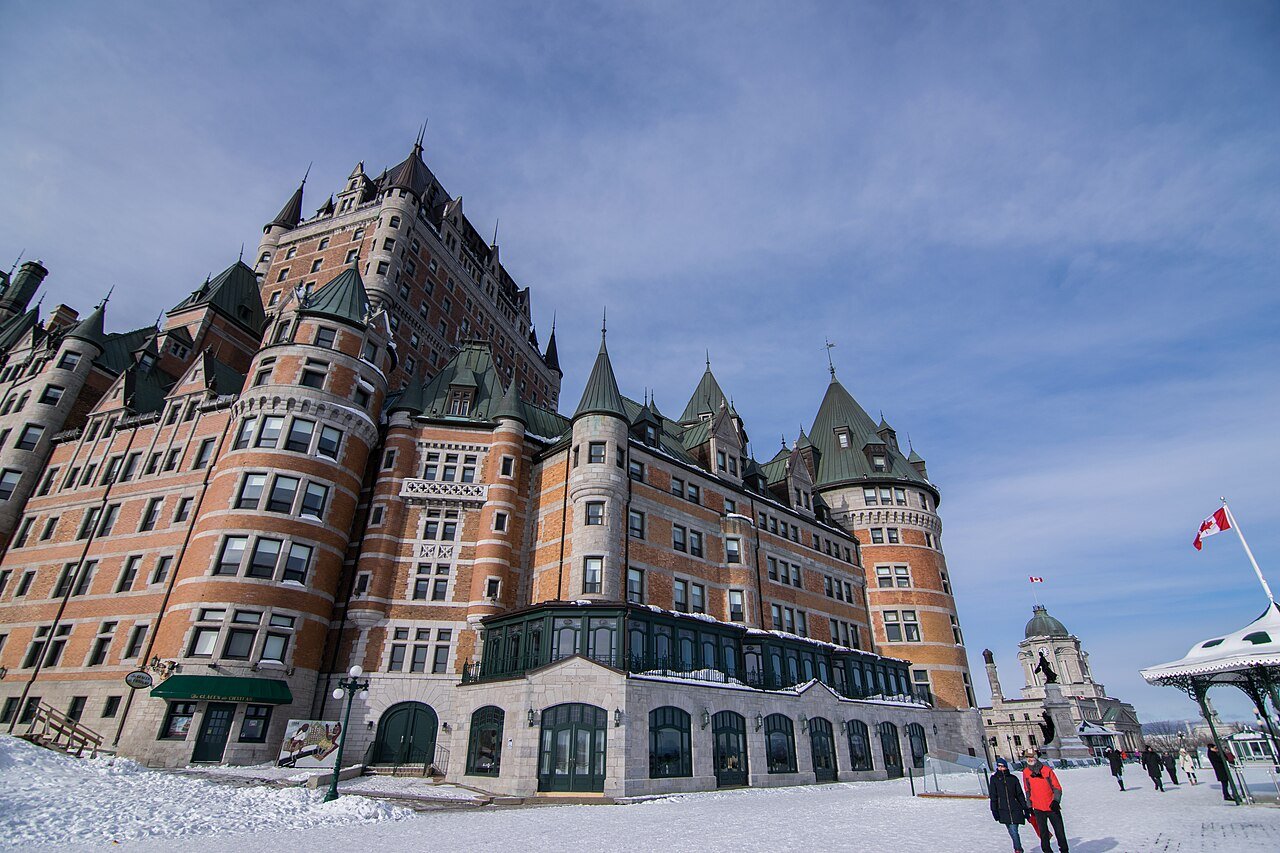
Quebec City is North America’s only walled city north of Mexico — a UNESCO World Heritage Site that feels closer to a European capital than anywhere else on the continent. The Old Town (Vieux-Québec) splits into Upper Town (Haute-Ville), crowned by the Château Frontenac, and Lower Town (Basse-Ville), where restored 17th- and 18th-century buildings ring Place Royale. The city is determinedly French-speaking, with terrific food (tourtière, poutine, maple syrup in everything) and a joie de vivre that is entirely its own.
4. Toronto
Toronto is Canada’s largest city and one of the most multicultural anywhere — close to half its residents were born outside Canada. That mix powers the food: Little Italy, two Chinatowns, Little Portugal, Greektown, Little India, and Koreatown each keep their own character. The CN Tower, the Royal Ontario Museum, and the Art Gallery of Ontario draw the crowds, but the neighbourhoods — Kensington Market, the Distillery District, Queen West — are where the city’s real personality lives.
5. Montreal
Few North American cities feel as European as Montreal — a bilingual metropolis where French and English often share a single sentence, with a serious food culture, late nightlife, world-class festivals (the Jazz Festival in June, Just for Laughs in July, Osheaga in August), and a confidence that is unmistakably Québécois. Old Montreal (Vieux-Montréal) keeps its 17th-century stone and its good restaurants; the Plateau-Mont-Royal and Mile End are where the city’s creative class has put down roots.
6. Niagara Falls
Niagara is among the most famous natural wonders anywhere — three waterfalls (the Horseshoe Falls, the American Falls, and the Bridal Veil Falls) where the Niagara River spills over the Niagara Escarpment between Lake Erie and Lake Ontario. The Canadian side, in Ontario, holds the finest vantage on the more powerful Horseshoe Falls. Niagara City Cruises (the Hornblower boats) carry you straight into the spray below. Beyond the falls themselves, the Niagara-on-the-Lake area has good wineries and the Shaw Festival theatre company.

7. Cape Breton Island, Nova Scotia
The northern reach of Nova Scotia, Cape Breton is joined to the mainland by a single causeway. The Cabot Trail — a 298-kilometre loop around the highlands — counts among the world’s finest coastal drives, with clifftop views over the Gulf of St Lawrence and the Atlantic and moose and bald eagles often spotted from the road. The Celtic traditions brought by Scottish Highland emigrants still run through the music, dance, and Gaelic-speaking communities of the island.
8. Churchill, Manitoba
Churchill, on the western shore of Hudson Bay, is one of the finest places anywhere to see polar bears in the wild — the bears gather near town each October and November to wait for the bay to freeze. The same town delivers the Northern Lights in winter and beluga whales in summer. It is a wildlife destination without equal: remote, costly to reach, and impossible to forget.
9. Prince Edward Island
Prince Edward Island (PEI) is Canada’s smallest province and one of its most disarming — red soil, rolling farmland, and some of the finest seafood in the country. This is the home of Lucy Maud Montgomery’s Anne of Green Gables, and the literary heritage is woven through the province. The north-shore beaches (Cavendish, Greenwich) are warm by Atlantic Canadian standards and backed by red sandstone dunes. PEI lobster, served at the roadside lobster suppers that pop up across the island each summer, is the meal to plan around.

10. Jasper National Park
Jasper, north of Banff on the Icefields Parkway, is bigger, wilder, and quieter than its famous neighbour. The Athabasca Glacier — the most visited glacier in North America — is reachable on foot or by glacier tour vehicle. The Jasper Dark Sky Preserve, one of the world’s largest, makes the town a first-rate stargazing base. Wildlife is everywhere: Jasper holds one of North America’s healthiest grizzly bear populations.
11. Victoria, British Columbia
Victoria, on the southern tip of Vancouver Island, is a beautifully kept British colonial city — afternoon tea at the Fairmont Empress Hotel, the elaborate Butchart Gardens (one of the world’s great private gardens), whale watching in the Strait of Juan de Fuca, and a strong roster of local craft breweries. Sheltered from the worst of BC’s rain by the Olympic Mountains, it stays mild and relatively dry, and it is at its loveliest in spring when the cherry blossoms come out.
12. Newfoundland
Newfoundland is Canada’s newest province — it joined Confederation only in 1949 — and one of its most singular: a rugged Atlantic island shaped by centuries of fishing, with its own dialect and music and a coastline of fjords, sea stacks, and icebergs that ride the Labrador Current south each spring. L’Anse aux Meadows, on the northern tip of the Great Northern Peninsula, is the only confirmed Norse settlement in North America (about 1000 AD) and a UNESCO World Heritage Site. Gros Morne National Park is the other reason to come — a UNESCO World Heritage Site of fjords, ancient mountain plateaus, and rock that helped scientists work out plate tectonics.
Frequently Asked Questions
What makes the Canadian Rockies the single best destination in Canada?
The Canadian Rockies hold mountain scenery that rivals anything on earth. Banff National Park — Canada’s oldest — centres on glacially-fed lakes of an almost unreal blue: Moraine Lake (backed by the Valley of the Ten Peaks, the image once on the Canadian $20 bill) and Lake Louise (backed by the Victoria Glacier and the Château Lake Louise hotel) hold a colour that photographs barely exaggerate. The Icefields Parkway (Highway 93, 232km between Lake Louise and Jasper) is routinely named one of the world’s greatest scenic drives. Wildlife is everywhere: grizzly and black bears, elk, bighorn sheep, wolves, and mountain goats are seen from the road and trails. Jasper National Park, immediately north, is larger, wilder, and far less crowded, with Maligne Lake and Spirit Island among Canada’s most recognizable landscapes.
What are Canada’s most distinctive cities and what makes each special?
Quebec City is North America’s only walled city north of Mexico — a UNESCO World Heritage Site where the Château Frontenac crowns the fortified promontory above the St Lawrence River, medieval streets run below, and a French-speaking culture sets it apart from anywhere else on the continent. Montreal is North America’s most European city — bilingual (French and English coexist), with a serious food culture, late nightlife, and world-class festivals (the Jazz Festival in June, Just for Laughs in July, Osheaga in August). Toronto is one of the most multicultural cities anywhere — close to half its residents were born outside Canada, producing a deep food scene and a string of distinct neighbourhoods. Vancouver pairs a dramatic natural setting (mountains to the north, ocean to the west) with an outdoor obsession, outstanding Asian food (particularly in Richmond), and Stanley Park’s 1,000 acres of forest on a downtown peninsula.
What extraordinary natural wonders does Canada have beyond the Rockies?
Niagara Falls (Ontario) is one of the world’s great natural set-pieces — the Horseshoe Falls drops 57 metres at a peak of 168,000 cubic metres per minute, and the Canadian side gives the finest views. Gros Morne National Park (Newfoundland) is a UNESCO World Heritage Site of fjords, ancient mountain plateaus, and rock that helped scientists understand plate tectonics. Cape Breton’s Cabot Trail (298km loop around the Nova Scotia highlands) ranks among the world’s most scenic coastal drives, with clifftop views over the Gulf of St Lawrence. Prince Edward Island’s Cavendish Beach offers warm-water swimming on red-sand beaches backed by sandstone dunes. The Bay of Fundy (New Brunswick) has the world’s highest tides — up to 16 metres.
What wildlife experiences does Canada offer?
Churchill, Manitoba, on the western shore of Hudson Bay, is one of the world’s best places to see polar bears in the wild — the bears gather near town each October and November to wait for the bay to freeze, viewable from specialized tundra vehicles. Churchill also delivers Northern Lights in winter and beluga whale watching in summer. Closer to central Canada, the St Lawrence estuary near Tadoussac, Quebec, is one of the most reliable whale-watching grounds on the continent — blue whales, fin whales, belugas, and minkes are regularly sighted. The Canadian Rockies have superb bear, elk, and bighorn sheep encounters in Banff and Jasper. Newfoundland’s Witless Bay Ecological Reserve (boat tours from Bay Bulls) holds North America’s largest Atlantic puffin colony.
What underrated or hidden gem destinations should visitors consider in Canada?
Victoria, British Columbia (on Vancouver Island’s southern tip) has a mild climate, the elaborate Butchart Gardens (one of the world’s great private gardens), afternoon tea at the Fairmont Empress Hotel, and good whale watching in the Strait of Juan de Fuca. Newfoundland is Canada’s most singular province — rugged Atlantic landscapes, a dialect and musical culture all its own, and L’Anse aux Meadows (the only confirmed Norse settlement in North America, about 1000 AD, UNESCO World Heritage Site). The Yukon — vast, remote, and largely undeveloped — offers some of the finest Northern Lights viewing on earth from October to March, and the Dempster Highway runs deep into sub-arctic wilderness. The Thousand Islands (St Lawrence River, Ontario) and the Magdalen Islands (Gulf of St Lawrence, Quebec) round out the country’s most overlooked corners.