Quebec ranks among the more liveable places in North America once you weigh housing affordability against public services and cultural depth — and Montreal makes that case better than anywhere else in the province. A city of 2.2 million carries a cultural calendar that rivals places twice its size: the Montreal Jazz Festival, the Just for Laughs comedy festival, the Festival du Nouveau Cinéma, the Francofolies music festival, and the Nuit Blanche arts night. Yet median condo prices sit at CAD $450,000–$620,000, and detached houses in the inner city run CAD $700,000–$1.1M — well under Toronto and Vancouver, and squarely in line with Europe’s better-value capitals. The tax bill is the honest trade-off. Quebec levies the steepest provincial income tax in the country, but it funds unusually deep social programs: the subsidized childcare system that began here in 1997, years before the federal Canada-wide Early Learning and Child Care framework nudged other provinces toward similar schemes, and a Quebec pharmacare plan that covers a wider list of prescriptions than most provinces. Where a household lands depends on income and family shape — but for families with young children in subsidized daycare, the Quebec arrangement is hard to beat financially.

Quebec Cost at a Glance 2026
- Montreal metropolitan area average condo price: CAD $450,000–$620,000
- Montreal inner city (Plateau, Mile End, Outremont) detached: CAD $800,000–$1.4M
- Quebec City average: CAD $380,000–$520,000 (houses); CAD $280,000–$380,000 (condos)
- Laval and South Shore (Montreal suburbs): CAD $500,000–$700,000
- Eastern Townships (Sherbrooke): CAD $280,000–$400,000
- Saguenay–Lac-Saint-Jean: CAD $180,000–$280,000
- Hydro-Québec electricity: the lowest residential rates of any large jurisdiction on the continent; a typical household pays CAD $900–$1,400/year, and that cheap power is a quiet, built-in saving for Quebec families
- Provincial income tax: Quebec’s top marginal provincial rate (25.75%) leads the country; the combined federal-provincial top rate (53.31%) applies to taxable income above CAD $258,482 in 2026, and pays for the broadest public services package in Canada
Montreal: The Great Affordable City
Montreal‘s housing market is the strongest plank in Quebec’s value argument. This is a global city with a world-class food and arts scene, a bilingual rhythm that opens the door to both French and English North American life, and prices that run 40–60% under Toronto for equivalent inner-city addresses. Here is how the neighbourhoods break down:
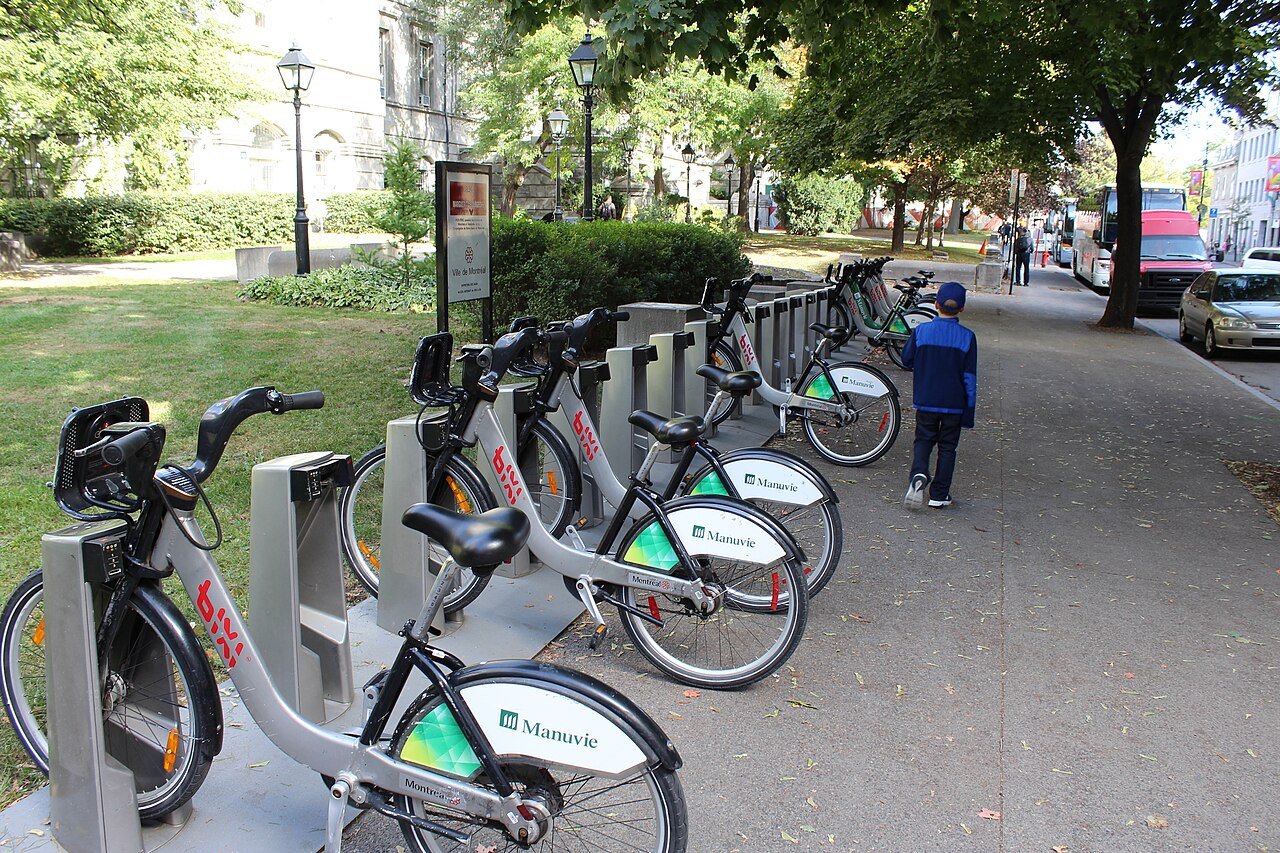
- Plateau-Mont-Royal: Montreal’s signature residential district — row houses with the exterior spiral staircases that once saved interior square footage, Parc Lafontaine, Duluth Street’s summer terrasses, and the Rachel Street cycling path; detached homes CAD $800,000–$1.2M; condos CAD $450,000–$700,000
- Mile End: birthplace of the Montreal bagel, where Jewish and Portuguese immigrant kitchens built a food legacy that still sits beside a thriving creative economy of design studios, film production, and music labels such as Constellation Records; Bernard Street cafés and restaurants; detached homes CAD $750,000–$1.1M
- Rosemont–La Petite-Patrie: the cycling-friendly, market-driven quarter east of the Plateau, anchored by Marché Jean-Talon and easier on the wallet than the Plateau proper; detached homes CAD $600,000–$850,000
- Verdun: a riverside district on the rise; Wellington Street’s restaurant strip; the Île-des-Sœurs (Nuns’ Island) luxury condos; detached homes CAD $550,000–$750,000, the cheapest inner-south option with steadily improving amenities
- Outremont and Westmount: Montreal’s prestige addresses — Outremont’s Francophone professional set, Westmount’s Victorian mansions and old anglophone money; medians CAD $1.2M–$3.0M+

Hydro-Québec: The Hidden Subsidy
Cheap electricity is one of Quebec’s quietest advantages. The province’s enormous hydroelectric system — the La Grande complex on James Bay alone produces roughly 83 TWh a year, enough to power a country the size of Belgium — delivers residential power at CAD $0.07–$0.11/kWh, against CAD $0.14–$0.18/kWh in Ontario and CAD $0.15–$0.19/kWh in British Columbia. In practice that gap is worth CAD $500–$1,000 a year to a Quebec household versus Ontario. The low price also makes electric heating sensible through Quebec’s hard winters and helps explain the province’s outsized appetite for electric cars — Quebec accounts for nearly half of all zero-emission vehicles registered in Canada and leads the country in their share of new-vehicle sales.
Subsidized Childcare: Quebec’s Family Advantage
Quebec’s subsidized daycare network — the CPE, or Centre de la petite enfance — provides regulated care at CAD $9.65 a day per child (the 2026 rate, indexed every 1 January) for families who land a CPE or subsidized space. For households with young children, the math is striking:
- Annual saving vs private childcare: a family using two CPE places saves roughly CAD $15,000–$25,000 a year against market-rate daycare in Toronto or Vancouver
- Wait lists: the sought-after CPE spots in Montreal and Quebec City carry queues; register during pregnancy at laplace0-5.com to give yourself the best shot at a subsidized place before you head back to work
- Program quality: CPEs answer to the Quebec Ministry of Family on staffing ratios, training, and curriculum, and the network is widely rated among the better early-childhood systems on the continent
Quebec City: Exceptional Affordability
Quebec City offers some of the best housing value in the country. This is a UNESCO World Heritage site with the most complete 17th-century urban fabric on the continent, a festival-driven cultural life that takes in the Carnaval de Québec and the Plains of Abraham, and average prices of CAD $380,000–$520,000 for houses and CAD $280,000–$380,000 for condos. A large provincial public-service workforce and the economy around Université Laval keep the labour market steady. For French-speaking families who want an alternative to Montreal’s prices without giving up the distinctly Québécois texture of daily life, nowhere else comes close.
Budgeting Practically for Quebec
Knowing the cost of living in Quebec is only the starting point; the real work is sorting fixed costs from the ones you can shape around your own life. Housing is the biggest lever in nearly every budget, and picking the right neighbourhood inside Quebec can swing your monthly outlay sharply while still keeping you near the places you care about. Utilities, transport, and groceries add up month after month, so small gaps turn into real money over a year. Quebec’s edge over high-cost cities like New York, San Francisco, or Sydney is genuine and measurable — many people who move report a healthier financial picture alongside a better day-to-day quality of life. Treat these numbers as a framework, and check current rents and property prices for the exact area you have in mind, since local markets move faster than annual cost-of-living surveys.
Frequently Asked Questions
Is Montreal affordable compared to Toronto and Vancouver?
Yes — clearly so. Montreal metropolitan condo prices run CAD $450,000–$620,000, and inner-city detached houses (Plateau, Mile End) run CAD $800,000–$1.4M. That is 40–60% under Toronto for equivalent inner-city addresses, and well under Vancouver. For households comfortable in French or bilingual settings, few large cities on the continent offer this much cultural payback for the money.
How cheap is electricity in Quebec?
Quebec has the lowest residential electricity rates of any large jurisdiction in North America. Hydro-Québec charges CAD $0.07–$0.11/kWh — against CAD $0.14–$0.18/kWh in Ontario and CAD $0.15–$0.19/kWh in BC. Yearly residential bills land at CAD $900–$1,400, saving households CAD $500–$1,000 a year versus Ontario alone. The low price makes electric heating viable and helps explain why Quebec accounts for nearly half of Canada’s zero-emission vehicle registrations.
What is Quebec’s income tax rate?
Quebec levies the highest provincial income tax in Canada — the combined federal-provincial top marginal rate of 53.31% applies to taxable income above CAD $258,482 in 2026. Middle-income earners pay far lower effective rates. Those taxes fund the broadest public services package in the country, including CAD $9.65/day subsidized childcare (CPE), a pharmacare plan covering more prescriptions than most provinces, and the cheapest electricity in North America.
What is Quebec’s subsidized childcare program?
The CPE (Centre de la petite enfance) provides regulated care at about CAD $9.65 a day per child (2026 rate, indexed annually on 1 January). A family using two CPE places saves roughly CAD $15,000–$25,000 a year against market-rate daycare in Toronto or Vancouver. Register during pregnancy at laplace0-5.com — queues for popular spots in Montreal and Quebec City are long. The network is widely rated among the best early-childhood systems on the continent.
Is Quebec City affordable compared to Montreal?
Yes — Quebec City averages CAD $380,000–$520,000 for houses and CAD $280,000–$380,000 for condos. It is the best-value heritage city in the country — a UNESCO World Heritage site with the most complete 17th-century urban fabric in North America, a busy festival scene (Carnaval de Québec, Festival d’été de Québec), and a steady labour market anchored by the provincial public service and Université Laval. For French-speaking families, Quebec City delivers Montreal’s cultural quality at noticeably lower housing costs.