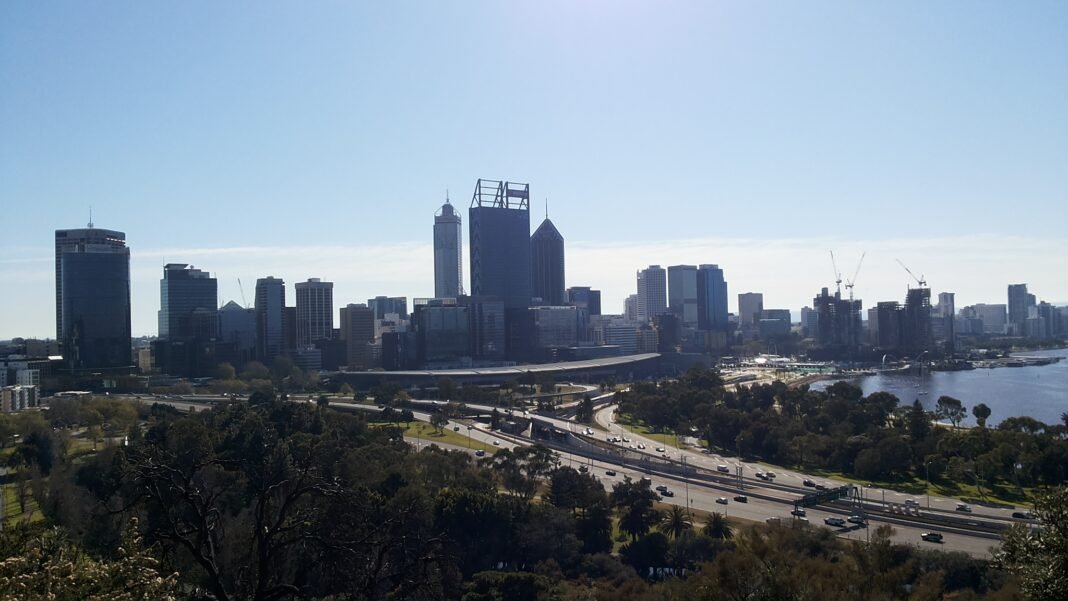
Western Australia’s cost of living is shaped by one dominant force: the resources economy. The Pilbara’s iron ore and LNG industries, combined with the Kimberley’s pastoral and tourism economy, have created a labour market where skilled tradespeople command wages that dwarf comparable roles in Sydney or Melbourne — and where Perth housing prices have risen sharply to reflect that income base. The honest picture of Western Australia’s cost structure is a paradox: Perth is dearer than Adelaide or Hobart, roughly level with Brisbane, and well below Sydney on housing — yet wages in the mining-adjacent sectors are among the highest in the country. For professionals in mining, construction, engineering, healthcare, and the resources supply chain, Western Australia offers the most financially compelling package of any Australian state. For household income not tied to the resources economy, Perth is a high-cost coastal city with quality-of-life advantages — beach access, an Indian Ocean climate, and the Swan Valley and Margaret River wine regions nearby — that many families reckon justify the premium.

Western Australia Cost at a Glance 2026
- Perth metro median dwelling price: AUD $750,000–$900,000 (houses); AUD $500,000–$600,000 (units)
- Inner Perth (3–7km from CBD) median: AUD $1.0M–$1.8M (houses)
- Coastal suburbs (Cottesloe, Swanbourne, City Beach): AUD $2.0M–$4.0M+
- Outer suburbs (Ellenbrook, Baldivis, Alkimos): AUD $500,000–$650,000
- Fremantle median: AUD $900,000–$1.2M
- Margaret River median: AUD $700,000–$950,000
- Mandurah median: AUD $500,000–$650,000
- Electricity costs: AUD $1,700–$2,600/year for the average household (Synergy tariff; rooftop solar economics are excellent in Perth’s high-irradiance climate)
Perth Housing: The Mining Cycle Effect
Perth’s property market is more cyclical than any other Australian capital, driven by the boom-bust rhythm of the global resources economy. The 2020–2026 period has delivered substantial price growth as iron ore revenues and post-pandemic migration fuelled demand — the REIWA median house price sat around AUD $780,000 in mid-2026, up roughly 18% on a year earlier — yet Perth remains well below Sydney and Melbourne on a median basis while matching them for liveability. The critical distinction is between coastal and inland suburbs: the premium for Indian Ocean proximity is steep, with Cottesloe, Swanbourne, and City Beach commanding prices that rival Sydney’s Eastern Suburbs for coastal access that Perth residents consider non-negotiable.

- Northern suburbs (Joondalup corridor): Joondalup, Wanneroo, Ellenbrook — family-friendly, newer housing stock, AUD $550,000–$750,000; good public transport into the CBD via the Joondalup Line
- Southern suburbs (Fremantle corridor): Hamilton Hill, Spearwood, Beeliar — transitional areas with improving amenity, AUD $600,000–$800,000; the Cockburn Central rail hub gives strong CBD connectivity
- Eastern suburbs (hills corridor): Kalamunda, Mundaring, Midland — the Darling Scarp foothills, cooler microclimate, AUD $550,000–$750,000; semi-rural blocks with bushland on the doorstep
- Inner north (Mount Hawthorn, Leederville, Inglewood): Perth’s most cafe-dense suburbs north of the city, AUD $900,000–$1.4M; walkability comparable to Melbourne’s inner north
- Inner south (South Perth, Victoria Park, Burswood): Swan River frontage and the Optus Stadium precinct, AUD $850,000–$1.5M; river views add a significant premium
The Mining Wage Premium
Western Australia‘s resources economy creates wage structures that reshape the household income picture relative to other states. FIFO (fly-in fly-out) roles in the Pilbara and Kimberley compress the cost-of-living disadvantage of Perth’s higher housing costs:

- Mining trades (electricians, boilermakers, mechanics): AUD $120,000–$180,000+ for experienced FIFO roles; swing rosters (commonly 2 weeks on/1 week off) leave substantial Perth-based time
- Mining engineers and geologists: AUD $140,000–$220,000 in senior Pilbara roles; Perth-based senior management and corporate roles AUD $160,000–$280,000
- Nursing and allied health (Pilbara and Kimberley remote): remote-area allowances, subsidised accommodation, and base salary uplift make regional health roles financially exceptional; Pilbara and Kimberley nursing packages can total AUD $100,000–$140,000 with benefits
- Construction and civil works: the LNG infrastructure buildout in the Pilbara and Perth’s suburban expansion keep demand strong for civil contractors; Perth-based construction trades typically earn AUD $90,000–$130,000
- Resources corporate (Perth CBD): BHP, Rio Tinto, Woodside Energy, and Fortescue all run their Australian operations from Perth; senior technical and commercial roles in these companies are among the highest-paid corporate positions in Australia outside investment banking
Groceries, Transport, and Daily Costs
Outside housing, Perth‘s day-to-day costs are broadly in line with Brisbane and Adelaide. Perth’s geographic isolation lifts freight costs on some goods, but the WA government’s FuelWatch scheme provides price transparency and competition that keeps petrol in check relative to other isolated markets. The practical picture:
- Groceries: broadly aligned with east-coast capitals; Coles, Woolworths, and ALDI coverage is excellent across metro Perth; fresh produce prices are softened by WA’s own growers (South West produce, Carnarvon tomatoes, and Kununurra tropical fruit)
- Petrol: Perth’s FuelWatch scheme publishes next-day prices, so you can plan a fill-up; metro prices track national averages with a modest isolation premium, while regional WA prices climb sharply with distance from Perth
- Transperth public transport: Perth’s integrated bus and train network (free CAT buses in the CBD, plus the Joondalup, Fremantle, and Mandurah Lines) keeps commuting competitive; the Transwa coach and train network links the regional centres
- Private schooling: Perth’s leading independent schools (Christ Church Grammar, Scotch College, Methodist Ladies’ College) charge AUD $25,000–$38,000/year — on par with Sydney and Melbourne equivalents; government schools across Perth’s middle suburbs are generally well regarded
- Dining and hospitality: Perth’s dining scene has matured a great deal; quality restaurants in Leederville, Mount Lawley, and Fremantle price comparably to Melbourne, while the Fremantle Fishing Boat Harbour’s seafood and the Swan Valley’s casual spots offer cheaper alternatives
Regional Western Australia: The Pilbara Towns
For households prepared to relocate to the Pilbara or Kimberley resource towns, the financial maths is extraordinary — but so are the lifestyle trade-offs. Karratha, Port Hedland, Newman, and Broome offer salaries and packages that can generate savings rates impossible in Perth:
- Karratha and Port Hedland: the Pilbara’s largest towns; subsidised employer housing or a high rental market (AUD $2,000–$3,500/week for employer-provided accommodation in some LNG operations); base salaries with remote allowances build AUD $200,000+ total packages for experienced tradespeople
- Broome: the Kimberley’s most liveable town; a genuine community with a full-service hospital, decent schools, an international airport, and one of Australia’s best beaches; salaries sit below the Pilbara’s industrial towns, but the lifestyle dividend is substantial
- Newman (BHP iron ore): the hub of BHP’s Pilbara iron ore operations; a company town with BHP-managed infrastructure, and the financial package for BHP permanent employees in Newman is among the most competitive in the Australian resources sector
Frequently Asked Questions
What drives Perth’s housing market and how do prices compare to eastern Australia?
Perth’s housing market is shaped by the resources economy — the Pilbara’s iron ore and LNG industries, together with the broader Western Australian mining sector, have created a labour market where skilled tradespeople command wages that far exceed comparable roles in Sydney or Melbourne, and where Perth housing prices have risen significantly to reflect that income base. The REIWA median house price reached about AUD $780,000 in mid-2026 (up roughly 18% year-on-year), with units near AUD $535,000. Inner Perth (3–7km from the CBD) crossed AUD $1.0M–$1.8M for houses. This positions Perth as dearer than Adelaide or Hobart, roughly level with Brisbane, and well below Sydney and Melbourne. The coastal suburbs (Cottesloe, Claremont, Nedlands, City Beach) — where the Indian Ocean beach lifestyle defines property values — make up the Perth premium tier, with houses at AUD $1.5M–$3M+ reflecting the mix of location quality and ocean access. For mining and resources professionals, Perth offers the most financially compelling state package in the country: high wages, lower housing costs than Sydney or Melbourne, and a lifestyle of rare quality.
What do Perth’s various suburbs offer and where do families typically settle?
Perth’s residential geography is built around the Swan River, the Indian Ocean coastline, and the Darling Scarp escarpment. The western suburbs (Cottesloe, Mosman Park, Nedlands, Dalkeith) — between the city and the Indian Ocean — are Perth’s most prestigious addresses, with houses at AUD $1.5M–$4M+ and direct beach access defining the coastal premium. The southern suburbs (Fremantle and its inner suburbs, South Perth, Como) carry the city’s most culturally interesting residential character: Fremantle’s arts scene, cafe culture, and historic port architecture draw a young professional crowd at AUD $900,000–$1.3M for houses. The northern corridor (Joondalup, Wanneroo, the Ocean Reef to Mindarie coastal strip) offers family-oriented suburbs with newer housing stock and direct northern-beaches access at more accessible prices of AUD $600,000–$800,000. The eastern suburbs (Midland, Swan Valley, Kalamunda) provide the most affordable metro access at AUD $500,000–$650,000, with Swan Valley wine country and Darling Range recreation compensating for the greater distance from the coast.
What are Western Australia’s stamp duty rates and first home buyer schemes?
Western Australia’s transfer duty rates are broadly competitive with other states — roughly AUD $22,515 in duty at AUD $600,000 and about AUD $32,316 at AUD $800,000 under the residential rate. The Western Australian government’s First Home Owner Grant provides AUD $10,000 for eligible first home buyers purchasing or building a new home. The First Home Owner Rate of Duty was substantially expanded in 2026: eligible first home buyers now pay no transfer duty on homes valued up to AUD $600,000 (previously $500,000), with a concessional rate phasing in between AUD $600,000 and AUD $800,000 (the concessional cap rose from $700,000) — thresholds that finally sit at or above the Perth metro median, making them genuinely useful for first home purchasers in the city. Vacant-land concessions were also lifted (no duty up to $450,000, concessional to $550,000). The Keystart and HomeStart WA loan programs round this out with low-deposit lending for eligible buyers who can’t access standard bank finance, with Keystart being WA’s most significant government home-lending program.
How do WA’s regional centres compare to Perth for cost of living?
Western Australia’s regional centres offer dramatically different cost structures depending on their economic drivers. The Pilbara towns of Karratha, Port Hedland, and Newman — the operational centres of the iron ore industry — have housing costs that can match or exceed Perth’s coastal suburbs, reflecting the mining industry’s demand for workforce accommodation; 3-bedroom houses in Karratha routinely top AUD $500,000–$700,000, and rents are extraordinarily high by national standards. The South West (Bunbury, Busselton, Dunsborough, Margaret River) has seen significant price growth driven by remote-worker and lifestyle migration from Perth — Dunsborough and Busselton medians have crossed AUD $700,000–$900,000. Albany (Great Southern region, about 420km south of Perth) provides the most complete regional-city experience in WA outside the South West at AUD $400,000–$550,000, with a spectacular harbour and national-park access. Geraldton (about 420km north of Perth, population around 40,000) is the most affordable mid-scale coastal city in WA at AUD $350,000–$450,000.
What are the employment and economic conditions for households considering WA?
Western Australia’s economy is the most resources-dependent of any Australian state — iron ore exports (predominantly to China) account for a significant share of the state’s economic output, and WA’s fiscal position swings sharply with commodity price cycles. During iron ore price booms, Western Australia effectively subsidises the rest of the country through federal GST redistribution; during troughs, the state economy slows. The 2020–2026 period has been a sustained resources boom that has produced one of Australia’s most robust state economies. Beyond resources, WA’s significant employment sectors include healthcare, education, agriculture (wheat from the Wheatbelt, wine from the South West), and defence (HMAS Stirling and the growing naval shipbuilding industry at Henderson). FIFO employment from Perth to Pilbara and Kimberley mine sites is a major lifestyle consideration for mining professionals — long rosters (14 days on/7 days off, or similar) have complex effects on family and community life that anyone weighing WA’s resources-sector model should research carefully before committing.