Victoria’s population is more capital-heavy than any other Australian state — the Melbourne metropolitan area now houses roughly 77% of the state’s 7 million residents, and the bulk of the state’s employment, cultural institutions, and tertiary infrastructure sits inside the Greater Melbourne footprint. The regional alternatives have lifted considerably over the past decade, however: Geelong has grown into a genuine second city rather than a Melbourne satellite; Ballarat and Bendigo have leveraged their goldfields heritage and university anchors into broader economies; and the Surf Coast, Mornington Peninsula, Yarra Valley, and Daylesford towns have shed their seasonal-retreat past to support permanent populations. Choosing where to live in Victoria ultimately comes down to how much Melbourne you need — and how much you are willing to pay for the proximity.

1. Fitzroy and Collingwood: Melbourne’s Creative Heart
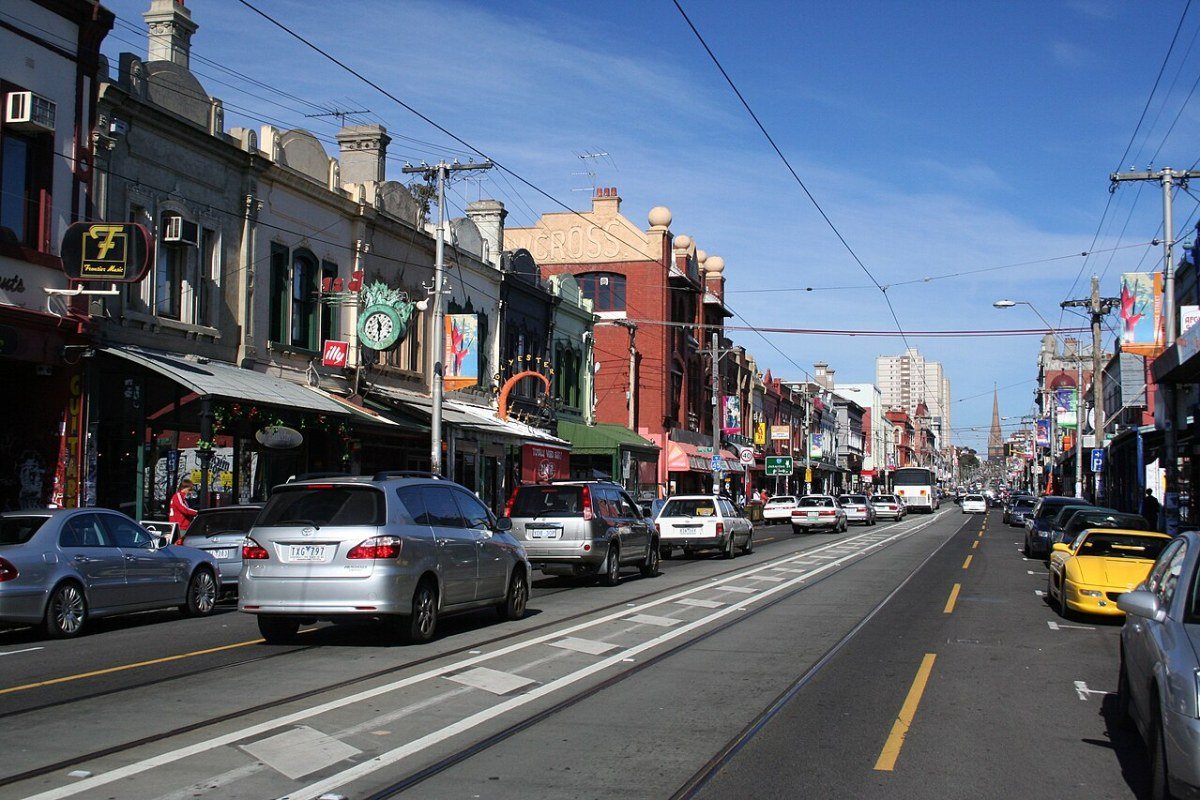
Fitzroy and its neighbour Collingwood, 2–3 km north of the Melbourne CBD, are the city’s most culturally dense inner suburbs — Victorian terraces on narrow streets lined with independent bookshops, galleries, restaurants, and small bars that have defined inner Melbourne for three decades. Smith Street (the so-called “gentrification corridor” that triggered Melbourne’s hospitality boom) and Brunswick Street (Fitzroy’s commercial spine, every second shopfront a café or wine bar) supply enough density to keep daily life entirely walkable. The Fitzroy Gardens (Captain Cook’s Cottage, the fairy tree, the conservatory) and the Edinburgh Gardens are the green lungs of the suburb. Victorian terraces typically trade at AUD $1.5M–$2.5M; warehouse-conversion apartments along Johnston Street and Smith Street start from AUD $600,000–$900,000.
2. St Kilda and Elwood: Bay Side Character
St Kilda, on Port Phillip Bay 6 km from the CBD, is Melbourne’s most recognisable inner bayside suburb — the Esplanade and Acland Street café and cake-shop strip, the Luna Park amusement park (opened on 13 December 1912, home of the world’s oldest continually operating roller coaster), the St Kilda Pier breakwater colony of little penguins, and a housing stock that mixes grand Art Deco apartments with Victorian terraces. The mix is the most genuinely diverse in inner Melbourne — the Barkly Street precinct, the Fitzroy Street restaurant strip, and the beachfront foreshore each have their own micro-feel. The adjacent Elwood offers a quieter alternative at similar price points. Terraces in St Kilda run AUD $1.2M–$2M; the Art Deco apartment stock provides more accessible entry from AUD $500,000–$800,000.
3. Geelong Waterfront: Victoria’s Coastal Alternative
Geelong’s waterfront precinct — Cunningham Pier, the bollard sculptures, Steampacket Gardens, the restored Eastern Beach Art Deco swimming enclosure, and the promenade running towards Rippleside — has become the regional postcode of choice for Melbourne’s price-sensitive professional class chasing bay living without bay-side Melbourne prices. Newtown and East Geelong hold the most desirable streets inland from the water; Geelong West and Manifold Heights provide more affordable footholds nearby. The V/Line service from Geelong to Southern Cross runs roughly every 20 minutes at peak (60–75 minutes door to door). Greater Geelong’s median house price now sits in the AUD $880,000–$910,000 band (CoreLogic, early 2026), which is no longer the bargain it was five years ago — but the trade-off in space and pace remains real.
4. Surf Coast: Torquay to Lorne
The Surf Coast communities between Torquay and Lorne, along the eastern stretch of the Great Ocean Road, have shifted in a decade from weekend holiday addresses into full-time towns for households who want the surf and the outdoors as a daily fixture rather than an annual visit. Torquay (the Rip Curl and Quiksilver HQ town, both brands founded in 1969; Bells Beach a short drive south) holds the largest permanent population; Anglesea (behind the golf course where eastern grey kangaroos share the fairways) is the most family-oriented; Lorne (140 km from Melbourne, the prettiest township on the Great Ocean Road) is the aspirational top end. Median prices of AUD $1.1M–$1.6M reflect the post-pandemic coastal premium, with Lorne and Torquay beachfront crossing AUD $2M+.
5. Daylesford: Wellness and Wine Country
Daylesford, in the Central Highlands 115 km north-west of Melbourne, is Victoria’s most distinctive lifestyle town — a community of around 3,000 built around the mineral springs, day spas, and weekend food culture that have made the area Australia’s spa-country capital. The Wombat Hill Botanic Gardens overlook the township; the Farmers Arms Hotel and Lake House restaurant draw the food crowd; the Hepburn Bathhouse and Spa at the Mineral Springs Reserve in neighbouring Hepburn Springs (established 1895) supplies the wellness infrastructure. A thriving arts community, a Sunday market, and the Daylesford Macedon Ranges wine region fill out the picture. Median house prices of AUD $700,000–$900,000 reflect the steady conversion of Melbourne weekenders into permanent residents.
6. Mornington Peninsula: Coastal and Wine Country Living

The Mornington Peninsula — the narrow finger of land between Port Phillip Bay and Western Port 60–90 km south-east of Melbourne — now supports a settled, full-time population, particularly in the townships of Mornington, Mount Martha, Dromana, Red Hill, and Sorrento. Calm bay beaches on the Port Phillip side, surf-pounded ocean beaches on the Bass Strait side (Rye, Sorrento Back Beach, Portsea), Peninsula Hot Springs at Fingal (Australia’s largest geothermal bathing destination, with more than 70 bathing experiences across a 30-hectare property), and a wine region producing acclaimed cool-climate Pinot Noir and Chardonnay around Red Hill together make this the most rounded coastal-and-country setting inside a 90-minute drive of the CBD. The Mornington Peninsula Freeway, plugged into EastLink, has made commuting workable for households content to drive 50–70 minutes on office days. Established townships sit at AUD $900,000–$1.4M; ocean-side coastal properties trade significantly higher.
Making Your Decision
Choosing where to live in Victoria comes down to honestly matching your priorities with what each city and community genuinely delivers. Budget, career opportunities, access to outdoor recreation, climate preferences, and community character all weigh differently depending on your life stage and values — and no ranking can substitute for that personal assessment. The cities and towns profiled in this guide represent the strongest overall options, but Victoria has smaller communities that offer compelling alternatives for those willing to trade urban convenience for affordability, quieter living, or closer access to natural landscapes. If you can, spend a long weekend in your shortlisted communities before committing — the practical factors matter enormously, but so does the less quantifiable sense of whether a place simply feels right for where you are in life.
Frequently Asked Questions
What are Melbourne’s most desirable inner neighbourhoods and what makes them distinctive?
Melbourne’s inner residential precincts each carry a distinct identity built over decades of neighbourhood evolution. Fitzroy and Collingwood (2–3 km north of the CBD) are the city’s most creative and culturally dense addresses — Victorian terraces on streets lined with independent bookshops, galleries, restaurants, and small bars along Smith Street and Brunswick Street, with the Fitzroy Gardens providing the green relief. Prices: houses AUD $1.5M–$2.5M+. The bayside strip — St Kilda (Melbourne’s historic beach suburb with Luna Park and the Esplanade Hotel’s live-music heritage), Elwood (Art Deco apartment blocks and a more residential feel), and Brighton (the famous colourful bathing boxes and Melbourne’s most expensive beach suburb) — delivers beach access at price points from AUD $1.0M to AUD $3M+. The inner west (Footscray, Yarraville, and Seddon) has gone through the most dramatic cultural transformation of any Melbourne precinct over the past decade — a diverse, food-forward neighbourhood where Vietnamese and East African restaurants set the streetscape, with prices 30–40% below the inner east. Carlton (directly north of the city, home to the University of Melbourne and the Royal Exhibition Building, listed on 1 July 2004 as the first Australian building inscribed on the UNESCO World Heritage list) provides the academic and cultural infrastructure of Australia’s most significant university precinct.
What does Geelong offer as Victoria’s most developed regional city?
Greater Geelong (roughly 300,000 residents, 75 km south-west of Melbourne on Corio Bay) is Victoria’s second-largest city and its most developed regional alternative — a post-industrial city that has reinvented itself through waterfront regeneration (the Eastern Beach Precinct with its restored Art Deco swimming enclosure and the locally beloved Jan Mitchell bollard sculptures), Deakin University’s expanding Waterfront and Waurn Ponds campuses, and GMHBA Stadium at Kardinia Park, the AFL Cats’ home ground and one of Australia’s most atmospheric regional football venues. V/Line trains from Geelong to Southern Cross run 60–75 minutes, which makes a part-time Melbourne commute workable. Median house prices in the AUD $880,000–$910,000 band (CoreLogic, early 2026) sit roughly 5–10% below Greater Melbourne at comparable quality. The Bellarine Peninsula (Queenscliff, Point Lonsdale, Ocean Grove) reaches south from Geelong to provide bay and ocean beach access within 30–45 minutes — the Queenscliff–Sorrento ferry is the most scenic link across to the Mornington Peninsula. Cultural anchors include Waterfront Geelong and the National Wool Museum, housed in an 1872 bluestone wool store.
What makes Ballarat and Bendigo compelling regional Victoria alternatives?
Ballarat and Bendigo — Victoria’s two premier goldfields cities, each roughly 1.5 hours from Melbourne — offer the most architecturally and culturally significant regional Victorian living outside Geelong. Ballarat (around 115,000 residents) is Victoria’s most important goldfields city, with the finest Victorian-era heritage architecture in regional Victoria: the Ballarat Avenue of Honour (the longest avenue of honour in Australia, 22 km of trees, predominantly elms, planted between 1917 and 1919 as a memorial to local WWI enlistees), the Art Gallery of Ballarat (Australia’s oldest and largest regional gallery, opened 1884, and long-time custodian of the original Eureka Flag from the 1854 stockade), and Sovereign Hill (the open-air museum that recreates Ballarat’s 1850s gold-rush townscape on a 25-hectare site). Housing: AUD $525,000–$660,000 — roughly 30–40% below comparable Greater Melbourne. Bendigo (around 125,000 residents in the Greater LGA) has Australia’s most significant Chinese heritage from the gold-rush era (the Golden Dragon Museum and the Joss House Temple), a Bendigo Art Gallery consistently programming blockbuster international exhibitions, and the Bendigo Easter Festival (running since 1871 and the only Chinese dragon procession in Australia with an unbroken tradition from the 19th century). Housing: AUD $575,000–$720,000.
What does the Mornington Peninsula offer as a Melbourne lifestyle destination?
The Mornington Peninsula — the narrow peninsula reaching 40 km south-east of Melbourne between Port Phillip Bay and Western Port — draws Melbourne commuters, remote workers, and retirees who want the coast within daily reach of the city. Peninsula Hot Springs at Fingal (one of Australia’s largest geothermal bathing facilities, sprawled across a 30-hectare property with more than 70 bathing and wellness experiences, from outdoor thermal pools to private cave pools, hilltop pools, and a hammam) is the region’s most visited single attraction. The Red Hill wine region (cool-climate Pinot Noir and Chardonnay from steep-sloped vineyards) provides the food-and-wine culture that defines the Peninsula’s premium character. Sorrento and Portsea (at the Peninsula’s southern tip) hold the most aspirational addresses — summer boat traffic, dolphin swims, and ocean-beach access combined with property prices of AUD $1.5M–$4M+. Frankston is the most accessible Peninsula entry point, with direct Metro train access from the Melbourne CBD (around 50 minutes) and housing at AUD $600,000–$750,000.
What makes the Surf Coast and Great Ocean Road area a distinctive Victorian residential destination?
The Surf Coast Shire — encompassing Torquay, Anglesea, Lorne, and Apollo Bay along the Great Ocean Road — offers Victoria’s most significant surf and coastal living outside the Mornington Peninsula. Torquay, the birthplace of Rip Curl and Quiksilver (both brands founded in 1969) and the self-styled “Surf Capital of Australia,” sits 30 minutes south of Geelong and anchors the Australian National Surfing Museum (Surf World). Bells Beach (3 km south of Torquay) is one of the world’s most famous surf breaks and the home of the Rip Curl Pro Bells Beach, the longest continually running event in competitive surfing (first staged in 1962, a fixture on the World Surf League Championship Tour). Lorne — a resort town on a sandy bay ringed by the Otway Ranges — is the Great Ocean Road’s most polished address for residents and visitors alike. Apollo Bay is the gateway to the Otway Ranges and the Great Ocean Walk (the 104 km coastal trail from Apollo Bay to the Twelve Apostles). Property prices in the most desirable Surf Coast locations (Lorne, Torquay beachfront) have crossed AUD $1.5M–$2.5M+ following the post-pandemic demand surge from Melbourne buyers.