Pennsylvania is one of the most historically significant and geographically varied states in the country — a Commonwealth whose southeastern anchor city of Philadelphia served as the nation’s first capital and the birthplace of American independence, whose western city of Pittsburgh has undergone one of the country’s most remarkable post-industrial transformations, and whose interior contains the Pocono Mountains’ lakeside resorts, the Pennsylvania Wilds’ vast State Forest wilderness, the Amish communities of Lancaster County (the largest Amish settlement in the world), and the Gettysburg battlefield that defines the American Civil War’s most decisive engagement. Philadelphia’s Independence National Historical Park is among the most important historical destinations in the Western Hemisphere. Pittsburgh’s cultural infrastructure rivals cities twice its size. And the landscapes of the Pennsylvania Wilds, where the Northern Tier’s public lands cover more than 2 million acres, provide outdoor recreation of the first order for residents of the Mid-Atlantic corridor.
Philadelphia: The Birthplace of America
Philadelphia‘s historical significance is unmatched in American cities — the Declaration of Independence was signed here in 1776, the Constitutional Convention met here in 1787, and the city served as the nation’s capital from 1790 to 1800 while Washington D.C. was under construction. Independence National Historical Park preserves the core of this history within a walkable Old City district that includes Independence Hall (a UNESCO World Heritage Site), the Liberty Bell Center, Carpenters’ Hall (where the First Continental Congress met), and the National Constitution Center. Beyond the historical district, Philadelphia rewards visitors with the Reading Terminal Market (a 19th-century train terminal converted to the most diverse indoor food market in the eastern United States), the Barnes Foundation’s extraordinary holdings of Impressionist and modern art (the world’s largest collection of Renoir, alongside major works by Matisse, Cezanne, and Picasso), and the Italian Market along South 9th Street, the oldest continuously operating outdoor market in the country.

Pittsburgh: The Renaissance City
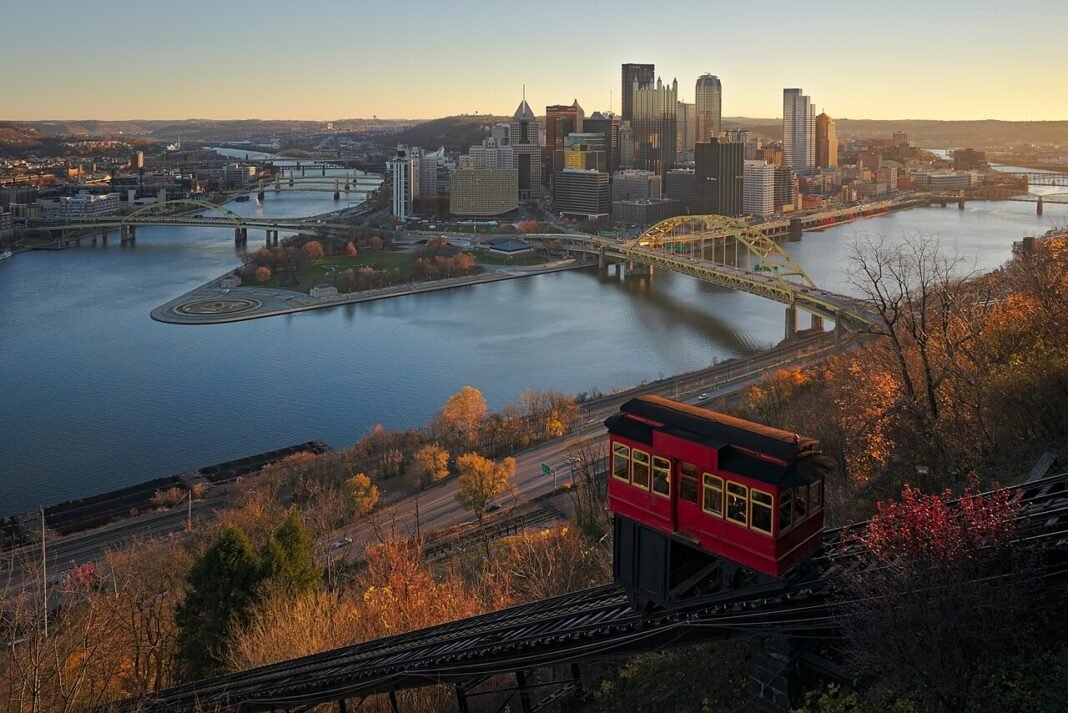
Pittsburgh’s post-industrial transformation has been one of the great urban American stories of the past four decades — a city that lost its steel industry catastrophically in the 1980s and rebuilt on education, healthcare, technology, and culture to become one of the most livable mid-sized cities in the country. The Point State Park, where the Allegheny and Monongahela Rivers join to form the Ohio River, shapes the striking geography that has defined Pittsburgh’s character. The Strip District’s weekend market and restaurant concentration, the Carnegie Museums complex in Oakland, the Warhol Museum in the North Shore, and the view from Mount Washington (accessible by the Duquesne Incline funicular railway) collectively deliver a cultural experience that consistently surprises visitors who arrive with diminished expectations.
Lancaster County: Amish Country
Lancaster County is home to the largest Amish community in the world — approximately 40,000 Old Order Amish who maintain a 17th-century agrarian lifestyle, rejecting most modern technology and creating a landscape of farms, covered bridges, and roadside markets that provides a striking contrast to the surrounding Pennsylvania landscape. The experience of driving Lancaster County’s back roads in early morning, when mist rises from the fields and horse-drawn buggies travel to market, is unlike anything available elsewhere in the country. Bird-in-Hand, Intercourse, and Strasburg are the primary tourist communities, offering access to Amish farm tours, cooking classes, and the quilts and crafts that are the community’s most celebrated products.
Gettysburg: The Civil War’s Defining Battle
Gettysburg National Military Park, in south-central Pennsylvania two hours west of Philadelphia, preserves the battlefield where the three-day Battle of Gettysburg (July 1–3, 1863) produced 50,000 casualties and ended the Confederate Army’s last major offensive into the North. The battlefield’s 26 miles of roads, more than 1,300 monuments, and preserved landscape — managed to maintain the 1863 appearance where possible — rank among the most powerful historical landscapes in the United States. The Gettysburg Museum and Visitor Center provides the essential orientation, with the Cyclorama (a 360-degree painted panorama of Pickett’s Charge created in 1884) providing an extraordinary period artifact. Lincoln’s Gettysburg Address, delivered at the dedication of the Soldiers’ National Cemetery in November 1863, is commemorated at the cemetery adjacent to the battlefield. The combination of physical scale, historical significance, and interpretive quality makes Gettysburg essential for any serious engagement with American history.
Pocono Mountains and the Northern Tier
The Pocono Mountains, in northeastern Pennsylvania, deliver accessible resort recreation for the Philadelphia and New York City markets — glacially carved lakes, notable waterfalls (Bushkill Falls and Dingmans Falls are the most dramatic), ski areas (Camelback, Jack Frost, Big Boulder), and resort communities with a history stretching back to the 19th century. The Delaware Water Gap National Recreation Area at the Poconos’ southern edge spans 70,000 acres of hiking, paddling, and wildlife habitat. Pennsylvania’s Northern Tier — the Pine Creek Gorge, 1,000 feet deep in the Tioga State Forest — is the state’s most dramatic natural landscape and among the most overlooked destinations in the northeastern United States.
Practical Information
Philadelphia International Airport (PHL) and Pittsburgh International Airport (PIT) serve as the state’s primary gateways. Amtrak’s Northeast Corridor connects Philadelphia to New York and Washington D.C. with frequent service; the Pennsylvanian connects Pittsburgh to Philadelphia and New York. Car rental is essential for Lancaster County, Gettysburg, the Poconos, and Pennsylvania’s rural interior. Pennsylvania’s four-season climate means spring (April–May) and fall (September–October) offer the most comfortable conditions for outdoor exploration, with summer viable but humid and winters (December–March) requiring preparation for snow and cold across the state.
Getting the Most Out of Your Visit
A few practical points that will improve any trip to Pennsylvania. Book accommodation and major attractions — particularly national parks, popular hiking trails, and well-known restaurants — as far in advance as you can; the best options fill weeks or months ahead, especially in peak season. A car gives you the freedom to explore beyond the main centers, where many of Pennsylvania’s richest experiences sit in places public transport never reaches. The sharpest local knowledge tends to come from regional visitor centers, independent bookshops, and conversations with residents — the discoveries that stick are rarely the ones printed in guidebooks. Give yourself more time than you think you need: Pennsylvania rewards travelers who slow down and dig in rather than racing to cover maximum ground in minimum time.
Frequently Asked Questions
What makes Philadelphia’s Independence National Historical Park significant?
Independence National Historical Park preserves the most historically significant urban district in the Western Hemisphere. The Declaration of Independence was signed here in 1776, the Constitutional Convention met here in 1787, and Philadelphia served as the nation’s capital from 1790 to 1800 while Washington D.C. was under construction. Key sites include Independence Hall (a UNESCO World Heritage Site), the Liberty Bell Center, Carpenters’ Hall (where the First Continental Congress met in 1774), and the National Constitution Center — all within a walkable Old City district. Beyond the historical district, the Reading Terminal Market (a 19th-century train terminal converted into the most diverse indoor food market in the eastern United States), the Barnes Foundation (the world’s largest Renoir collection, with major Matisse, Cezanne, and Picasso works), and the Italian Market along South 9th Street (the oldest continuously operating outdoor market in the country) round out Philadelphia’s visitor offer.
What has Pittsburgh become as a travel destination?
Pittsburgh’s post-industrial transformation has been one of the great American urban stories of the past four decades — a city that lost its steel industry catastrophically in the 1980s and rebuilt on education, healthcare, technology, and culture to become one of the most livable mid-sized cities in the country. Point State Park, where the Allegheny and Monongahela Rivers join to form the Ohio River, defines the city’s dramatic geography. The Andy Warhol Museum on the North Shore is the largest museum dedicated to a single artist in North America. The Carnegie Museums complex in Oakland, the Strip District’s weekend market and restaurant concentration, and the view from Mount Washington (accessible by the Duquesne Incline funicular railway, one of two historic inclines still operating) consistently surprise visitors who arrive with diminished expectations.
What is the Lancaster County Amish community and how do you experience it?
Lancaster County is home to the largest Amish community in the world — approximately 40,000 Old Order Amish who maintain a 17th-century agrarian lifestyle, rejecting most modern technology. The landscape of farms, covered bridges, and roadside markets provides a striking contrast to the surrounding Pennsylvania countryside. Driving Lancaster County’s back roads in early morning — when mist rises from the fields and horse-drawn buggies travel to market — is unlike anything available elsewhere in the country. Bird-in-Hand, Intercourse, and Strasburg are the primary tourist communities, offering farm tours, cooking classes, and the quilts and crafts that are the community’s most celebrated products. The Amish are generally agreeable to respectful tourism; do not photograph individuals without permission.
What is Gettysburg National Military Park?
Gettysburg National Military Park, two hours west of Philadelphia, preserves the battlefield where the three-day Battle of Gettysburg (July 1–3, 1863) produced 50,000 casualties and ended the Confederate Army’s last major offensive into the North. The battlefield’s 26 miles of roads, more than 1,300 monuments, and preserved landscape create one of the most powerful historical sites in the United States. The Gettysburg Museum and Visitor Center provides the essential orientation; the Cyclorama (a 360-degree painted panorama of Pickett’s Charge, created in 1884) is an extraordinary period artifact. Lincoln’s Gettysburg Address was delivered at the dedication of the Soldiers’ National Cemetery in November 1863 — the cemetery is adjacent to the battlefield and still an active military cemetery. Allow a full day minimum; two days allows a more thorough exploration.
What outdoor destinations does Pennsylvania offer beyond the cities?
Pennsylvania’s most significant natural landscapes are: the Pocono Mountains in northeastern Pennsylvania (glacially carved lakes, Bushkill Falls and Dingmans Falls, ski areas including Camelback and Jack Frost, the Delaware Water Gap National Recreation Area at 70,000 acres); the Pennsylvania Wilds in the Northern Tier, where the Pine Creek Gorge — 1,000 feet deep in Tioga State Forest — is the state’s most dramatic natural landscape and one of the most overlooked in the northeastern United States; and the Laurel Highlands in southwestern Pennsylvania, where Fallingwater (Frank Lloyd Wright’s 1935 masterpiece, one of the great works of American architecture) and Ohiopyle State Park’s Youghiogheny River whitewater define the outdoor offer. The Appalachian Trail crosses Pennsylvania for 230 miles through the ridges of the central part of the state.