New Mexico’s residential choices are more varied than the state’s limited population (2.1 million) might suggest — the gap between Santa Fe’s resort-economy affluence and Albuquerque’s working-city affordability frames the first decision most households face when they move to the state. Taos adds an artist-colony alternative, Las Cruces a university-town option along the state’s southern border, and the smaller cities deliver deep affordability for households whose employment is location-flexible. The state’s cultural richness — the three-culture confluence of Native American, Hispanic, and Anglo traditions strongest in northern New Mexico — shapes a way of life unlike anywhere else in the country, one that rewards genuine curiosity about the traditions behind the landscape and the rhythms of community life.

1. Santa Fe — The Art Capital
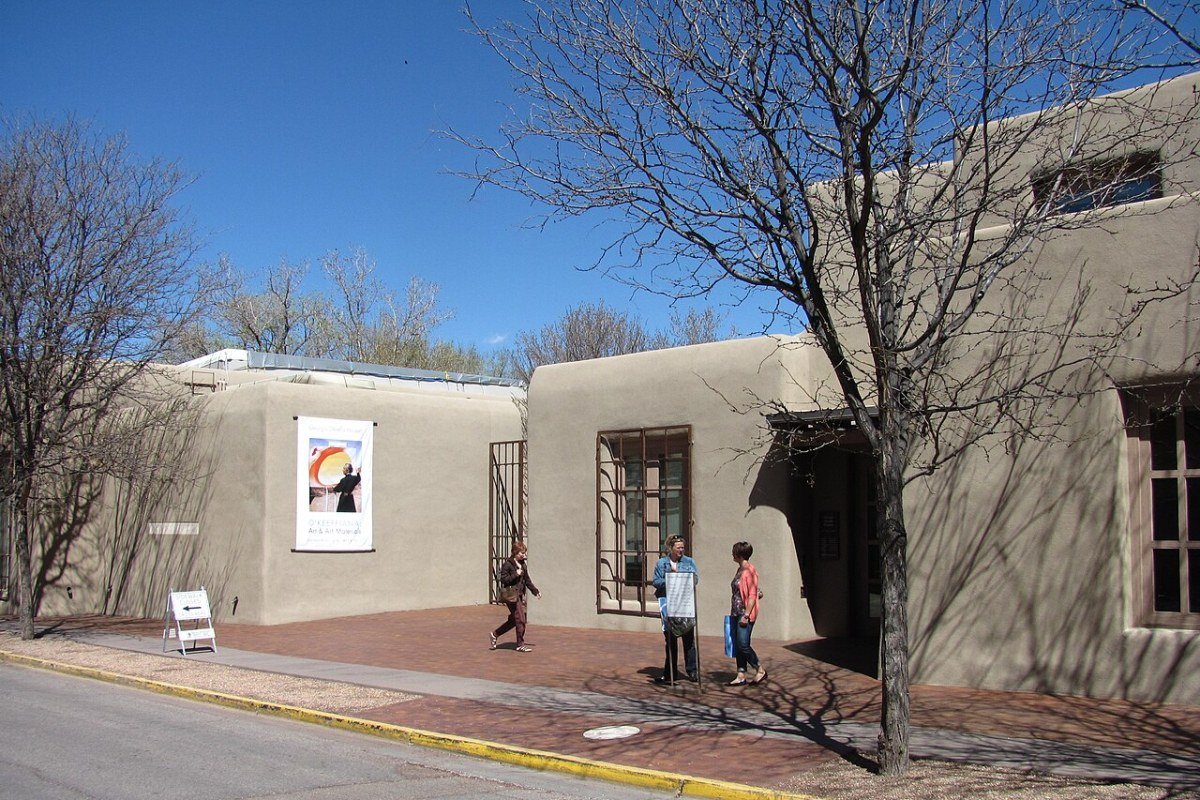
Santa Fe, the state capital and cultural center of northern New Mexico, is one of the country’s most singular small cities. UNESCO-recognized architecture, a deep museum network, a gallery scene of international standing, and the outdoor recreation of the surrounding Sangre de Cristo Mountains add up to a quality of life that justifies home prices well above what local wages would support. The city attracts artists, retirees, remote workers, and second-home buyers nationwide who find in Santa Fe a combination of intellectual stimulation, aesthetic environment, and climate (over 300 days of sunshine a year at 7,000 feet, with mild summers and manageable winters) that coastal markets rarely offer at the same price.
Santa Fe’s neighborhoods offer distinct characters within the city’s broad Pueblo Revival framework. The Eastside, the older residential streets running east of the Plaza toward the foothills, holds the city’s oldest adobe compounds, and its most sought-after properties run $700,000–$2 million. The Guadalupe district, southwest of the Plaza and next to the Railyard Arts District, feels more urban and walkable, with galleries, restaurants, and the Santa Fe Farmers Market in the restored Railyard building. The Southside neighborhoods (Tierra Contenta, Bellamah, Casa Solana) open up more attainable owner-occupied housing at $400,000–$600,000 for buyers who want a foothold in Santa Fe without paying the full historic-district premium.
2. Albuquerque’s Northeast Heights — The Family Choice
Albuquerque’s Northeast Heights covers the residential zone between Montgomery Boulevard and the Sandia Mountain foothills, running from Tramway Boulevard east to the mountain base. It is the city’s longest-established family neighborhood, built around mid-20th-century ranch homes, public schools that test above the city average, and quick access to the Sandia Mountain trails and the Sandia Peak Aerial Tramway. The Academy corridor (Academy Road, Comanche, and the streets around them) is the area’s most walkable pocket; the Sandia Heights subdivision at the mountain base commands the boldest views and the closest trailheads, with prices of $400,000–$700,000.
Albuquerque’s North Valley, along the bosque (the cottonwood forest corridor that follows the Rio Grande), keeps a rural feel inside the city limits — large lots with horse setups, working New Mexico farm irrigation, and the acequia system (the centuries-old ditch network inherited from Spanish colonial water management) at prices of $300,000–$600,000. The North Valley’s character — quieter, more agricultural, with deep Hispanic roots in the farming families who have worked this land for generations — offers a side of New Mexico the planned subdivisions of the Northeast Heights simply do not have.
3. Taos — The Artist Colony
Taos, 70 miles north of Santa Fe in the Sangre de Cristo Mountains at 6,969 feet elevation, holds the densest concentration of artists in New Mexico — a town of roughly 6,000 permanent residents, with the wider Taos County adding another 28,000 or so where the artistic heritage of the Taos Society of Artists and the literary tradition of D.H. Lawrence, Georgia O’Keeffe, and Mabel Dodge Luhan continue to attract painters, sculptors, writers, and filmmakers seeking the landscape and cultural richness that made Taos famous. The Taos Plaza — the central square of the Spanish colonial town, next to the Kit Carson Home (now a museum) and ringed by galleries, restaurants, and the Taos Inn (opened in 1936 from a cluster of 19th-century adobe houses) — anchors the social and commercial life of a town that runs year-round, not just in tourist season.

Taos Ski Valley ranks among the premier ski resorts in New Mexico, with 110 runs across 1,294 acres and some of the steepest terrain in the Southwest, and it supplies the winter jobs and recreation that carry the town through its quieter months. The Taos Valley community stretches from the Pueblo on the north to the El Prado and Ranchos de Taos communities to the south, with residential properties ranging from historic adobe homes in the Taos Historic District ($350,000–$700,000) to more affordable manufactured housing and newer construction in the outlying areas ($200,000–$350,000). The median household income in Taos County is well below the state average, reflecting the service-economy makeup of a town where many residents work in the tourism, arts, and recreation sectors.
4. Las Cruces — The Southern Alternative
Las Cruces, New Mexico’s second-largest city with 115,000 residents in the Mesilla Valley at the southern edge of the Rio Grande, is one of the Southwest’s quietly rewarding places to settle — a university city (New Mexico State University, founded 1888, employs thousands and brings the cultural and intellectual weight of a land-grant research university) at the meeting point of New Mexico, Texas, and Mexico that offers the state’s most affordable major-city housing (medians around $250,000–$320,000), 300-plus days of sunshine a year, and proximity to the Organ Mountains-Desert Peaks National Monument and White Sands National Park. The historic Mesilla Village (La Mesilla), adjacent to Las Cruces on the original El Camino Real, preserves the Spanish colonial plaza and architecture of the pre-Gadsden Purchase (1853) era in a village where the Billy the Kid story (he was tried and sentenced to hang at the Mesilla courthouse in 1881, then escaped later that year from the jail in Lincoln), the New Mexico Farm and Ranch Heritage Museum, and the chile heritage of the nearby Hatch Valley give the area a distinctive identity.
Las Cruces attracts retirees from Texas, California, and the Northeast who find its combination of affordability, climate (warmer winters than northern New Mexico but still distinct seasons), and university-town amenities compelling. El Paso, Texas sits 45 minutes south, lending Las Cruces the reach of a major Texas city — El Paso International Airport, big-box and specialty retail, and the dining and entertainment that a metro of nearly 700,000 supports. NMSU’s employment base (including the adjacent White Sands Missile Range, which employs thousands of civilian and contractor personnel) lends an economic stability unusual among New Mexico’s smaller cities.
5. Silver City — Remote and Authentic
Silver City, a historic mining town of about 9,500 residents in the foothills of the Pinos Altos Range, part of the Mogollon Mountains of southwestern New Mexico, at 5,900 feet, has become one of the Southwest’s most affordable and least packaged small-city alternatives — a place with a real arts scene (the Western New Mexico University gallery, the Silver City Arts Center, and the historic downtown murals program), the outdoor recreation access of the Gila National Forest (which contains the Gila Wilderness, the first designated wilderness area in the US, established 1924), and housing prices of $175,000–$300,000 that make homeownership accessible for artists, writers, and remote workers who choose quality of life over economic opportunity. The Gila Cliff Dwellings National Monument (44 miles north of Silver City), the Whitewater Baldy hike in the Mogollon Range, and the Gila River box canyon put wild country of national quality within a day’s drive of town.
Frequently Asked Questions
What makes Santa Fe’s neighborhoods attractive to buyers seeking cultural immersion?
Santa Fe’s residential neighborhoods reflect the city’s dual identity as New Mexico’s capital and the most culturally significant small city in the American Southwest. The Eastside — the historic neighborhood immediately east of the Plaza, with adobe homes on Canyon Road and in the Museum Hill area — is the most prestigious address in Santa Fe, where historic properties in walking distance of the city’s gallery district command $700,000 to $2 million. The Guadalupe district and the Railyard Arts District near the SITE Santa Fe contemporary arts center offer a more urban, walkable alternative with converted industrial spaces and newer construction. The Southside and the South Capitol neighborhood open more affordable footholds in Santa Fe at $400,000 to $600,000 while keeping the city’s cultural infrastructure within reach. Santa Fe’s 7,000-foot elevation produces 300 days of sunshine annually and a four-season climate — cold winters with ski access at Ski Santa Fe (12,000-foot summit) and warm but dry summers without the humidity of lower-elevation cities.
What distinguishes Albuquerque’s Northeast Heights from other city neighborhoods?
Albuquerque’s Northeast Heights — the broad residential area rising from the Rio Grande valley eastward toward the Sandia Mountain foothills — is the most sought-after urban residential setting in New Mexico’s largest city. The neighborhood’s mid-20th-century ranch homes, built during Albuquerque’s post-World War II suburban expansion, represent the most stable and desirable segment of the Albuquerque housing market, with prices ranging from $280,000 to $480,000 for well-maintained homes in established subdivisions. The Academy corridor — the commercial spine of the Northeast Heights along Academy Road and Menaul Boulevard — anchors neighborhood shopping and dining. Sandia Heights, at the mountain’s base, opens onto direct trail access to the Sandia Mountain Wilderness and the Sandia Peak Tramway, with larger lot sizes and mountain views reflected in prices from $400,000 to $700,000. Albuquerque Bernalillo County schools vary significantly by neighborhood, making school district research essential for families.
What does Albuquerque’s North Valley offer residents seeking a rural feel within the city?
Albuquerque’s North Valley — the agricultural corridor along the Rio Grande between central Albuquerque and Corrales — preserves the most distinctive residential character available within an Albuquerque zip code. Large-lot properties with horses, historic adobes, the bosque cottonwood forest along the river, and the acequia system of Spanish colonial irrigation channels still functioning for agricultural use create a genuine rural atmosphere within 15 minutes of downtown. Properties range from $300,000 to $600,000 for large lots with outbuildings, significantly lower per-square-foot than comparable rural-feel properties in Santa Fe. The adjoining village of Corrales, a separate municipality north of Albuquerque, provides a similar agricultural character with its own village governance and a somewhat more removed location from urban services. The North Valley’s proximity to the Paseo del Norte corridor and I-25 access points makes it more practical for commuters than its rural character suggests.
What makes Taos a distinctive residential destination despite its small size?
Taos, with approximately 6,000 permanent residents in the town proper (and about 34,000 across the broader Taos County area), holds the densest arts and culture scene of any small community in New Mexico — a century of artistic production has resulted in more galleries, studios, and cultural institutions per capita than any comparable community in the Southwest. Historic adobe homes in the town proper and in the surrounding communities of Ranchos de Taos, Arroyo Seco, and El Prado range from $350,000 to $700,000. Taos Ski Valley — 18 miles north of town, with 110 runs across 1,294 acres and an average snowfall of 300 inches — puts world-class skiing within day-trip reach. The year-round resident economy is constrained by low wages in the service and arts sectors, creating a bifurcated market between full-time residents dependent on local employment and second-home owners from Albuquerque, Santa Fe, Dallas, and Denver.
What does Las Cruces offer as an affordable alternative in southern New Mexico?
Las Cruces, with 115,000 residents in the Mesilla Valley on the Rio Grande, is New Mexico’s second-largest city and offers the most affordable major housing market in the state — median single-family home prices of $250,000 to $320,000, significantly below both Albuquerque and Santa Fe. New Mexico State University (founded 1888), with about 16,000 students, anchors the local economy and adds research and technology jobs on top of the city’s government and service sectors. The historic village of Mesilla — where Billy the Kid was tried and sentenced to hang in 1881 — keeps a preserved Spanish colonial plaza alongside active restaurants and shops within the broader Las Cruces metro. El Paso, Texas lies 45 minutes south, adding a major international airport, a larger retail and medical center, and the Fort Bliss military installation that employs significant numbers of Las Cruces residents who commute. White Sands National Park, about 50 miles east via US-70, is the most significant natural attraction within day-trip range.