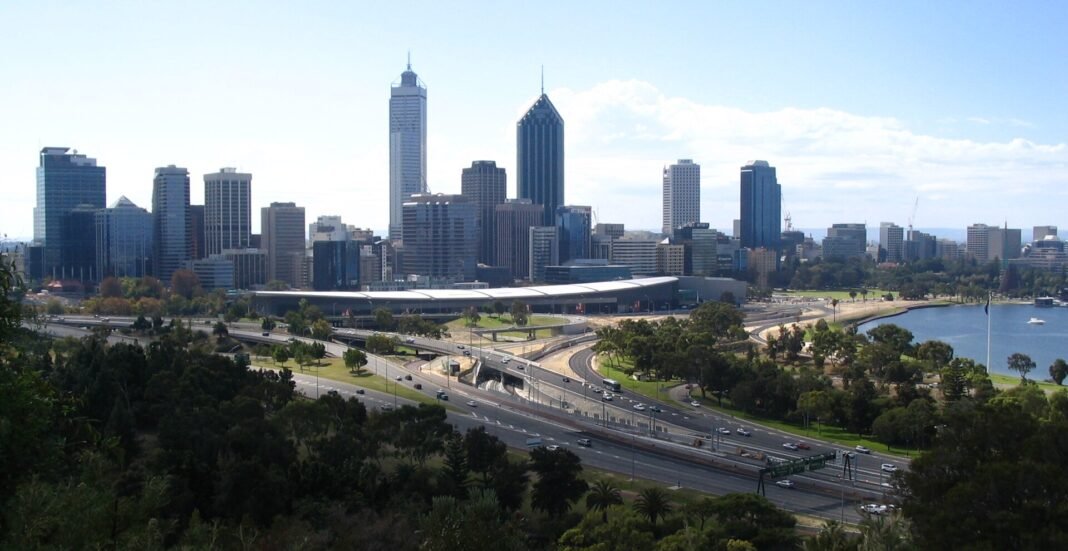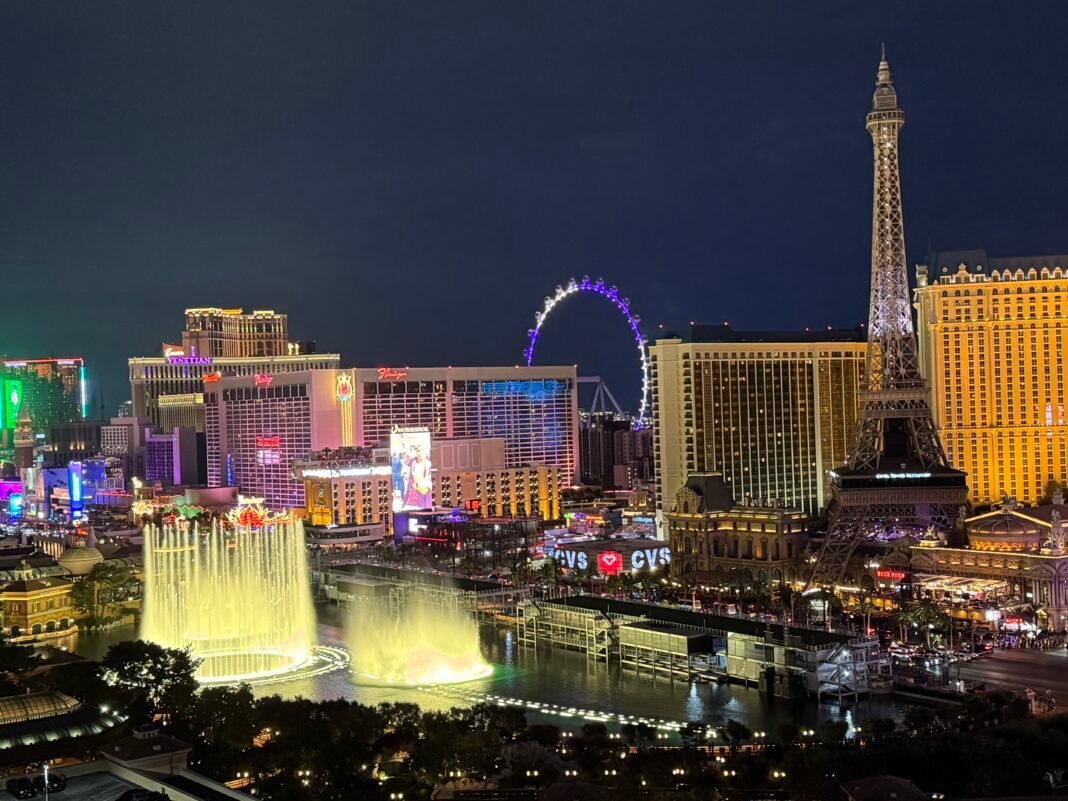
Nevada is a state of extraordinary contrasts. The neon of the Las Vegas Strip — a corridor of concentrated commercial entertainment that is at once absurd and genuinely impressive — sits in the same state as some of the most remote and least-visited wilderness in the lower 48. The Great Basin, which covers most of Nevada, is the largest endorheic drainage basin in North America: a high desert of parallel mountain ranges and dry valleys where the rain falls and stays, where ancient bristlecone pines cling to the high slopes, and where the night sky over Great Basin National Park ranks among the darkest in the continental United States. Between the Strip and the backcountry lie Red Rock Canyon, the arts scene of a reinvented Reno, and the Black Rock Desert, where Burning Man turns a dry lake bed into the world’s largest temporary city. Nevada rewards travelers who come for both extremes.
Las Vegas: The World’s Entertainment Capital
Las Vegas draws more than 41 million visitors a year, which puts it among the most visited cities in the country. People come to a metro area of 2.2 million to experience a density of entertainment, dining, and showmanship that simply does not exist in comparable form anywhere else. The Strip — the 4.2-mile run of Las Vegas Boulevard South from Mandalay Bay up to the Strat — packs in more hotel rooms than any equivalent stretch of road on earth. The MGM Grand has 6,852 rooms, the Venetian 7,092, the Wynn 4,748, the Bellagio 3,933; each is larger than any hotel outside Las Vegas in all of North America. Add the celebrity-chef restaurants, the Michelin-starred kitchens, the Broadway-caliber production shows, the championship boxing and UFC cards, and the electronic dance scene that made the city a global capital of EDM, and you get sensory overload no matter how much you think you can resist it.
,_The_Strip_--_2012_--_6232.jpg?width=1200)
Away from the Strip, Downtown Las Vegas centers on Fremont Street, and it has been thoroughly revitalized — partly by Tony Hsieh’s Downtown Project, which brought startup money and creative energy before its troubled end, and partly by the organic rise of the Arts District on South Main Street. Galleries, independent restaurants, and the monthly First Friday event have built a walkable creative quarter distinct from the casino floors. The Neon Museum, a two-acre outdoor collection of retired Las Vegas signs lit up on nighttime guided tours, may be the most authentically local experience in the city: the history of Las Vegas told through its own commercial signage.
Red Rock Canyon and the Las Vegas Natural Landscape
Red Rock Canyon National Conservation Area sits 17 miles west of the Strip on Charleston Boulevard, and it delivers one of the finest natural settings reachable from any major American city. A 13-mile scenic loop curls through the red and cream sandstone of the Calico Hills. Thirty miles of trails branch off it, climbers work the routes on the Sandstone Bluffs and the Rainbow Wall, and the Keystone Thrust lays bare a piece of deep geology where ancient gray limestone was shoved up and over younger red sandstone by tectonic forces that began about 65 million years ago. The loop opens at 6 a.m., before the summer heat turns brutal. Trails range from easy washes through the White Rock Hills to the steep scramble of Calico Tanks, which ends at a natural rock basin above the formations. For a landscape this accessible, it remains oddly underappreciated.

Valley of Fire State Park, 50 miles northeast of Las Vegas, offers an equally dramatic but quieter red-rock world. It is the oldest state park in Nevada, full of brilliant Aztec sandstone, petroglyphs left by the Ancestral Puebloans and earlier peoples, and the Elephant Rock and Beehive formations that fill so many Nevada photo albums. Fire Wave — a swirl of banded sandstone reached by a 1.5-mile trail — has become the park’s signature walk. Arrive before 8 a.m. to beat both the heat and the crowds.
Reno: The Real Nevada
Reno, the anchor of Nevada’s second-largest metropolitan area and the self-styled “Biggest Little City in the World,” has spent the past decade reinventing itself and shedding its old reputation as Las Vegas’s smaller, scruffier sibling. The Nevada Museum of Art — the only accredited art museum in the state, housed in a striking Will Bruder building, with a collection rooted in the American West and the Great Basin — anchors a wider cultural shift. The Midtown district along South Virginia Street has filled with galleries, restaurants, and independent shops to become the city’s most creative neighborhood. Lake Tahoe is 45 minutes away over the Mount Rose Highway, and the Sierra Nevada ski resorts — Heavenly, Northstar, and Palisades Tahoe — each sit within 90 minutes. For Reno residents, that adds up to a quality of life the city’s casino-heavy image has long obscured.
Great Basin National Park
Great Basin National Park, hard against the Nevada-Utah border in White Pine County, is one of the least-visited national parks in the lower 48 and one of the most rewarding. Wheeler Peak rises to 13,063 feet — Nevada’s second-highest summit, after Boundary Peak — and beneath it sit the Lehman Caves, whose rare shield formations occur in only a handful of caves worldwide. A grove of bristlecone pines near the peak includes individuals more than 3,000 years old, among the oldest living things on earth, and the sky overhead stays dark enough for unaided Milky Way viewing through most of the year. The Alpine Lakes Loop runs a gentle 2.7 miles past two subalpine lakes — Stella and Teresa — below Wheeler Peak’s north face — one of the best short hikes in Nevada. The full summit climb, 8.6 miles round trip, opens up views across 100 miles of Great Basin desert. The park is genuinely far from anywhere; Salt Lake City, the nearest big city, is almost four hours off. That remoteness keeps the trails and campgrounds quiet even on summer weekends, in ways Zion, Bryce, and Arches never manage.
Frequently Asked Questions
What is Las Vegas and how many people visit it?
Las Vegas draws more than 41 million visitors a year, putting it among the most visited cities in the United States. People come to a metro area of 2.2 million for the world’s densest concentration of entertainment, dining, and spectacle. The Strip — the 4.2-mile stretch of Las Vegas Boulevard South — holds more hotel rooms than any comparable road on earth: the Venetian (7,092 rooms), MGM Grand (6,852 rooms), Wynn (4,748 rooms), and Bellagio (3,933 rooms) each outsize any hotel outside Las Vegas in North America. Beyond the casinos, the Neon Museum — a two-acre outdoor collection of retired signs on nighttime guided tours — is the most authentically local experience in the city, and Downtown’s Fremont Street anchors a real Arts District on South Main Street.
What is Red Rock Canyon and how do you get there from Las Vegas?
Red Rock Canyon National Conservation Area lies 17 miles west of the Strip on Charleston Boulevard — one of the finest natural settings reachable from any major American city. Its 13-mile scenic loop winds through the red and cream sandstone of the Calico Hills, with 30 miles of trails and climbing routes on the Sandstone Bluffs and Rainbow Wall. The Keystone Thrust exposes ancient gray limestone pushed over younger red sandstone by forces that began about 65 million years ago. The loop opens at 6 a.m., before the summer heat sets in. Valley of Fire State Park, 50 miles northeast of Las Vegas, is the state’s oldest state park and offers equally dramatic Aztec sandstone, Ancestral Puebloan petroglyphs, and the famous Fire Wave (arrive before 8 a.m. to avoid heat and crowds).
What is Great Basin National Park and why is it worth visiting?
Great Basin National Park, on the Nevada-Utah border in White Pine County, is one of the least-visited but most rewarding national parks in the lower 48. Wheeler Peak reaches 13,063 feet — Nevada’s second-highest summit, after Boundary Peak — and the Lehman Caves below it hold rare shield formations found in only a handful of caves worldwide. A grove of bristlecone pines near the peak includes trees more than 3,000 years old, among the oldest living things on Earth, beneath one of the darkest night skies in the continental United States. The Alpine Lakes Loop (2.7 miles, two subalpine lakes — Stella and Teresa — below Wheeler Peak’s north face) is one of Nevada’s best short hikes; the full summit climb (8.6 miles round trip) opens 100-mile views across the Great Basin. Even on summer weekends, the trails and campgrounds stay quiet.
What makes Reno worth visiting beyond gambling?
Reno has reinvented itself over the past decade. The Nevada Museum of Art — the only accredited art museum in the state, in a striking Will Bruder building — focuses on the American West and the Great Basin. The Midtown district on South Virginia Street has become the city’s most creative neighborhood, full of galleries, restaurants, and independent shops. Lake Tahoe is 45 minutes away over the Mount Rose Highway, and the Sierra Nevada ski resorts — Heavenly, Northstar, and Palisades Tahoe — each sit within 90 minutes, making Reno a year-round base for outdoor recreation. The Truckee River Whitewater Park runs through downtown for kayaking and rafting, and every summer Burning Man turns the Black Rock Desert (120 miles north) into the world’s largest temporary city.
What is the Black Rock Desert and Burning Man?
The Black Rock Desert, 120 miles north of Reno in the high country of northern Nevada, is a vast playa — a dry lake bed of extraordinary flatness and one of the largest flat surfaces on earth. Every late summer, Burning Man turns the playa into Black Rock City, a community of 70,000-plus people built around radical self-expression, self-reliance, and communal effort. It is the world’s largest temporary city, full of elaborate art installations and themed camps, and it culminates in the burning of a large central effigy. Outside the festival, the playa hosts land-speed-record attempts, and the surrounding Humboldt-Toiyabe National Forest offers hiking and four-wheel-drive access into the desert mountains.