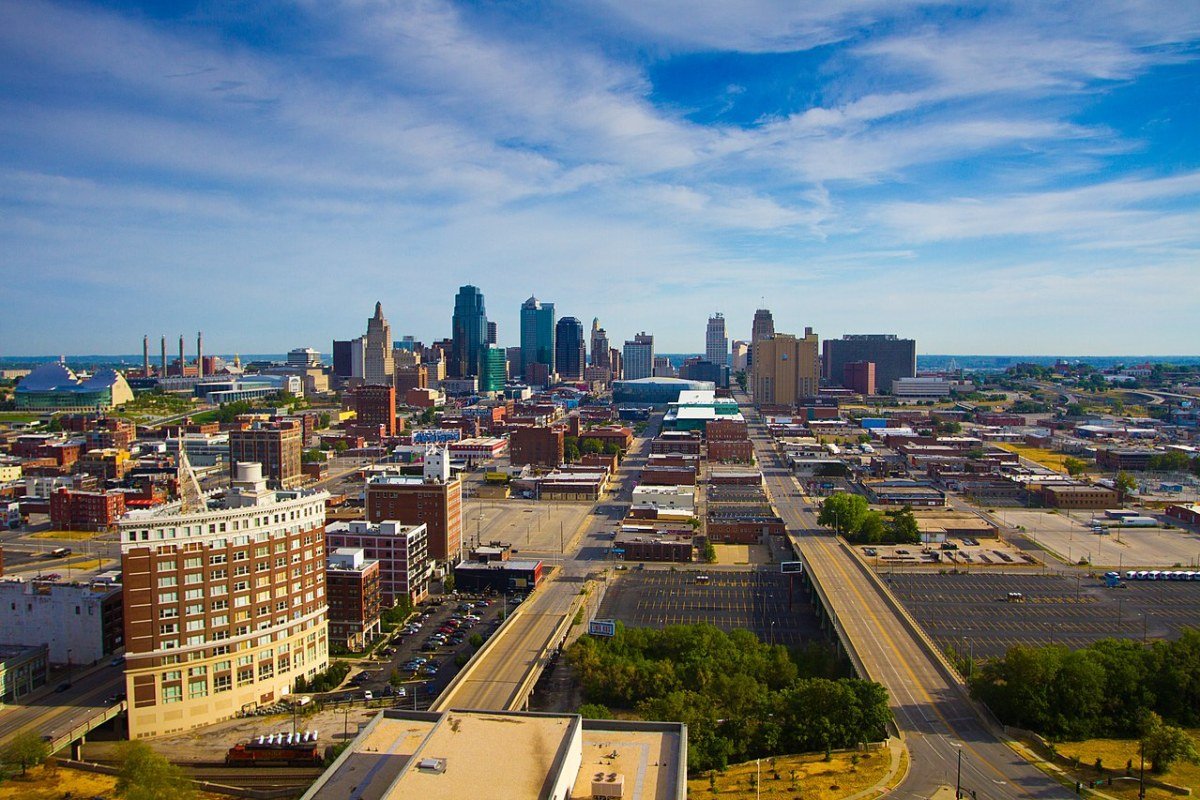
Missouri makes one of the strongest cost-of-living arguments of any state with major metropolitan areas. Housing in both St. Louis and Kansas City sits far under what you would pay for equivalent cities on either coast, the state income tax is moderate and still falling, and the Midwest’s structural edge in food, energy, and services keeps everyday costs down. For households whose income travels with them — remote workers, or anyone who can tap Missouri’s own employment base — the state pairs real urban culture with prices few other American metros can touch at this scale.

Housing: St. Louis’s Extraordinary Value
St. Louis ranks among the most undervalued major real estate markets in the country. The city has the institutions you would expect of a much pricier place — the Art Museum, the Symphony, the Cardinals and Blues franchises, a deep restaurant and bar scene — plus the MetroLink light rail linking the airport, downtown, and the inner suburbs, all attached to housing that costs a fraction of similar markets. Median home prices in St. Louis City proper run between $140,000 and $220,000, among the lowest of any American city offering amenities at this level. In the most sought-after urban neighborhoods — the Central West End, Lafayette Square, Soulard, Tower Grove South, Shaw, and Maplewood — renovated single-family homes on walkable, restaurant-rich blocks generally fall in the $200,000–$400,000 range.
St. Louis County’s inner suburbs pair strong schools with established suburban character, and family demand reflects that at prices well under equivalent metros. Clayton, the county seat and most prestigious inner suburb, carries medians of $450,000–$700,000 for single-family homes — still far cheaper than Boston, DC, or Bay Area equivalents with the same school quality. University City, Kirkwood, Webster Groves, and Maplewood open the door at $200,000–$380,000, with transit access and walkable commercial districts. For the most space-intensive suburban living, Creve Coeur, Chesterfield, and the western county communities sit at $300,000–$550,000.
Kansas City’s market sits in similar territory: affordable by coastal standards, with a tier of premium neighborhoods that has grown alongside the city’s cultural and economic revival over the past decade. Median prices in Kansas City proper run between $180,000 and $280,000 for single-family homes. The most desirable areas — the Country Club Plaza district (the first planned outdoor shopping center in America, and still the city’s most prestigious commercial and residential address), Brookside, Waldo, Westport, and the Crossroads Arts District — fall between $250,000 and $500,000. On the Kansas side, Overland Park, Leawood, and Shawnee deliver top suburban schools at $280,000–$500,000; the Missouri side’s Lee’s Summit and Blue Springs keep family housing more affordable at $220,000–$350,000.

State Income Tax
Missouri has trimmed its income tax steadily. The top rate dropped to 4.7% in 2025, down from 4.8%, and further cuts toward 4.5% are queued behind revenue triggers. The graduated schedule tops out at that 4.7% rate, which keeps Missouri moderate by national standards and well under high-tax states such as California (13.3%), New York (10.9%), and Minnesota (9.85%). The reforms position the state to compete with its no-income-tax neighbors while phasing the cuts against revenue performance rather than slashing all at once.
City residents pay a little more. Kansas City levies a 1% earnings tax on people who live or work within its limits, and St. Louis City applies the same 1% to its residents and workers. Stacked on the state rate, that brings the combined effective burden for St. Louis and Kansas City residents to roughly 5.8–6.8% — still moderate, but worth weighing in any city-versus-suburb decision for households near the margin.
Property Taxes
Property taxes here run under the national average, with a statewide effective rate of roughly 0.9–1.1% of market value. Against Missouri’s low median home prices, that translates to manageable annual bills: a $200,000 St. Louis neighborhood home typically owes $1,800–$2,200 a year, while a $350,000 Kansas City suburban home owes around $3,500–$4,200. Rates are set locally — Clay County and Jackson County on the Kansas City side, and St. Louis City and County, each handle their own assessments, so effective rates vary somewhat from one jurisdiction to the next. Missouri also offers a property tax credit (the “circuit breaker”) that returns part of the bill to qualifying senior and disabled homeowners and renters.
Everyday Costs
Day-to-day spending stays consistently under the national average. Grocery prices run 4–8% below it — a function of the state’s farm output and a competitive retail field that mixes Schnucks (the dominant St. Louis-based chain), Dierbergs (the local upmarket option), Aldi, Walmart, and Whole Foods across the major markets. Midwest agriculture keeps meat, dairy, and produce cheaper than on the coasts. Eating out in both cities costs noticeably less than comparable dining in big coastal markets: the barbecue institutions (Joe’s Kansas City, Arthur Bryant’s), the Soulard bars, and the rising kitchens of the Crossroads and Maplewood deliver real quality at 30–50% under New York or Chicago equivalents.
Energy lands near the national average. Coal and natural gas generation hold residential electricity to roughly 12–14 cents per kilowatt-hour, still below the U.S. average even after recent rate increases. Heating matters in winter — Missouri runs colder than the Deep South but milder than Minnesota — with natural gas bills averaging $800–$1,400 a year for a typical home. Summers cut the other way: June through August highs regularly hit 90–100°F with heavy humidity in both St. Louis and Kansas City, so air conditioning becomes a meaningful line item.
The Missouri Value Case
For households chasing urban life at Midwest prices, Missouri offers one of the strongest propositions of any state east of the Mississippi. The clearest example is St. Louis: a beautifully renovated brick home on a walkable, restaurant-lined block, with transit access, runs $250,000–$350,000 — and that comes with world-class free institutions (the Art Museum, the Zoo, Forest Park) and Ozark wilderness within an hour. The same budget would barely cover a studio rent in Boston, New York, or San Francisco. The honest counterweights are real: St. Louis carries concentrated poverty and crime that demand neighborhood-by-neighborhood research, and the city’s long population decline tempers appreciation potential. Weigh those alongside the numbers — but the financial case itself is genuinely hard to beat.
Frequently Asked Questions
Is St. Louis affordable to live in?
St. Louis ranks among the most undervalued major urban real estate markets in the United States. Median home prices in St. Louis City run $140,000–$220,000, with the most sought-after neighborhoods (Central West End, Lafayette Square, Soulard, Tower Grove South) at $200,000–$400,000 for renovated single-family homes. That is a fraction of what comparable cultural amenities, restaurants, and professional sports cost in other markets.
What is Missouri’s income tax rate?
Missouri’s top income tax rate dropped to 4.7% in 2025 (down from 4.8%), with further cuts toward 4.5% queued behind revenue triggers — moderate by national standards. Kansas City and St. Louis residents pay an additional 1% city earnings tax, bringing the combined effective rate to roughly 5.8–6.8% for residents of the two major cities.
How do Missouri property taxes compare to other states?
Missouri property taxes run below the national average, at roughly a 0.9–1.1% effective rate. Against the state’s low home values, the dollar amounts stay manageable: a $200,000 St. Louis neighborhood home owes about $1,800–$2,200 a year; a $350,000 Kansas City suburb home runs about $3,500–$4,200. A state property tax credit (the “circuit breaker”) returns part of the bill to qualifying senior and disabled homeowners and renters.
Is Kansas City or St. Louis cheaper to live in?
Both are similarly affordable. Kansas City proper medians run $180,000–$280,000, with desirable neighborhoods (Country Club Plaza, Brookside, Crossroads Arts District) at $250,000–$500,000, and Kansas-side suburbs (Overland Park, Leawood) at $280,000–$500,000. St. Louis City runs $140,000–$220,000 median, with sought-after urban neighborhoods at $200,000–$400,000 and the top inner suburb (Clayton) at $450,000–$700,000.
What everyday costs should I expect in Missouri?
Groceries run 4–8% below the national average. Electricity is roughly 12–14 cents/kWh, still below average. Natural gas heating averages $800–$1,400 a year. Restaurant dining runs 30–50% under New York or Chicago equivalents. Summers are hot and humid (90–100°F from June through August), so air conditioning is a meaningful budget item.