Scotland Travel Guide 2026: Edinburgh, the Highlands, and the Islands
Scotland is one of Europe’s great travel destinations — a country of 78,000km² that encompasses one of the continent’s most architecturally magnificent capital cities, the last significant wild mountain landscape in the British Isles, an island archipelago of extraordinary beauty and cultural distinctiveness, and a cultural identity — shaped by Gaelic, Norse, and Scots traditions — that has generated a literature, a music, a whisky culture, and a scenic mythology disproportionate to a country of 5.5 million people. Scotland’s combination of Edinburgh’s medieval Old Town and Georgian New Town, the Highland landscape of Glencoe and Torridon, the island cultures of Skye and the Outer Hebrides, and the genuine warmth of its people creates a travel experience that brings visitors back repeatedly; the country ranks consistently as one of the world’s most popular travel destinations relative to population size.
Edinburgh: Scotland’s Capital
Edinburgh (550,000 residents) is one of Europe’s most beautiful capital cities — the medieval Old Town crowning the volcanic crag of Castle Rock, the Georgian New Town’s elegant crescents and squares descending to the Firth of Forth, and Arthur’s Seat’s extinct volcanic summit above Holyrood Palace create a cityscape of such dramatic natural and architectural achievement that the entire city centre is a UNESCO World Heritage Site. Edinburgh is simultaneously a city of history (the castle, the Royal Mile, Mary Queen of Scots’ apartments in Holyrood), a city of festivals (the August Edinburgh International Festival, the Festival Fringe — the world’s largest arts festival — and the Hogmanay New Year celebrations), and a city of contemporary culture (the Scottish Parliament building by Enric Miralles, the National Museum of Scotland, the Scotch Whisky Experience).
- Edinburgh Castle: The fortress at the summit of Castle Rock — occupied since at least the Iron Age, built to its current form over seven centuries of Scottish history — houses the Scottish Crown Jewels (the Honours of Scotland, the oldest crown jewels in the British Isles), the Stone of Destiny (on which Scottish and English kings were crowned), and the One O’Clock Gun (fired daily at 1pm). The castle’s position — 80m above the city on three sides of sheer volcanic cliff — makes it the defining visual experience of Edinburgh’s skyline
- The Royal Mile: The medieval street connecting Edinburgh Castle to the Palace of Holyroodhouse (the Scottish residence of the monarch) is lined with closes (narrow alleyways leading into the Old Town’s medieval residential layers), the St Giles’ Cathedral (the High Kirk of Edinburgh, where John Knox preached), the Scottish Parliament building, and the dozens of whisky shops, tartan emporiums, and independent shops that make it Scotland’s most visited street
- Arthur’s Seat: The 251m summit of the ancient volcano above Holyrood Park — a 45-minute walk from the city centre — provides the finest view of Edinburgh’s roofscape, the Firth of Forth, and on clear days the Highland mountains to the north. It is the city’s accessible wilderness in miniature and the most popular walk in urban Scotland
- Edinburgh Festival Fringe: The August Fringe (typically the second to fourth weeks of August) transforms Edinburgh into the world’s largest arts festival — 3,500+ shows across 300+ venues in a city of 550,000. Theatre, comedy, dance, circus, and spoken word fill every available space from the Usher Hall to pub basements; booking ahead for popular shows is essential

The Scottish Highlands: Europe’s Last Wilderness
The Scottish Highlands — the mountainous terrain north and west of the Highland Boundary Fault, encompassing approximately half of Scotland’s land area and less than 5% of its population — is the last significant wild mountain landscape in the British Isles and one of the finest in Europe. The combination of Munros (mountains above 914m, of which Scotland has 282), the Atlantic-facing sea lochs of the west coast, the ancient Caledonian pine forests of Cairngorms and Glen Affric, and the remote character of a landscape with very few roads and very few people creates an outdoor environment of genuine wild quality.
- Glencoe: The most dramatic glaciated valley in Scotland — the U-shaped valley carved between the Three Sisters of Glencoe (the volcanic ridges of Bidean nam Bian) and the Aonach Eagach ridge — is 90 minutes from Glasgow and the most photographed Highland landscape. The 1692 Massacre of Glencoe (the Campbells’ slaughter of the MacDonalds, under government orders) gives the valley a historical darkness that the scenery amplifies
- Loch Ness: The 37km lake in the Great Glen (the geological fault running northeast from Fort William to Inverness) is the world’s most famous lake — the Nessie mythology (the 1933 photograph, the 90 years of monster hunts, the Loch Ness Centre in Drumnadrochit) draws millions of visitors to what is actually one of Scotland’s most impressive natural landscapes regardless of its monster population
- Cairngorms National Park: The largest national park in the UK (4,528km²) encompasses the high plateau of the Cairngorms (Britain’s only sub-Arctic ecosystem, with genuine tundra habitats above 1,100m), the Strathspey valley’s ancient pine forests and reindeer herd, and the ski resorts of Cairngorm Mountain and the Lecht. Ben Macdui (1,309m, the second-highest mountain in Britain) is accessible from the Cairngorm Mountain car park
Isle of Skye: Scotland’s Most Beautiful Island
Skye — the largest island of the Inner Hebrides, connected to the mainland by the Skye Bridge since 1995 — has become Scotland’s most visited destination outside Edinburgh, for reasons immediately apparent on arrival: the Cuillin mountains (the most technically demanding mountains in Britain, a gabbro ridge of 12 Munros with exposed scrambling and genuine mountaineering on several routes), the Trotternish Ridge (the basalt cliffs and pinnacles of the Old Man of Storr and the Quiraing), the colour of the light on Atlantic water, and the island’s Gaelic culture (still spoken by a significant proportion of Skye’s 13,000 residents).
Glasgow: Scotland’s Cultural Engine
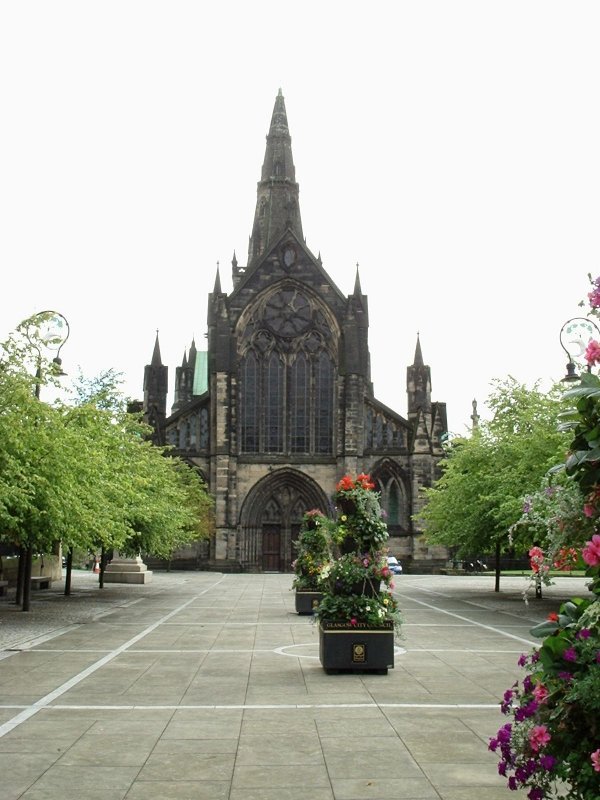
Glasgow (650,000 residents) is Scotland’s largest city and its most culturally vibrant — the city that built the Victorian world’s ships (the Clyde shipyards) and has reinvented itself since deindustrialisation as one of Britain’s finest cultural cities. The Kelvingrove Art Gallery and Museum (Scotland’s most visited attraction, with an extraordinary collection of Rennie Mackintosh, Dalí, and European masters), the Glasgow School of Art (Charles Rennie Mackintosh’s masterwork, currently being restored after fire damage), the Kelvin Hall, the Riverside Museum (Zaha Hadid’s transport museum on the Clyde), and the Barrowland Ballroom (Scotland’s most celebrated live music venue) define a city of real cultural ambition.