Outdoor Activities in Western Australia 2026: Kimberley, Karijini, and the Indian Ocean
Western Australia’s outdoor experience operates at a scale that defeats easy description — the state is larger than Western Europe, with a coastline of 20,000km, national parks that dwarf small countries, and wilderness areas where the nearest human settlement is hundreds of kilometres distant. The Kimberley’s gorges and waterfalls, the Pilbara’s ancient iron formation landscapes, the South West’s surf and karri forests, and the Ningaloo Reef’s whale shark encounters define an outdoor recreation menu with few equivalents anywhere in the world. What distinguishes WA’s outdoor experience from other Australian states is the preparation required — fuel range, water carrying capacity, satellite communication, and wildlife awareness (crocodiles in the Kimberley, sharks in the ocean, and venomous snakes throughout) are genuine considerations, not bureaucratic cautions. The reward for that preparation is access to landscapes of extraordinary rarity and beauty, often in complete solitude.
The Kimberley: Gorges, Waterfalls, and the Gibb River Road
The Gibb River Road, 660km of unsealed track connecting Derby to Kununurra through the heart of the Kimberley, is Australia’s most demanding and rewarding 4WD touring route. The gorges, waterfalls, and cattle stations along the Gibb provide a full overland expedition experience:
- Windjana Gorge National Park: The Lennard River cuts through the Oscar Range in a limestone gorge where freshwater crocodiles bask on the sandbars; the gorge walk (3.5km return) passes through some of the most dramatically sculpted limestone landscapes in Australia
- Bell Gorge: A tiered waterfall in the King Leopold Ranges; the walk (8km return from Silent Grove campground) is among the most rewarding day walks in the Kimberley; swimming in the pool below the falls
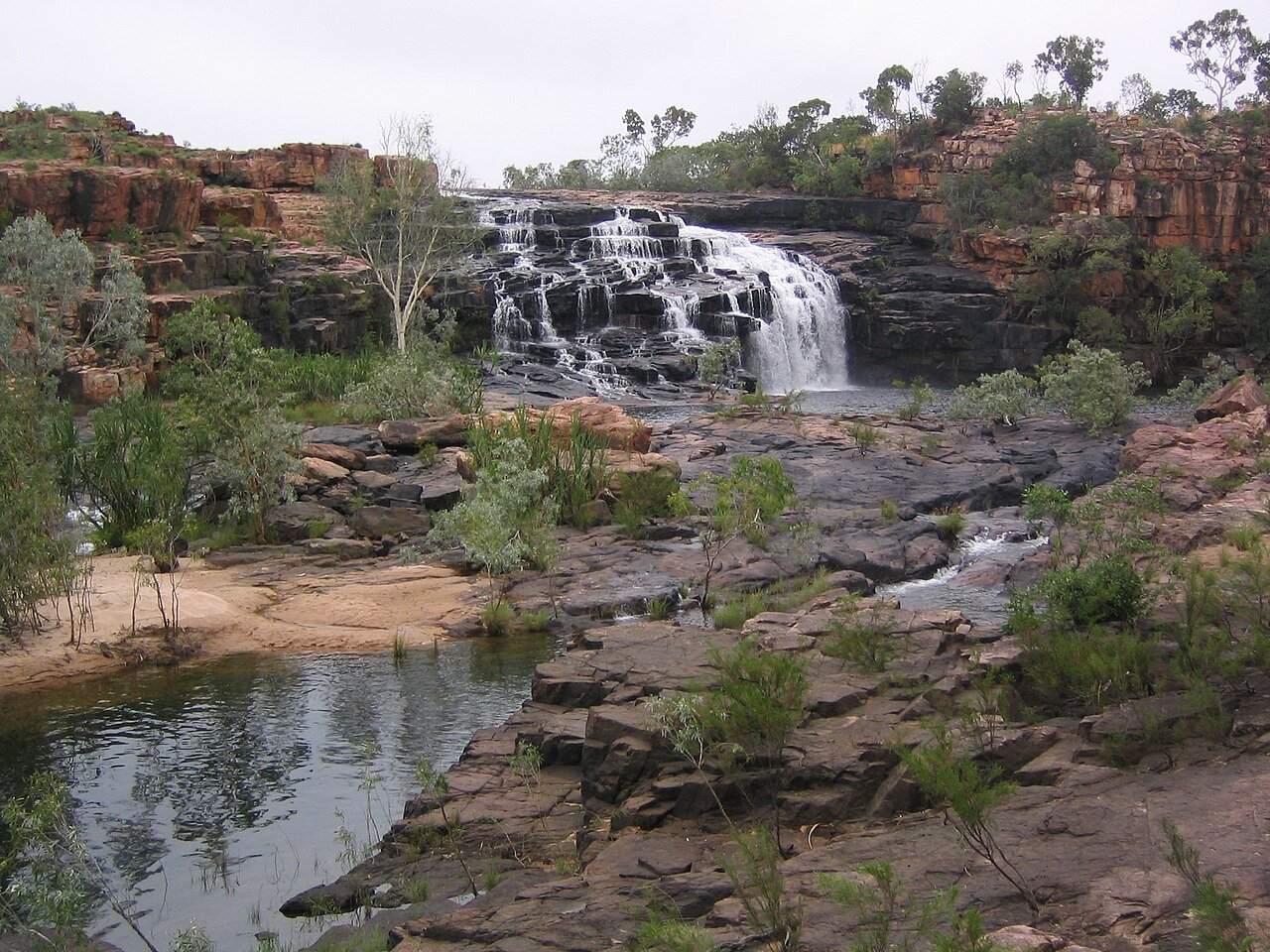
- Manning Gorge: A Kimberley cattle station gorge accessible by swimming across the Manning River to reach the upper waterfall; the most quintessentially Kimberley experience on the Gibb River Road
- El Questro Wilderness Park: A private wilderness station of 700,000 acres east of the Gibb; Zebedee Springs (thermal pools in a palm grove), Emma Gorge, and El Questro Gorge provide the most accessible Kimberley gorge experiences
- Purnululu National Park (Bungle Bungles): UNESCO World Heritage Site east of Halls Creek; the beehive-striped sandstone domes (orange and black banding from silica and cyanobacteria) are among the world’s most distinctive geological formations; Cathedral Gorge (2km, palms and echoing acoustics) and Echidna Chasm (the tallest and narrowest gorge) provide the ground-level experience
- Horizontal Falls: Tidal rapids through two narrow gorges in the Buccaneer Archipelago near Talbot Bay; the horizontal movement of tidal water creates a waterfall effect; seaplane and boat tours from Broome and Derby provide access
Karijini National Park: The Pilbara Gorges
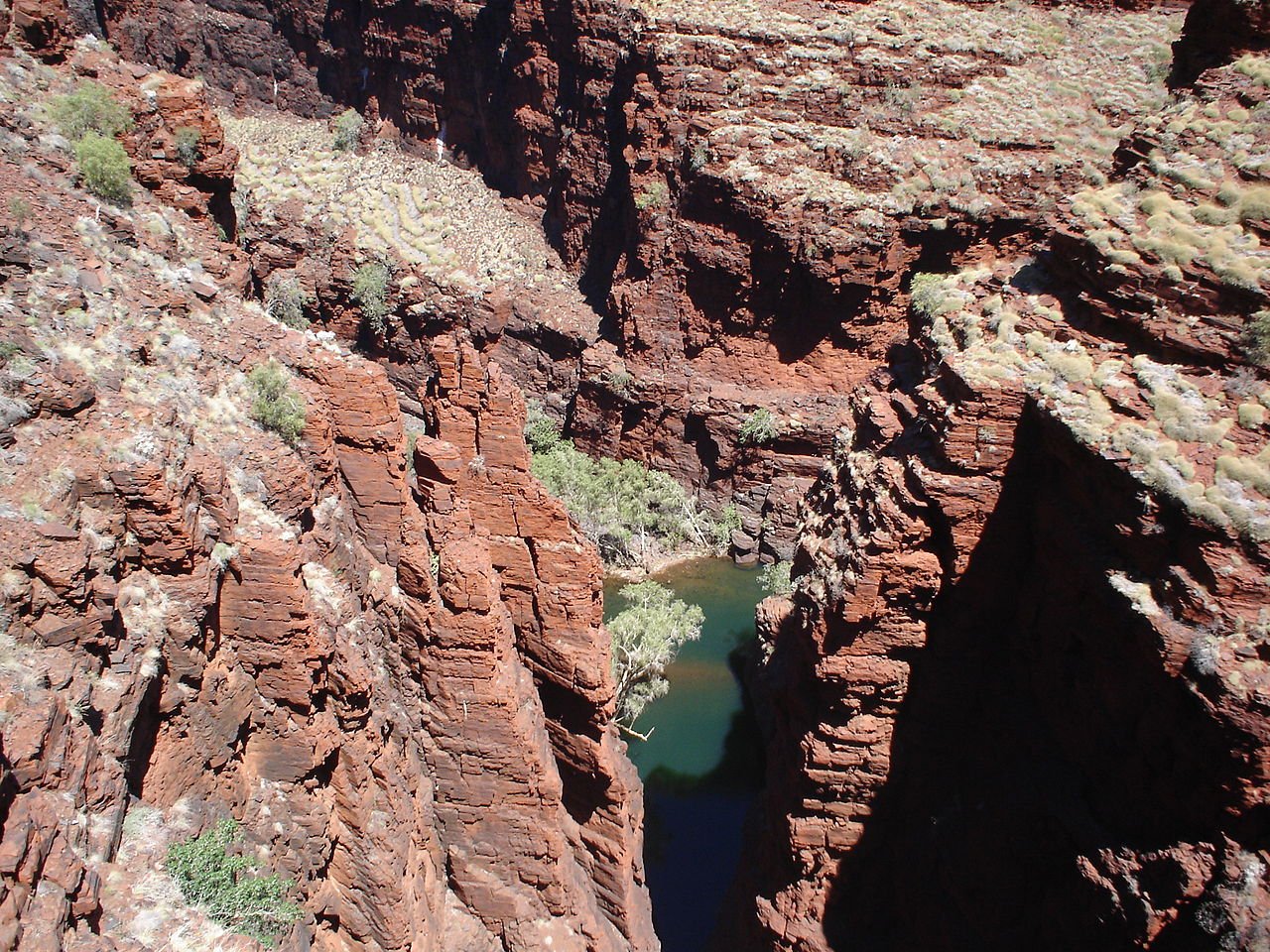
Karijini National Park, 1,400km north of Perth in the Pilbara, contains the most visually extraordinary gorge landscapes in Australia — narrow chasms of 2.5-billion-year-old banded iron formation rock descending to swimming holes of crystalline water, accessible by walks that range from tourist-friendly to technical scrambles requiring ropes:
- Hancock Gorge: The most dramatic and demanding accessible gorge; the Kermit’s Pool section requires swimming through chest-deep water in the narrow chasm; the iron-red walls descend to turquoise water in a visual combination of extraordinary intensity
- Dales Gorge and Fortescue Falls: The most accessible Karijini gorge; Fortescue Falls (a permanent waterfall in the gorge) and Fern Pool (a swimming hole below the falls) provide a complete gorge experience on a 4km return walk; the gorge rim walk above provides the overview context
- Weano Gorge and Handrail Pool: A narrow gorge descent to a swimming hole using fixed handrails; the combination of engineered access and genuinely remote-feeling landscape is distinctive
- Knox Gorge: Less visited than Hancock or Weano; one of the deepest accessible gorges in Karijini; the 4km return walk to the bottom involves rock scrambling
- Oxer Lookout: The confluence of four gorges — Hancock, Joffre, Weano, and Red — viewed from a single lookout point; the most visually comprehensive view of Karijini’s geology and the most photographed outlook in the Pilbara

Ningaloo Reef: The Indian Ocean Marine Experience
Ningaloo Reef, a 260km fringing reef system along the Cape Range Peninsula near Exmouth (1,200km north of Perth), is UNESCO World Heritage listed and provides the world’s most accessible coral reef and large marine animal encounter in a single location:
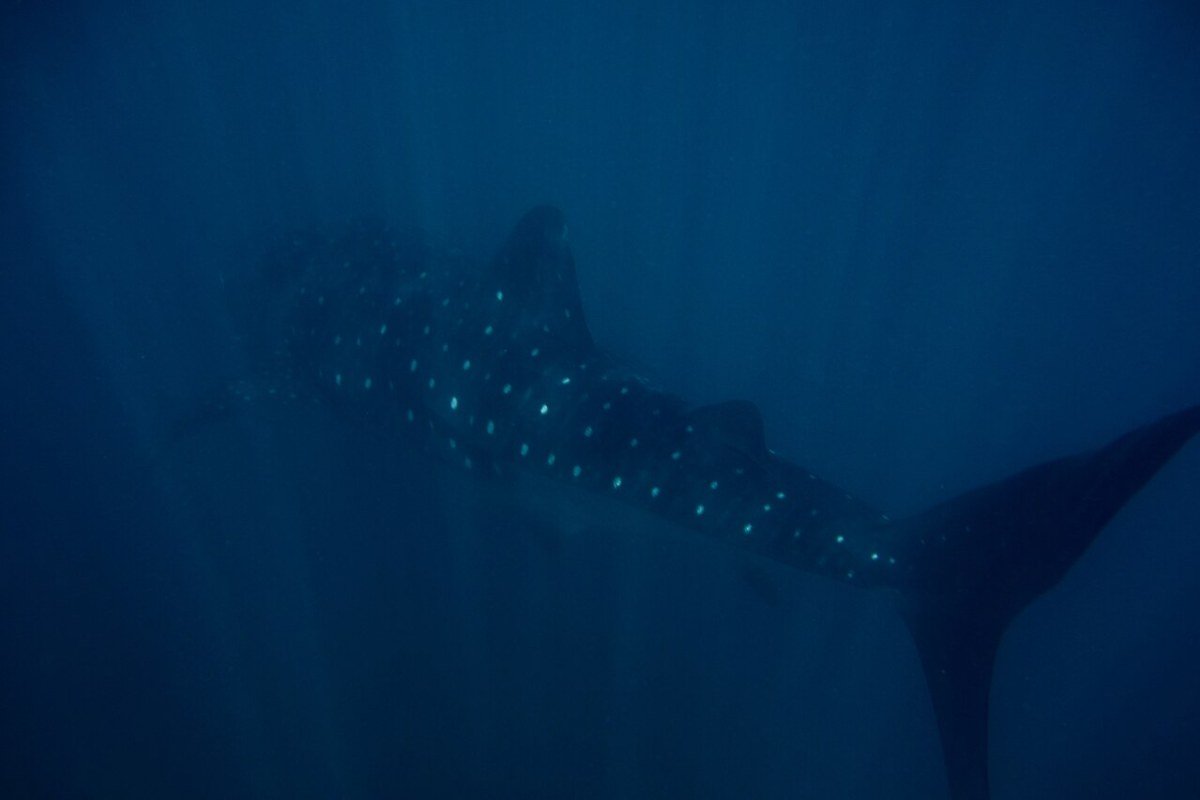
- Whale shark swimming (March–July): Ningaloo’s whale shark aggregation (the world’s largest predictable seasonal gathering of whale sharks) is accessible by boat tour from Exmouth and Coral Bay; guided snorkelling alongside the world’s largest fish, up to 12m in length, is the defining Ningaloo experience
- Manta ray snorkelling (May–November): Reef manta rays aggregate at Ningaloo’s coral bommies; boat tours provide interaction opportunities with animals that span 4–5m wing-to-wing
- Humpback whale watching (July–October): Humpback whales use Ningaloo as a nursery and mating ground during their annual migration; boat tours from Coral Bay and Exmouth observe behaviours (breaching, tail-slapping, calf play) at close range
- Cape Range National Park: The limestone ranges of the Cape Range run parallel to the Ningaloo coast; Yardie Creek Gorge (boat tours into the gorge, black-footed rock-wallaby spotting on the clifftops), the Mandu Mandu Gorge walk (3km), and the Badjirrajirra loop hike provide the land complement to the reef experience
- Turquoise Bay and Oyster Stacks snorkelling: Shore-based reef snorkelling accessible directly from the beach at Cape Range; Turquoise Bay’s drift snorkel (entering the northern end and drifting south along the reef on the current) is Western Australia’s finest accessible reef snorkelling
The South West: Surfing, Cycling, and Tall Timber
Western Australia’s South West (the region south of Perth extending to the Southern Ocean) provides a complete outdoor recreation landscape combining world-class surf, karri forest walks, and coastal cycling:
- Margaret River surf breaks: Surfers Point at Prevelly is the premier Margaret River break — consistent Indian Ocean swells, a quality left-hand point, and the Margaret River Pro (a WSL Championship Tour event) provide the context; Gracetown’s North Point and South Point, and the isolated southern breaks (Guillotine, Gallows, and Box) require local knowledge and are for experienced surfers
- Boranup Karri Forest: The Margaret River region’s karri forest (karri is one of the world’s tallest flowering trees, reaching 60m+) provides a walking and mountain biking landscape of unusual grandeur; the Boranup Karri Walk Trail (2km loop) and the Karri Forest Explorer drive showcase the forest
- Cape to Cape Track: A 135km walk from Cape Naturaliste to Cape Leeuwin along the Leeuwin-Naturaliste National Park coast; the track takes 7–8 days end-to-end and traverses Southern Ocean cliff tops, wildflower heath, and karri forest; one of Australia’s finest long-distance coastal walks
- Jewel Cave and Ngilgi Cave: The Margaret River region’s limestone cave system; Jewel Cave (the most spectacular, with massive stalagmite formations) near Augusta and Ngilgi Cave (adventure caving tours) near Yallingup
- Stirling Range National Park: The Stirling Ranges, 400km south of Perth, are the only mountain range in southern WA with sufficient elevation for cloud formation; Bluff Knoll (1,099m, the highest peak in southern WA) provides a 6km return walk with spectacular Southern Ocean views on clear days