Northern Ireland Travel Guide 2026: Belfast, the Giant’s Causeway, and the Emerald Isle’s Hidden Gem
Northern Ireland — one of the world’s most misconceived travel destinations — has been transformed since the Good Friday Agreement of 1998 from a conflict zone avoided by international tourism into one of the UK’s most compelling and fastest-growing travel destinations. The political settlement that ended the Troubles has allowed Northern Ireland to redirect its energy into what it always had: a spectacular coastline (the Causeway Coastal Route is one of the world’s great scenic drives), a cultural capital (Belfast’s reinvention from industrial city to creative hub has produced a restaurant scene, a pub culture, and an arts infrastructure that rivals any UK city for its size), and a landscape — the Mourne Mountains, the Antrim Plateau, Lough Neagh (the largest freshwater lake in the British Isles), and the ancient oak forests of the Sperrins — of extraordinary variety in a small area (13,843km², with 1.9 million residents). The Game of Thrones tourism legacy (much of the HBO series was filmed in Northern Ireland) has introduced millions of international visitors to a landscape that has become one of the BBC’s most photographed in the world; what they find, beyond the filming locations, is a country of genuine depth — its history complex and contested, its people warm and direct, and its natural landscape among the finest in the British Isles.
Belfast: The Transformed City
Belfast (350,000 residents) is Northern Ireland’s capital and one of the UK’s most remarkable urban transformations — a Victorian industrial city that built the Titanic, suffered Europe’s longest sustained urban conflict, and emerged as a creative, cosmopolitan, and genuinely exciting city with a restaurant and bar scene that consistently surprises visitors expecting something less sophisticated. The Titanic Quarter (the revitalised shipyard area on Belfast Lough, housing the Titanic Belfast museum, the SS Nomadic, the Titanic Slipways) is Northern Ireland’s most visited attraction; the Cathedral Quarter (the Victorian warehouse district north of the city centre, with live music venues, restaurants, and the Oh Yeah Music Centre celebrating Belfast’s extraordinary popular music legacy — Van Morrison, Stiff Little Fingers, Gary Moore, Snow Patrol) is the city’s cultural heart.

- Titanic Belfast: The world’s largest Titanic visitor experience, in the building shaped like a ship’s prow on the exact site where the RMS Titanic was built — the six floors of interactive exhibitions covering the Titanic’s construction, launch, voyage, and sinking are among the finest museum experiences in the UK. The dry dock where Titanic was fitted out (the Thompson Graving Dock, beside the museum) provides the most direct physical connection to the ship’s construction
- Belfast City Hall: The Edwardian baroque civic building in Donegall Square — the centrepiece of Victorian Belfast’s confidence — provides free guided tours of the Council Chamber, the Great Hall, and the history of the city and the peace process
- The Crown Liquor Saloon: Belfast’s most famous pub, owned by the National Trust (the only pub in National Trust ownership) and preserved in its Victorian tile, brass, and snug perfection, is one of the finest Victorian pub interiors in the UK
- Murals and the Peace Walls: The Falls Road (republican/nationalist) and Shankill Road (loyalist/unionist) mural traditions — the political street art that documented the Troubles and continues to evolve in the post-conflict period — provide an outdoor gallery of political and cultural history unique to Belfast. The Peace Walls (the physical barriers between the two communities, still present in many streets) are an unequivocal reminder of the recent past
The Causeway Coastal Route: Northern Ireland’s Scenic Drive
The Causeway Coastal Route (120 miles, from Belfast to Derry/Londonderry via the Antrim coast) is one of the world’s great scenic drives — the cliff-top road above the Irish Sea, passing through the Glens of Antrim, the coastal villages (Carnlough, Cushendun, Ballycastle), the ruins of Kinbane Castle and Dunluce Castle (the most dramatically situated medieval castle in Ireland, perched on a cliff stack above the Atlantic), the Giant’s Causeway (UNESCO World Heritage Site), the Carrick-a-Rede Rope Bridge, and the Old Bushmills Distillery (the world’s oldest licenced whiskey distillery, 1608) in a sequence of landscape and heritage that rewards the full day required to drive it properly.
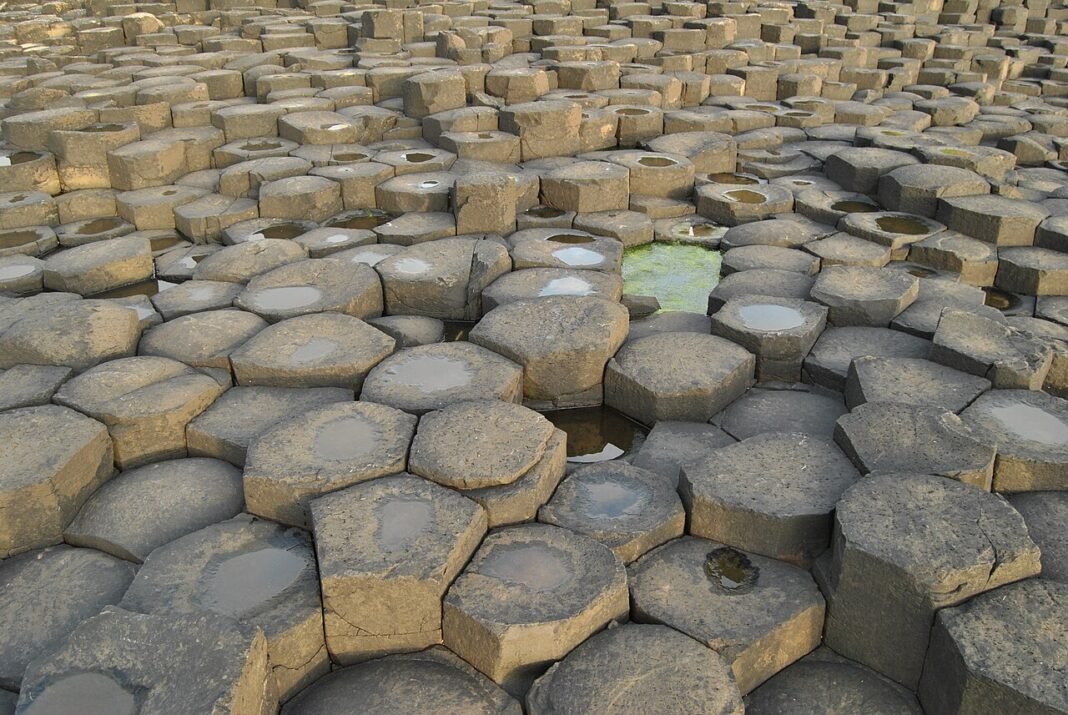
- Giant’s Causeway: The 40,000 interlocking basalt hexagonal columns (formed by volcanic cooling 60 million years ago) extending from the cliff base into the Irish Sea are Northern Ireland’s most visited attraction — a UNESCO World Heritage Site and an AONB whose geometric regularity seems improbable until explained by the physics of lava cooling and contracting. The National Trust visitor centre provides the geological and mythological context
- Carrick-a-Rede Rope Bridge: The suspension bridge connecting the mainland to the tiny island of Carrick-a-Rede, 30m above the sea, was originally erected by salmon fishermen; now a tourist attraction (National Trust) that provides the most direct interaction with the Antrim coast’s dramatic cliff scenery
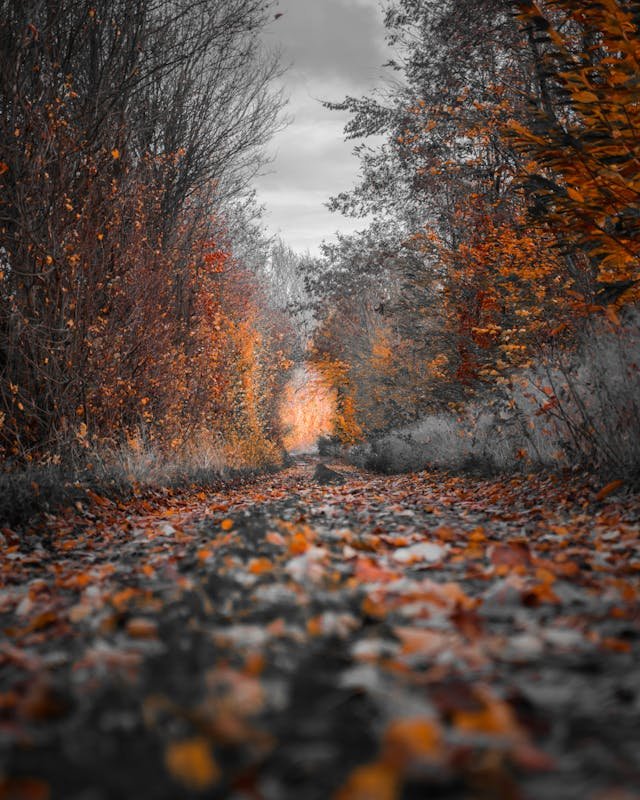
- Dark Hedges: The avenue of ancient beech trees on Bregagh Road in County Antrim — photographed millions of times as a Game of Thrones filming location (the Kingsroad) — is one of Northern Ireland’s most visited natural attractions, with the intertwining branches creating a natural tunnel of extraordinary atmosphere
The Mourne Mountains: Northern Ireland’s Peaks
The Mourne Mountains in County Down (35km south of Belfast) are Northern Ireland’s most dramatic landscape — a compact granite range rising sharply from the Irish Sea, with Slieve Donard (852m, the highest peak in Northern Ireland) accessible from Newcastle in a 5–6 hour return hike and the Mourne Wall (a dry stone wall enclosing the 9 highest Mournes in a 35km circuit, built 1904–1922) providing the most extraordinary walking infrastructure in Ireland. The Mournes’ proximity to Belfast (1 hour by car) makes them the closest mountain landscape to any city in Ireland or Northern Ireland, and the coastal geography (the sea visible from most summits) creates a visual drama equal to anything in the Lake District.
Derry/Londonderry: The Walled City
Derry (the nationalist name) or Londonderry (the unionist name) — the city is still navigated by both names depending on community identity — is Northern Ireland’s second city (110,000 residents) and the only complete walled city in Ireland. The 17th-century walls (1.5km circuit, fully intact and walkable) enclose the original plantation city of 1613; the Bogside murals (the nationalist community’s mural tradition, including the iconic “You are now entering Free Derry” gable end) and the Museum of Free Derry document the civil rights movement and the Bloody Sunday massacre of 1972 in a way that is simultaneously raw and reconciled.