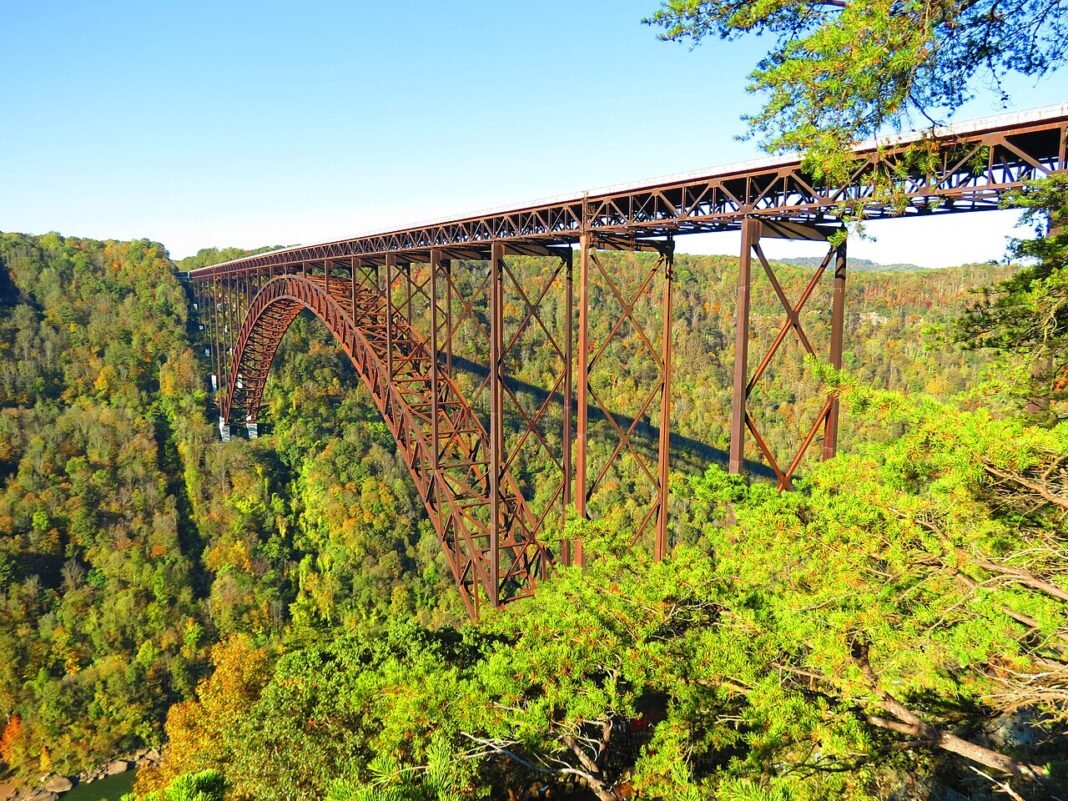
Moving to West Virginia rewards the household that looks past the state’s reputation for economic struggle. For remote workers, retirees, and anyone with the freedom to choose where they live, West Virginia pairs mountain scenery, real community character, and outdoor recreation with some of the lowest costs of living east of the Mississippi. The state’s Ascend WV remote worker program (cash grants up to $12,000), combined with housing prices 50–70% below the national coastal average, has drawn a steady stream of new arrivals who have figured out what longtime residents already knew: the mountains and rivers here are the draw, and living near them costs a fraction of what it does on the coasts. The practical relocation process is straightforward; the most important preparation is understanding the rural infrastructure realities that differ from metropolitan departures.

Driver’s License and Vehicle Registration
- License deadline: 30 days after establishing West Virginia residency
- DMV locations: West Virginia Division of Motor Vehicles offices in Charleston, Morgantown, Huntington, and regional offices statewide; appointments recommended
- Required documents: Proof of identity (primary document — passport or birth certificate), Social Security card or proof of SSN, proof of West Virginia residency (two documents: lease, utility bill, bank statement), out-of-state license
- Knowledge test: Required for most applicants; vision test required; the WV DMV knowledge test is available in written and electronic format
- Vehicle inspection: Annual safety inspection required within 10 days of registering a vehicle in West Virginia
- Personal property tax: West Virginia counties levy an annual personal property tax on vehicles; rates vary by county but are generally modest
The Ascend WV Remote Worker Program
West Virginia‘s Ascend WV program is one of the most generous remote worker relocation incentives in the United States. Program details for the current 2026 cohort:
- Financial incentive: $12,000 cash, paid in monthly installments across two years of West Virginia residency; the wider relocation package (coworking, guided outdoor trips, WVU remote-work certifications) has been valued at more than $20,000
- Outdoor recreation pass: Two full years of free access to participating ski resorts, whitewater outfitters, climbing facilities, and other outdoor recreation businesses
- Coworking access: Free membership at participating coworking spaces in the program’s host communities
- Community integration: Programming connecting new residents to the existing community; peer networks of other program participants
- Eligibility requirements: Full-time remote employment for a company or clients headquartered outside West Virginia; relocation to one of the participating communities (recent cohorts have included the Morgantown area, the Greenbrier Valley around Lewisburg, the Eastern Panhandle, the New River Gorge, Greater Elkins, and the Charleston area); a two-year residency commitment
- Application: Competitive selection; visit ascendwv.com for current application windows and program details; cohorts are limited in size

Broadband and Connectivity: Rural Realities
West Virginia’s broadband infrastructure has historically been among the most limited in the country — the combination of mountainous terrain, low population density, and limited investment created significant rural connectivity gaps. That is changing:
- BEAD funding: West Virginia received $1.2 billion in federal BEAD (Broadband Equity, Access, and Deployment) funding; deployment of fiber to rural areas is underway through multiple ISPs
- Urban centers: Morgantown, Charleston, and Huntington have multiple providers with fiber and cable options; 1Gbps service is available in most of these cities
- Rural connectivity: Fiber deployment timelines vary by county; fixed wireless broadband is available in many rural areas where fiber has not yet arrived; Starlink satellite service covers all of West Virginia
- Critical due diligence: For remote workers, verify internet availability at any specific rural address before purchasing — this is the most important practical infrastructure check in West Virginia
Healthcare Access in Rural Areas
West Virginia’s healthcare system has unique characteristics that new residents should understand:
- WVU Medicine: The state’s academic medical system, centered on J.W. Ruby Memorial Hospital in Morgantown (the most comprehensive hospital in the state); operates regional hospitals throughout West Virginia
- CAMC: Charleston Area Medical Center, now part of Vandalia Health — a major hospital system serving the Kanawha Valley and surrounding region
- Rural access: Critical Access Hospitals serve rural communities; specialist access may require travel to Morgantown or Charleston for non-emergency care
- Telehealth: WVU Medicine and other providers have expanded telehealth services, partially addressing rural access gaps; important for households in remote counties
- Medicaid: West Virginia expanded Medicaid under the ACA; coverage rates are high relative to neighboring states
Schools and Education
West Virginia’s public school system varies significantly by county, reflecting the state’s dramatic economic geography. The highest-performing school districts are concentrated in the northern Panhandle (Jefferson and Berkeley Counties, benefiting from proximity to the Washington D.C. metropolitan employment market and its professional household concentration) and Monongalia County (Morgantown, where WVU’s presence creates an unusually well-educated parent community). Rural counties in the southern coalfields have more limited school resources and lower performance metrics. West Virginia University (Morgantown) is the state’s flagship public university, with strong programs in engineering, law, medicine, and agriculture; Marshall University (Huntington) serves the western part of the state. The state’s community and technical college system provides workforce training and transfer pathways in most regions of the state.
Winter Preparation and Mountain Roads
West Virginia’s mountain terrain creates winter driving conditions that require preparation beyond what many relocating households from flatter states have experienced. The state’s Division of Highways maintains a comprehensive road treatment program, but the combination of steep grades, narrow mountain roads, and rapid weather changes in the highland counties means that all-wheel drive and winter tires are practical necessities rather than optional upgrades for households living above 2,000 feet elevation. Black ice on shaded mountain curves is a recurring hazard in the highland counties from November through March. The West Virginia 511 road conditions service provides real-time conditions and closures for mountain passes. Households in Pocahontas, Randolph, Tucker, and Webster Counties — the state’s highest and most scenic counties — should budget for a vehicle appropriate for sustained winter mountain driving.
Frequently Asked Questions
What are the driver’s license and vehicle registration requirements when moving to West Virginia?
Driver’s license: must be obtained within 30 days of establishing West Virginia residency. West Virginia DMV requires a primary identity document (passport or birth certificate), Social Security card or proof of SSN, two West Virginia residency documents (lease, utility bill, or bank statement), and your out-of-state license. A knowledge test is required for most applicants, along with a vision test. Vehicle registration: complete at a West Virginia DMV office. Important: a West Virginia annual safety inspection is required within 10 days of registering a vehicle — this is one of the shortest post-registration inspection windows of any state, and the clock starts at registration, not at your arrival in the state. West Virginia counties also levy an annual personal property tax on vehicles; rates are generally modest and vary by county.
What is West Virginia’s Ascend WV remote worker program?
Ascend WV is among the most financially compelling remote worker relocation incentives in the United States. The program offers $12,000 in cash paid in monthly installments across two years of West Virginia residency, two full years of free access to participating ski resorts, whitewater outfitters, and climbing facilities, and free membership at coworking spaces in its host communities. Eligibility requires full-time remote employment for a company or clients headquartered outside West Virginia and relocation to one of the participating communities (recent cohorts have spanned the Morgantown area, the Greenbrier Valley around Lewisburg, the Eastern Panhandle, the New River Gorge, Greater Elkins, and the Charleston area), with a two-year residency commitment. Selection is competitive and cohorts are limited in size. Applications and current program details are at ascendwv.com; cohorts open on a rolling basis. Combined with West Virginia’s housing prices (50–70% below coastal averages), the financial case for qualifying remote workers is compelling.
How reliable is broadband connectivity in West Virginia?
West Virginia’s broadband infrastructure has historically been among the most limited in the country — mountainous terrain and low population density created significant rural connectivity gaps. That is changing: the state received $1.2 billion in federal BEAD (Broadband Equity, Access, and Deployment) program funding, and fiber is reaching underserved communities through multiple providers. Urban centers (Morgantown, Charleston, Huntington) have fiber and cable options with 1Gbps service available. Rural connectivity varies significantly by specific address and county — fiber deployment timelines are uneven. Starlink satellite internet provides coverage across all of West Virginia at approximately $120/month residential, making it a viable primary or backup connection for rural remote workers. For any remote worker considering rural West Virginia property, verifying internet availability at the specific address before purchasing is essential due diligence.
What healthcare access should West Virginia residents expect?
West Virginia’s healthcare system is anchored by WVU Medicine — the J.W. Ruby Memorial Hospital in Morgantown is the most comprehensive hospital in the state (the state’s only Level I trauma center) and operates a network of regional hospitals throughout West Virginia. Charleston Area Medical Center (CAMC), part of Vandalia Health, is a major hospital system serving the Kanawha Valley and surrounding region. Rural Critical Access Hospitals serve communities across the state; specialist access for non-emergency care may require travel to Morgantown or Charleston from rural counties. WVU Medicine and other systems have expanded telehealth services, partially addressing the rural specialist access gap — important for households in remote highland counties like Pocahontas, Randolph, Tucker, and Webster. West Virginia expanded Medicaid under the ACA, resulting in high coverage rates relative to neighboring states.
What winter driving preparation do West Virginia mountains require?
West Virginia’s mountain terrain creates winter driving conditions that exceed the experience of most relocators from flatter states. Households living above 2,000 feet elevation — which includes most of the highland counties and parts of the Eastern Panhandle — should treat all-wheel drive and winter tires as practical necessities rather than optional upgrades. Black ice on shaded mountain curves is a recurring hazard from November through March. The West Virginia Division of Highways maintains road treatment, but steep grades and rapid weather changes in the highland counties can create dangerous conditions quickly. The WV 511 road conditions service provides real-time conditions and closures for mountain passes — check it before any significant highland travel during winter months. Top school districts: Monongalia County (Morgantown, with WVU presence creating a highly educated parent community) and the northern Panhandle counties of Jefferson and Berkeley, which benefit from proximity to the Washington D.C. metro employment market.