Moving to Northern Ireland 2026: Relocation Guide for the UK’s Hidden Gem
Northern Ireland is one of the UK’s best-kept relocation secrets — a place of affordable housing, exceptional natural landscape, warm community culture, and a unique economic position (the Windsor Framework’s dual UK-EU market access) that is beginning to attract the attention of international professionals and businesses. The post-Troubles transformation of Belfast into a dynamic, creative, and internationally connected city has removed the primary barrier to relocation that existed before 1998; what remains is a country that offers the full framework of UK citizenship, employment rights, and NHS access, combined with the most affordable property market in the UK, the closest proximity of any UK city to both the Irish and UK markets, and a landscape (the Antrim coast, the Mourne Mountains, the Fermanagh lakelands) that rivals anything in Britain for outdoor quality. The honest qualifications — the sectarian geography of some Belfast neighbourhoods, the political uncertainty around Northern Ireland’s constitutional future, and the narrower employment market outside the public sector and specific high-growth sectors — are real but manageable for those who arrive with clear professional objectives and genuine openness to Northern Ireland’s specific character.
Immigration and Visa Considerations
Northern Ireland uses the same UK immigration system as England, Scotland, and Wales — all visa routes and requirements are identical (Skilled Worker, Graduate Visa, Youth Mobility Scheme, etc.). There is no Northern Ireland-specific visa. However, Northern Ireland’s unique constitutional position creates additional options for certain nationalities:
- Irish citizenship for Northern Ireland residents: Under the Good Friday Agreement, all persons born in Northern Ireland are entitled to Irish citizenship as a birthright. More relevantly for relocators, those who have lived in Northern Ireland or the Republic for a qualifying period (typically 5 years of continuous residence) can apply for Irish naturalisation, which provides EU citizenship and the associated right of free movement across the EU
- EU citizens: EU citizens relocating to Northern Ireland are in a uniquely complex position post-Brexit — they require UK visas for employment (the EU freedom of movement in the UK ended January 2021) but may be able to maintain EU travel rights through Irish citizenship paths not available to residents of Great Britain
- Irish passport holders: Citizens of the Republic of Ireland have unrestricted right of abode in Northern Ireland and the UK under the Common Travel Area (CTA) arrangement — the bilateral UK-Ireland agreement predating EU membership that continues post-Brexit. Irish citizens do not need visas or permits to live and work in Northern Ireland
Finding Employment
- Health and Social Care: The Health and Social Care service (Northern Ireland’s equivalent of the NHS) is Northern Ireland’s largest employer. The integrated health and social care model (unique in the UK — unlike the NHS, which is separate from social services in England and Scotland, Northern Ireland’s HSC combines both) employs approximately 65,000 staff. International recruitment from the Philippines, India, and the EU is ongoing for nursing, physiotherapy, and other clinical roles
- Legal services: Belfast’s emergence as a UK and international legal services hub (Allen & Overy, Baker McKenzie, A&L Goodbody, and a growing number of international firms) has created significant legal employment growth. The combination of UK legal expertise, lower operating costs than London, and the ability to service both UK and Irish law creates genuine competitive advantages for Belfast-based legal operations
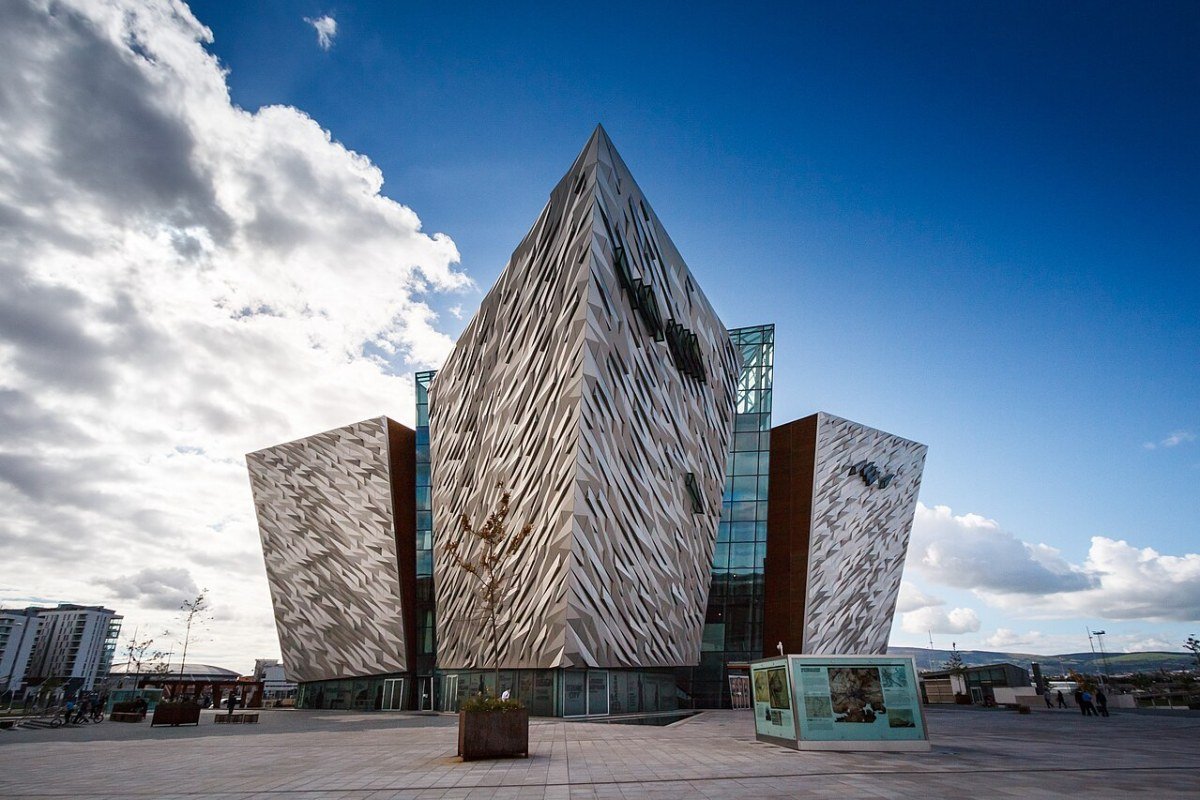
- Technology and fintech: The Catalyst Belfast tech accelerator, Citi’s Belfast tech centre (3,000+ employees), Allstate Northern Ireland (1,000+ employees), and a growing fintech cluster have established Belfast as a significant UK tech hub. The Titanic Quarter’s Catalyst Belfast campus is the physical centre of this sector
- Tourism: Northern Ireland’s tourism boom (driven by the Game of Thrones legacy, the Giant’s Causeway, and Belfast’s cultural renaissance) employs significant numbers in hospitality, guiding, and tour operations. Seasonal employment is concentrated in the Antrim coast communities and the Mourne area
- Cross-border opportunities: The border with the Republic of Ireland creates unique cross-border employment opportunities — professionals living in Northern Ireland can work in both jurisdictions; the Belfast-Dublin economic corridor employs significant numbers who commute or work remotely across the border
_-_geograph.org.uk_-_3539064.jpg?width=1200)
Practical Relocation Information
- Getting to Northern Ireland: Belfast International Airport (serving Ryanair, easyJet, British Airways, and others) and Belfast City Airport (George Best Airport, serving Aer Lingus, Flybe, and British Airways Cityflyer) provide connections to London, Manchester, Birmingham, Edinburgh, Glasgow, and dozens of European destinations. Dublin Airport (2 hours south by road or bus) provides the widest range of international long-haul connections. The Stena Line and P&O Ferries services from Belfast and Larne to Cairnryan (Scotland) and Liverpool (England) provide road vehicle crossings
- Cross-border travel: The border between Northern Ireland and the Republic of Ireland is invisible — no customs checks, no passport checks (the Common Travel Area means free movement of UK and Irish citizens). Crossing the border by car is indistinguishable from crossing a county boundary; the only indicators are the road signs (speed in km/h in the Republic, mph in Northern Ireland) and the currency change
- Banking: Northern Ireland has both UK banks (Barclays, HSBC, Santander) and the Northern Ireland-specific banks (Ulster Bank, Bank of Ireland Northern Ireland, Danske Bank Northern Ireland) that issue their own banknotes. These Northern Irish banknotes are the same currency (sterling) as English notes but are technically “promise to pay” rather than Bank of England notes; they are not universally accepted outside Northern Ireland and the Republic
- Schools: Northern Ireland’s school system is separately administered from the rest of the UK — Northern Ireland has its own grammar school system (the 11+ selection test is still used in Northern Ireland, unlike England where grammar schools are rare), and a separate integrated schools movement that deliberately educates Catholic and Protestant children together. The denominational school system (most schools are either controlled/Protestant or maintained/Catholic) is a feature of Northern Ireland’s educational landscape
Community and Cultural Life
Northern Ireland’s community culture is shaped by the Troubles legacy in ways both visible and subtle. The sectarian geography of some Belfast neighbourhoods (where the community flags, the kerbstone colouring, and the murals signal community identity) is a reality that newcomers need to understand without being dominated by; the community identity is an expression of real historical experience, not a performance for visitors. Belfast’s Cathedral Quarter, the south Belfast Queen’s Quarter, and the Holywood/north Down commuter towns are the most effectively “shared” spaces — welcoming to newcomers regardless of background and largely free from the community boundary tensions that still mark parts of north and west Belfast.
The social culture of Northern Ireland — the pub, the céilidh, the football match, the Ulster Fry (the Northern Irish contribution to the great British breakfast debate, served in every café and restaurant in the country) — is genuine, warm, and inclusive to those who approach it without the assumption that the Troubles define everything. Northern Ireland’s people are consistently cited by visitors and relocators as among the warmest in the UK; the particular directness of Belfast’s social culture (a quality shared with Glasgow and immediately recognisable to those from both cities) makes social integration easier than in more reserved parts of the UK.