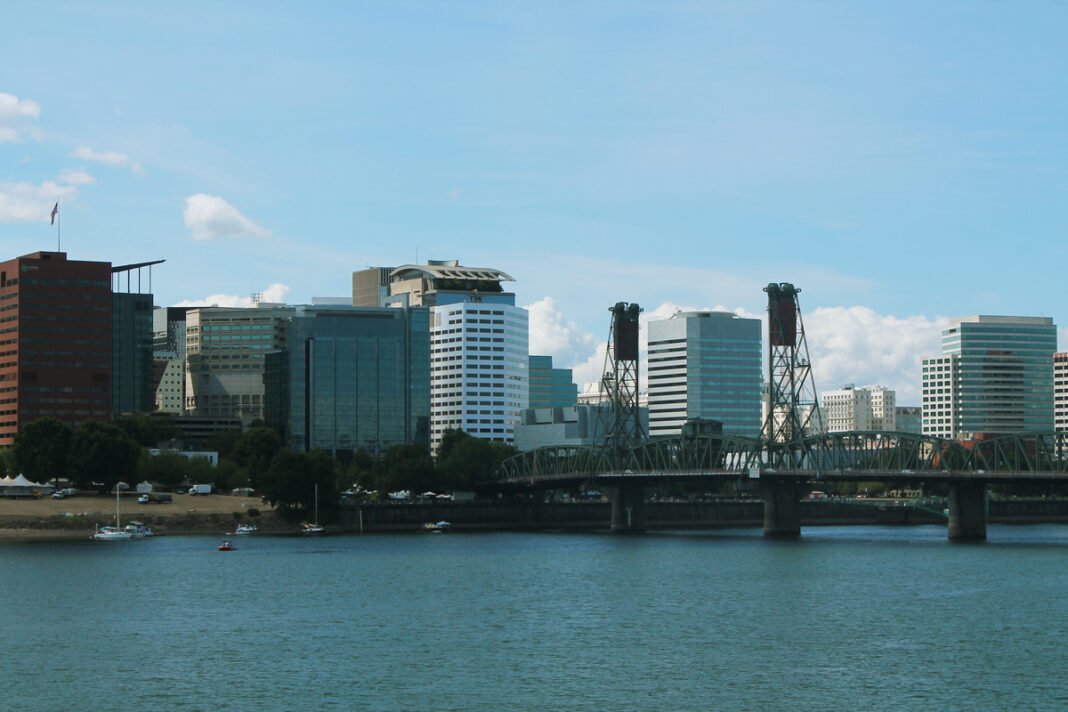
Oregon’s cost-of-living profile is shaped by one clear advantage (no state sales tax — one of only five states in the country without one) and one stubborn challenge (housing costs in the Portland metro have climbed sharply over the past decade, driven by tech-sector in-migration and constrained supply under Oregon’s urban growth boundary system). The honest assessment requires geographic specificity: Portland and its suburbs carry costs that approach Seattle for comparable quality of life, while the rest of Oregon — the Willamette Valley cities of Eugene and Salem, the Bend high desert community, the coastal towns, and the agricultural regions of eastern Oregon — offers real affordability for households willing to accept distance from Portland’s urban amenities. The state income tax (among the higher in the country at a top rate of 9.9%) partially offsets the sales-tax advantage for high earners.

Oregon Cost of Living Overview 2026
- No state sales tax — saves 8–10% on purchases compared with most states
- State income tax (top rate): 9.9% on taxable income above $250,000 (joint filers) or $125,000 (single); 8.75% applies on the bracket below that
- Portland metro median home price: $510,000–$560,000
- Eugene median home price: $450,000–$520,000
- Bend median home price: $650,000–$730,000
- Salem median home price: $425,000–$500,000
- Portland average rent (1BR): $1,450–$1,650 per month
- Property tax effective rate: 0.8–1.1% (statewide average near 0.8%; moderate by West Coast standards)
Housing: Portland vs. The Rest of Oregon
Portland metro housing has appreciated steeply from its pre-2015 baseline — median home prices in the metro now run about $510,000–$560,000, with the most desirable close-in neighborhoods (Hawthorne, Mississippi Avenue, Division Street, the Pearl District) reaching $600,000–$800,000 for single-family homes. That marks a substantial jump from historical norms while staying below Seattle ($850,000+ median) and far under San Francisco ($1.7M+). Outside Portland, the math eases considerably: Eugene medians run $450,000–$520,000; Bend has pushed to roughly $650,000–$730,000 as remote workers discovered its mountain and outdoor access; Salem sits around $425,000–$500,000; and the coastal towns range from $350,000–$550,000 depending on ocean proximity and tourist economy.
The rental market shows the same geographic spread. A one-bedroom apartment in a desirable Portland neighborhood runs $1,450–$1,650 per month; Eugene ranges from $1,200–$1,550; Bend from $1,400–$1,800; Salem from $1,050–$1,400. For households weighing Oregon against other West Coast states, Portland rents come in under Seattle and well under San Francisco, which makes the state an attractive landing spot for remote workers anchored to West Coast salaries.
Income Tax: Oregon’s Primary Cost
Oregon’s income tax is the biggest line item to weigh for anyone relocating from a low-income-tax state. The top marginal rate of 9.9% kicks in on taxable income above $250,000 for joint filers (above $125,000 for single filers), with an 8.75% rate on the bracket just below that. There is no sales tax, which trims 8–10% off purchases compared with most states. Property taxes land in moderate territory by West Coast standards — effective rates of 0.8–1.1% (the statewide average sits near 0.8%, with Portland’s Multnomah County at the top of that range), lower than California but higher than Nevada. For high earners arriving from no-income-tax states (Nevada, Washington, Texas), the Oregon income tax is a real cost increase that partly or fully cancels the housing savings against Seattle or San Francisco.
Oregon does not tax Social Security income, and the state’s pension-income exclusions ease the bill for many retirees. The Earned Income Credit is available at the state level. Oregon’s kicker law — a unique provision that requires the state to refund excess revenues to taxpayers when collections beat the forecast by more than 2% — has produced periodic tax credits for Oregon residents in strong revenue years.
Bend: The High Desert Premium
Bend deserves its own section because its growth story ranks among the sharpest of any mid-sized American city over the past decade — a high desert city of roughly 110,000 at the foot of the Cascade Range that has drawn remote workers, outdoor enthusiasts, and retirees chasing a mix of mountain access, sun (Bend logs about 158 clear days a year, far more than Portland’s 144), and small-city character. Prices have tracked that demand — the median has risen from about $300,000 in 2015 to the $650,000–$730,000 range today. For households with portable income, Bend’s lifestyle-to-cost ratio still holds up against comparable mountain towns in Colorado or California; for households leaning on local employment, the gap between local wages and home prices is steep.
Utilities and Everyday Costs
Oregon’s electricity rates sit well below the national average, thanks to the Columbia River’s hydropower infrastructure — typical residential bills land around $110–$160 a month for a standard home, with rates roughly 10% under the U.S. average. Natural gas rates are middling. The main utility consideration west of the Cascades is heating through the cool, wet winters — Portland averages lows in the high 30s from December through February, which keeps furnaces working. East of the Cascades, Bend’s colder winters bring higher heating bills but lower air-conditioning costs than comparable high desert cities in Nevada or Arizona.
Grocery costs in Oregon track close to the national average, with the no-sales-tax break shaving 8–10% off food purchases compared with neighboring states. Portland’s restaurant and food scene is genuinely first-rate, running from an internationally recognized fine-dining roster to the food-cart pods (clusters of 15–30 carts serving cuisines from around the world) that turn out quality meals at $10–$18 per person. Healthcare costs sit close to national averages, with OHSU and the major health systems anchoring coverage across the Portland metro.
Who Benefits Most from an Oregon Move
Remote workers earning tech salaries calibrated to San Francisco, Seattle, or New York markets are the profile that gains the most from Oregon’s cost structure — no sales tax, lower housing costs than Bay Area or Seattle equivalents, and standout outdoor access add up to a quality-of-life case that is hard to argue with on paper. The income tax at Oregon’s upper brackets is real, but for anyone moving from California — which carries the nation’s highest top marginal rate at 13.3% and comparable rates at six-figure incomes — the net tax difference is often modest. Retirees arriving from high-income-tax states gain from Oregon’s Social Security exemption and moderate property tax rates, though the income tax on retirement-account distributions calls for planning. The households most squeezed are those tied to local employment in lower-wage sectors — Oregon’s job market outside technology, healthcare, and the outdoor industry does not pay wages that comfortably cover the home prices that rising demand has driven.
Frequently Asked Questions
Does Oregon have a sales tax?
No — Oregon is one of only five states with no state sales tax. That saves 8–10% on purchases compared with most states. For a household spending $60,000 a year on taxable goods, the savings versus a state with an 8% combined rate come to about $4,800 a year. The break applies to every consumer purchase, from groceries to vehicles to restaurant meals.
What is Oregon’s income tax rate?
Oregon runs one of the higher state income taxes — a top marginal rate of 9.9% on taxable income above $250,000 for joint filers (above $125,000 for single filers), with 8.75% on the bracket below that. For high earners moving from no-income-tax states (Nevada, Washington, Texas), that is a genuine added cost that can erode the housing savings. Oregon does not tax Social Security income, and the kicker law refunds surplus state revenue to taxpayers in strong years.
Is Portland housing affordable?
Moderate — Portland metro medians run about $510,000–$560,000, with desirable close-in neighborhoods (Hawthorne, Pearl District, Mississippi Avenue) reaching $600,000–$800,000. That sits below Seattle ($850,000+ median) and far under San Francisco ($1.7M+), but well above pre-2015 Portland levels. One-bedroom apartments run $1,450–$1,650 a month. Salem ($425,000–$500,000) and Eugene ($450,000–$520,000) are the more affordable Oregon options.
Why is Bend, Oregon so expensive?
Bend has logged some of the steepest price growth of any mid-sized American city — medians rising from about $300,000 in 2015 to the $650,000–$730,000 range today. Remote workers, outdoor enthusiasts, and retirees have been drawn by the mix of Cascade Mountain access, roughly 158 clear days a year, and small-city character. For households with portable income, the lifestyle-to-cost ratio still works; for local-wage earners, the home-price-to-wage gap is steep.
What are electricity costs like in Oregon?
Rates sit well below the national average — typical bills run $110–$160 a month for a standard home, with per-kilowatt-hour rates roughly 10% under the U.S. average thanks to the Columbia River’s hydropower infrastructure. Natural gas rates are middling. The main utility cost west of the Cascades is heating through Portland’s cool, wet winters (lows in the high 30s December–February).