Montreal is a city that genuinely defies easy categorization — a bilingual metropolis where French and English coexist in complex cultural negotiation, where the arts scene is extraordinary, the food is world-class, the winters are brutal and somehow fun, and the summers generate a festival culture that makes the city seem like it’s trying to compensate for all those frozen months. It’s the second-largest French-speaking city in the world after Paris, and yet it feels entirely unlike any French city — more irreverent, more multicultural, more willing to reinvent itself. Montrealers will tell you their city is better than Toronto and Paris combined, and though this is obviously self-serving, there’s a thread of truth worth examining.
Old Montreal: Where the City Began
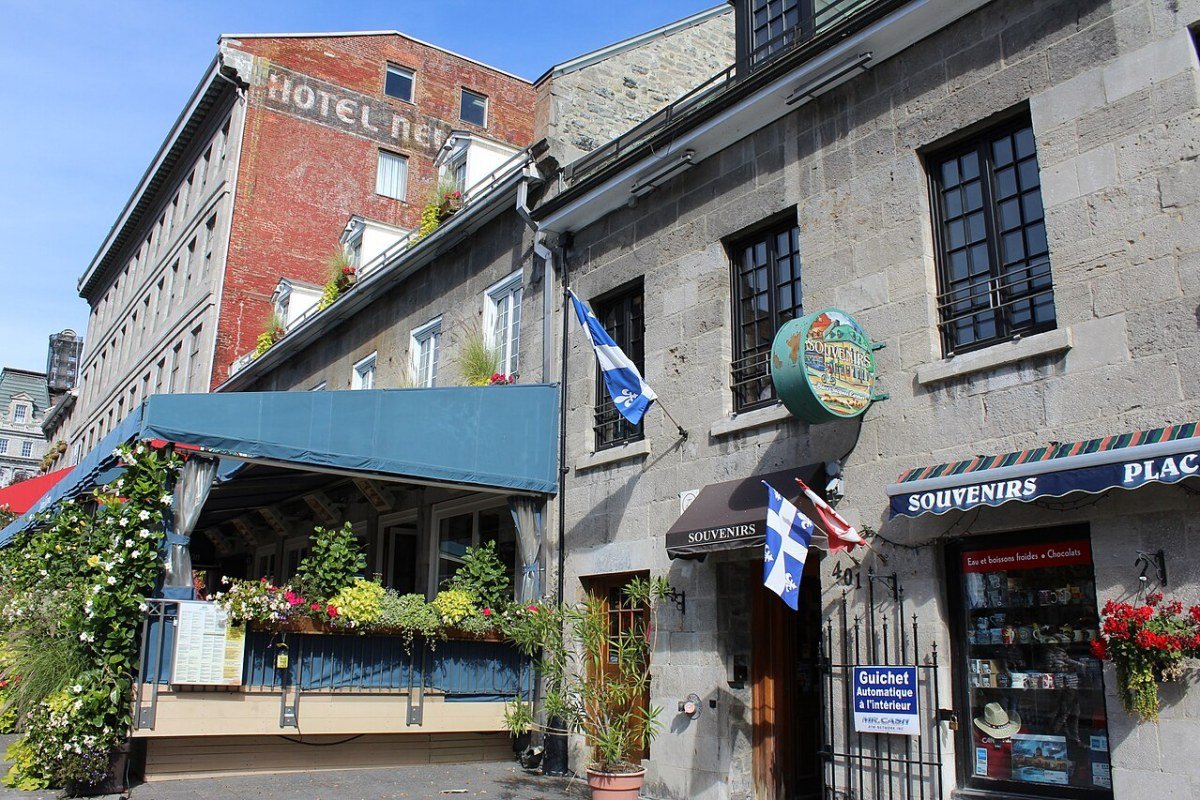
Old Montreal (Vieux-Montréal) preserves the most complete concentration of 17th to 19th-century architecture in North America — a compact district of gray stone buildings along the St Lawrence waterfront, with cobblestone streets and some of the finest restaurants in the city. Notre-Dame Basilica (1829) is one of the most beautiful churches in North America — the interior, with its deep blue vault studded with gold stars, carved wooden choir stalls, and extraordinary Gothic Revival ornament, is genuinely awe-inspiring; don’t miss the Aura light show in the evenings. Place d’Armes, the square in front of the basilica, has been the civic heart of Montreal since 1672. Pointe-à-Callière Museum (built on the exact site of the original settlement of 1642) is one of the most technically accomplished history museums in Canada, with archaeological excavations viewable through glass floors. The Old Port waterfront has been transformed into a public park with a clock tower, an excellent winter ice skating rink, and the science centre — and the views of the St Lawrence River from the Jacques Cartier Bridge at sunset are extraordinary.
The Food: Why Montreal Claims the Culinary Capital Title
Smoked Meat
Montreal smoked meat is the city’s defining dish — beef brisket dry-cured with a rub of black pepper, coriander, garlic, and spices (similar to pastrami but distinct in flavor and texture), then smoked and steamed until yielding, sliced by hand to order, and served on rye bread with yellow mustard. The fat content of the cut matters: “lean” is the deli option, “medium” has more flavor, “fat” (or “extra fatty”) is for the committed. Schwartz’s Hebrew Delicatessen on Boulevard Saint-Laurent has been the standard since 1928, with lineups that stretch out the door at all hours. The smoked meat sandwich ($14–18) and a half-sour pickle is the order.
Bagels
Montreal bagels are fundamentally different from New York bagels — smaller, denser, slightly sweet (made with honey in the dough), with a larger hole, and baked in a wood-fired oven rather than boiled in plain water. The result is crispier outside, chewier inside, and more complex in flavor. St-Viateur Bagel (since 1957) and Fairmount Bagel (since 1919) have been the two institutions locked in eternal rivalry, both on the same street in Mile End. Get them fresh from the oven, ideally with a smear of cream cheese from the adjacent grocery store. They are not the same eaten cold, a day later, in another city.
Poutine
Poutine was invented in rural Quebec in the late 1950s — French fries with fresh cheese curds (the squeak is not optional) and rich brown gravy. La Banquise in the Plateau-Mont-Royal neighborhood is open 24 hours and serves over 30 varieties of poutine, from the classic to versions topped with duck confit, foie gras, or pulled pork. Au Pied de Cochon (Martin Picard’s baroque temple to excess on Duluth Avenue) serves the most famous foie gras poutine in existence — simultaneously the most indulgent and most correct thing you might eat in North America.
The Best Neighborhoods
Le Plateau-Mont-Royal
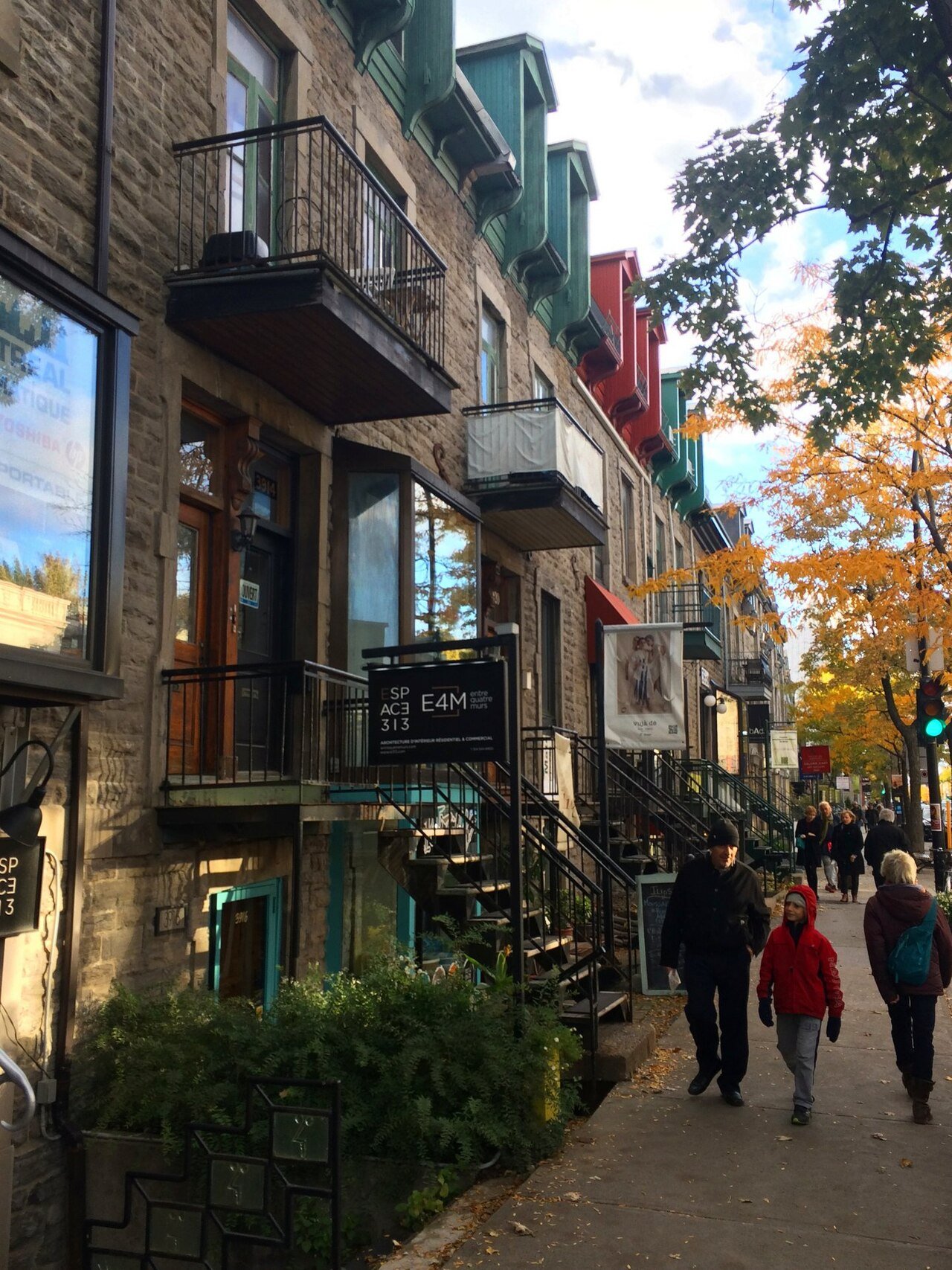
The Plateau is the cultural heart of Montreal — a neighborhood of Victorian duplexes with their distinctive exterior spiral staircases (designed to save interior space), independent restaurants and bookshops along Saint-Denis Street and Mont-Royal Avenue, the beloved Parc La Fontaine (with outdoor theatre in summer and skating in winter), and a density of creative energy that produces a disproportionate share of Canadian art, music, and literature. Café Cherrier on Saint-Denis for a café au lait and a croissant on a sunny morning is a quintessential Montreal experience.
Mile End
Mile End, at the northern end of the Plateau, is where Montreal’s musicians, artists, and tech startup culture have concentrated — the neighborhood where Arcade Fire, Godspeed You! Black Emperor, and a remarkable number of other bands developed their sound in the 2000s. The two bagel institutions (St-Viateur, Fairmount) are here. The independent coffee shops (Café Névé, Myriade) are among the finest in Canada. The stretch of Bernard Avenue and Saint-Laurent above Mont-Royal has some of the city’s most interesting independent restaurants and boutiques.
Festivals and Cultural Life
Montreal’s festival calendar is genuinely extraordinary — the city seems to understand that a city locked in winter for five months needs to compensate with spectacular summers. The Montreal International Jazz Festival (late June–early July) is the world’s largest jazz festival, with over 650 concerts (500+ free outdoor performances) across multiple stages in the city center — the outdoor shows on Rue Sainte-Catherine transform the downtown into an outdoor concert hall. Just for Laughs (July) is the world’s largest comedy festival, with gala shows and free outdoor performances throughout the city. Osheaga (August at Parc Jean-Drapeau) is one of Canada’s premier multi-day music festivals. Les Nuits d’Afrique (July) celebrates African and Caribbean music. Montréal en Lumière (February) is a winter light festival that makes the dark season considerably more bearable. The Montreal Museum of Fine Arts (Musée des beaux-arts de Montréal) has a permanent collection of 44,000 works and stages some of the finest touring exhibitions in North America.
Getting There and Practical Information
Montreal Pierre Elliott Trudeau Airport has direct connections from Europe (Paris, London, Lisbon, Geneva), the US (New York, Boston, Chicago, Miami, Los Angeles), and across Canada. VIA Rail connects Montreal to Quebec City in 3 hours, to Ottawa in 2 hours, and to Toronto in about 5 hours — useful for multi-city itineraries. The city’s metro (STM) is clean, efficient, and covers the city well; a day pass (about $11) is good value for tourists. The best time to visit is June–September for warm weather and the festival season; February for carnival atmosphere and winter sports; November–December for Christmas markets. Winter temperatures typically range from -10°C to -20°C in January — dress accordingly, but the city functions at full capacity regardless.