

Montana Travel Guide 2026: Glacier, Yellowstone, and the Big Sky
Montana is the fourth-largest state in the United States and one of the least densely populated — a land of such scale that the phrase “Big Sky Country” is not a marketing slogan but a physical description of what happens when the horizon extends to distances that flatten the human sense of proportion. The state’s two great national parks — Glacier in the northwest and the northern section of Yellowstone in the south — anchor a travel landscape of extraordinary diversity: the high alpine terrain of the Rocky Mountain Front, the rolling grass ocean of the Great Plains that begins east of the mountains and extends to the Missouri River Breaks and the badlands of southeastern Montana, the Missouri River’s historic canoe route through one of the least-changed landscapes in the American interior, and the small cities of Missoula, Bozeman, and Billings that provide the cultural and culinary infrastructure for exploring the state’s wilderness. Montana rewards the visitor who comes with time — the distances are real and the landscapes reveal themselves slowly.
Glacier National Park
Glacier National Park is the most dramatic national park in the continental United States by the measure of alpine scenery concentrated in an accessible area — a park of 1,583 square miles in the Rocky Mountains of northwestern Montana, on the US-Canada border, where glacially carved peaks rise directly above valley floors to create a landscape of cirques, arêtes, and hanging valleys that defines the word “alpine.” The Going-to-the-Sun Road, a 50-mile engineering achievement crossing the Continental Divide at Logan Pass (6,646 feet), is the most scenic mountain drive in North America — a road blasted from the cliffs above Lake McDonald and Saint Mary Lake, passing through avalanche country and over the Divide in a section that is closed by snow for seven to eight months annually and open fully only from approximately July to October.
The hiking in Glacier is exceptional at every level — from the easy Trail of the Cedars (a wheelchair-accessible boardwalk through ancient cedar and hemlock forest along Avalanche Creek) to the demanding Highline Trail (11.8 miles from Logan Pass to the Granite Park Chalet, traversing the Garden Wall along the Continental Divide at 7,000+ feet with views of both sides of the Divide) to the backcountry circuits in the park’s remote Two Medicine, Many Glacier, and North Fork areas that receive a fraction of the Logan Pass crowds. The Many Glacier area — accessible by road to the Swiftcurrent Motor Inn and the trailheads for the Grinnell Glacier and Iceberg Lake hikes — is the park’s most rewarding day-hiking destination, combining accessible trailheads with scenery that rivals any in the park. The Grinnell Glacier trail (7.6 miles round trip with 1,600 feet of elevation gain) ends at the surface of one of the park’s 25 remaining named glaciers — a shrinking remnant of the glaciation that carved the park’s entire landscape and that will likely be gone by 2030 under current climate trajectories.

Yellowstone’s Montana Gateway
While the majority of Yellowstone National Park lies in Wyoming, Montana provides the northern entrance through Gardiner — the most historic approach to the park, through the Roosevelt Arch (where Teddy Roosevelt laid the cornerstone in 1903) and into the Mammoth Hot Springs district where the park’s administrative headquarters and the terraced travertine formations of the Mammoth Springs are located. The Lamar Valley, accessible from the northeast entrance at Cooke City, is the finest wildlife watching area in the lower 48 states — a broad, glacially carved valley where bison herds of hundreds and the wolves reintroduced in 1995 (and now numbering 100+ individuals in the park) are visible from the road with regularity. Dawn and dusk in the Lamar Valley, with a spotting scope aimed at the ridgeline where wolves routinely travel, is an experience that has no equal in the continental United States for large predator observation.
Missoula: Montana’s Cultural Capital
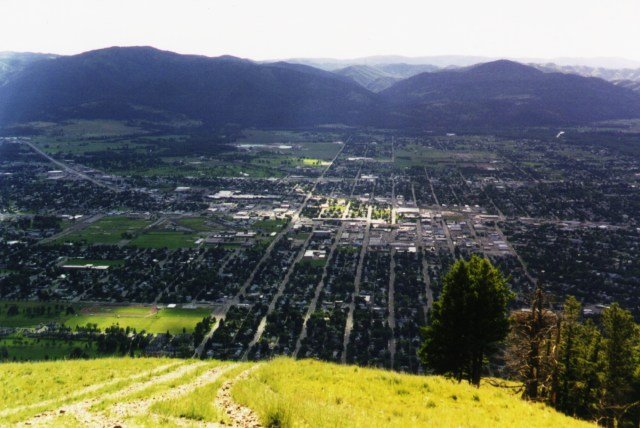
Missoula, at the confluence of three rivers in western Montana, is the most cosmopolitan of Montana’s cities — a university town (home to the University of Montana, with its distinguished creative writing MFA program) that has developed a coffee shop, brewery, and independent bookstore culture genuinely disproportionate to its population of 75,000. The Clark Fork River running through downtown, with its riverside trail system, creates an urban outdoor experience that is the center of Missoula’s daily life. The Rattlesnake Wilderness and National Recreation Area, the largest urban wilderness in the country, is accessible within a 20-minute walk from downtown — miles of trail through old-growth ponderosa pine and Douglas fir accessible without a car from the city center. The Missoula Farmers Market on Saturdays, the International Wildlife Film Festival (the oldest wildlife film festival in the country), and the Montana Book Festival reflect a cultural depth that exceeds the city’s size.
Bozeman: The New West’s Hub
Bozeman, 90 miles north of Yellowstone’s north entrance on I-90, has experienced the most dramatic growth of any Montana city in the past decade — driven by remote work migration, Montana State University’s research enterprise, and the outdoor recreation access (Big Sky Resort is 45 miles south; the Bridger Bowl ski area is 16 miles from downtown; Hyalite Canyon’s year-round outdoor recreation is 20 minutes from Main Street) that has made Bozeman one of the most in-demand small cities in the American West. Downtown Bozeman — the Main Street commercial corridor with its independent restaurants, the Emerson Center for the Arts, the Bozeman Public Library’s community programming, and the Saturday farmers market — provides a cultural density that has made Bozeman a destination for the professional and creative classes who want outdoor access without sacrificing urban quality.
The Missouri River Breaks
The Missouri River Breaks — the 149-mile Wild and Scenic River corridor from Fort Benton to the Fred Robinson Bridge in central Montana — is one of the least-visited and most historically significant river corridors in America. Lewis and Clark canoed this section of the Missouri in 1805, and the landscape they described (white cliffs of eroded sandstone, cottonwood bottoms, eagle nests, bighorn sheep on the canyon walls) is essentially unchanged from their journals — the Breaks remain one of the most intact landscapes in the American interior. A float trip through the Missouri River Breaks (typically 5–7 days by canoe or kayak from Fort Benton) is the most complete Lewis and Clark immersion available and one of the finest wilderness river experiences in the country — a trip through a landscape where you can camp in the cottonwood bottoms and look up at canyon walls that no road crosses for 150 miles.