
Mississippi Travel Guide 2026: Natchez, the Blues Highway, and the Gulf Coast
Mississippi is a state that rewards visitors who engage with its contradictions honestly — a state of extraordinary natural beauty and cultural richness that has produced more American music (the blues, the birthplace of rock and roll), more significant American literature (Faulkner, Eudora Welty, Richard Wright, Willie Morris), and more powerful American visual art (the folk art tradition of the Mississippi Delta) per capita than any other state, while simultaneously holding some of the country’s most troubling racial history and its persistent economic consequences. Traveling Mississippi with historical awareness is not only ethically appropriate but practically necessary for understanding what you’re seeing — the antebellum mansions of Natchez, the blues juke joints of Clarksdale, the Civil Rights trail through Jackson and Philadelphia, and the Gulf Coast beaches all make more sense in their full historical context. Mississippi is not an easy state to understand, but it is one of the most genuinely revelatory in America.
Natchez: Antebellum Capital
Natchez, on the Mississippi River at the Louisiana border, contains the largest concentration of antebellum plantation homes in America — more than 30 significant mansions within the city limits and surrounding area, representing the wealth generated by the cotton economy and the enslaved labor that made it possible. The Natchez Pilgrimage (held twice annually, in spring and fall) opens most of the city’s historic homes to visitors — a tourism tradition that began in 1932 and has been conducted with varying degrees of historical honesty about the source of the wealth being displayed. The most recent years have seen a significant expansion of interpretation that acknowledges and centers the enslaved people who built, maintained, and inhabited these properties alongside their enslaving owners — a shift that has made the Natchez Pilgrimage a more honest and ultimately more powerful historical experience.
Longwood Mansion, the largest octagonal antebellum house in the United States (begun in 1860 and never completed after the Philadelphia craftsmen building it left for the Civil War in 1861, leaving only the ground floor finished and the upper stories in structural but unfinished state), is the most architecturally distinctive property in Natchez. The unfinished upper floors — visible through the open stairwell, with their raw lumber and construction tools still in place from 1861 — create a haunting encounter with interrupted history that no completed mansion can match. Melrose Plantation, operated by the National Park Service as part of the Natchez National Historical Park, provides the most complete interpretation of both enslaver and enslaved life of any Natchez property.
The Mississippi Blues Trail
The Mississippi Delta — the flat alluvial plain between the Mississippi and Yazoo Rivers that stretches from Vicksburg north to Memphis — is the birthplace of the blues and one of the most culturally significant geographic regions in America. The music that emerged from the Delta’s African-American communities in the late 19th and early 20th centuries — a synthesis of field hollers, African musical traditions, and the particular emotional landscape of life under racial oppression — became the foundation of virtually all subsequent American popular music: rock and roll, rhythm and blues, soul, hip-hop. Traveling the Delta with musical awareness means following the Mississippi Blues Trail (a network of more than 200 historical markers) and engaging with the specific places where this music was created.
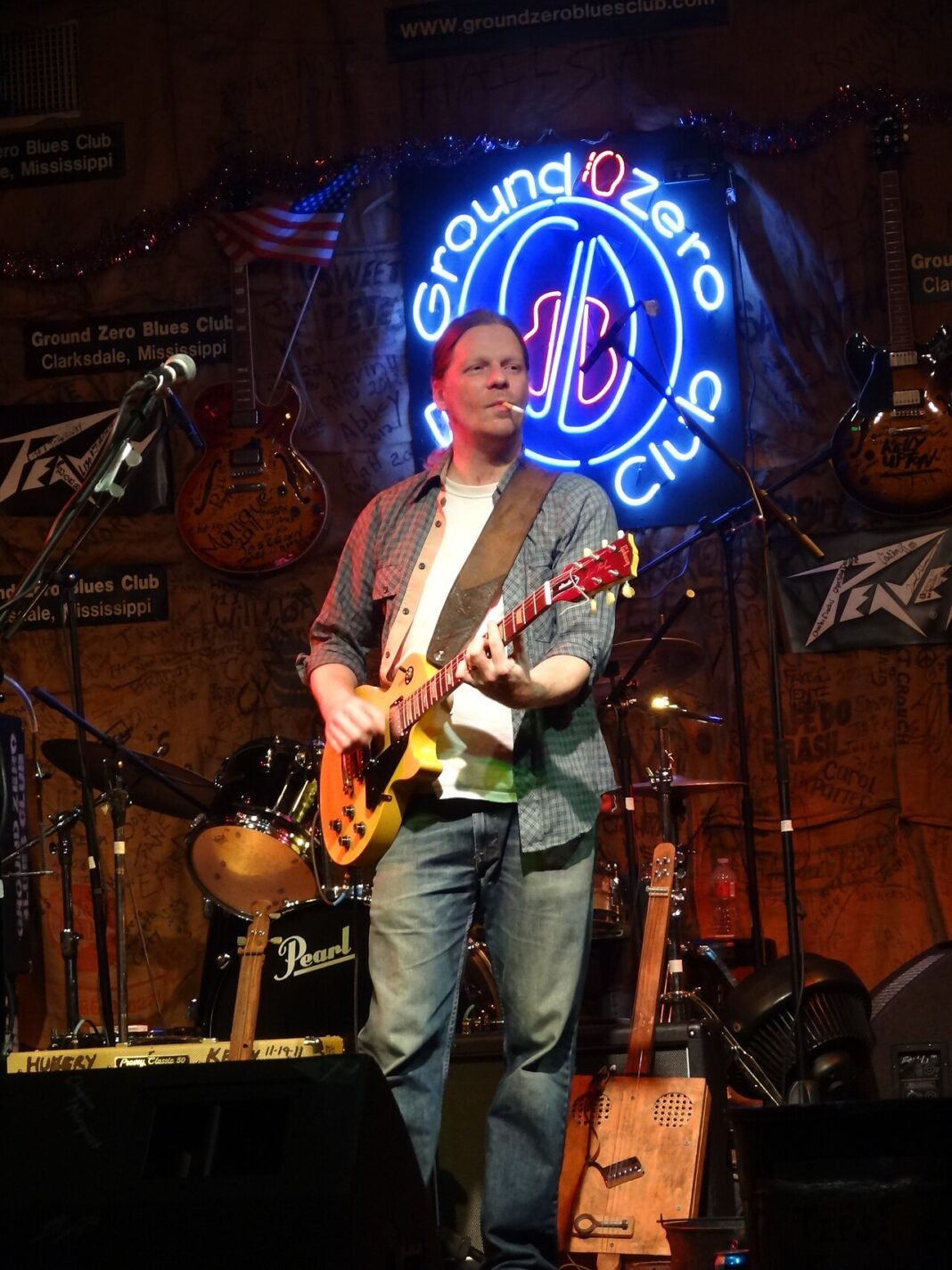
Clarksdale is the Delta’s most visited music destination — a small city whose crossroads (where US Highways 61 and 49 intersect, and where Robert Johnson allegedly sold his soul to the devil) has become the symbolic center of blues mythology. The Delta Blues Museum in Clarksdale, located in a restored freight depot that once served as a hobo jungle and informal gathering place for traveling musicians, houses the state’s most significant blues artifact collection, including Muddy Waters’ boyhood cabin, relocated from Stovall Plantation. The Red’s Lounge on Sunflower Avenue — a juke joint still operating in its original form, with no sign, a screen door, and handwritten setlists on the wall — is the closest thing to an authentic blues experience available to the visitor who arrives on a weekend night when Red himself or one of the surviving Delta blues musicians he hosts is performing.

Vicksburg: Where the River Was Won
Vicksburg National Military Park preserves the battlefield of the 47-day siege (May–July 1863) that ended with the Confederate surrender of Vicksburg, giving the Union control of the Mississippi River and effectively splitting the Confederacy. The park’s 1,800 monuments and markers, 20 miles of reconstructed trenches and earthworks, and the 16-mile tour road through the battlefield provide the most comprehensive preserved Civil War battlefield landscape in America — the terrain of the siege is more intact here than at Gettysburg, and the physical scale of the operation (the Union army’s approach trenches, the Confederate fortifications, the civilian population’s cave network where Vicksburg’s residents sheltered during the siege) is visually comprehensible in a way that the dense development of eastern battlefield parks sometimes prevents.
The USS Cairo, a Union ironclad gunboat sunk by Confederate torpedoes in 1862 and raised from the Yazoo River mud in 1964, is preserved at the park and provides the most complete surviving example of a Civil War river gunboat — the ship still contains its original equipment, and thousands of personal items from the crew were recovered from the mud and are displayed in the adjacent museum. The Cairo’s story — the first vessel in history sunk by a remotely detonated electric mine — is one of the most significant military technology stories of the Civil War, and the physical ship makes it immediate in a way no museum reproduction can achieve.
Oxford: Faulkner’s Town
Oxford, in the hills of northern Mississippi, is home to the University of Mississippi (Ole Miss) and to the literary legacy of William Faulkner — the most significant American novelist of the 20th century according to many critical assessments, and the writer whose fictional Yoknapatawpha County is one of the most complete invented geographies in world literature. Rowan Oak, Faulkner’s home from 1930 until his death in 1962, is preserved by the university as a museum of his daily life and working environment — the outline of A Fable that Faulkner wrote directly on the plaster wall of his study (his working method for large projects) is still visible, one of the most extraordinary surviving artifacts of American literary process.
Oxford’s Square — the courthouse square around which the city’s commercial district is organized — has developed into one of the most vibrant small-city cultural environments in the South, anchored by Square Books (one of the finest independent bookstores in America, with a long tradition of hosting major literary events), the City Grocery restaurant and bar (where the Oxford literati have gathered since its opening), and the music and food scene that the university presence and Oxford’s literary reputation sustain. The Oxford American magazine, headquartered in Little Rock but identified with the Oxford intellectual tradition, has been the most significant voice of southern literature and music criticism for three decades.
Gulf Coast: Beaches and Casinos
Mississippi’s Gulf Coast, stretching 62 miles from the Louisiana border at Pearlington to the Alabama border at Pascagoula, provides white sand beaches, barrier island wilderness in Gulf Islands National Seashore, and the casino resort development of Biloxi and Gulfport that has made the Gulf Coast a regional tourism destination. The beaches of the Coast — particularly at Ocean Springs, Pass Christian, and the undeveloped stretches near the mouth of the Pascagoula River — provide Gulf of Mexico swimming and shell collecting at prices far below Florida equivalents. Biloxi’s lighthouse (1848, survived the Civil War and Hurricane Katrina), the Biloxi Shrimping industry’s heritage, and the Beauvoir (the Jefferson Davis home and Confederate presidential library, a controversial but historically significant site) provide cultural tourism beyond the casino floor. Ship Island, in the Gulf Islands National Seashore (accessible by ferry from Gulfport), provides the most pristine beach day-trip available on the Mississippi Gulf Coast — a barrier island with white sand and clear green water that represents the Gulf’s natural character before coastal development.