

Idaho Travel Guide 2026: Best Places to Visit in the Gem State
Idaho is the most underestimated travel destination in the American West — a state of extraordinary natural diversity that most travelers bypass entirely on their way to more famous neighbors. That oversight is their loss. Idaho contains more miles of wild and scenic rivers than any other contiguous US state, the deepest river gorge in North America, some of the most dramatic volcanic landscapes on the continent, world-class ski resorts, and a genuine frontier character that persists in a way that states with heavier tourist development have largely lost. The visitor who takes the time to discover Idaho typically leaves wondering why they waited so long.
Sun Valley: Mountain Town Excellence
Sun Valley, in the Wood River Valley of south-central Idaho, is one of the finest mountain resort towns in the United States — a distinction it has maintained since opening as America’s first destination ski resort in 1936. The combination of Bald Mountain (Baldy), the primary ski mountain with 2,054 vertical feet and runs that begin above treeline with panoramic views of the Pioneer Mountains, and the village of Ketchum, a walkable town of excellent restaurants, galleries, and lodging, creates a mountain experience that is comparable to any Colorado resort town but without Colorado’s crowding and prices.
Sun Valley’s appeal extends across all seasons. Summer brings the Sun Valley Music Festival (a world-class outdoor classical music event held in a purpose-built open-air pavilion since 1936), the Sun Valley Film Festival in spring, exceptional fly fishing on Silver Creek (one of the most technically demanding spring-fed trout streams in the West), and mountain biking on the trail networks that connect Ketchum to the surrounding wilderness areas. Ernest Hemingway spent his final years in Ketchum and is buried in the town cemetery — a literary pilgrimage that draws visitors uninterested in skiing.
Craters of the Moon National Monument
Craters of the Moon National Monument and Preserve, on the Snake River Plain between Twin Falls and Sun Valley, preserves one of the most extraordinary volcanic landscapes in North America — a 618,000-acre expanse of lava flows, cinder cones, spatter cones, and lava tubes that was formed by a series of eruptions beginning approximately 15,000 years ago and continuing as recently as 2,000 years ago. The monument’s name is not hyperbole: NASA astronauts trained at Craters of the Moon before the Apollo missions, studying the geological environment most similar to what they expected to find on the lunar surface.
The 7-mile loop drive through the monument passes the most accessible features: the North Crater Flow, Inferno Cone (a 180-foot cinder cone with a short steep hike to summit views across the lava plain), the Big Cinder Butte, and access points for the lava tube caves (Indian Tunnel, Boy Scout Cave, and Beauty Cave). Cave hiking requires flashlights and in some tubes a helmet — the caves maintain a temperature near 40°F year-round. In spring, the apparently barren lava plain blooms with wildflowers that have adapted to the thin volcanic soil.
.jpg?width=1200)
Hells Canyon: Deepest Gorge in North America
Hells Canyon, on the Idaho-Oregon border where the Snake River cuts through the Seven Devils Mountains, is the deepest river gorge in North America — deeper than the Grand Canyon by nearly 2,000 feet at its maximum depth of 7,993 feet. The canyon’s remote character (no road crosses the canyon for 100 miles; access is primarily by jet boat from the Oregon side or by trail from the Idaho rim) preserves a wilderness quality that has been eroded from more accessible western landscapes. Bighorn sheep are commonly seen on the canyon walls; black bears, cougars, rattlesnakes, and nesting golden and bald eagles inhabit the canyon ecosystem.
Hells Canyon National Recreation Area provides several access points. The Hells Canyon Overlook near Oxbow, Oregon, provides the most accessible rim view. Jet boat tours operate from Hells Canyon Dam and from Lewiston, Idaho — the furthest inland seaport on the Pacific coast, 465 miles from the ocean via the Columbia and Snake River system. Whitewater rafting through the main canyon runs Class IV-V rapids; multi-day float trips through the canyon are among the most spectacular river experiences in the continental United States.
Sawtooth Mountains and Stanley Basin
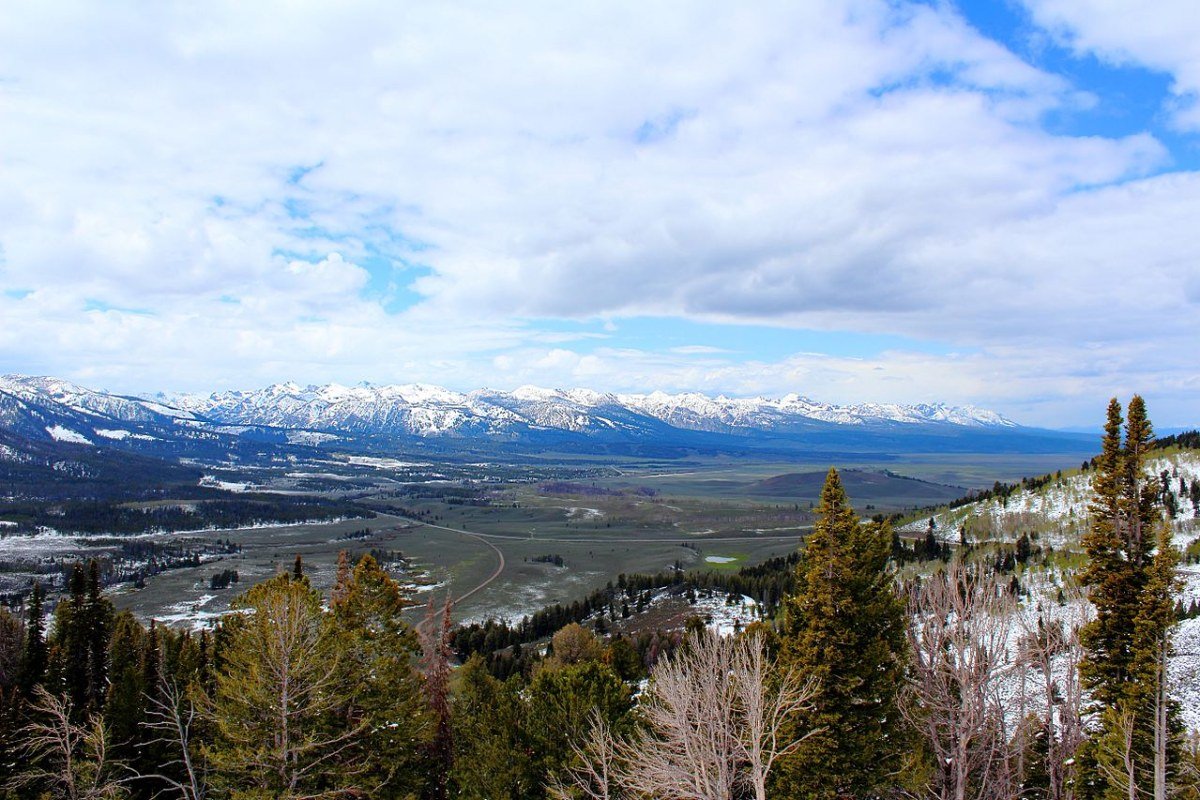
The Sawtooth Range, north of Sun Valley in central Idaho, contains forty-two peaks exceeding 10,000 feet and over 300 alpine lakes in the Sawtooth Wilderness. The town of Stanley — population approximately 100 year-round — sits at 6,260 feet in the Stanley Basin with the Sawtooth peaks rising dramatically to the south and west, creating a mountain panorama that is regularly cited as one of the most spectacular vistas in the Rocky Mountains. The Salmon River, which begins near Stanley and flows for 425 miles before joining the Snake, provides the main artery of float trips through the Idaho backcountry.
The Sawtooth National Recreation Area trail system includes the Alice-Twin Lakes Trail (8 miles round-trip to two alpine lakes beneath the main Sawtooth peaks), the Goat Lake route in the White Cloud Mountains, and dozens of multi-day backpacking options in terrain that sees a fraction of the traffic of comparable Colorado or Utah wilderness areas. Stanley’s isolation — the nearest major grocery store is more than an hour’s drive — preserves its frontier character in a way that is increasingly rare in the mountain West.
Coeur d’Alene: Idaho’s Lakefront City
Coeur d’Alene, in the Idaho Panhandle two hours east of Spokane on Interstate 90, anchors the most accessible tourism region in the state — a combination of a beautiful glacially carved lake (Lake Coeur d’Alene, 25 miles long with 109 miles of shoreline), a walkable lakefront downtown with excellent restaurants and waterfront resort development, and proximity to outstanding outdoor recreation that makes it the most visited destination in northern Idaho.
The Coeur d’Alene Resort, built on a peninsula jutting into the lake, operates one of the most famous golf courses in the country — the Resort Course, which includes a floating green on the lake (accessible only by boat) that is among the most photographed golf features in the world. The Trail of the Coeur d’Alenes, a 73-mile paved rail-trail from Mullan to Plummer along the valley of the South Fork of the Coeur d’Alene River, provides exceptional cycling through historic Silver Valley mining country. The nearby town of Wallace, entirely listed on the National Register of Historic Places, preserves intact Victorian architecture from the silver boom era of the 1880s–1910s.

Boise: The Emerging Urban Destination
Boise, Idaho’s capital and largest city, has emerged over the past decade as one of the most livable and increasingly well-regarded mid-sized cities in the western United States. The Basque Block in downtown Boise — a compact district of Basque restaurants, bars, a cultural center, and a frontón (handball court) — reflects Idaho’s surprisingly significant Basque community, descendants of sheepherders who immigrated in the late 19th century and established a community that maintains its cultural identity more robustly than any other Basque diaspora in North America. The Boise River Greenbelt, a 25-mile paved pathway along the Boise River through the heart of the city, provides an urban outdoor recreation experience comparable to the finest in the West.
The Idaho State Capitol, completed in 1920 and built from local sandstone, stands at the head of Capitol Boulevard in a setting that preserves the original civic vision of downtown Boise. The Boise Museum of Art and the Discovery Center of Idaho provide cultural anchors for a downtown that has seen significant restaurant and retail investment in recent years. Boise’s proximity to the Owyhee Mountains to the south — a vast, remote high-desert range with limited visitor infrastructure and extraordinary solitude — provides a backcountry wilderness option that few of the city’s residents have fully explored.
Shoshone Falls and the Snake River Canyon
Shoshone Falls, on the Snake River near Twin Falls, drops 212 feet — 36 feet higher than Niagara Falls — over a basalt ledge nearly 1,000 feet wide. In spring runoff season, the falls operate at their full volume, creating one of the most impressive waterfall spectacles in the western United States. In summer, water is diverted upstream for irrigation and the falls are dramatically reduced, making spring (typically March through May) the optimal viewing period. The Snake River Canyon at Twin Falls also contains the site of Evel Knievel’s 1974 attempted motorcycle jump across the canyon — the launch ramp remains visible from the north rim.
Idaho’s tourist attractions share a characteristic that distinguishes the state from its more marketed neighbors: they exist at a scale and with an access structure that rewards independent exploration over guided tours. The visitor who drives Idaho’s highways with a willingness to detour — down a dirt road toward a river access, up a canyon toward a trailhead, through a small town with an unexpectedly excellent coffee shop — discovers a western landscape that is as rewarding as anything in the continental United States, and more genuinely wild than most of it.