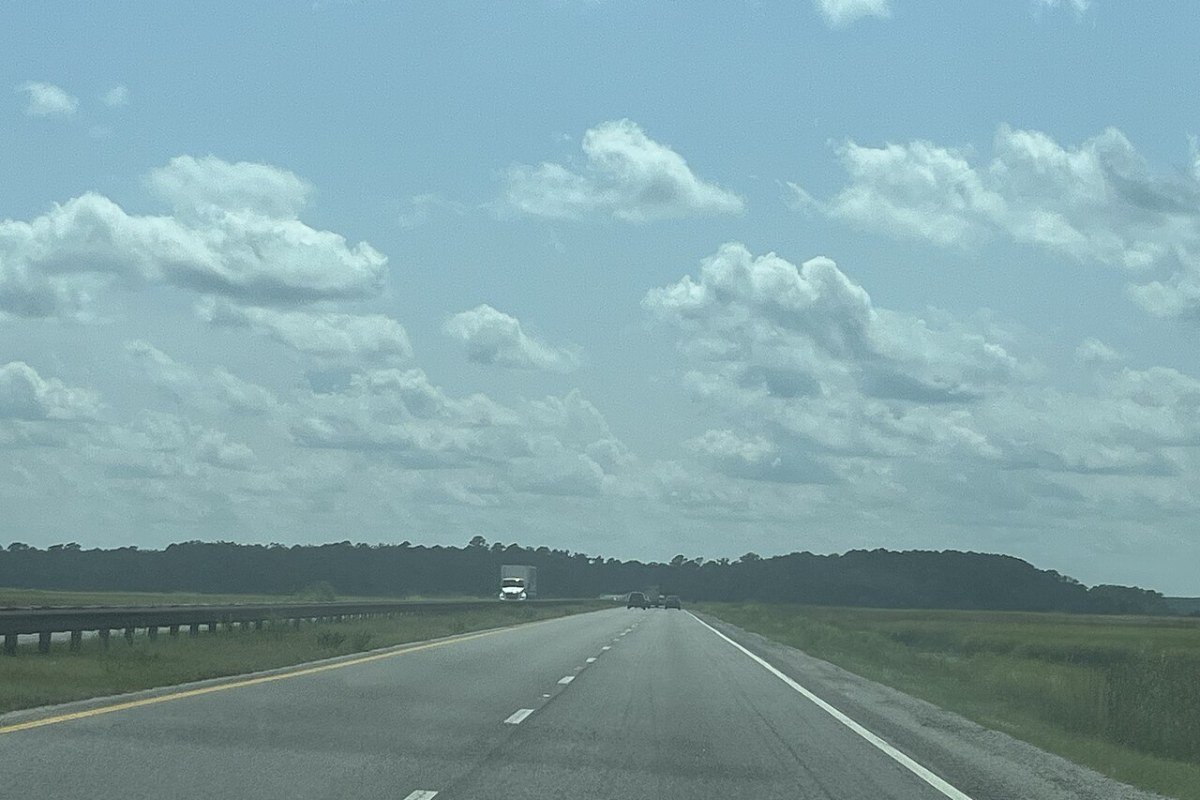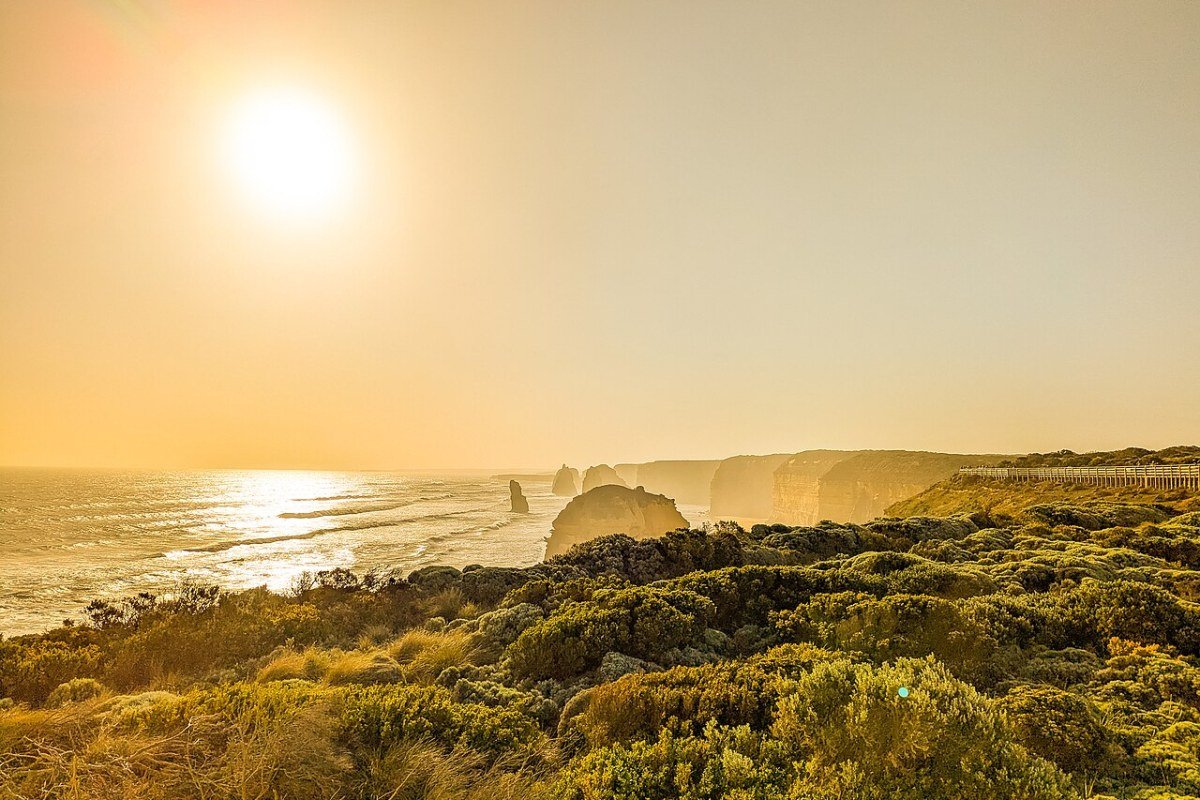
The Great Ocean Road is one of the world’s great coastal drives — 243 kilometers of winding road carved into the sea cliffs of Victoria’s southwestern coast, with the Twelve Apostles limestone stacks as its famous centerpiece. Built by returning World War I soldiers between 1919 and 1932 as a memorial to those who had served — the world’s largest war memorial, dedicated to the 3,000 men who built it — the road today passes through surf towns, ancient rainforests, clifftop lookouts above the Southern Ocean, and national park wilderness. Unlike many “scenic drives” that are beautiful for 20 minutes and monotonous for the rest, the Great Ocean Road stays spectacular for virtually its entire length. Here’s how to give it the time it deserves.
How to Drive It: Direction, Timing, and Duration
The road runs from Torquay (90 minutes southwest of Melbourne) to Allansford, near Warrnambool. Most visitors drive it west from Torquay — this puts the ocean on your side of the car for the most scenic sections, and the Twelve Apostles are better lit for photography in the afternoon when approaching from the east. Allow a minimum of 2 days (3 is better) to stop at the main attractions; a single-day dash from Melbourne misses most of what makes the road special. The driving itself is slow — the road is winding, narrow in places, and you’ll want to pull over constantly. Book accommodation in Lorne, Apollo Bay, or Port Campbell in advance; summer weekends fill up months ahead.
Torquay to Lorne: Surf Country
Torquay is the surfing capital of Australia — home to the Surf World Museum (the world’s largest surfing museum, tracing the sport from Hawaiian royalty to Rip Curl’s global empire), and the flagship stores of Quiksilver and Rip Curl (both founded here in the 1960s on the profits of a surf culture that Torquay created). Bells Beach (5km south, a short detour off the main road) is one of the most famous surf breaks in the world — the big right-hand point break hosts the Rip Curl Pro, the world’s longest-running professional surfing contest, annually in April. Point Addis Marine National Park (between Torquay and Anglesea) has one of Victoria’s best beach walks with excellent surf views. Anglesea is worth a stop for its extraordinary golf course — kangaroos graze on the fairways year-round, entirely unconcerned by golfers.
Lorne is the first substantial town on the road — a well-established holiday destination with a beautiful beach, an excellent independent arts scene, good restaurants (Erskine House, Kosta’s, Movida on the road), and access to the Erskine River walk (ending at the 30-meter Erskine Falls, a 45-minute walk). The Lorne Pier-to-Pub swim (January) is one of Australia’s most beloved open-water swimming events — 1,400 swimmers cross the bay from the pier to the pub.
Apollo Bay and the Great Otway National Park
Apollo Bay is a working fishing town with excellent fresh seafood, a Saturday morning market, and access to the hinterland forests of the Great Otway National Park. The Cape Otway Lightstation (the oldest surviving lighthouse on mainland Australia, 1848) is worth a detour — the Cape Otway Road passes through prime koala habitat and independent wildlife sightings are common year-round, especially in the eucalyptus trees along the road between the main highway and the lighthouse. The Maits Rest Rainforest Walk (45 minutes, free) descends into a pocket of cool temperate rainforest — tall myrtle beech, tree ferns, and ancient blackwood trees that make you forget the ocean is minutes away. Zip World (zipline tours through the forest canopy) provides a different perspective.
The Twelve Apostles and Port Campbell
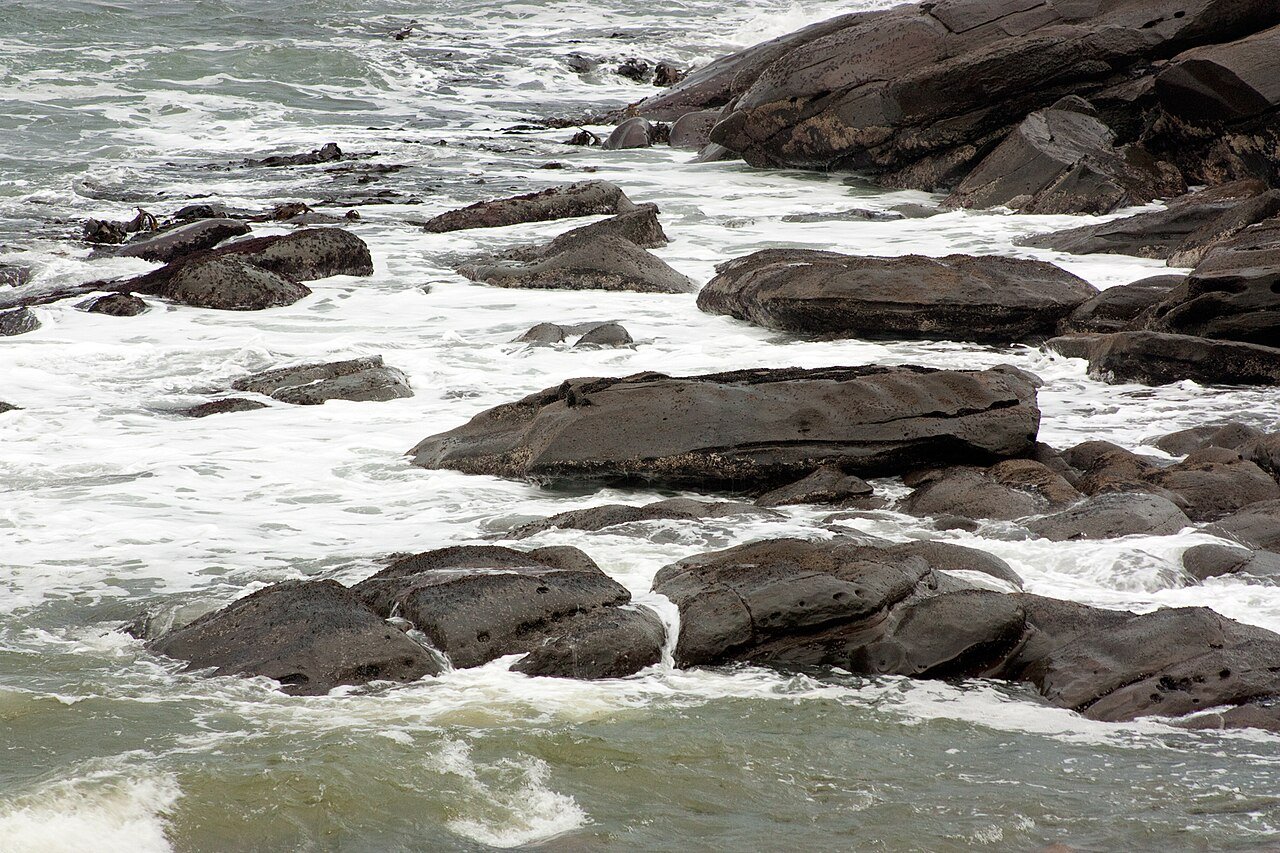
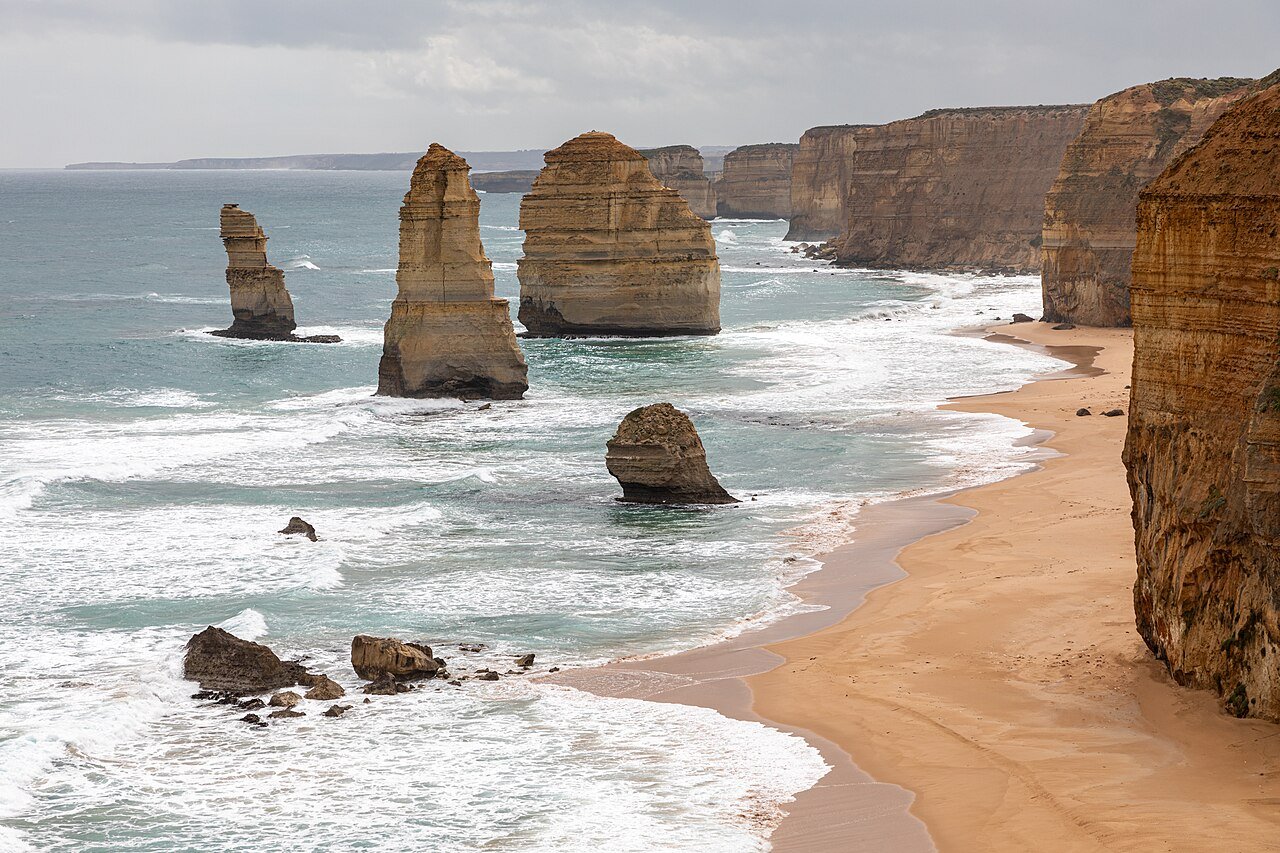
The Twelve Apostles — actually eight (several have collapsed into the ocean since the marketing name was applied, and there were never actually twelve) — are limestone stacks rising up to 45 meters above the Southern Ocean, separated from the mainland by the relentless erosion of the ocean’s waves. The visitor center and viewing platforms are excellent. The free helicopter tour operators at the site are genuinely spectacular (AUD $145 for 10 minutes above the coastline) — booking is possible on the day at the helicopter pad. Go at sunrise (the car park is accessible even if the visitor center is closed) for the finest light and smallest crowds; sunset is equally beautiful but busier.
Loch Ard Gorge (1km east of the Twelve Apostles, free) is arguably more dramatic — sheer limestone cliffs enclosing a sheltered beach with brilliant turquoise water, accessible via a short steep path. Named for the iron clipper ship that sank here on May 31, 1878, with 52 lives lost (only two survivors: a 19-year-old Irish immigrant woman and a young crew member who swam through the gorge to get help). The wreck story and the grave of four victims are described at the site. The Grotto and London Arch (formerly London Bridge — the connecting span collapsed in 1990, stranding two tourists on the isolated arch) are other excellent nearby stops.
Wildlife Along the Road
The Great Ocean Road region has excellent wildlife that many visitors miss by staying in their cars. Koalas are regularly seen in the Cape Otway area — look up into the forks of manna gum (grey eucalyptus) trees in the Cape Otway Road corridor and the Bimbi Park area. Kangaroos and wallabies graze in the national park clearings at dawn and dusk — the camping areas at Cape Otway and Johanna Beach are particularly good. Southern right whales and humpback whales (June–October, peak July–September) can be seen from clifftop lookouts near Warrnambool — the town is considered one of the best places in the world for land-based whale watching, with dedicated viewing platforms at Logan’s Beach. Little penguins come ashore after dark at various points along the coast — Apollo Bay and Aireys Inlet have accessible colonies.
Getting There and Practical Tips
The Great Ocean Road is best driven with a rental car from Melbourne — public bus services (V/Line Geelong to Warrnambool) exist but are slow and infrequent. The full drive from Torquay to Warrnambool takes about 3 hours non-stop; 2–3 days with all the stops. Consider picking up a car in Melbourne and dropping it in Adelaide (the road continues inland through Warrnambool and Ballarat to Adelaide, adding the Grampians National Park as an excellent detour). Accommodation: Lorne and Apollo Bay have the best range of options at all price points; Port Campbell has limited but adequate choices near the Twelve Apostles. Book December–January accommodation 3–6 months ahead. Fuel up at Lorne or Apollo Bay — prices increase significantly further along the road.