

Cost of Living in Wyoming 2026: Tax-Free Energy State vs. Jackson Hole’s Stratosphere
Wyoming presents the most extreme internal cost-of-living divide of any state in the country — the Jackson Hole area (Teton County) has the highest per-capita income of any county in the United States (driven by billionaire second-home buyers and hedge fund managers), with median home prices above $3 million and the most expensive retail real estate outside of Manhattan; the rest of Wyoming has one of the lowest costs of living in the Mountain West, with affordable housing in Casper, Cheyenne, Laramie, and Sheridan reflecting an energy-extraction economy with lower wage levels and proportionate housing costs. The state’s financial advantages are genuine and significant: no state income tax, no state estate tax, low property taxes, and royalties from federal mineral extraction that have historically allowed Wyoming to fund government without burdening residents with high taxes. For households not bound to the Jackson area, Wyoming offers extraordinary financial conditions for outdoor enthusiasts and remote workers.
Wyoming Cost at a Glance 2026
- State income tax: None (Wyoming has no personal income tax)
- Teton County (Jackson) median home price: $2.5M–$4M+
- Casper median: $260,000–$320,000
- Cheyenne median: $290,000–$360,000
- Laramie median: $280,000–$340,000
- Sales tax: 4% state + local (most areas 5%–6%)
- Property tax effective rate: ~0.57% — among the lowest in the nation
Jackson Hole: The Billionaire Zip Code
Teton County, Wyoming, contains one of the most extreme wealth concentrations in the United States — the combination of Grand Teton and Yellowstone proximity, Jackson Hole Mountain Resort’s world-class ski terrain, the National Elk Refuge’s wildlife viewing, and the deliberate scarcity created by the surrounding national park and national forest land has made Jackson Hole real estate among the most expensive in the world. A modest home within commuting distance of the Town Square costs $1.5M–$2.5M; properties with Teton views command $3M–$10M+; ski-in/ski-out at the base of Jackson Hole Mountain Resort approaches $10M–$30M+. The billionaire-driven market (the Jackson area is home to some of the most significant private wealth concentrations in the country) has pushed prices beyond what the local professional economy (guides, ski patrol, hospital workers, teachers) can access — workforce housing is the community’s most pressing policy challenge.

The No-Income-Tax Advantage
Wyoming’s absence of a state income tax is the most significant financial advantage for households with above-average incomes — the comparison with neighboring states illustrates the scale:
- vs. Colorado: Colorado’s 4.4% flat rate; a $150,000 household saves $6,600/year in Wyoming
- vs. Montana: Montana’s top rate 6.9%; savings of $10,350/year at $150,000
- vs. Utah: Utah’s 4.65% flat rate; savings of $6,975/year at $150,000
- Capital gains: Wyoming has no capital gains tax; for investors and business owners with significant capital events, the Wyoming advantage can be substantial — Wyoming LLCs and trusts are frequently used in estate planning for this reason
Casper: The Energy Capital Value Proposition
Casper, Wyoming’s second-largest city (60,000 residents) and the commercial center of the state’s oil and gas industry, provides the best housing value in Wyoming for households seeking a full urban amenity set at the lowest possible cost. Median home prices of $260,000–$320,000 provide purchasing power comparable to significantly smaller Midwest towns, but in a city with the Casper Events Center (concerts, rodeos, Wyoming Wrestling events), the National Historic Trails Interpretive Center, Hogadon Basin Ski Area, and direct access to the North Platte River’s fishing and the Wyoming Range’s hunting. Casper’s energy economy creates cyclical volatility — boom-and-bust cycles tied to oil prices affect the local job market in ways that stable-employment households should understand before purchasing.
Cheyenne: Government Stability in the High Plains
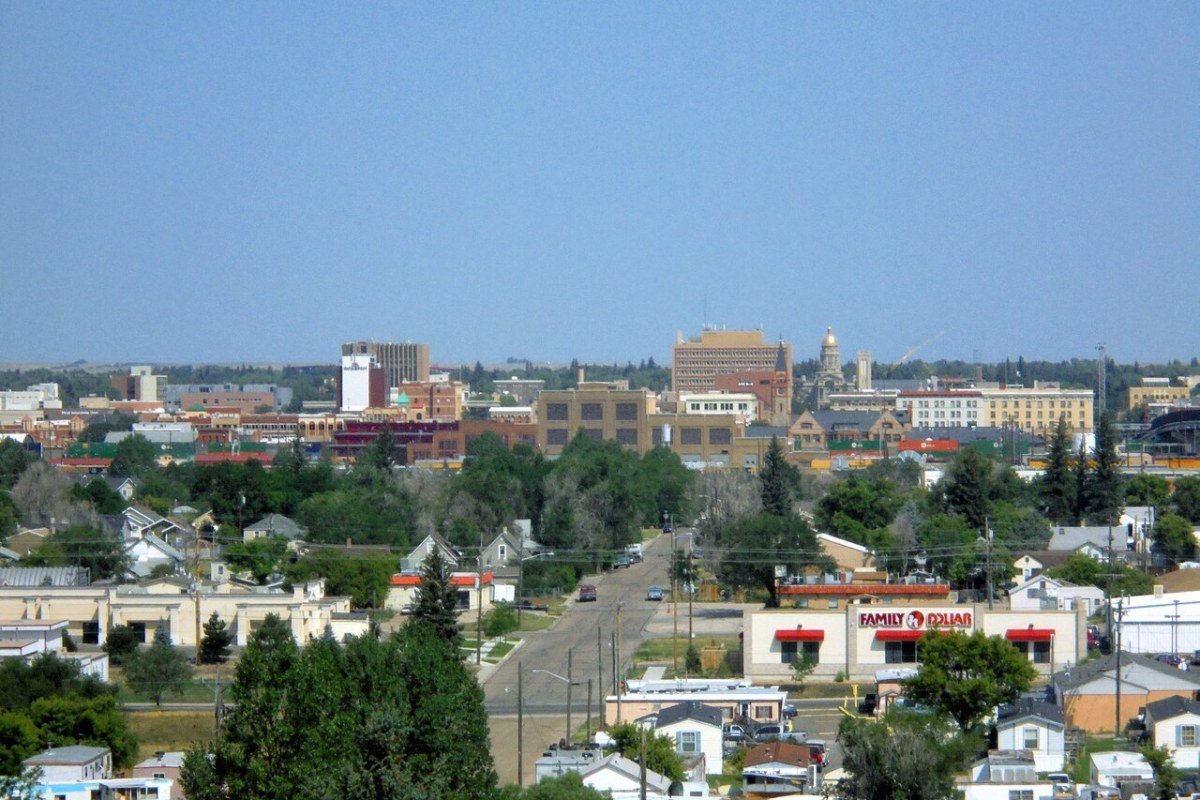
Cheyenne, the state capital (65,000 residents), provides Wyoming’s most stable employment base — state government, F.E. Warren Air Force Base (one of the three ICBM bases in the country), and a growing data center industry (Wyoming’s cheap land, cold climate, and reliable power grid have attracted significant data center investment). The Cheyenne Frontier Days rodeo (the “Daddy of ’em All,” the largest outdoor rodeo in the world, held each July) is Wyoming’s most famous annual event. Housing at $290,000–$360,000 median combines the state’s tax advantages with the employment stability of a government and military anchor, making Cheyenne the most straightforward relocation destination in Wyoming for households not drawn specifically to the Jackson ski market.
Laramie: University Town at Altitude
Laramie, home to the University of Wyoming (the state’s only four-year research university), sits at 7,165 feet elevation on the high plains between Cheyenne and the Medicine Bow Mountains — offering a college-town atmosphere at a fraction of comparable university cities in more competitive states. The UW campus anchors a stable employment base of faculty, administrators, and healthcare providers that insulates Laramie’s economy from the energy-sector volatility that affects Casper. Housing at $280,000–$340,000 reflects this stability. Rock climbers prize Vedauwoo, 20 minutes from downtown Laramie, for its unique Sherman granite formations. Cross-country ski trails in Medicine Bow National Forest start within a short drive of the city. For remote workers and academics seeking Mountain West lifestyle without Mountain West premium pricing, Laramie delivers compelling value — winter winds on the high plains are the primary trade-off that prospective residents should honestly evaluate.
Wyoming’s Outdoor Recreation Economy
Across all of Wyoming’s communities, outdoor recreation access is the consistent draw that justifies the trade-offs of a state with limited urban density and long drives between services. Yellowstone and Grand Teton national parks anchor one of the world’s premier wildlife viewing and backcountry hiking destinations. Wyoming’s elk herds are among the largest in the country, and the state’s hunting culture creates an annual economic cycle that sustains outfitters, guides, and rural communities across the state. For households whose quality of life is measured in proximity to public land — Wyoming has more than 31 million acres of national forest, BLM land, and state land open to recreation — the state’s financial advantages combine with unmatched access to create one of the most distinctive lifestyle propositions in the American West.