
The Real Cost of Living in Alaska: No State Tax, But Everything Else Is Expensive
Alaska has a financial profile unlike any other state in the country — and understanding it requires looking past the headline that the state has no income tax and no statewide sales tax. Those facts are real and significant, but they exist alongside a cost structure for housing, food, utilities, and transportation that is consistently and substantially higher than the national average. Alaska also does something no other state does: it pays residents to live there.
The overall picture is complex, the trade-offs are real, and the right answer depends entirely on your situation — your income, your lifestyle, and how you value the extraordinary natural environment that comes standard with Alaskan residency. Here is an honest, detailed breakdown of what it actually costs to live in the Last Frontier in 2026.
The Alaska Permanent Fund Dividend: Getting Paid to Live Here
Since 1982, Alaska has distributed a portion of the earnings from its sovereign wealth fund — built on oil revenue — directly to residents as an annual cash dividend. The Permanent Fund Dividend (PFD) is paid each October to every Alaskan who has lived in the state for a full calendar year and meets basic eligibility requirements. The amount varies significantly year to year based on fund earnings and legislative decisions, but has ranged from roughly $1,000 to $2,000 per person in recent years. A family of four can receive $4,000–$8,000 per year in direct annual payments from the state simply for maintaining residency.
This is not a marketing pitch — it is a genuine feature of Alaska’s fiscal policy with a 40-year track record. For low-income residents, the PFD represents a meaningful supplement to income. For higher earners, it is a pleasant bonus that helps offset some of Alaska’s elevated costs. For families with children, it accumulates into a meaningful sum over the years of residency. The PFD is taxable as ordinary income at the federal level, but Alaska has no state income tax, so the full amount is yours minus federal obligation.
Housing Costs: The Anchorage Premium and Regional Variation
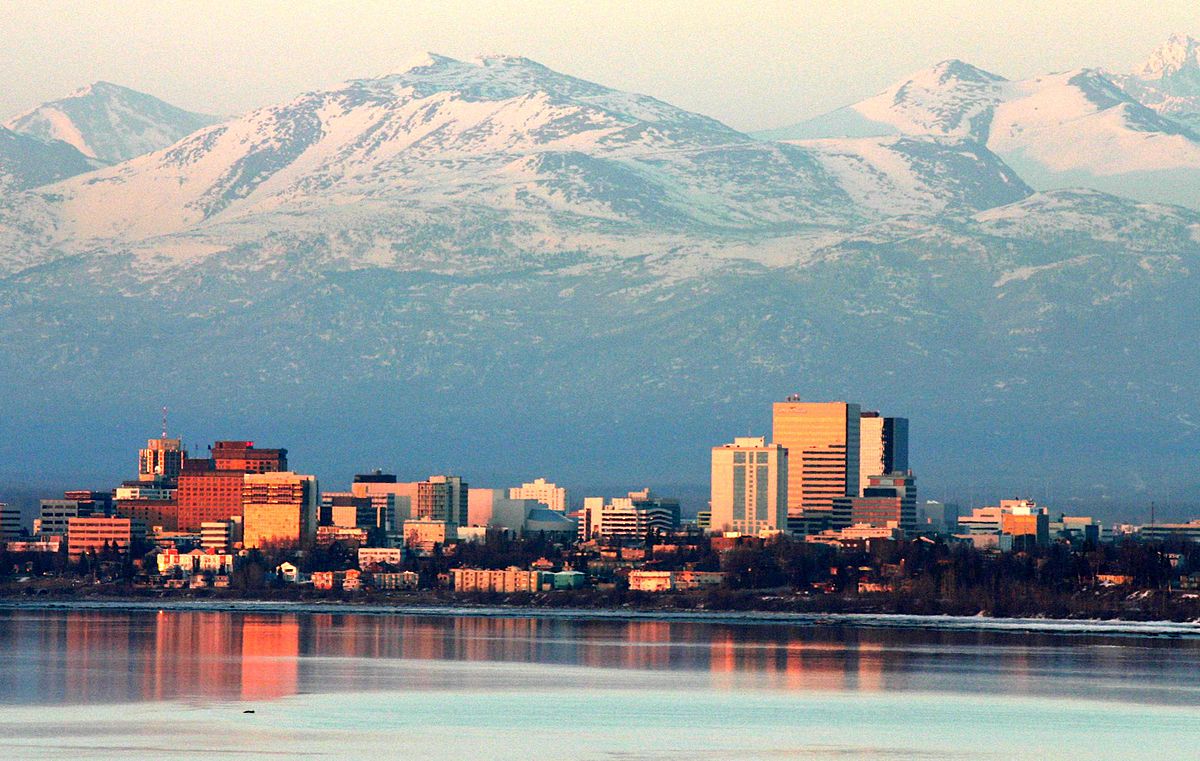
Housing in Alaska varies dramatically by location. Anchorage, home to nearly 40% of the state’s population, has a housing market that is expensive by national standards but not dramatically so for a mid-size city. The median home price in Anchorage runs approximately $360,000–$420,000 as of early 2026 — well above the national median but comparable to many mid-size Sun Belt cities and significantly below coastal metros like Seattle, Portland, or San Francisco.
Fairbanks is considerably more affordable than Anchorage, with median home prices running $200,000–$280,000 in most neighborhoods. The trade-off is a much harsher winter climate and fewer economic opportunities. The Matanuska-Susitna (Mat-Su) Borough north of Anchorage — Palmer, Wasilla, and surrounding communities — offers lower housing costs than Anchorage proper, with median prices around $280,000–$350,000, and has been growing rapidly as a bedroom community for Anchorage workers willing to commute.
Southeast Alaska communities like Juneau, Sitka, and Ketchikan have limited developable land (most Southeast communities are wedged between mountains and the sea) and housing costs reflect that constraint. Juneau median home prices run $380,000–$450,000, and the rental market is notably tight. In truly remote communities accessible only by air — Bethel, Nome, Dillingham, and dozens of smaller villages — housing costs are highly variable and often characterized by a shortage of quality housing regardless of price.
Rental costs follow similar patterns. A two-bedroom apartment in Anchorage runs $1,500–$2,200 per month; in Fairbanks, $1,000–$1,500. Utility costs, discussed below, add meaningfully to these numbers.
Food and Grocery Costs: The Supply Chain Premium
Groceries in Alaska cost approximately 25–35% more than the national average in Anchorage and Fairbanks, and dramatically more in rural and remote communities where everything must be flown or barged in. The math of shipping goods to a state that is separated from the rest of the country by Canada, and internally dispersed across an area the size of Western Europe, shows up directly in store prices.
In Anchorage, a gallon of milk runs $4.50–$6.00. A dozen eggs is $4.00–$6.00. Fresh produce — particularly anything that bruises or wilts easily during the long supply chain — is both expensive and often of mediocre quality during winter months. Alaska produces very little of its own food commercially outside of seafood and some local agriculture in the Mat-Su Valley. The Fred Meyer, Carrs/Safeway, and Walmart grocery chains compete in Anchorage and provide something approaching normal grocery shopping; prices are elevated but the selection is reasonable.
In smaller communities, the situation becomes more dramatic. In Nome, a small box of cereal might cost $8.00. In Bethel or rural villages, basic grocery staples can cost two to three times Anchorage prices. Residents of remote communities often cope through subsistence hunting and fishing — activities that remain legally central to Alaska Native communities and are practiced widely by long-term rural Alaskan residents of all backgrounds.
One significant upside: fresh wild Alaska salmon, halibut, Dungeness crab, and king crab are available at prices that reflect their geographic proximity to the source. If you fish yourself — or know people who do — your freezer can be stocked with protein of extraordinary quality at costs that undercut lower-48 equivalent products significantly.
Utilities: Heating Alaska Is Expensive
Heating a home in Fairbanks through an Alaskan winter is not a trivial expense. Interior Alaska winters are genuinely extreme — temperatures regularly fall below -40°F and can stay there for weeks — and the energy required to maintain a livable interior temperature in those conditions is substantial. Heating oil is the primary fuel for home heating in much of rural and Interior Alaska, and prices fluctuate with global oil markets but are consistently elevated above lower-48 levels due to transportation costs. Annual heating costs for a standard single-family home in Fairbanks can run $3,000–$6,000 depending on home efficiency and fuel prices.
In Anchorage, the situation is considerably better. Natural gas is available and provides a more cost-effective heating option than oil for connected properties. Average monthly utility bills in Anchorage (electricity, natural gas, water, sewer) run $250–$400 per month year-round, with peak winter months at the higher end. The Alaska Energy Authority’s Power Cost Equalization program subsidizes electricity costs for residents of rural communities with small-scale, expensive local generation, but rates in many rural areas still exceed $0.50–$1.00 per kilowatt-hour compared to national averages of $0.13–$0.16.
Transportation: The High Cost of Distance
Transportation is a major cost factor in Alaska at every level. Gasoline prices typically run $0.50–$1.50 per gallon above the national average, reflecting the logistics of delivering fuel to remote northern markets. In communities off the road system, gasoline is barged or flown in and can cost $6.00–$10.00 per gallon or more.
For residents who fly frequently — and most Alaskans who live off the road system do — air travel costs are substantial. The bush aviation industry that connects rural communities is vital infrastructure but expensive: a round-trip from Anchorage to a rural village might cost $400–$800 depending on distance and carrier. Alaska Airlines provides the dominant commercial service between major cities, and prices for Anchorage-Fairbanks, Anchorage-Juneau, and Anchorage-Seattle routes are reasonable on advance purchase but variable.
Vehicle costs in Alaska also include additional expenses not common in lower-48 states. Studded snow tires (legal in Alaska through specific seasonal windows) are a near-mandatory expense for most drivers. Block heaters to prevent engine freeze-up in extreme cold add to the initial vehicle cost. Remote communities may have limited or no vehicle service infrastructure, making vehicle maintenance either expensive or requiring travel to larger centers.
No State Income Tax, No State Sales Tax: The Real Numbers
Alaska’s tax structure is genuinely favorable. There is no state income tax — zero — on any form of income, including wages, investment income, and retirement distributions. There is no statewide sales tax. These two absences represent real savings, particularly for middle- and higher-income households.
The catch is that many municipalities levy their own local sales taxes. Anchorage has no local sales tax, which is genuinely unusual for a major American city. Juneau levies a 5% local sales tax. Sitka charges 6%. Fairbanks borough has no sales tax but the city of Fairbanks levies 2%. Rural communities vary. When evaluating tax burden, check the specific municipality rather than relying on the statewide picture.
Property taxes in Alaska are assessed at the borough (county equivalent) level and vary considerably. Anchorage Municipality’s effective property tax rate runs approximately 1.2–1.5% — above the national average of 1.1%. Fairbanks rates are comparable. Several boroughs offer exemptions for seniors and disabled veterans that can substantially reduce the effective burden for eligible residents.
Healthcare Costs
Healthcare in Alaska is consistently cited as one of the most expensive in the United States, driven by the same geographic factors that make everything else more expensive: everything must be brought in from outside, specialists are scarce, and the distances involved in providing care across a state the size of Western Europe are enormous. Providence Alaska Medical Center in Anchorage is the state’s major tertiary care facility; Alaska Native Medical Center provides care specifically to Alaska Native and American Indian populations under federal obligation.
For serious conditions requiring specialized care, many Alaskans travel to Seattle (a three-hour flight) at significant personal expense and disruption. Health insurance premiums in Alaska are among the highest in the country — individual marketplace plans regularly run $600–$1,000+ per month for a 40-year-old non-smoker, reflecting the underlying cost of delivering care in the state.
Sample Monthly Budget: Anchorage, 2026
Here is a realistic monthly budget for a single adult in Anchorage earning $75,000 annually — approximately the Anchorage median household income:
- Rent (2BR apartment): $1,700
- Groceries: $550
- Utilities (gas, electric, water, internet): $320
- Transportation (vehicle payment, insurance, fuel): $750
- Healthcare (insurance premium + estimated out-of-pocket): $450
- Dining out and entertainment: $400
- Miscellaneous: $250
- Total monthly expenses: ~$4,420
On $75,000 with no state income tax, after-tax monthly income (federal only) is approximately $5,100–$5,200. The budget is manageable but leaves less margin than the same income would provide in most lower-48 cities. Add the annual PFD (~$1,300–$1,800 in recent years) and the effective picture improves somewhat.
Is Alaska Worth the Cost?
That question can only be answered by what you value. The people who thrive in Alaska and choose to stay are those who measure the extraordinary natural environment, the genuine sense of frontier, the PFD, the absence of state income and sales tax, and the tight-knit communities as things worth paying a premium for. The people who leave are often those who underestimated the cost of groceries and heating oil, overestimated how much they would enjoy nine months of cold, or couldn’t find employment that matched their skills.
Alaska is not an economically efficient choice for most people on paper. But for the right person, it is exactly the right place — and the right people tend to know it within about six months of arriving.