


Cost of Living in Hawaii 2026: The Real Price of Paradise
Hawaii is the most expensive state to live in the United States — not by a small margin, but by a significant one. The combination of island geography (virtually everything must be shipped or flown in), isolation from the continental US economy, a housing market constrained by geography and policy, and extraordinarily high state taxes creates a cost structure that is approximately 85–90% above the national average when all categories are considered. This is not a matter of coastal premium or lifestyle inflation — it is the fundamental economics of island living at the margin of the global supply chain.
Yet Hawaii’s resident population is not exclusively composed of the wealthy. Working-class and middle-class Hawaiian families have maintained roots in the islands for generations, adapting their lifestyles and economic strategies to a cost structure that would be financially catastrophic if approached with mainland expectations. Understanding how Hawaii’s economy works for residents — not just for visitors — requires looking past the sticker shock at the structural adaptations that make Hawaiian life sustainable for people at various income levels.
Housing: The Defining Constraint
Hawaii’s housing market is structured around immovable constraints: it is impossible to build more land, and the islands’ combination of protected conservation areas, agricultural land restrictions, and cultural preservation requirements further limits buildable land to a small fraction of total area. The result is a housing market in which demand — driven by a desirable climate, strong tourism economy, military employment, and the aspiration of people across the world — consistently outpaces supply.
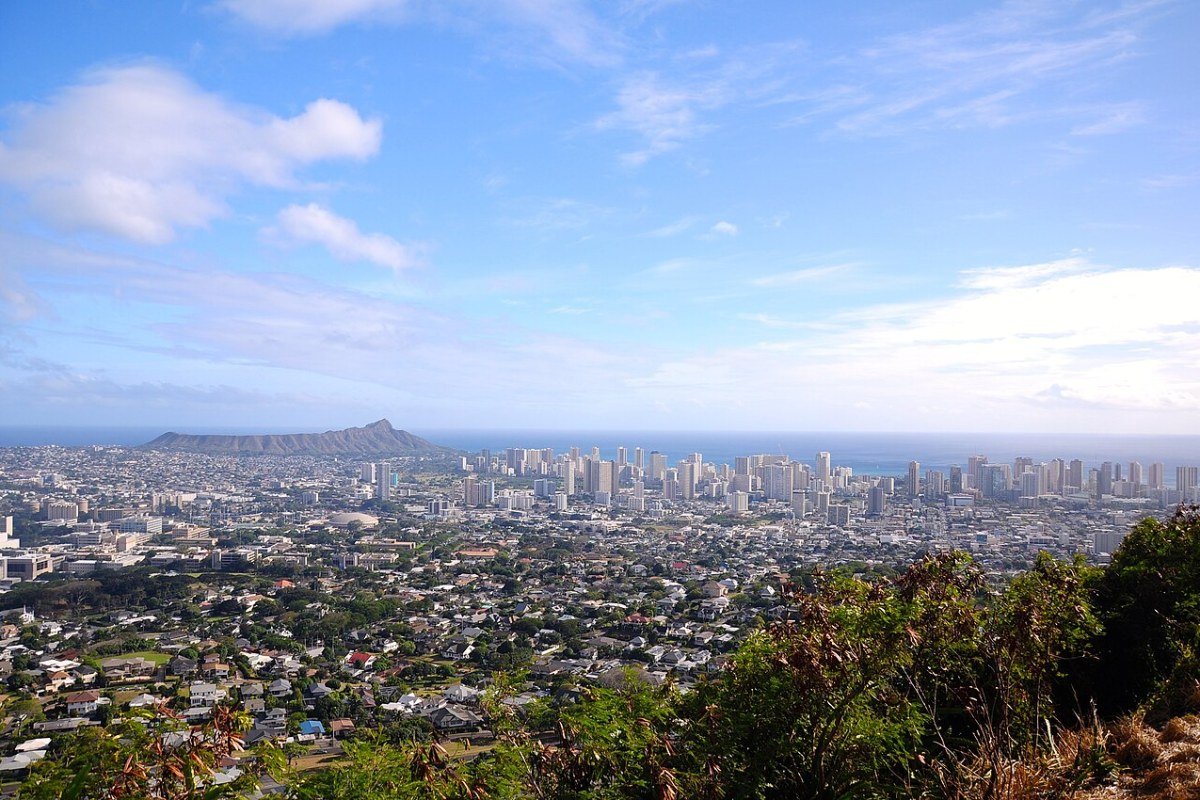
Honolulu (Oahu) median home prices: $780,000–$900,000 for single-family homes as of early 2026. Maui: $1.1–$1.4 million (significantly elevated by post-Lahaina Fire supply constraints and continued demand from mainland buyers). Kauai: $900,000–$1.1 million. Big Island: $400,000–$600,000 (the most accessible market in the state, reflecting lower demand and more buildable land). Condominiums — which represent the most common form of Honolulu housing for working residents — average $500,000–$700,000 for units in desirable locations.

Rental costs reflect the same pressure. Honolulu one-bedroom apartments average $2,000–$2,500 per month for modest units; larger apartments and desirable neighborhoods run considerably higher. The Lahaina Fire of 2023 (which destroyed over 2,200 structures in West Maui, displacing thousands of residents) has severely constrained Maui’s rental market, with displacement costs still reshaping the island’s housing availability as of 2026.
Groceries and Food: Island Premium
Grocery costs in Hawaii are 50–70% above the national average. A gallon of milk that costs $3.50 in the continental US typically runs $6–$8 in Honolulu. A dozen eggs: $5–$7. Fresh fruit and vegetables, while locally grown options exist, are often priced at levels that reflect either importation costs or the premium commanded by local producers for organic certification.
The practical adaptation for many Hawaii residents is a combination of Costco membership (the Honolulu Costco is one of the highest-volume stores in the Costco system nationally, reflecting the rational Hawaiian response to the membership fee’s value relative to bulk pricing), local farmers’ markets where seasonal produce is competitive, and a dietary adaptation toward lower-cost proteins (fresh fish is sometimes competitive with mainland alternatives, and eggs from local farms periodically undercut mainland prices).
Taxes: Hawaii’s High Rate
Hawaii levies one of the highest income tax rates in the United States: the top marginal rate of 11% applies to income over $200,000 for single filers. More commonly, professional-class earners in the $75,000–$200,000 range face effective rates of 8–9% — significant even by high-tax state standards. The general excise tax (GET), which Hawaii levies at 4% (4.5% in Honolulu county) on virtually all business transactions, functions more broadly than a conventional sales tax and is often passed to consumers, effectively functioning as a consumer tax rate higher than the stated rate.
Hawaii’s property taxes are among the lowest in the nation for owner-occupied residences — the homeowner exemption and low millage rates mean that a $750,000 Honolulu home might generate only $3,000–$4,000 annually in property tax. This is an intentional policy to help local residents maintain ownership in a market that would otherwise price out all but the wealthiest. However, investment properties and vacation rentals face higher rates.
The Hawaii Lifestyle Trade-Off
Hawaii’s cost of living is real and substantial, and anyone moving to Hawaii without understanding the financial implications will face genuine hardship. The people who make Hawaii work financially typically fall into specific categories: military families (whose housing allowances are calculated for Hawaii’s market), federal government employees in Hawaii (same), healthcare professionals whose compensation reflects island market rates, technology and finance workers with remote income from continental employers, and people who have strategically selected the Big Island’s more accessible market while maintaining income sources not tied to Hawaii’s smaller economy.
The quality of life rewards for those who make the financial adjustment are real: year-round outdoor recreation in a paradise-level natural environment, a multicultural community of extraordinary diversity (Hawaii is the only US state with an Asian American majority), and a pace and quality of life that justifies the premium for the specific people for whom Hawaii is genuinely home rather than extended vacation.
Who Hawaii Makes Financial Sense For
Hawaii’s financial case is clearest for specific household profiles: military personnel and federal employees whose compensation is set for Hawaii’s cost of living; remote workers earning mainland salaries of $150,000+ who can absorb the cost premium through income rather than local wages; retirees who have accumulated significant wealth and for whom the Hawaii lifestyle justifies the ongoing premium; and individuals working in Hawaii’s dominant industries (tourism, healthcare, government, military) who find that the local wage structure, though below mainland equivalents in most categories, provides a livable income in context. The honest assessment for everyone else: Hawaii is one of the most beautiful places in the world to live, and the price reflects that reality without apology.
Budgeting Practically for Hawaii
Understanding the cost of living in Hawaii is the foundation — the next step is knowing which costs are fixed and which can be optimized for your specific lifestyle. Housing is the largest variable in almost every budget, and choosing the right neighborhood within Hawaii can produce dramatically different monthly costs while still keeping you close to the places and amenities you value most. Utilities, transport, and food costs compound over time, so even small differences per month become significant over a year. The cost advantages of Hawaii relative to high-cost cities like New York, San Francisco, or Sydney are real and measurable — many people who relocate report significant improvements in their financial position alongside a better overall quality of life. Use these figures as a starting framework and verify current rental and property prices for your specific target area, since local markets can shift faster than annual cost-of-living studies.