
The Canadian Rockies road trip is one of the great journeys of North America — a route through mountain scenery so dramatic it seems almost computer-generated. Turquoise glacial lakes of an impossible intensity, ancient glaciers slowly retreating from valley walls, peaks that rise vertically from valley floors in knife-edge ridges, and a wildlife population that includes grizzly bears, wolves, mountain goats, and elk — all accessible from one of the world’s most spectacular highway routes. The Icefields Parkway between Lake Louise and Jasper is routinely named one of the world’s greatest drives, and the superlatives are earned. Here’s how to experience it properly.
The Icefields Parkway: 232 Kilometers of Spectacle
Highway 93 (the Icefields Parkway) runs from Lake Louise north through Banff National Park, across the Banff-Jasper boundary, and continues to Jasper townsite — 232 kilometers of mountain driving that most people agree is the finest scenic highway in North America. Built in the 1930s as a Depression-era public works project, it follows a valley system flanked by the main ranges of the Rockies on both sides. Key stops, north from Lake Louise:
- Bow Lake (90 minutes from Lake Louise): A beautiful turquoise lake backed by the Bow Glacier, with Num-Ti-Jah Lodge at its northern shore (open for meals and accommodation since 1937).
- Peyto Lake Viewpoint: The most photographed viewpoint on the Parkway — a wolf-shaped turquoise lake 500 meters below the viewing platform, surrounded by peaks and forest. The walk from the parking lot is 20 minutes return. Go early in the morning before the tour buses arrive.
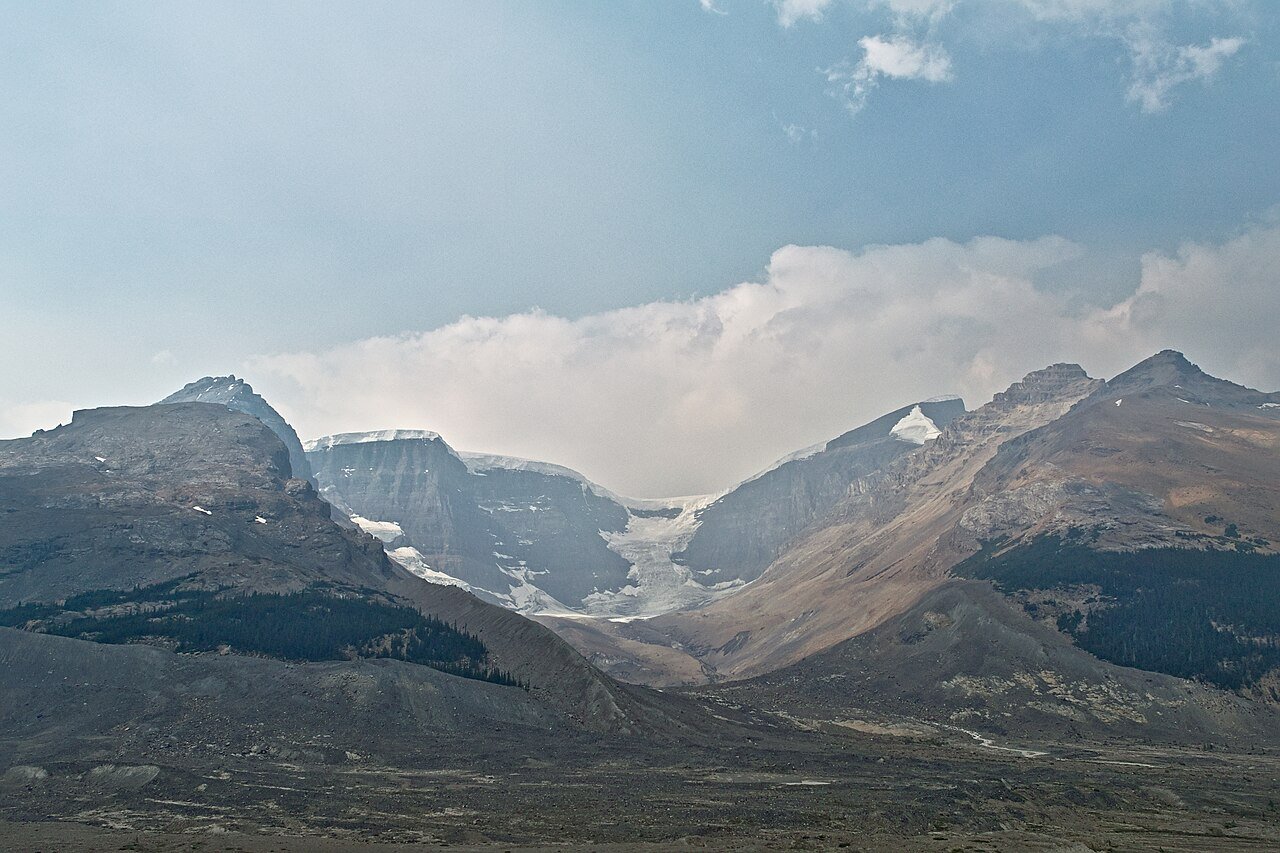
- Columbia Icefield: The largest icefield in the Rocky Mountains, visible from the highway and accessible at the Icefield Centre (with a Glacier Adventure tour onto the Athabasca Glacier in large Ice Explorer vehicles). The Skywalk — a glass-floored walkway over the canyon 280 meters above the valley floor — is genuinely impressive.
- Sunwapta Falls: Where the Sunwapta River drops over a resistant quartzite ledge in a narrow canyon — 10 minutes’ walk from the highway, excellent photography in the afternoon light.
- Athabasca Falls: More powerful than Sunwapta, where the full Athabasca River drops 23 meters through a narrow gorge. Can be combined with the short Canyon Loop walk.
Banff National Park: Lake Louise and Moraine Lake
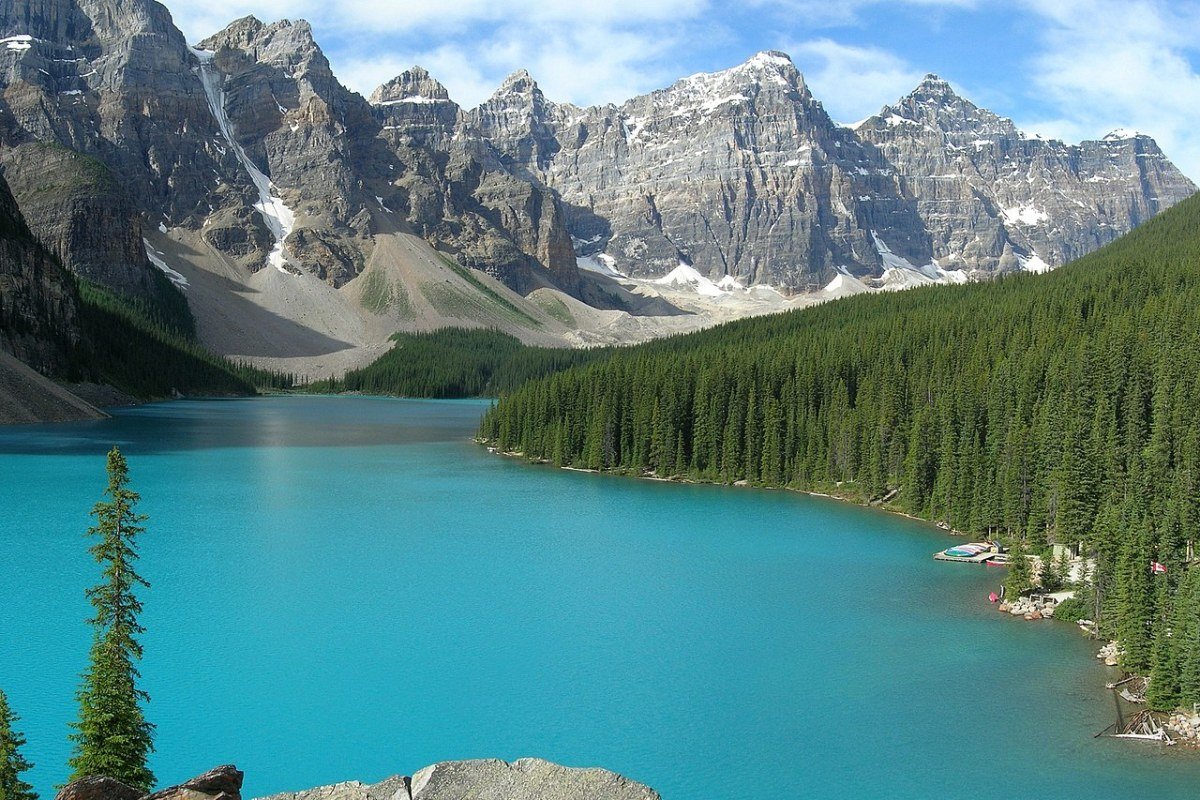
Lake Louise is one of the most photographed spots in Canada — a glacially-fed lake of intensely vivid turquoise backed by the Victoria Glacier and the classic Fairmont Château Lake Louise. The color comes from glacial flour (finely ground rock suspended in meltwater), which reflects the shorter blue-green wavelengths of light. Hikes above the lake — the Plain of Six Glaciers Trail to a historic teahouse, the Lake Agnes Trail to a hanging mountain lake — are among the finest half-day hikes in the Canadian Rockies. Moraine Lake (12km from Lake Louise) may be even more beautiful — a deeper turquoise lake backed by the Valley of the Ten Peaks, with access now restricted to a Parks Canada shuttle that must be booked months in advance. The view from the Rockpile overlook is the classic Banff image that appeared on the Canadian $20 bill. Allow two full days in the Lake Louise area to do justice to both lakes and their surrounding hiking.
Jasper National Park: Wilder and Quieter
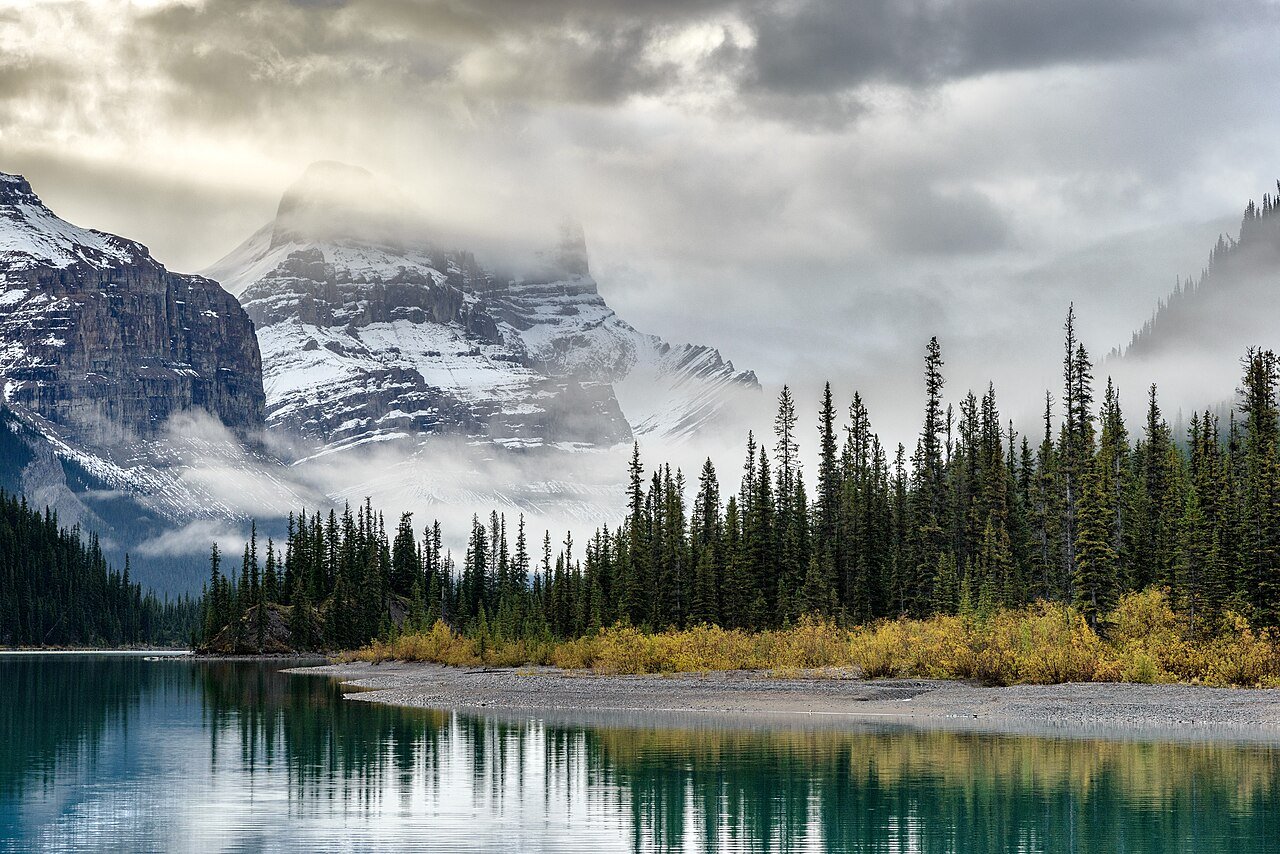
Jasper is larger (10,878 sq km, compared to Banff’s 6,641) and significantly less crowded — fewer international visitors make the extra effort, and the result is a park that feels more genuinely wild. The Maligne Lake road (45km from Jasper townsite) is one of the finest drives in the Rockies: passing Medicine Lake (which famously disappears each autumn as the water drains through an underground karst system, leaving a lakebed of sand) before reaching Maligne Lake — the largest natural lake in the Canadian Rockies and the setting of Spirit Island, one of the most photographed scenes in Canada (boat tours to the island required — book in advance). The Maligne Canyon, 11km from Jasper, has a dramatic series of waterfalls in a narrow limestone gorge — accessible year-round (in winter, guided ice walks through the frozen canyon are exceptional). Miette Hot Springs — the hottest naturally occurring hot springs in the Canadian Rockies at 54°C before cooling — are an excellent post-hike soak 60km from Jasper townsite.
Wildlife Watching in the Rockies
The Canadian Rockies have exceptional wildlife and encounters are common. Elk are extremely abundant — wandering through Banff and Jasper townsite in autumn during the rut, with bulls bugling and sparring in the middle of town (maintain a 30-meter distance — they’re large animals and genuinely dangerous when agitated). Bighorn sheep gather at mineral licks along the Minnewanka Loop in Banff and at various roadsides in Jasper. Grizzly bears and black bears are present throughout both parks — the forests above the Banff valley floor and the meadows around the Columbia Icefield are good grizzly territory. The Icefields Parkway in early June, when bears come down from the snowline to eat young vegetation in the valley, is one of the best wildlife viewing corridors in North America. Always carry bear spray when hiking; make noise in dense bush; never approach wildlife.
Road Trip Planning: The Essential Information
- Base airports: Calgary International (for Banff, 1.5 hours by car) is the most common entry point. Edmonton International Airport (for Jasper, 3.5 hours) is the alternative. One-way car rentals between Calgary and Edmonton are widely available for driving the Icefields Parkway without backtracking.
- Park passes: Required for entry to Banff and Jasper national parks — $10.50/adult per day or the Parks Canada Discovery Pass ($75.25/adult per year, covering all national parks). Buy at the park gate or online.
- Shuttle and reservation requirements: Moraine Lake requires a Parks Canada shuttle reservation (books out months in advance). Lake Louise parking fills by 8am in summer. Johnston Canyon gets crowded by 9am. Early mornings change everything.
- When to go: July–August for full trail access and best lake colors; late September for golden larch trees and elk rut with significantly fewer crowds; December–April for skiing at Banff’s three ski areas (Lake Louise, Sunshine Village, Mt. Norquay) and Marmot Basin in Jasper.
- Accommodation: Book 6–12 months in advance for anything in July and August within the parks. The Fairmont properties (Château Lake Louise, Banff Springs) require even further advance planning. Excellent camping within both parks through the Parks Canada reservation system.