
Best Places to Live in Idaho 2026: A City-by-City Guide
Idaho’s population centers vary dramatically — from the emerging metropolitan character of Boise to the resort-town affluence of Ketchum to the agricultural city identity of Twin Falls and the northern lake-country appeal of Coeur d’Alene and Sandpoint. Choosing where to live in Idaho depends heavily on income source, lifestyle priorities, and tolerance for rural versus urban tradeoffs. This guide covers the most realistic options for people considering Idaho as a long-term home.
1. Boise — The Complete Package
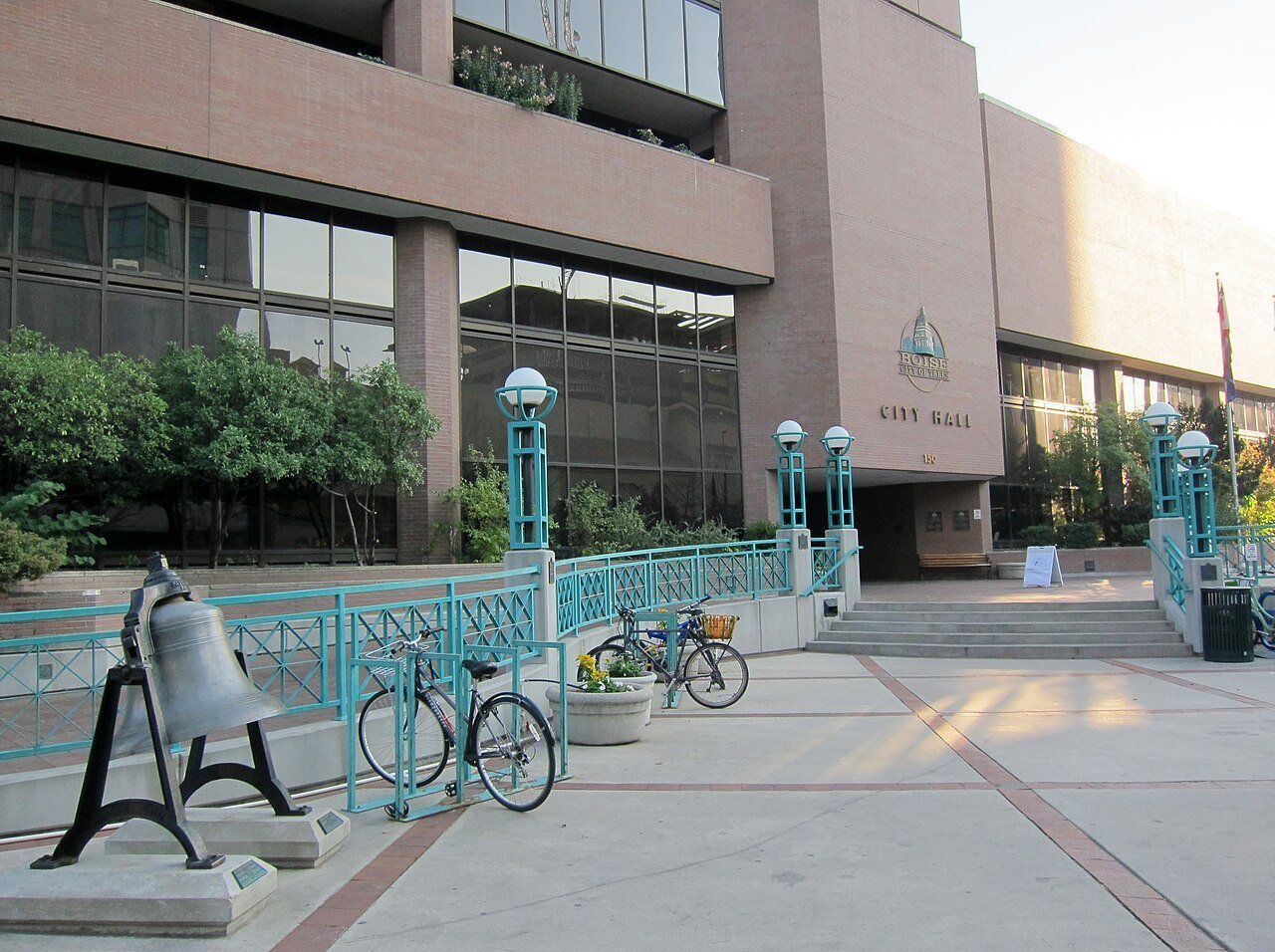
Boise is Idaho’s only city that offers the full range of urban amenities — a downtown with genuine dining and cultural depth, a job market spanning technology, healthcare, government, finance, and agriculture, multiple hospital systems, a state university (Boise State, with 26,000 students and a nationally competitive program in business, engineering, and social work), and access to the Boise River Greenbelt and the Boise Foothills trail system within the city limits. The combination of these qualities with housing costs still significantly below Seattle or Portland has made Boise one of the fastest-growing metros in the country for the past decade.
The neighborhoods of Boise vary considerably. The North End — the city’s most walkable and architecturally distinguished neighborhood, with tree-lined streets, Craftsman bungalows, proximity to Hyde Park (a commercial street with independent restaurants and shops), and the Boise Foothills trailheads — is consistently the most desirable address and commands a corresponding premium. The East End, near Warm Springs Avenue and the hot springs geothermally heated district, offers similar character at slightly lower prices. The bench neighborhoods (areas on the flat mesa above the Boise River valley) are more affordable and more car-dependent.
Meridian, Boise’s largest suburb and one of the fastest-growing cities in the United States, provides newer construction, more affordable single-family housing, and a suburban character that differs substantially from Boise’s intown neighborhoods. Eagle, to the northwest, combines suburban family-oriented development with higher-income demographics and excellent schools. Nampa and Caldwell, the western anchors of the Treasure Valley, offer the most affordable housing in the metro but trade urban amenity access for driving distance.
2. Coeur d’Alene — Lakefront Living in the North
Coeur d’Alene offers a quality of life proposition that differs fundamentally from Boise: a smaller community of 55,000 oriented around Lake Coeur d’Alene, with a walkable lakefront downtown, exceptional outdoor recreation (lake recreation, nearby ski areas, the Trail of the Coeur d’Alenes), and a regional economy centered on healthcare, retail, real estate, and the resort industry. The city has attracted significant migration from the Pacific Northwest — particularly from the Seattle area and Portland — drawn by housing costs still below those markets, natural beauty, and what many characterize as a more conservative and traditional community culture.
Coeur d’Alene’s lakefront neighborhoods, particularly those north of Sherman Avenue with water access, command the highest prices in the region — $500,000–$800,000 for homes with lake proximity. The Post Falls area to the west provides more affordable family housing at $280,000–$380,000. Hayden and Hayden Lake to the north offer a mix of suburban development and lake-access properties. The Rathdrum Prairie, stretching north from Post Falls, has seen significant new construction that provides the most affordable entry to the region’s housing market.

3. Twin Falls — Agricultural Hub With Outdoor Proximity
Twin Falls, with a population of approximately 55,000, is the commercial and cultural center of the Magic Valley — south-central Idaho’s agricultural heartland, where the Snake River Plain’s volcanic soil and the Snake River’s water produce some of the world’s most significant yields of potatoes, dairy, trout (the Snake River valley around Twin Falls produces a significant fraction of US farmed trout), and sugar beets. The city’s economy is more diversified than its agricultural base suggests: the Chobani yogurt plant (the world’s largest yogurt factory) in Twin Falls has brought manufacturing investment and professional employment to the region.
Twin Falls offers good value by any Idaho metric: median home prices of $280,000–$340,000, lower than Boise or Coeur d’Alene, combined with the natural attractions of Shoshone Falls, the Snake River Canyon rim (a paved pathway along the north rim provides access to the canyon views and to the bridge from which BASE jumpers leap legally into the gorge below), and proximity to the Sawtooth Mountains and Sun Valley within a two-hour drive. The College of Southern Idaho, a well-regarded community college, provides local education options and cultural programming. Twin Falls is Idaho’s most underrated mid-sized city for residents who want affordability, outdoor access, and a genuine community identity.
4. Idaho Falls — Eastern Idaho’s Center
Idaho Falls, with a population of 68,000 (metro area 150,000), is the largest city in eastern Idaho and serves as the commercial center for a region that includes significant agricultural production, the Idaho National Laboratory (one of the largest federal research facilities in the country, specializing in nuclear energy research and employing thousands of engineers and scientists), and proximity to Grand Teton and Yellowstone National Parks. The Snake River flows through the center of Idaho Falls over a series of falls, with a riverside greenbelt providing walking and cycling access in a setting that is more attractive than the city’s modest size might suggest.
Idaho Falls has benefited from federal laboratory employment in ways that give it an atypically high concentration of technical professionals and above-average median income for its size. Home prices average $250,000–$320,000 — significantly below Boise — and the city’s relative lack of California-origin migration pressure has moderated price increases compared to the Treasure Valley. Eastern Idaho’s Mormon community character is pronounced in Idaho Falls and influences the community’s culture, retail environment, and social fabric in ways that are more evident than in Boise or Coeur d’Alene.
5. Ketchum/Sun Valley — The Mountain Town Option
Ketchum, the town adjacent to the Sun Valley ski resort in the Wood River Valley, offers the most lifestyle-complete mountain town experience in Idaho — with all the costs that implies. Median home prices in Ketchum now exceed $1 million; the valley’s desirability has attracted wealthy second-home buyers who have compressed the available housing stock and driven prices to levels that make full-time residency challenging for people without substantial means or remote income from continental markets. Service industry workers and resort employees typically commute from Hailey (15 minutes south) or Bellevue (25 minutes south) where housing is more accessible in the $350,000–$500,000 range.
For households with the financial means to live in Ketchum, the quality of life is exceptional: world-class skiing, outstanding fly fishing, a summer cultural calendar that rivals much larger cities, and the visual reward of living among the highest peaks in southern Idaho. The Hemingway literary culture, the Sun Valley Music Festival, the outdoor recreation economy, and the community’s genuine cosmopolitanism (the Sun Valley resort has attracted international visitors since the 1930s, creating a more globally aware community than most small Idaho towns) make Ketchum distinctive in a way that no other Idaho community replicates.
6. Sandpoint — North Idaho’s Gem
Sandpoint, at the northern end of Lake Pend Oreille (Idaho’s largest and deepest lake, at 43 miles long and 1,150 feet deep), combines small-town character — population 9,000 — with remarkable natural surroundings. Schweitzer Mountain Resort, 11 miles above the town, provides 2,900 acres of ski terrain. The lake, visible from most parts of town, provides swimming, sailing, paddling, and fishing. The downtown’s concentration of independent restaurants, galleries, bookstores, and music venues is disproportionately sophisticated for the population size, reflecting the community of artists, writers, and outdoor-oriented professionals who have chosen Sandpoint for its combination of beauty and relative affordability.
Idaho’s best cities share a trait that distinguishes them from comparable communities in more famous western states: they are not performing for visitors. Boise is not curating a tourism image. Twin Falls is not competing for weekend getaway traffic. Even Sun Valley, which is explicitly a resort, maintains a year-round character that keeps it from feeling purely transactional. That authenticity — the sense that a place exists for its residents rather than for its marketing — is what the best Idaho communities offer, and it is a quality that is genuinely scarce in the contemporary American West.