.jpg?width=1200)
Living in Alaska: How to Choose the Right City
Alaska’s communities are as different from each other as they are from the rest of the United States. The state’s geography has produced settlements shaped almost entirely by their relationship to specific natural resources — fishing, oil, mining, government, military — and each carries the character of that origin. Choosing the right Alaska community requires understanding not just housing prices and job markets, but the fundamental character of different ways of life in the state’s diverse regions.
This guide covers the cities and communities that offer the most realistic quality-of-life options for people considering Alaska residency, with honest assessments of what each place offers and what it demands in return.
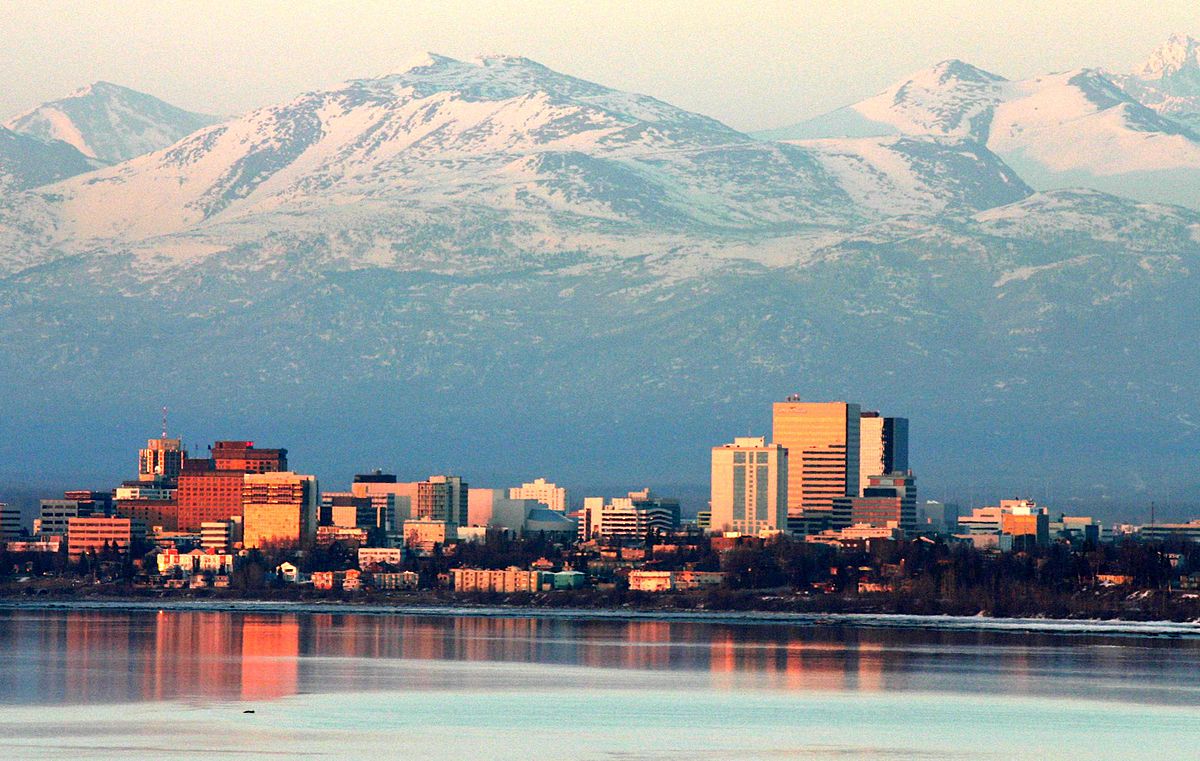
1. Anchorage — Alaska’s Cosmopolitan Hub
Anchorage is Alaska’s only city in the conventional sense of the word — a metro area of nearly 300,000 people with real urban infrastructure, multiple hospital systems, a diverse restaurant scene, major retail, an international airport, and a cultural life that includes a symphony, several theater companies, and one of the better regional art museums in the country at the Anchorage Museum at Rasmuson Center. For someone moving to Alaska who wants the state’s extraordinary natural environment without sacrificing all the conveniences of modern urban life, Anchorage is the rational choice.
The city’s location is spectacular. Anchorage sits at the head of Cook Inlet between the Chugach Mountains to the east and the Alaska Range visible to the northwest. Denali is visible on clear days from downtown. The Tony Knowles Coastal Trail runs along the city’s western waterfront past stunning views of the inlet and the mountains beyond, and moose are routine visitors to suburban neighborhoods year-round. The city integrates urban amenities and wilderness access in a way that no lower-48 city can match.
The economy is diversified relative to other Alaska communities — healthcare, state government, the military (Joint Base Elmendorf-Richardson is one of the largest military installations in the US), finance, retail, and tourism all contribute. The unemployment rate tracks somewhat above national averages but reflects Alaska’s general economic structure rather than acute distress. Higher earners working in law, medicine, engineering, and finance find that the combination of competitive salaries and no state income tax makes Anchorage financially attractive despite the elevated cost of living.
Best for: Professionals seeking full urban amenities, military families, healthcare workers, anyone wanting the most accessible Alaska experience
Median home price: ~$390,000
Key employers: Providence Alaska Medical Center, JBER, State of Alaska, Municipality of Anchorage, Ted Stevens Airport
2. Fairbanks — Interior Alaska’s Most Resilient City
Fairbanks is the true test of Alaska commitment. Located 360 miles north of Anchorage and roughly 150 miles south of the Arctic Circle, Fairbanks experiences winters that regularly reach -40°F and occasionally lower. The city sits in a temperature inversion — cold, dense air settles in the Tanana Valley and stays there — which creates conditions that are qualitatively different from any lower-48 winter experience. Vehicles must be plugged into electrical block heaters to start. Exposed skin freezes in minutes in extreme cold. Ice fog forms in temperatures below about -25°F, reducing visibility and lending the city a surreal, otherworldly appearance.
And yet Fairbanks has something that Anchorage does not: the Northern Lights. Positioned under the auroral oval, Fairbanks offers the most reliably excellent aurora viewing of any settled community in Alaska. From late August through April, clear nights produce displays ranging from subtle green shimmers on the horizon to full-sky eruptions of green, purple, and red that cascade for hours. For people who place the aurora at the top of their Alaska experience list, Fairbanks is the natural choice of home base.
The University of Alaska Fairbanks (UAF) is a genuine asset to the community — a research institution with particular strengths in arctic and geophysical sciences that hosts international researchers and creates a intellectual culture that moderates the city’s frontier character considerably. The Museum of the North on the UAF campus is one of the finest Alaska-focused museums in the state. Downtown Fairbanks has a modest but authentic character centered on gold-rush-era history, with several good restaurants and a strong craft beer scene built around the local Pioneer Brewing Company and Silver Gulch Brewery in nearby Fox.
Best for: Aurora enthusiasts, UAF students and faculty, people with genuine winter recreation interests (skiing, dog mushing, ice fishing), military personnel (Fort Wainwright is nearby)
Median home price: ~$240,000
3. Juneau — The Capital City Without Roads
Juneau is the only US state capital not connected by road to the rest of the country, a fact that fundamentally shapes everything about life there. Surrounded by mountains, glaciers, and the Gastineau Channel, Juneau is accessible only by air and sea — the Alaska Marine Highway ferry provides surface connection to Bellingham, Washington via a three-day journey through the Inside Passage, and Alaska Airlines provides jet service to Seattle and Anchorage year-round.
What sounds like a disadvantage has created some of Juneau’s most appealing characteristics. The city cannot sprawl — geography prevents it — which means the downtown core is compact and walkable, the surrounding wilderness is immediately accessible, and the community has a tightly connected character that is genuinely different from road-connected cities. Residents joke about the “Juneau effect” — the way the isolation causes a kind of attachment to place that makes it hard to leave despite the expressed intention of many newcomers to stay only a few years.
State government is Juneau’s dominant economic sector, and the Legislature’s presence during session from January through May creates a particular civic energy. The fishing and tourism industries provide employment, and a small but serious arts community has taken root in a city that has produced a disproportionate number of Alaska’s best visual artists. Housing is expensive relative to Fairbanks and Mat-Su but reflects genuine market constraints — developable land is genuinely scarce.
Best for: State government employees, outdoor enthusiasts, people seeking strong community character, fishing industry workers
Median home price: ~$420,000
4. Palmer and the Mat-Su Valley — Alaska’s Fastest-Growing Region
The Matanuska-Susitna Borough — commonly called “the Mat-Su” — is Alaska’s fastest-growing region, driven by Anchorage workers seeking more affordable housing and more space. Palmer and Wasilla are the two largest communities, and while they lack urban amenities, they offer commuting distance to Anchorage (45–90 minutes depending on location and traffic, which in Alaska means traffic on the Glenn Highway during winter conditions), lower housing costs, and the agricultural landscape of the Matanuska Valley.
Palmer’s history as a Depression-era agricultural colony — it was settled in 1935 by families relocated from the upper Midwest under a federal colonization program — gives it a distinct civic identity expressed through the Alaska State Fair (held in Palmer every August-September and the state’s largest annual event) and a genuinely productive local agricultural sector that takes advantage of the valley’s unusually rich soils and the intense growing season created by 18+ hours of summer daylight.
For families prioritizing space, a single-family home with land, and a lifestyle that orients more toward outdoor recreation and community life than toward urban amenity, the Mat-Su Valley offers excellent value. The schools are adequate, the community social life is active, and the relationship to Anchorage gives access to the urban resources of Alaska’s largest city without paying Anchorage prices.
Best for: Anchorage commuters seeking more affordable housing, families wanting space and land, agricultural/homesteading interest
Median home price (Mat-Su): ~$310,000
5. Sitka — Beautiful, Isolated, and Deeply Historic
Sitka occupies one of the most beautiful natural settings of any American city — an island in Southeast Alaska surrounded by the island-dotted waters of Sitka Sound, backed by the extinct volcano Mount Edgecumbe, and fronted by a downtown core that preserves Russian Orthodox churches and totem poles in the same civic landscape. Sitka was the capital of Russian America before the 1867 purchase and remains one of the most culturally layered communities in the state, with strong Tlingit Alaska Native traditions, Russian heritage, and an identity built around the commercial fishing industry that still dominates its economy.
Life in Sitka is beautiful and real. The commercial fishing fleet operates year-round, and the connection to the sea — for work, subsistence, and recreation — is visceral in a way that most Americans never experience. The weather, like most of Southeast Alaska, is wet: Sitka receives over 100 inches of rain per year, and clouds and drizzle are the norm for much of the year. The compensation is an extraordinary landscape of old-growth Sitka spruce forest, clear streams full of salmon and steelhead, and coastal mountains that descend directly to saltwater.
Best for: Commercial fishing industry, people seeking remote small-city life with strong community character, Russia/Alaska history enthusiasts
Median home price: ~$340,000
6. Homer — Artists, Fishermen, and the End of the Road
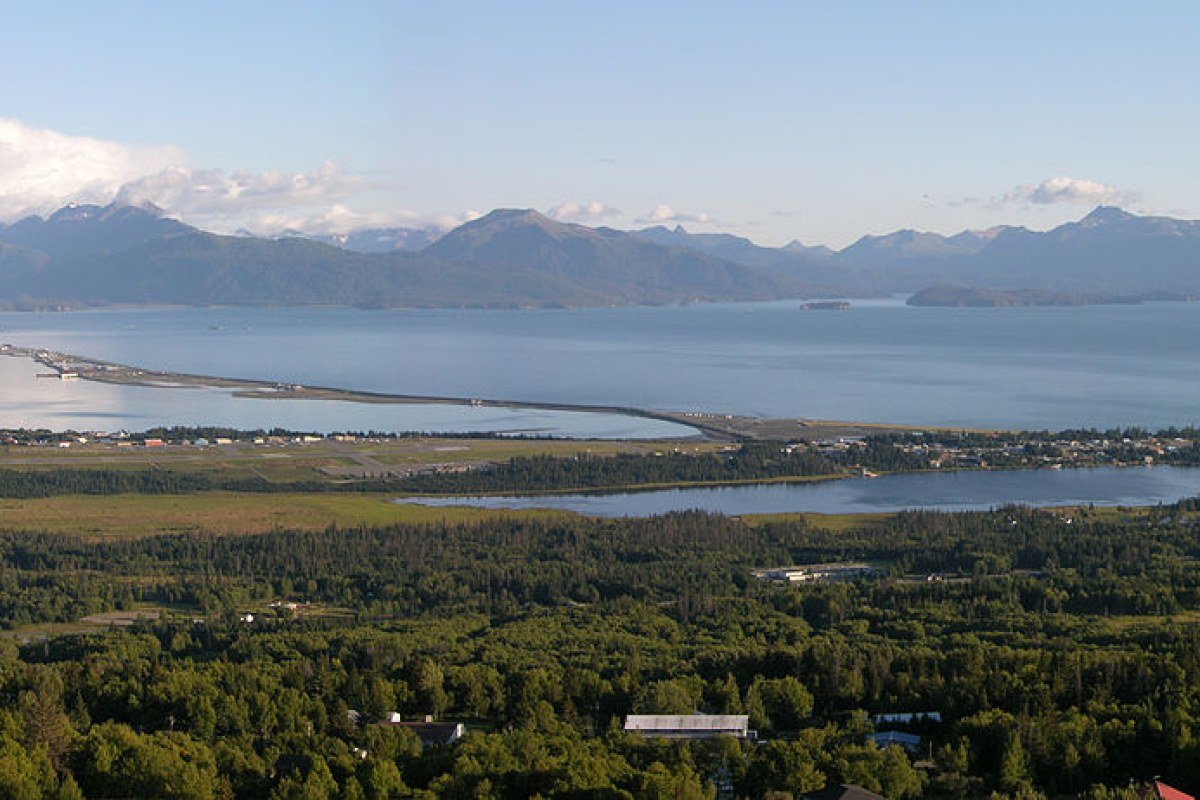
Homer is the end of the road — literally. The Sterling Highway terminates here at the edge of Kachemak Bay, 226 miles south of Anchorage, and the community that has grown up at this terminus is unlike any other in Alaska. Artists, commercial fishermen, wilderness guides, environmental advocates, and people who have deliberately chosen to live at the farthest accessible point from urban civilization coexist in a community of roughly 5,000 people that generates a cultural life disproportionate to its size.
The Homer Spit, extending five miles into the bay, is the social and commercial center — galleries, restaurants, fishing docks, charter operators, and the famous Salty Dawg Saloon all crowded onto a narrow strip of gravel between the bay and the inlet. Kachemak Bay State Park across the water provides some of Alaska’s finest wilderness hiking, and the shorebirds that pass through the bay each spring draw birders from across the country. The combination of accessible wilderness, artistic community, and genuinely exceptional commercial halibut fishing has made Homer one of Alaska’s most beloved small towns.
Best for: Artists, fishermen, retirees seeking remote community character, nature/birding enthusiasts
Median home price: ~$350,000
Choosing Between Alaska Communities
The right Alaska community depends above all on how you intend to engage with the state. If you want full urban amenities, choose Anchorage. If you want the aurora and interior wilderness, Fairbanks. If you want Southeast Alaska’s rainforest and maritime culture, Juneau, Sitka, or Ketchikan. If you want space and lower housing costs near Anchorage, the Mat-Su Valley. If you want community character and an arts scene at the end of the road, Homer.
What unites all of these communities is the thing they share: they all exist in Alaska, with everything that implies about wilderness access, extreme weather, remoteness, and the particular human character that living in genuinely demanding places tends to produce. That character — independent, resourceful, darkly humorous about the difficulties, and fiercely proud of the choice — is perhaps the most consistent thing about Alaskans regardless of which community they call home.