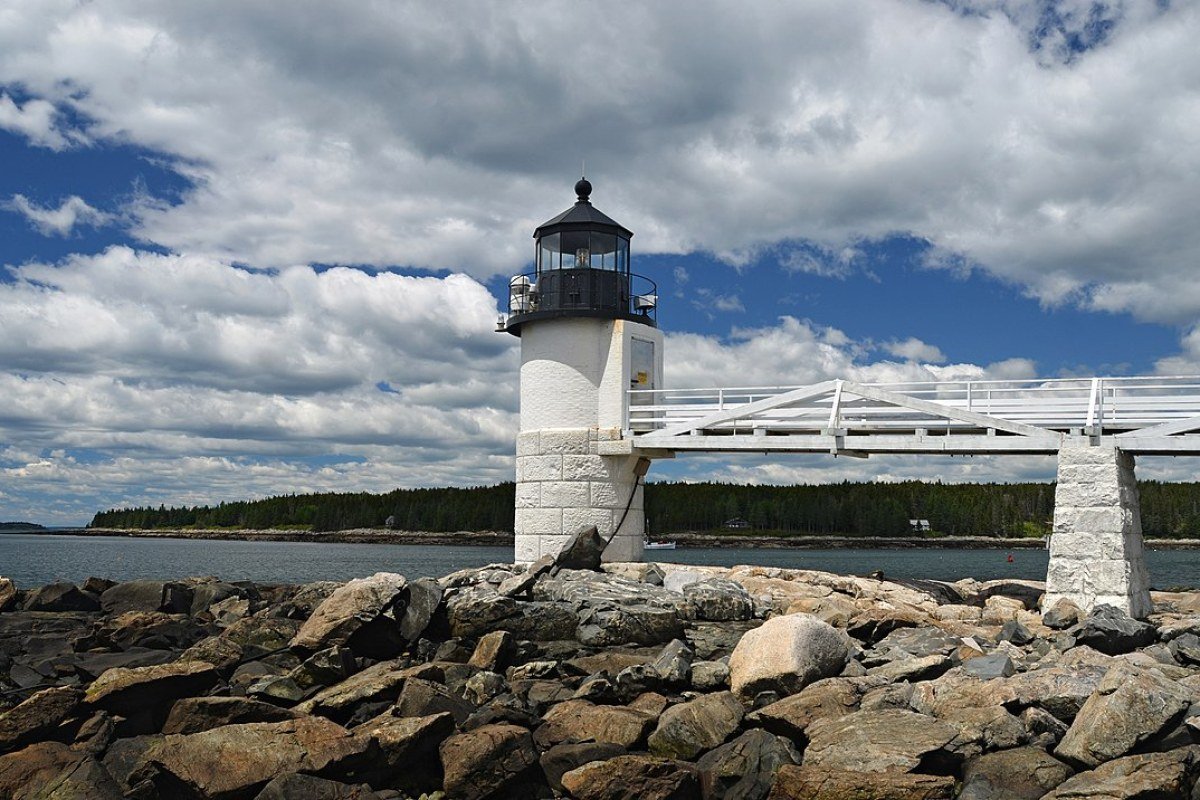
Maine is the wildest and most sparsely populated state in the northeastern United States — a state where 90% of the land is forested, where the Atlantic coastline shifts from sand beaches in the south to granite headlands and tidal coves farther north, where the interior lakes and mountains hold wilderness that stays truly remote despite sitting within a day’s drive of New England’s major population centers. Maine’s identity is rooted in its working waterfront (lobster fishing, boatbuilding, and the fishing industry that has shaped communities from Kennebunkport to Eastport for centuries), its wilderness character (more moose than people in many counties), and a cultural authenticity that the tourist economy has not yet been able to dilute entirely.
Acadia National Park: Granite Coast and Mountain Summits
Acadia National Park, on Mount Desert Island off the mid-coast of Maine, is the most visited national park in New England and packs natural beauty and outdoor recreation into a tighter range than almost anywhere in the eastern United States. The park’s roughly 49,000 acres encompass the summit of Cadillac Mountain (1,530 feet, the highest peak on the North Atlantic seaboard, and from early October through early March the first place in the continental United States to receive direct sunlight each morning), 45 miles of historic carriage roads (built by John D. Rockefeller Jr. between 1913 and 1940, these crushed-stone roads are closed to motor vehicles and open to cycling, carriage tours, and cross-country skiing), and a coastline of pink granite headlands, cobblestone beaches, and sea caves accessible by foot and by kayak.

A 158-mile trail system runs from the paved Ocean Path (3.5 miles along the rocky shore between Sand Beach and Otter Cliffs) to the iron-rung ladders of the Precipice Trail, one of the boldest climbs in the East, where granite cliff sections demand the use of fixed rungs and handholds. The range covers every fitness level and every definition of outdoor challenge. The Jordan Pond House, in the center of the park, has served popovers and tea at outdoor tables overlooking Jordan Pond and the North and South Bubble mountains since 1895 — a tradition worth keeping for the combination of setting and institution.
Portland: Maine’s Urban Hub
Portland, Maine‘s largest city at roughly 69,000 (metro 550,000), has grown into one of the most praised small cities in the United States over the past two decades — a reputation earned chiefly through an extraordinary restaurant scene (Portland has long claimed more restaurants per capita than almost any American city, and the cooking has drawn national attention from food critics who rank it among the country’s best dining towns), a deep craft-brewery culture (more breweries per capita than almost any American city), and an architecturally rich Victorian Old Port district wrapped around a working harbor that holds onto the authentic character of Maine’s fishing trade.

The Portland Museum of Art, in a building designed by Henry N. Cobb of I.M. Pei & Partners (the firm whose work includes the Louvre pyramid and the East Wing of the National Gallery), houses the finest fine art collection in Maine — including one of the largest public holdings of Winslow Homer’s work, whose marine and Maine landscape paintings rank among the finest representations of the Maine coast in American art. The adjacent Winslow Homer Studio in Prouts Neck, south of Portland, where Homer lived and worked for the last quarter-century of his life, is open for tours from the Portland Museum and provides direct connection to the physical environment that produced the paintings.
Maine’s Lobster Coast
Maine produces roughly 80% of all lobsters landed in the United States — a dominance that reflects the state’s specific oceanographic conditions (cold, clear Atlantic water with the rocky bottom habitat that lobsters require), the regulations that have made Maine’s lobster fishery one of the most sustainably managed in the world, and the generational knowledge of the lobstermen (and women) who set and haul traps from Kennebunkport to Eastport. A lobster pound — where the morning’s catch is boiled to order and served at picnic tables overlooking the harbor — is the quintessential Maine seafood meal, and the gap between a lobster cracked open on a Maine dock and one served anywhere else is unmistakable.
Baxter State Park and the Appalachian Trail Terminus
Baxter State Park, in the remote interior of northern Maine, protects 209,000 acres of wilderness centered on Mount Katahdin (5,268 feet, Maine’s highest peak and the northern terminus of the Appalachian Trail). Governor Percival Baxter donated the land to Maine over a period of decades (1931–1962) with the specific requirement that it remain “forever wild” — managed as a wilderness rather than as a park with concession facilities. There is no food service in Baxter; cell service is absent; the permit system for campsites fills months in advance for peak season visits. Katahdin’s summit routes (the Hunt Trail follows the AT, while the Knife Edge crosses a bare rocky spine narrowing to less than three feet wide with drops of roughly 1,500 feet on both sides) rank among the most demanding day hikes in the eastern United States.
Maine rewards the traveler who comes seeking the specific pleasures of the North — cold Atlantic water, granite headlands, dark forests, fresh lobster from the trap, the solitude of a lake in the Maine interior, and the particular quality of light on a September morning at the summit of Cadillac Mountain. These are not substitutes for other experiences; they are Maine’s own, and they are irreplaceable.
Getting the Most Out of Your Visit
A few practical points that will improve any trip to Maine. Book accommodation and major attractions — particularly national parks, popular hiking trails, and well-known restaurants — as far in advance as possible; the best options can fill weeks or months ahead, especially in peak season. A car gives you the greatest flexibility for exploring beyond the main centers, and many of Maine’s finest experiences sit in places public transport does not reach. The sharpest local knowledge usually turns up in regional visitor centers, independent bookshops, and conversations with residents — the discoveries you remember are rarely the ones in the guidebooks. Allocate more time than you think you need: Maine consistently rewards travelers who slow down and explore in depth rather than trying to cover maximum ground in minimum time.
Frequently Asked Questions
What makes Acadia National Park exceptional among eastern US national parks?
Acadia National Park on Mount Desert Island is the most visited national park in New England and one of the most concentrated combinations of natural beauty and outdoor recreation in the eastern United States. The park’s roughly 49,000 acres encompass Cadillac Mountain (1,530 feet, the highest peak on the North Atlantic seaboard, and from early October through early March the first place in the continental United States to receive direct sunlight each morning), 45 miles of historic carriage roads built by John D. Rockefeller Jr. between 1913 and 1940 (closed to motor vehicles, open to cycling, carriage tours, and skiing), and a coastline of pink granite headlands, cobblestone beaches, and sea caves. The 158-mile trail system ranges from the flat Ocean Path (3.5 miles along the rocky shore) to the Precipice Trail, where iron-rung ladders on granite cliff sections make it one of the boldest climbs in the eastern United States. The Jordan Pond House has served popovers and tea with views of Jordan Pond since 1895.
What makes Portland, Maine one of the most praised small cities in the United States?
Portland, Maine’s largest city at roughly 69,000 (metro 550,000), has developed into one of the country’s most praised small cities — a reputation earned primarily through its extraordinary restaurant scene. Portland has long claimed one of the highest restaurant counts per capita of any American city, and the quality has attracted national attention from food critics who have named it among the country’s best dining destinations. A thriving craft brewery culture complements the dining scene. The architecturally rich Victorian Old Port district maintains the authentic character of Maine’s fishing heritage alongside a creative community that has established itself in galleries, studios, and independent businesses. The Portland Museum of Art, housed in a building designed by Henry N. Cobb of I.M. Pei & Partners, holds the finest art collection in Maine — including one of the largest public collections of Winslow Homer’s work, whose marine and Maine landscape paintings rank among the great American depictions of the coast.
What makes Maine lobster distinctive and why does Maine produce most US lobsters?
Maine produces roughly 80% of all lobsters landed in the United States — a dominance reflecting the state’s specific oceanographic conditions (cold, clear Atlantic water with the rocky bottom habitat lobsters require), regulations that have made Maine’s lobster fishery one of the most sustainably managed in the world, and the generational knowledge of the lobstermen who set and haul traps from Kennebunkport to Eastport. The lobster pound — where lobsters harvested from the morning’s traps are boiled to order and eaten at picnic tables overlooking the harbor — is the quintessential Maine seafood meal. The difference in quality between lobster eaten on a Maine dock and lobster eaten anywhere else is unmistakable. Maine’s lobster regulations include trap limits, size minimums, and protections for egg-bearing females that have sustained the fishery across generations.
What does Baxter State Park and Mount Katahdin offer visitors?
Baxter State Park in the remote interior of northern Maine protects 209,000 acres of wilderness centered on Mount Katahdin (5,268 feet, Maine’s highest peak and the northern terminus of the Appalachian Trail). Governor Percival Baxter donated the land to Maine between 1931 and 1962 with the specific requirement that it remain “forever wild” — managed as a wilderness rather than a park with concession facilities. There is no food service in Baxter; cell service is absent; the permit system for campsites fills months in advance for peak season. Katahdin’s summit trails include the Hunt Trail (following the AT route) and the Knife Edge — a route that crosses a bare rocky ridge narrowing to less than three feet wide with drops of roughly 1,500 feet on both sides, making it one of the most demanding day hikes in the eastern United States. The trail system also includes Hamlin Peak, South Peak, and approaches through the Chimney Pond basin.
What does Maine’s coastline offer beyond Acadia National Park?
Maine’s Atlantic coastline stretches for approximately 3,500 miles when all tidal inlets, bays, and island shorelines are included — a figure that reflects the dramatic complexity of a rocky coast shaped by glaciation. The Midcoast region (Rockland, Camden, Rockport) provides the most quintessential Maine coastal experience: working harbors, windjammer schooner cruises departing from Rockland and Camden, the Farnsworth Art Museum in Rockland (the most significant collection of Andrew Wyeth’s work outside of Pennsylvania), and access to dozens of island communities by ferry. The Down East coast from Ellsworth to Eastport becomes increasingly remote — the Bold Coast trail system near Cutler provides the most dramatic sea cliff hiking in Maine. Kennebunk and Kennebunkport in the south offer accessible beach vacations. The Maine Island Trail, a 375-mile water trail from Portland to Machias, connects state-managed islands for kayak camping.