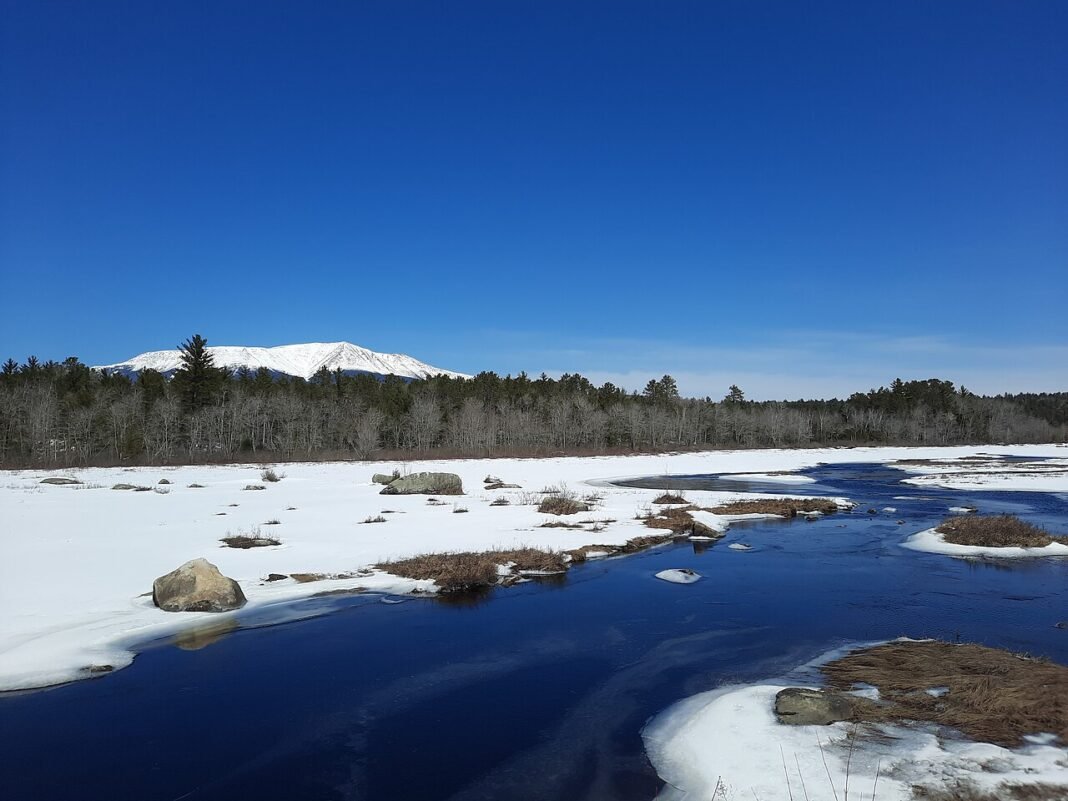
Maine‘s outdoor recreation spans a range that is extraordinary for a state of its size: the Atlantic granite coast of Acadia National Park, the rounded peaks of the western mountains, the 10 million-acre North Maine Woods (larger than several states), the whitewater rivers of the Penobscot and Kennebec drainages, and the moose-inhabited wilderness of the St. John River valley. This is the wilderness state of the Northeast — a place where genuine backcountry travel is accessible without the permit queues and crowds that define comparable terrain in the western United States. The northern forest, the cold-water fishing, and the maritime coast combine into outdoor rewards you will not find anywhere else in the eastern US.

Acadia National Park: The Crown of the Maine Coast
Acadia’s more than 49,000 acres on and around Mount Desert Island hold the finest coastal hiking in the eastern United States. The park’s 45 miles of historic carriage roads — built by John D. Rockefeller Jr. with precise stone-surface and drainage construction that has held through a century of frost cycles and foot traffic — carry cyclists and skiers through the park’s interior, away from motor vehicles. In summer, the carriage road system is the most pleasant way to explore the park without competing with traffic on the loop road; in winter, those same roads become backcountry ski routes once the loop road closes.
The hiking trails run across every difficulty level. Ocean Path is the most accessible — a 3.5-mile paved walk along the shore between Sand Beach and Otter Cliffs, essentially level and suited to any fitness level, with direct Atlantic views and swimming at Sand Beach in July and August (the water temperature rarely climbs past 58°F, an acclimatization that most visitors call bracing and locals call refreshing). The Precipice Trail, on the east face of Champlain Mountain, is the most thrilling — a 1,000-foot scramble up exposed granite using iron rungs and handholds fixed in the cliff, with sections that thread narrow chimneys above 100-foot drops. The trail closes in spring for peregrine falcon nesting and reopens when the chicks fledge in late summer.

Whitewater: The Penobscot and Kennebec Rivers
Maine’s rivers hold some of the best whitewater rafting in the eastern United States. The West Branch of the Penobscot, below the Ripogenus Gorge in northern Maine, runs Class IV–V water through a dramatic mile-long gorge where the river drops roughly 70 feet in rapid succession — a technically demanding run that commercial outfitters manage from their bases in Millinocket. The Kennebec River Gorge, in The Forks area, sends Class IV–V water through a deeply incised canyon that the Kennebec carves across the Longfellow Mountains. Pair that with the Dead River, which releases from its dams on a coordinated schedule, and The Forks becomes one of the premier whitewater destinations in the East. Outfitters there build multi-day camping-and-rafting trips around both rivers for an immersive Maine experience.
Sea Kayaking: The Maine Island Trail
The Maine Island Trail, a 375-mile water trail running the Maine coast from Casco Bay to Machias Bay, is the nation’s first water trail and one of the finest sea kayaking routes in North America. Its roughly 200 islands open up camping on state-owned and private land for registered trail members, stringing together multi-day paddling expeditions through a coastline of extraordinary beauty — granite headlands, spruce-covered islands, harbor seal haul-outs, osprey nests, and the particular light of the Maine coast at dawn or dusk, when the lobster boats slide through the fog. Day trips launch from outfitters in Portland, Rockport, Bar Harbor, and Castine; several established Maine sea kayak guides run longer guided expeditions.
Moose Watching and Wildlife
Maine holds the largest moose population in the contiguous United States — roughly 60,000–70,000 animals across the boreal forests of the northern and western parts of the state. Moose watching (the commercial guides who run evening excursions in the prime habitat of the Golden Road area near Millinocket and the Rangeley Lakes region sometimes call them “moose safaris”) ranks among Maine’s distinctive wildlife-tourism draws. At dawn and dusk in the right habitat, the odds of an encounter are high enough that guided trips can essentially guarantee a sighting. Cows with calves in late May and June make the most compelling encounter; bulls in the September rut, moving hard across the country, are the most photogenic.
Cross-Country Skiing and Snowshoeing
Maine’s winter recreation reaches well beyond the alpine slopes at Sugarloaf and Sunday River. The Maine Huts & Trails system — a backcountry network of four eco-lodges linked by more than 50 miles of trail through the Carrabassett Valley and the western Maine mountains — comes the closest thing in the eastern US to a European hut-to-hut tour. The lodges offer comfortable beds and, on full-service dates, meals, so skiers can string together a multi-day trip without hauling camping gear. The terrain mixes groomed cross-country tracks with backcountry snowshoe routes through forest that catches 150-plus inches of snow a year. Cold, dry snow — nothing like the heavy coastal stuff of southern New England — settling over spruce and fir is exactly why the western Maine mountains have won such a following among Nordic skiers.
Maine’s outdoor rewards accumulate over years of living there — the first time you top out on Katahdin in the clear September air and watch the North Woods roll to every horizon; the morning you paddle out of a Maine Island Trail campsite in dense fog and steer by compass to the next island; the afternoon you pull a brook trout from the North Branch of the Penobscot on a dry fly. These take Maine, not just any wilderness, and they are the specific return on the choice to build a life in this particular place.
Frequently Asked Questions
What makes Acadia National Park the finest coastal hiking destination in the eastern US?
Acadia’s more than 49,000 acres on and around Mount Desert Island hold the most varied coastal hiking in the eastern United States — from the accessible Ocean Path (3.5-mile paved shore trail between Sand Beach and Otter Cliffs) to the Precipice Trail on Champlain Mountain’s east face, a 1,000-foot scramble up exposed granite using iron rungs and handholds fixed in the cliff, threading narrow chimneys above 100-foot drops (closed in spring for peregrine falcon nesting). The 45 miles of historic carriage roads built by John D. Rockefeller Jr. carry cyclists in summer and skiers in winter through the park’s interior, closed to motor vehicles. Cadillac Mountain (1,530 feet), the highest point on the US Atlantic coast, is the first place in the country to catch the sunrise from October through March.
What whitewater rafting does Maine offer?
Maine’s rivers hold some of the best whitewater rafting in the eastern United States. The West Branch of the Penobscot, below Ripogenus Gorge in northern Maine, runs Class IV–V water through a dramatic mile-long gorge where the river drops roughly 70 feet in rapid succession — commercial outfitters operate from Millinocket. The Kennebec River Gorge at The Forks sends Class IV–V water through a deeply incised mountain canyon. The Dead River, releasing on coordinated dam schedules with the Kennebec, adds more whitewater during scheduled release weekends. The Forks area — base for both the Kennebec and Dead River operations — is the premier multi-day whitewater destination in the eastern United States, with outfitters running camping-and-rafting trips through the wilderness.
What is sea kayaking on the Maine Island Trail?
The Maine Island Trail, a 375-mile water trail from Casco Bay to Machias Bay along the Maine coast, is the nation’s first water trail and one of the finest sea kayaking routes in North America. Its roughly 200 islands open camping on state-owned and private land for registered trail members, stringing together multi-day expeditions through a coastline of extraordinary beauty — granite headlands, spruce-covered islands, harbor seal haul-outs, and osprey nests. Day trips launch from outfitters in Portland, Rockport, Bar Harbor, and Castine. The Maine coast’s tidal range (up to 20 feet in the northern reaches of Downeast Maine) and its fog create navigation challenges that demand experience; guided multi-day expeditions are available from established Maine sea kayak operators.
What moose and wildlife viewing does Maine offer?
Maine holds the largest moose population in the contiguous United States — roughly 60,000–70,000 animals in the boreal forests of the northern and western parts of the state. Commercial guided moose-watching excursions run from the Golden Road area near Millinocket and the Rangeley Lakes region in the prime dawn and dusk windows — in the right habitat, guided trips can essentially guarantee a sighting. Cows with calves in late May and June make the most compelling encounter; bulls in the September rut are the most photogenic. In Acadia National Park, the Sieur de Monts Spring area and the carriage road ponds offer accessible viewing of beaver, white-tailed deer, and breeding songbirds within the park.
What winter outdoor recreation does Maine offer?
Maine’s winter recreation reaches far beyond the alpine slopes at Sugarloaf and Sunday River. The Maine Huts & Trails system — four backcountry eco-lodges linked by more than 50 miles of trail through the Carrabassett Valley and the western Maine mountains — comes the closest thing in the eastern United States to a European hut-to-hut tour, with comfortable lodge beds and, on full-service dates, meals at the huts, so skiers can string together a multi-day trip without hauling camping gear. The western Maine mountains catch 150-plus inches of snow a year, the cold dry kind, nothing like the heavy coastal snow of southern New England. Baxter State Park (managed “forever wild” by state mandate) opens winter snowshoeing and skiing on Katahdin’s lower slopes and across the park interior, under stringent winter access permits that protect its wilderness character.