Las Vegas is the most audacious city in the United States — a place built in a desert valley where the operating philosophy is “why not?” rather than “is this reasonable?” Enormous hotels, serious restaurants, big-budget shows, 24-hour gambling, and a climate of consequence-free enjoyment have drawn visitors from around the world for decades. But Las Vegas in 2026 has moved a long way from its casino-only past. The city is now a genuine food destination, a heavyweight live-entertainment hub, a gateway to extraordinary outdoor adventure, and — if you are careful about where the money goes — a surprisingly affordable trip. Here is what you actually need to know.
The Strip: How to Navigate It Without Getting Destroyed
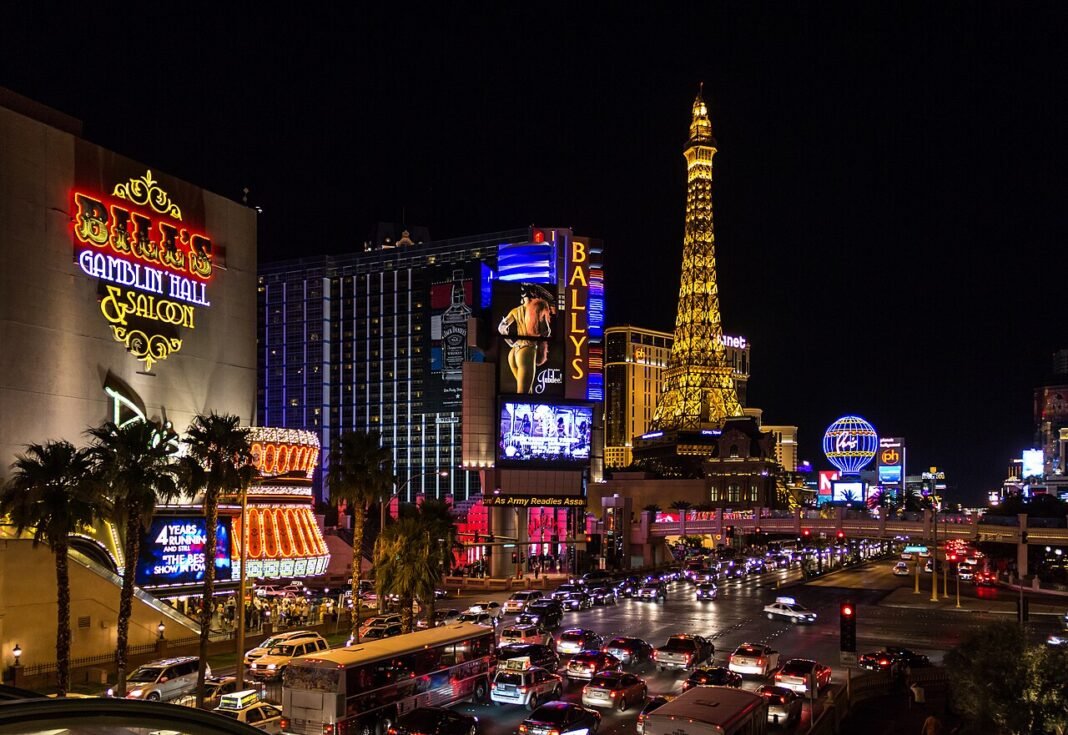
The Las Vegas Strip (Las Vegas Boulevard South) is a 4.2-mile stretch of the most extravagant hotels ever built, each competing to outdo the last. Walking the entire Strip takes two to three hours and is genuinely interesting — the sheer ambition of the architecture, the people-watching, and the free spectacles (the Bellagio fountains, the Fremont Street Experience light show, the casino lobbies themselves) justify the walk even if you never step inside to gamble.
A few key orientations. The Strip runs from Mandalay Bay in the south (closest to the airport) up to the Strat in the north. The densest concentration of top-tier resorts sits in the middle, roughly from the Bellagio to the Wynn. Taxis and rideshares are plentiful; the Las Vegas Monorail runs along the east side of the Strip — seven stations from MGM Grand up to the Sahara — and is useful for quick point-to-point hops within the resort corridor. Note that the Strip’s casinos are not actually inside Las Vegas city limits — they sit in Paradise, Nevada, an unincorporated township, which is why Nevada gambling law applies but Las Vegas city ordinances do not.

The Casinos: A Practical Introduction
If you have never gambled before, Las Vegas can be intimidating. It shouldn’t be. The lowest-stakes table games usually carry $10–$15 minimum bets — you can sit down at a blackjack table with $100 and, playing basic strategy (available free online and on casino apps), stay in your seat for several hours. Slots range from penny machines to $100-per-spin machines; video poker (jacks or better, played off a good strategy chart) offers some of the better odds of any machine game on the floor.
Casinos are designed, very deliberately, to keep you inside and disoriented — no clocks, no windows, and a layout built to confuse. The drinks flowing to active gamblers are not free if you tally the hourly cost of the bets required to keep them coming. Set a gambling budget before you arrive, treat it as the price of the entertainment, and never chase losses. For anyone who recognizes gambling as a potential problem, the National Council on Problem Gambling runs a confidential 24/7 helpline at 1-800-522-4700. The friendliest odds in any Las Vegas casino are on craps (pass line with maximum odds) and blackjack played with basic strategy, both sitting around a 0.5% house edge.
Food: Las Vegas Has Become a Serious Dining Destination
Over the past two decades, Las Vegas has turned into one of the country’s heavyweight restaurant cities — arguably the single biggest shift in its identity. The roster of chef-driven rooms now reads like a directory of American fine dining: Joël Robuchon (MGM Grand, the city’s most decorated French restaurant), Gordon Ramsay (several properties), Thomas Keller’s Bouchon (the Venetian), Nobu Matsuhisa (multiple locations), and José Andrés, whose Bazaar Meat reopened at the Venetian in 2025 alongside his intimate é tasting room at the Cosmopolitan.
For dining beyond the marquee names: Lotus of Siam, tucked into an unremarkable strip mall on East Flamingo, is widely rated the finest Thai restaurant in the United States — no exaggeration, since critics from New York make pilgrimages for it. The Arts District is full of independent restaurants charging roughly half what the Strip does for comparable cooking. The Wicked Spoon at the Cosmopolitan runs a buffet so far above the old Las Vegas buffet idea that the word barely fits. And breakfast at any of the big casino buffets ($20–$30) is solid value — bring an appetite.
Shows and Entertainment
Las Vegas packs in more live entertainment than any other city on the planet. Cirque du Soleil holds permanent residencies across several shows (O at the Bellagio, Mystère at Treasure Island, Michael Jackson ONE at Mandalay Bay); Penn & Teller are a must-see at the Rio, where they have now run for more than two decades; the Blue Man Group plays the Luxor. Major touring acts routinely add Las Vegas dates — and the Sphere at the Venetian, which opened in 2023, is a 17,600-seat venue lined inside with a wraparound 16K LED screen, its spherical exterior — the Exosphere, at about 580,000 square feet the largest LED display on Earth — making it one of the most talked-about concert spaces anywhere.
For free entertainment: the Bellagio fountains run every 15 to 30 minutes and are a genuine spectacle — the choreography set to Frank Sinatra and Celine Dion on a warm Las Vegas evening ranks among the finest no-cost shows you will see anywhere. The Fremont Street Experience in downtown Las Vegas (not the Strip) shows you a different side of the city — a covered pedestrian mall under a vast LED-screen canopy, with live music and a grittier, more lived-in throwback atmosphere.

Day Trips: Las Vegas as an Outdoor Gateway
Las Vegas sits inside a remarkable concentration of natural landscapes, and the swing from the Strip to the surrounding desert wilderness is one of the sharpest contrasts in American travel.
- Red Rock Canyon National Conservation Area (30 minutes west): A 13-mile scenic drive through dramatic red sandstone, with excellent hiking, rock climbing, and wildlife. The morning light on the canyon walls is spectacular. Entrance fee: $15 per vehicle — and from October through May a timed-entry reservation (a small extra fee, booked via recreation.gov) is required to drive the scenic loop between 8 a.m. and 5 p.m.
- Valley of Fire State Park (1 hour northeast): Nevada’s oldest state park, with fiery red Aztec sandstone formations, ancient petroglyphs, and some of the most otherworldly terrain in the American West. The White Domes area and the Fire Wave are the standouts.
- Hoover Dam (45 minutes southeast): A staggering engineering feat — 726 feet (221 meters) of curved concrete holding back Lake Mead, built during the Depression and still generating power for millions of homes. The dam tour is excellent; the powerplant tour is better still.
- Zion National Park (2.5 hours northeast): One of the great day trips out of Las Vegas — leave early, tackle the Angels Landing hike or the Narrows, and return in the evening. Book a timed-entry permit through recreation.gov well ahead for summer visits.
- Grand Canyon South Rim (4 hours east): A stretch for a single day but doable — many visitors take a combination tour that folds in Hoover Dam, and some add a helicopter flight over the rim, bookable from Las Vegas.
Practical Tips
When to visit: March–May and September–November bring the best mix of pleasant weather (70–85°F / 21–30°C) and manageable crowds. Summer is brutally hot (105–115°F / 40–46°C) but hotel rates plummet. December through February runs cool, occasionally cold at night, but crowds thin out and rates stay low outside of holiday weekends.
Hotels on the Strip look expensive but often aren’t, thanks to a pricing model in which gambling revenue subsidizes the rooms. Midweek rates at major Strip hotels can run well below a comparable hotel in New York or San Francisco. Resort fees are the catch — typically $35–$65 per night; since a 2025 federal rule, hotels must now fold them into the upfront advertised price rather than springing them at checkout, so read the all-in total before you book. Booking direct with the hotel sometimes opens room to negotiate the resort fee. Flights to Las Vegas from most US cities are frequent and competitively priced; from Los Angeles (about four hours by car), plenty of visitors drive instead of fly.
Frequently Asked Questions
What are the best free things to do in Las Vegas?
Las Vegas has exceptional free entertainment. The Bellagio fountains — choreographed to music, firing water up to 460 feet, running every 15 to 30 minutes — rank among the finest no-cost spectacles anywhere. The Fremont Street Experience in downtown Las Vegas offers a different atmosphere from the Strip: a covered pedestrian mall under a vast LED-screen canopy, with live music stages and a grittier throwback feel. The Cosmopolitan’s chandelier bar is free to explore, and the art galleries inside the Bellagio, Wynn, and Venetian hold original works worth seeing independently of the casinos. Walking the full 4.2-mile Strip takes two to three hours and is interesting for the architectural spectacle alone.
What are the best restaurants and dining experiences in Las Vegas?
Las Vegas has grown into one of the country’s finest dining cities. For special-occasion fine dining: Joël Robuchon at the MGM Grand (three Michelin stars, the city’s most acclaimed French restaurant), é by José Andrés at the Cosmopolitan (an eight-seat avant-garde tasting experience), and Thomas Keller’s Bouchon at the Venetian all deliver world-class meals. The same chef’s Bazaar Meat reopened at the Venetian in 2025. For genuine local knowledge: Lotus of Siam, in an East Flamingo strip mall, is widely rated the best Thai restaurant in the United States — critics from New York make the pilgrimage. The Wicked Spoon at the Cosmopolitan runs a buffet so far above the typical Las Vegas buffet that the label barely fits, and the Arts District is packed with independent restaurants at roughly half Strip prices for comparable cooking.
What are the best day trips from Las Vegas?
Las Vegas is ringed by remarkable natural landscapes. Red Rock Canyon National Conservation Area (30 minutes west) has a 13-mile scenic drive through dramatic red sandstone with excellent hiking and rock climbing ($15 per vehicle; a timed-entry reservation is required to drive the loop from October through May). Valley of Fire State Park (1 hour northeast) — Nevada’s oldest state park — features fiery red Aztec sandstone and ancient petroglyphs, with the White Domes area and Fire Wave as highlights. Hoover Dam (45 minutes southeast) is a genuine engineering marvel from the Depression era: 726 feet (221 meters) of curved concrete still generating power for millions of homes. Zion National Park (2.5 hours northeast) is the pick for hikers — book the Angels Landing permit and timed entry in advance via recreation.gov.
How do Las Vegas casinos work and what should first-timers know?
Las Vegas casinos are designed deliberately to disorient: no clocks, no windows, and intentionally confusing layouts. The lowest-stakes table games start at $10–$15 minimum bets. The friendliest odds on the floor are on craps (pass line with maximum odds) and blackjack played with basic strategy — both sitting around a 0.5% house edge. Drinks flow to active gamblers, but the hourly cost of the bets needed to keep qualifying often exceeds the value of the drink. Slot machines range from penny play to $100 per spin; video poker (jacks or better, with a strategy chart) gives better odds than most machines. Set a gambling budget before you arrive, treat it as the cost of entertainment, and never chase losses. The casino floor is kept slightly cool to keep players alert.
What shows and entertainment does Las Vegas offer in 2026?
Las Vegas packs in more live entertainment than any other city on the planet. Cirque du Soleil holds permanent residencies across several shows: O at the Bellagio (an aquatic production on a 1.5-million-gallon pool stage), Mystère at Treasure Island, and Michael Jackson ONE at Mandalay Bay are the most acclaimed. Penn & Teller at the Rio — running since 2001, the longest-running headline residency in the city — put on one of the most intellectually engaging magic shows anywhere. The Sphere at the Venetian, a 17,600-seat venue that opened in 2023 and is lined inside with a wraparound 16K LED screen — its spherical exterior, the Exosphere, the largest LED display on Earth at about 580,000 square feet — has become one of the most discussed concert spaces in the world, with major acts often selling out months ahead. The Blue Man Group plays the Luxor, and the biggest touring acts regularly book the MGM Grand Garden Arena, T-Mobile Arena, and Allegiant Stadium.