British Columbia has the most varied outdoor menu of any Canadian province — a place where you can ski Whistler’s 8,171 acres in the morning and paddle a glacier fjord by afternoon, where the Great Bear Rainforest’s grizzlies and Spirit Bears rank among the rarest wildlife encounters anywhere, where the Haida Gwaii archipelago rewards everyone who makes the journey with one of the planet’s finest sea-kayaking environments, and where the Okanagan’s bike trails, the Sea-to-Sky corridor’s rock, and the Squamish Chief’s big walls all sit 60–120 minutes from Canada’s third-largest city. Outdoor life isn’t a sideline here — it’s why many residents pick BC over cheaper alternatives, and the provincial parks system (over 1,000 parks protecting 14% of the province’s land area) supports that culture at every level of commitment.
Whistler Blackcomb: North America’s Premier Ski Resort
Whistler Blackcomb sits 120km north of Vancouver on the Sea-to-Sky Highway, and it is the largest ski resort on the continent — 8,171 acres of skiable terrain spread across two mountains linked by the Peak 2 Peak gondola (a 4.4km span, 436m above the valley floor), more than 200 marked runs, a 1,609m vertical drop (the second-greatest in North America), and a pedestrian village that stretches the ski day into an après scene of international standing:
- Peak 2 Peak gondola: The 11-minute hop between Whistler and Blackcomb lets you ski both mountains without dropping back to the valley; the glass-floor cabins frame the most striking above-treeline view in North American resort skiing
- Terrain variety: The split between beginner (20%), intermediate (55%), and advanced or expert (25%) suits every skill level; the Harmony, Symphony, and Glacier zones hold the best powder after a fresh dump, while the Blackcomb Glacier stretches spring skiing into June
- Summer operations: The Whistler Bike Park (80+ trails served by gondola and lifts) is the most developed mountain-bike park on the continent; the Lost Lake cross-country network, Valley Trail cycling, and the Garibaldi Provincial Park hiking that begins at the gondola mid-station round out the warm-season options
- Smaller Sea-to-Sky options: Squamish’s Garibaldi Provincial Park (hikes to the Black Tusk, Cheakamus Lake, and the turquoise bowl of Garibaldi Lake) offers the most spectacular mountain day-hiking within 90 minutes of Vancouver; the Chief — a 700m-plus granite monolith above Squamish — is the climbing draw
The Great Bear Rainforest: Wildlife of the Central Coast
The Great Bear Rainforest — 6.4 million hectares of temperate rainforest along BC’s central and north coast — ranks among the last great coastal wilderness systems on Earth: a landscape of fjords, old-growth Sitka spruce and red cedar, and waterways that hold the heaviest concentration of large carnivores in Canada:
- Spirit Bear (Kermode Bear) viewing: The white colour morph of the black bear — caused by a recessive gene in this isolated population, and showing up in roughly one of every ten births in Kitasoo/Xai’xais territory — lives only in the central BC coast rainforest; Gribbell and Princess Royal Islands hold the densest habitat, and guided trips from Bella Bella, Klemtu, and Hartley Bay reach it; sightings during the September salmon-run peak run high on guided tours in the core areas
- Grizzly bear viewing (Knight Inlet and Bella Coola): Knight Inlet Lodge and the Kynoch Adventures programme out of Bella Coola offer the most reliable grizzly viewing in BC; the bears gather on salmon streams through September and October, and zodiac and walking approaches balance distance with intimacy
- Bald eagle and humpback whale: The central coast’s winter herring spawn draws bald eagles and humpbacks in numbers visible from the ferry and from coastal communities; the BC Ferries Inside Passage service (Port Hardy to Prince Rupert, about 16 hours) threads the central coast and turns up whale and eagle sightings along the way
Haida Gwaii: The Edge of the World
.jpg?width=1200)
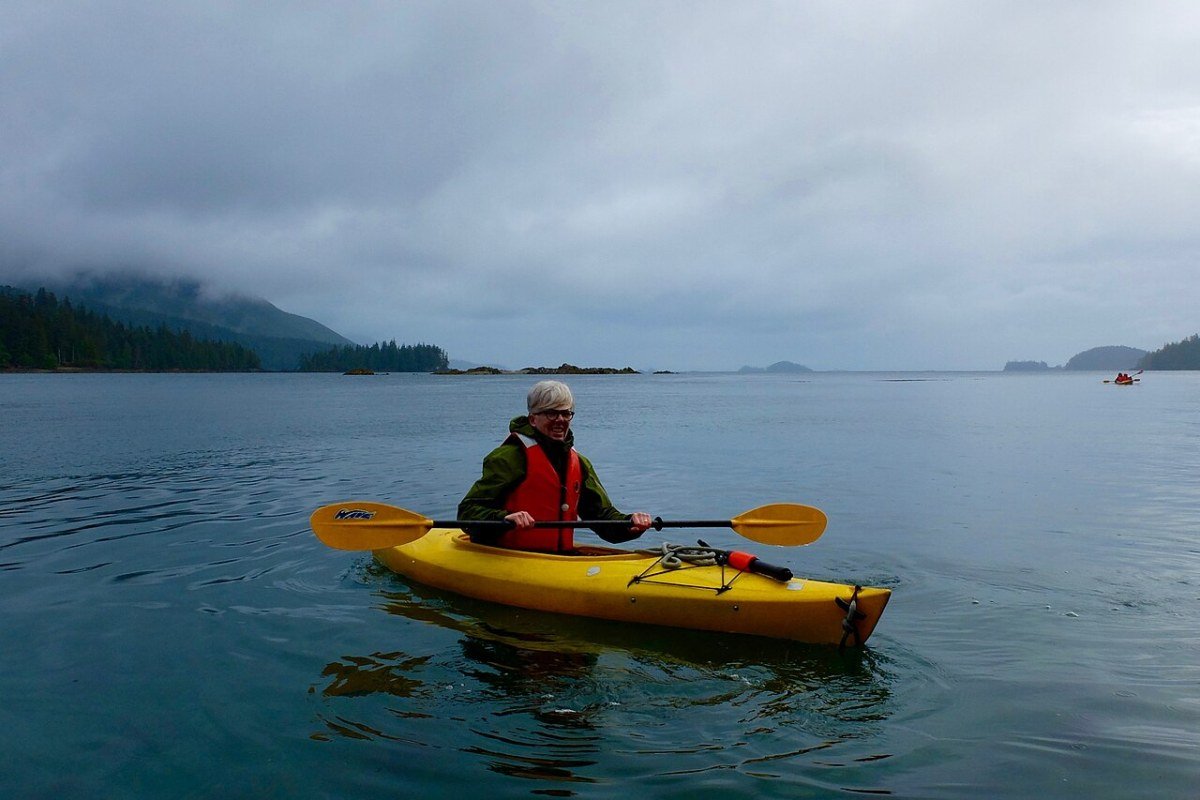
Haida Gwaii (the Queen Charlotte Islands) lies 130km off BC’s north coast, reached by BC Ferries from Prince Rupert (about 7 hours) or by floatplane from Vancouver. It is Canada’s most remote and culturally significant island destination — the ancestral territory of the Haida Nation, now co-managed within Gwaii Haanas National Park Reserve and Haida Heritage Site, a UNESCO World Heritage Site that protects the southern archipelago’s old-growth rainforest, Haida village sites, and marine environment:
- Sea kayaking (Gwaii Haanas): The multi-day circuit through the islands and narrows of Gwaii Haanas — past the SGang Gwaay (Ninstints) UNESCO village site, the Burnaby Narrows intertidal zone (among the most biologically rich on Earth), and the hot springs of the southern park — ranks among the world’s great wilderness paddles; a Parks Canada permit is required
- Old-growth rainforest: The forests here carry Sitka spruce, red cedar, and western hemlock of remarkable size; the Yakoun River valley old-growth trail and the Tow Hill hiking area bring you close to that scale without a multi-day commitment
- Haida culture: The Haida Heritage Centre at Kaay Llnagaay (Skidegate) holds the most thorough interpretation of Northwest Coast Indigenous culture in Canada, and master carvers at work in the longhouse open a window onto a living tradition
Cycling and Mountain Biking
British Columbia’s mountain-bike and cycling culture is the most developed in the country:
- North Shore (North Vancouver): The birthplace of North Shore riding — the elevated wooden ladder bridges, rock drops, and rooty singletrack of the LSCR, Mount Seymour, and Fromme Mountain networks shaped a style that went on to influence global mountain biking in the 1990s; intermediate and advanced trails reward experienced riders
- Squamish: 900km of trail across the Squamish network; Galactic, Half Nelson, and the Quest system cover the full range from flowing cross-country to technical enduro, and the Sea to Sky Gondola opens the upper-mountain trails in summer
- Kootenays (Nelson, Rossland): The Kootenay mountain towns hold networks that rival the Sea-to-Sky corridor; Rossland’s Seven Summits is one of Canada’s finest ridge-to-ridge rides, and Nelson’s Whitewater Ski Resort runs as a bike park through summer
- Okanagan Rail Trail: 50km of converted rail corridor along the eastern shore of Okanagan Lake between Kelowna and Vernon — flat, surfaced, suited to every ability level, with wineries along the route
Frequently Asked Questions
What makes Whistler one of the world’s premier mountain destinations?
Whistler Blackcomb — 125km north of Vancouver on the Sea-to-Sky Highway — is consistently ranked the top ski resort in North America and one of the top three worldwide. Its combined 8,171 acres of skiable terrain across two mountains (Whistler Mountain and Blackcomb Mountain) make up the largest ski area on the continent, with 200+ marked runs, 16 alpine bowls, and 3 glaciers. The Peak 2 Peak Gondola — linking the two peaks 436m above the valley over a 4.4km span, the longest free-span lift in the world when it opened — delivers the most dramatic gondola ride in mountain skiing. The 1,609m vertical drop on Whistler Mountain ranks among the greatest in North America. Past the ski season (November–May), summer brings lift-accessed riding at the Whistler Mountain Bike Park (80km of trails, the most celebrated bike park of its kind anywhere), hiking on the High Note Trail and Musical Bumps, and the Lost Lake cross-country network. The purpose-built pedestrian village holds the most concentrated mountain-resort services in Canada.
What does the Great Bear Rainforest offer as a wilderness destination?
The Great Bear Rainforest — 6.4 million hectares of coastal temperate rainforest on British Columbia’s central and north coast, one of the largest intact temperate rainforests on Earth — was formally protected in 2016 under an agreement among the BC government, First Nations, environmental groups, and the forestry industry that stands as one of the most significant conservation deals in Canadian history. The Spirit Bear (Kermode bear, a white-coated black bear that appears in roughly one of every ten births in Kitasoo/Xai’xais territory) is the rainforest’s most extraordinary resident, reached on bear-viewing expeditions from Bella Bella, Hartley Bay, and Klemtu. The wider wildlife cast includes grizzlies (gathered on salmon streams in September–October), wolves, eagles, humpback whales, and orcas in the coastal fjords. The Fjordland Conservancy and the Kitlope Heritage Conservancy — the world’s largest protected coastal temperate watershed — hold the wildest country in the region. Access is by floatplane from Vancouver or Prince Rupert, or by the BC Ferries Discovery Coast route.
What does the Okanagan Valley offer for outdoor recreation and lifestyle?
The Okanagan Valley — 350km of lake-filled valley running from Osoyoos (Canada’s only true desert climate, with less than 300mm of annual precipitation) in the south to Vernon in the north — is British Columbia’s main wine region and its most popular interior summer destination. Okanagan Lake (135km long) anchors the recreation: beaches at Kelowna, Penticton, and Vernon, plus paddleboarding, kayaking, and swimming all summer. The wine region (300+ wineries, the densest in Western Canada) turns out Pinot Noir, Merlot, Chardonnay, and Riesling of international quality — Mission Hill Family Estate (the most architecturally dramatic winery in Canada) and Quails’ Gate Estate Winery set the benchmark. The Okanagan Rail Trail (56km along the lake’s east shore, converted from CN Rail) is the most scenic flat ride in the interior. Big White Ski Resort and Silver Star Mountain Resort, both within 60 minutes of Kelowna, cover the valley’s winter side. Kelowna (230,000 metropolitan, the largest interior BC city) has built a technology sector and creative economy that rank it among Canada’s fastest-growing cities.
What does the Pacific Rim National Park Reserve offer on Vancouver Island’s west coast?
Pacific Rim National Park Reserve — three distinct units (Long Beach, the Broken Group Islands, and the West Coast Trail) along the western shore of Vancouver Island — protects the most rugged accessible wild coastline in Canada. Long Beach (16km of unbroken Pacific shoreline between Ucluelet and Tofino) is the most visited and most photogenic stretch of Pacific Coast in the country, with old-growth rainforest meeting the surf, storm watching (November–March, when winter swells roll in off the open Pacific), and grey whale watching during the March–April migration. The West Coast Trail (75km, 7 days, Port Renfrew to Bamfield) is one of the world’s great long-distance coastal trails — first built as a lifesaving route for shipwreck survivors, it crosses old-growth rainforest, sea caves, waterfalls, and exposed headlands, and it requires permits and ferry crossings. Tofino, the surf town at the park’s northern edge, has grown from a remote fishing village into Canada’s surf capital, with year-round surfing (wetsuit required), a sophisticated food and lodging scene, and Hot Springs Cove reachable by water taxi.
What makes the Sea-to-Sky corridor a world-class outdoor destination?
The Sea-to-Sky Highway (Highway 99, linking Vancouver to Pemberton via Squamish and Whistler) runs through one of the most scenic drive corridors in North America — from Howe Sound’s fjord scenery, past the granite walls of the Stawamus Chief, up to the alpine meadows below Whistler and Blackcomb. Squamish (80km north of Vancouver) has become one of the world’s premier rock-climbing destinations: the Stawamus Chief — a granite dome rising more than 700m above Howe Sound, among the largest in North America — offers multi-pitch climbing of international calibre, and the surrounding granite holds 2,000+ routes. For non-climbers, the Sea to Sky Gondola (reaching the Chief’s summit ridge from the highway) and Shannon Falls Provincial Park (the third-highest waterfall in BC, in view from the road) make easy stops. The Squamish and Cheakamus estuaries draw exceptional numbers of bald eagles from November to January, and nearby Brackendale has recorded one of the largest eagle counts anywhere. Pemberton (35km north of Whistler) marks the corridor’s quieter end, with farm-valley scenery and Joffre Lakes Provincial Park — one of the most visited backcountry lake destinations in the province, now requiring a free BC Parks day-use pass and closed to visitors for cultural use by the Lil’wat Nation and N’Quatqua from June 20–27 and September 8–30, 2026.