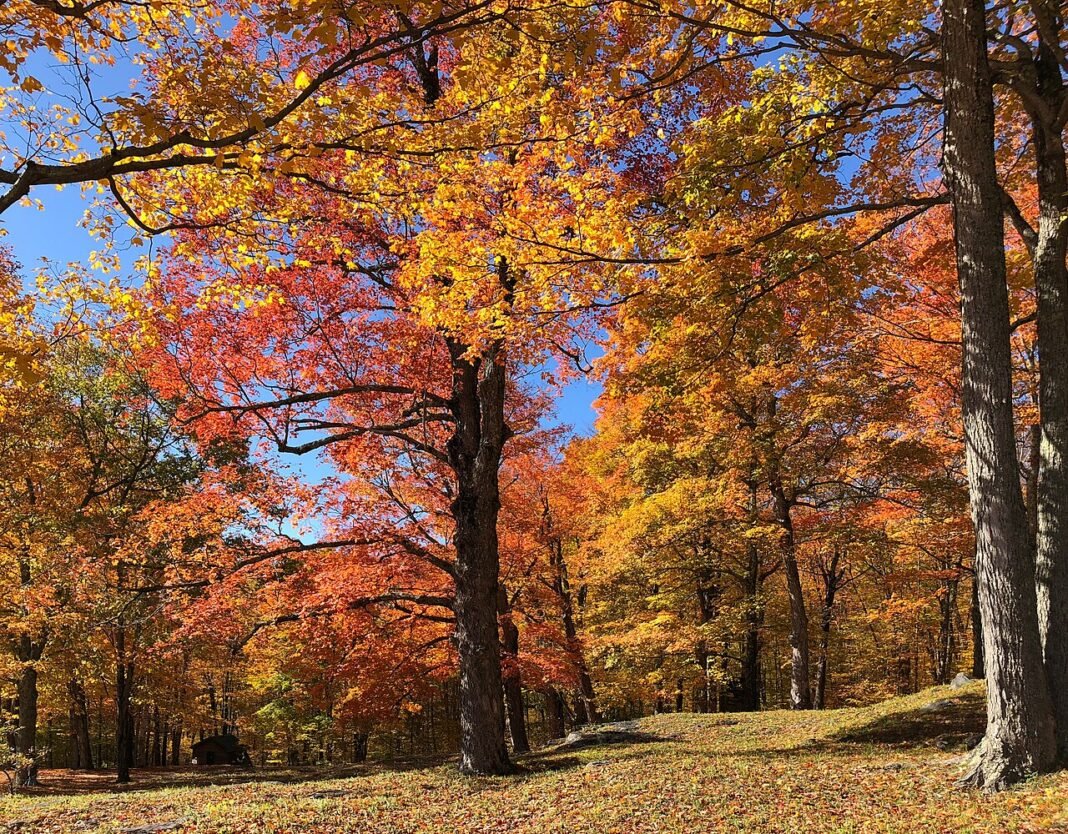
Vermont‘s outdoor recreation is defined by an authentic four-season cycle that few states in the country can match — serious alpine skiing at world-class resorts from November through April, sugar maple forests exploding into the most celebrated fall foliage display in North America, summer hiking on the Long Trail (the oldest long-distance hiking trail in the United States, completed in 1930), and lake paddling, mountain biking, and fly fishing across a landscape that has largely escaped the overdevelopment threatening the character of outdoor destinations elsewhere. The Green Mountain spine runs the length of the state from Massachusetts to the Canadian border, providing the elevation and terrain that makes Vermont’s skiing and hiking possible; Lake Champlain on the western border and the Connecticut River on the east provide water recreation corridors that frame the mountain experience. Vermont’s outdoor culture is participatory rather than spectator — the lifestyle is built around actual engagement with the landscape, not Instagram backdrops.
Skiing: The Green Mountain Resorts
Vermont contains the best ski terrain in the eastern United States, concentrated in the Green Mountains with individual resort characters as distinct as any in the country:

Stowe Mountain Resort
- Vertical drop: 2,360 feet (second highest in Vermont)
- Terrain: 485 acres; Front Four — National, Liftline, Starr, and Goat — are the most challenging expert runs in New England
- Pass: Epic Pass (Vail Resorts)
- Character: The prestige address of Vermont skiing; luxury resort service, gondola to the summit, expert-level terrain
Killington Resort
- Vertical drop: 3,050 feet — longest in the East
- Terrain: 1,509 acres across six peaks — the largest ski resort in New England
- Season: October through May with extensive snowmaking
- Character: The volume destination; best for skiers who want maximum terrain options and a lively après scene

Mad River Glen
- Vertical drop: 2,037 feet
- Terrain: 115 acres; skiers-only (no snowboards); 45% expert terrain; the single-chair (one of only two operating single chairlifts in the United States) is a Vermont institution
- Character: The most deliberately traditional ski experience in New England; cooperatively owned; beloved by hardcore skiers who prefer natural snow and challenge to groomed cruising
The Long Trail: Vermont’s Backbone
The Long Trail, completed in 1930 by the Green Mountain Club, is the oldest long-distance hiking trail in the United States — 272 miles from the Massachusetts border to the Canadian border along the spine of the Green Mountains. Its route passes through or near the summits of Vermont’s highest peaks, including Mount Mansfield (4,393 feet), Camel’s Hump (4,083 feet), and Killington Peak (4,236 feet), providing alpine above-treeline hiking unusual in New England. The Green Mountain Club maintains a system of overnight shelters (lean-tos and enclosed cabins) at roughly eight-mile intervals, making multi-day through-hiking accessible without a tent. Day-hiking access points exist throughout the trail’s length, and Camel’s Hump (reached from Huntington or Duxbury) ranks as the best above-treeline day hike in Vermont.
Mountain Biking: Kingdom Trails and Beyond
Vermont’s mountain biking scene is anchored by two trail networks that have made the state an international destination for the sport:
- Kingdom Trails (East Burke): 100+ miles of purpose-built singletrack through private farmland in Vermont’s Northeast Kingdom; a landmark network rated among the best in North America; the adjacent Burke Mountain Ski Area provides chairlift-accessed downhill biking in summer
- Millstone Trails (Barre): 25 miles of trails through granite quarry landscape unlike anything else in Vermont; a unique industrial-natural combination with challenging technical terrain
- Stowe Mountain Bike Park: Lift-served downhill biking at Stowe Mountain Resort in summer, using the gondola and chairlifts to access top-to-bottom descents; XC network through the resort’s lower terrain
- Craftsbury Outdoor Center: Nordic skiing in winter and gravel cycling and mountain biking in summer through the Northeast Kingdom’s rolling farmland
Lake Champlain: Paddling and Water Recreation
Lake Champlain, stretching 120 miles along Vermont’s western border with New York, is one of the best freshwater paddling destinations in the eastern United States — the lake’s combination of protected bays, wooded islands, and Adirondack backdrop creates a paddling experience that rivals maritime coastal destinations. The 15-acre Sand Bar State Park near Milton, with its 2,000-foot sand beach, provides lake swimming and windsurfing; the Lake Champlain Bikeway (350+ miles around the entire lake including ferry crossings) is a multi-day cycling destination. Burlington’s Community Sailing Center rents kayaks, paddleboards, and sailboats from the waterfront, providing lake access without equipment ownership. Fishing on Lake Champlain (largemouth and smallmouth bass, walleye, northern pike, lake trout) ranks among the best freshwater fishing in New England.
Cross-Country Skiing and Nordic Trails
Vermont’s Nordic skiing tradition is as deep as its alpine heritage — the state’s rolling terrain, reliable snow cover, and farm-to-forest landscape create conditions for cross-country skiing that few states can match. The Trapp Family Lodge in Stowe (founded by the family that inspired The Sound of Music) operates the most famous Nordic center in the United States — more than 100 kilometers of trails through the hills above Stowe village, with heated warming huts and a European ski touring culture that predates Vermont’s alpine boom. The Craftsbury Outdoor Center in the Northeast Kingdom trains Olympic-level cross-country skiers and opens its groomed network to the public during the winter season. The Catamount Trail, a 300-mile cross-country skiing route crossing Vermont from Massachusetts to Quebec, provides backcountry touring for skilled skiers capable of navigating ungroomed terrain between trail systems. For households moving to Vermont who have never cross-country skied, the state’s Nordic centers provide an introduction to a winter activity that makes Vermont’s long winters genuinely enjoyable rather than merely endured.
Planning Your Outdoor Adventure
The outdoor experiences described in this guide reward practical preparation. For wilderness and protected areas, check trail conditions, permit requirements, and seasonal access with the relevant land management authority before departure — trail closures, fire restrictions, and entry quotas can change quickly, and many high-demand parks now require advance reservations that were not needed in previous years. Weather in Vermont can change rapidly, particularly in mountain terrain and during shoulder seasons; a layered approach with a waterproof outer shell is advisable for most outdoor pursuits regardless of the season. For water-based activities — paddling, snorkeling, diving, surfing — check current conditions with local outfitters who will have the most accurate and up-to-date information. Leave No Trace principles apply throughout: pack out everything you bring in, stay on established trails, give wildlife space, and leave natural features undisturbed for the next visitor.
Frequently Asked Questions
What are Vermont’s best ski resorts and how do they differ?
Vermont holds the best ski terrain in the eastern United States. Killington Resort — largest ski resort in New England — offers 1,509 acres across six peaks and a 3,050-foot vertical drop (longest in the East) with a season extending October through May via snowmaking. Stowe Mountain Resort features the iconic Front Four (National, Liftline, Starr, Goat) — the most demanding expert runs in New England — from a 2,360-foot vertical. Mad River Glen, cooperatively owned and skier-only (no snowboards), is the most deliberately traditional ski experience in New England, with 45% expert terrain and the legendary single chairlift (one of only two operating single chairs in the United States). Sugarbush, Smugglers’ Notch, and Jay Peak round out a resort portfolio with no equivalent in the eastern US.
What is the Long Trail and what does Vermont hiking offer?
The Long Trail, completed in 1930 by the Green Mountain Club, is the oldest long-distance hiking trail in the United States — 272 miles along the spine of the Green Mountains from Massachusetts to the Canadian border. The trail passes the summits of Vermont’s highest peaks: Mount Mansfield (4,393 feet, highest in Vermont), Camel’s Hump (4,083 feet), and Killington Peak (4,236 feet), providing above-treeline hiking rare in New England. The Green Mountain Club maintains overnight lean-tos and enclosed cabins at approximately eight-mile intervals, making multi-day hiking accessible without a tent. Camel’s Hump (accessible from Huntington or Duxbury) is widely rated the best above-treeline day hike in Vermont.
What mountain biking does Vermont offer and what is Kingdom Trails?
Kingdom Trails in East Burke — 100+ miles of purpose-built singletrack through private Northeast Kingdom farmland — is rated one of the best mountain bike trail networks in North America, with adjacent Burke Mountain providing chairlift-accessed downhill biking in summer. Millstone Trails in Barre (25 miles through granite quarry landscape) provides a unique industrial-natural trail combination with challenging technical terrain found nowhere else in Vermont. Stowe Mountain Bike Park offers lift-served downhill biking on the same gondola and chairlifts used in winter. The Craftsbury Outdoor Center adds gravel cycling and cross-country skiing across the rolling Northeast Kingdom farmland.
What paddling and water recreation does Lake Champlain offer?
Lake Champlain stretches 120 miles along Vermont’s western border with New York — one of the top freshwater paddling destinations in the eastern United States, combining protected bays, wooded islands, and an Adirondack Mountain backdrop. Burlington’s Community Sailing Center rents kayaks, paddleboards, and sailboats from the waterfront. Sand Bar State Park near Milton provides lake swimming and windsurfing. The Lake Champlain Bikeway (350+ miles around the entire lake including ferry crossings) is a multi-day cycling destination. Fishing — largemouth and smallmouth bass, walleye, northern pike, lake trout — ranks among the best freshwater fishing in New England.
What cross-country skiing does Vermont offer and what is the Trapp Family Lodge?
The Trapp Family Lodge in Stowe — founded by the family that inspired The Sound of Music — operates the most famous Nordic ski center in the United States: more than 100 kilometers of trails through the hills above Stowe village, with heated warming huts and a European ski touring tradition that predates Vermont’s alpine ski boom. The Craftsbury Outdoor Center in the Northeast Kingdom trains Olympic-level cross-country skiers and opens its competition-standard groomed network to the public in winter. The Catamount Trail — a 300-mile cross-country skiing route crossing Vermont from Massachusetts to Quebec — provides backcountry touring for skilled skiers. Vermont’s rolling terrain and reliable snow cover create Nordic skiing conditions few states can match.