

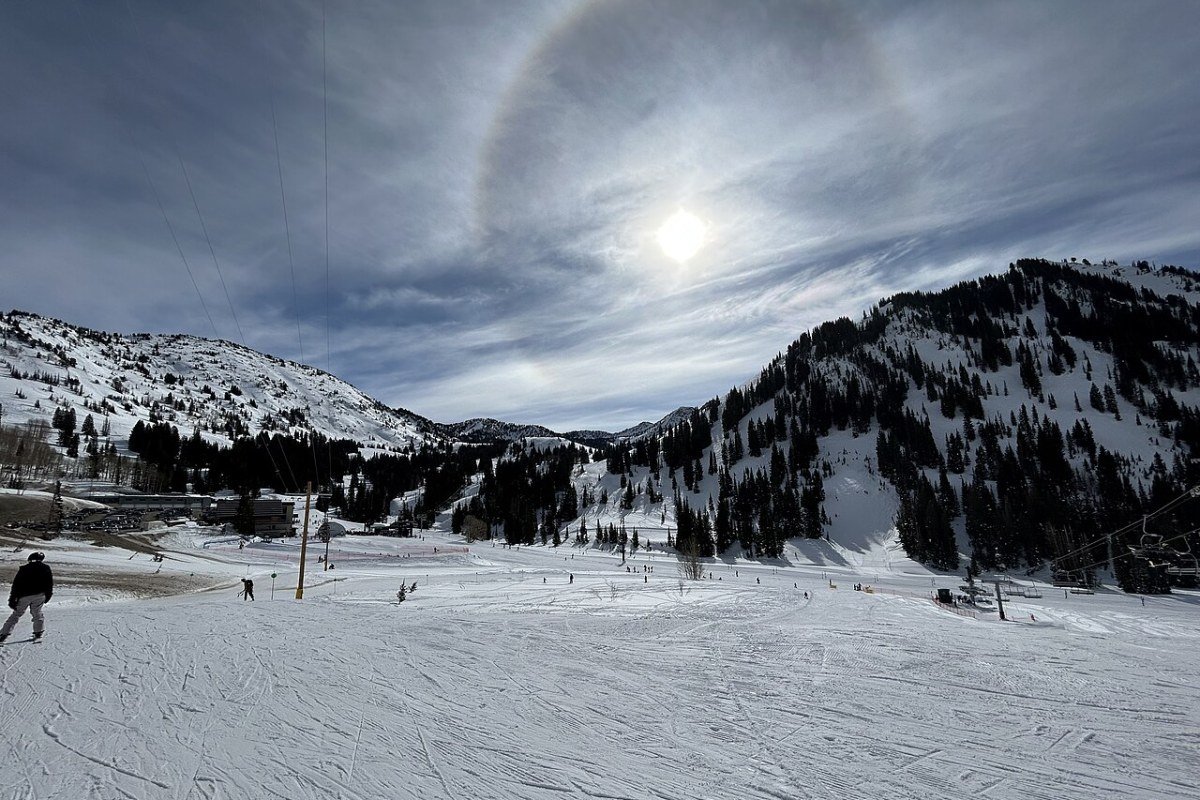
Moving to Utah is administratively straightforward, and the lifestyle payoff — skiing, hiking, national parks, a growing tech economy, and a low flat income tax (4.45% in 2026) — is real. The practical preparation comes down to understanding the state’s distinctive cultural landscape (Utah’s dominant LDS Church culture shapes everything from alcohol laws to business hours to social patterns in ways that visitors and new residents should grasp without judgment), the housing market’s current appreciation curve (the Wasatch Front’s rapid growth means listings move quickly), and the environmental tradeoffs that come with the geography (winter air inversions in the Salt Lake Valley trap pollution at levels that can leave the valley’s air unhealthy for days or weeks at a time).

Driver’s License and Vehicle Registration
- License window: 60 days from establishing Utah residency
- Required documents: Out-of-state license, proof of identity (passport or birth certificate), Social Security number, two Utah residency proofs (utility bill, lease, bank statement)
- Tests: Behind-the-wheel road test waived for valid out-of-state license holders; written knowledge test still required for most transfers; vision test mandatory for all transfers
- REAL ID: Available — ask for it specifically at the time of application for federal ID compliance (airport access, federal buildings)
- Vehicle registration: Complete within 60 days at your county motor vehicle division
- Emissions testing: Mandatory annually in Salt Lake, Davis, Utah, Weber, and Cache Counties for most vehicles
Understanding Utah’s Alcohol Laws
Utah’s alcohol laws are the most distinctive in the country, and new residents need a clear picture of them to avoid confusion:

- State liquor stores (DABS): Wine and spirits sold exclusively at state-owned stores run by the Department of Alcoholic Beverage Services; no wine or spirits in grocery stores
- Beer in grocery stores: Only beer and beverages at or below 5% alcohol by volume sold in grocery and convenience stores
- High-point beer and spirits: Full-strength beer and spirits available only at state liquor stores or licensed restaurants and bars
- Restaurant laws: Substantially relaxed since 2009 — most restaurants can now serve alcohol without any membership requirement
- Sunday sales: Licensed restaurants and bars can serve alcohol on Sundays, but state liquor stores are closed every Sunday and operate Monday through Saturday only
- Home delivery: Alcohol home delivery is not currently permitted in Utah
Winter Inversions: Utah’s Hidden Challenge
The Salt Lake Valley’s geography — a broad flat basin ringed by mountains — produces winter temperature inversions that trap cold air and particulate pollution at valley level while the peaks above stay under clear blue skies. During inversion episodes (typically December through February, lasting anywhere from a few days to several weeks), the valley’s air quality can reach “unhealthy” or “very unhealthy” readings on the EPA Air Quality Index. For households dealing with asthma, COPD, or other respiratory conditions, these spells are a real quality-of-life concern. Ways to soften the impact include living at higher elevations (the Avenues, East Bench, and Foothill neighborhoods sit above the worst of the inversion layer), scheduling outdoor activities during inversion-free breaks, and tracking the air quality forecast through the Utah Division of Air Quality’s daily updates. On the flip side, winter days with no inversion deliver the bluebird skies that feed Utah’s reputation as one of the sunniest states in the country, with Salt Lake City averaging well over 200 sunny days a year.
Employment in Utah’s Tech Economy
- Silicon Slopes anchor companies: Adobe (major Lehi campus), Qualtrics, Domo, Pluralsight, Podium, Instructure (Canvas), Merit Medical — clustered along the I-15 corridor from Lehi to Provo
- Healthcare: Intermountain Health is the dominant system and one of the state’s largest employers; University of Utah Health runs the academic medical center and a deep research operation
- Defense and aerospace: Hill Air Force Base near Ogden is the largest single-site employer in Utah; Northrop Grumman, L3Harris, and Boeing all maintain substantial operations across the Wasatch Front
- Outdoor industry: Black Diamond Equipment, Skullcandy, and dozens of outdoor brands are headquartered in Utah, building an employment base that mirrors the state’s lifestyle identity
- Financial services: Goldman Sachs, JPMorgan Chase, and several regional banks run sizable Utah operations, supplying finance-sector jobs well outside the traditional coastal hubs
Schools and Education
Utah’s public school system runs on a paradox — a state with strong family values and high adult educational attainment, yet among the lowest per-pupil spending in the country (a large average family size spreads the education budget across more students). Quality varies sharply by district: the Canyons, Davis, and Granite districts in the Salt Lake metro area carry strong reputations, while Jordan, Alpine, and Nebo serve the high-growth suburban corridors with generally solid but uneven outcomes. Private and charter options are widely available throughout the Wasatch Front. BYU (Provo), the University of Utah (Salt Lake City), Utah State (Logan), and Utah Tech (St. George) anchor higher education across the state.
Cultural Adjustment: What New Residents Experience
Households relocating to Utah from outside the Mountain West tend to report a consistent set of adjustments. The LDS cultural influence reaches well beyond the alcohol laws — Sunday schedules, business cultures, neighborhood social dynamics, and the political environment all reflect the majority religion’s values in ways that non-LDS residents experience differently depending on their own background. Most newcomers outside the faith find the adjustment manageable and describe Utah’s communities as genuinely welcoming regardless of religious affiliation. The outdoor culture creates a common language that crosses religious and political lines — a shared passion for skiing, hiking, mountain biking, and the landscape is the state’s most universal value. The tech sector’s rapid rise has noticeably diversified the state’s demographic and cultural profile over the past decade, particularly in Salt Lake City and the Silicon Slopes corridor.
Preparing for Your Move
The logistical side of relocating to Utah follows a familiar sequence no matter where you are coming from: secure housing before or right after arrival, transfer any professional licenses if your occupation requires them, register your vehicle and update your driver’s license within the window required by local law (typically 30 to 90 days for new residents), and register to vote at your new address. Connecting early with community organizations, sports clubs, neighborhood associations, or professional networks can sharply accelerate the sense of belonging. Across much of Utah that has grown fast over the past decade, a large share of the population has relocated from somewhere else, which means being new to the area is perfectly ordinary — and the infrastructure for meeting people and building a life from scratch is well established.
Frequently Asked Questions
What are the driver’s license and vehicle registration requirements when moving to Utah?
Driver’s license: must be obtained within 60 days of establishing Utah residency. You will need your out-of-state license, proof of identity (passport or birth certificate), Social Security number, and two Utah residency proofs (utility bill, lease, or bank statement). The behind-the-wheel road test is waived if you hold a valid license from another U.S. state, but the written knowledge test is still required for most transfers, and a vision test is mandatory for everyone. REAL ID-compliant licenses are available in Utah — ask for one specifically at the time of application for domestic air travel and federal building access. Vehicle registration: complete within 60 days at your county motor vehicle division. Emissions testing is required annually in Salt Lake, Davis, Utah, Weber, and Cache Counties for most vehicles.
What are Utah’s alcohol laws and how do they affect daily life?
Utah has the most distinctive alcohol laws in the country. Wine and spirits are sold exclusively at state-owned DABS (Department of Alcoholic Beverage Services) stores — there is no wine or spirits in grocery stores. Grocery and convenience stores sell only beer and beverages at or below 5% alcohol by volume. Full-strength beer and spirits are available at state liquor stores or at licensed restaurants and bars. Restaurant alcohol service has been substantially relaxed since 2009 — most restaurants can now serve alcohol without the membership requirement that once confused visitors. Licensed restaurants and bars can serve alcohol on Sundays, but state liquor stores are closed every Sunday and operate Monday through Saturday only. Home alcohol delivery is not permitted in Utah. For households used to integrated grocery store alcohol sales, adjusting shopping logistics is a routine but non-trivial change.
What are Salt Lake Valley’s winter air inversions and how should residents prepare?
The Salt Lake Valley’s bowl geography — a broad flat basin ringed by mountains on three sides — produces winter temperature inversions that trap cold air and particulate pollution at valley level while the peaks above stay clear. During inversion episodes (typically December through February, lasting anywhere from a few days to several weeks), EPA Air Quality Index readings in the valley can climb into “unhealthy” or “very unhealthy” territory. For households with asthma, COPD, cardiovascular conditions, or young children, these spells are a meaningful health concern. Ways to soften the impact include living at higher elevations — the Avenues, East Bench, and Foothill neighborhoods sit above the worst of the inversion layer and breathe noticeably cleaner air during episodes. Track forecasts through the Utah Division of Air Quality’s daily updates, and schedule longer outdoor activities during inversion-free breaks. On clear days, the valley lives up to Utah’s billing as one of the sunniest states in the country, with Salt Lake City averaging well over 200 sunny days a year.
What is Utah’s Silicon Slopes tech economy and major employment base?
Utah’s “Silicon Slopes” technology corridor runs along I-15 from Salt Lake City south through Lehi to Provo and has become one of the most significant tech employment clusters in the western US. Anchor companies include Adobe (which operates a major campus in Lehi), Qualtrics, Domo, Pluralsight, Podium, and Instructure (the Canvas learning management system). Hill Air Force Base near Ogden is the largest single-site employer in Utah, supporting substantial defense-contractor employment from Northrop Grumman, L3Harris, and Boeing. Healthcare: Intermountain Health is one of the state’s largest employers and one of the most respected integrated health systems in the country; University of Utah Health runs the academic medical center. Financial services: Goldman Sachs, JPMorgan Chase, and several regional banks maintain sizable Utah operations, supplying finance jobs outside the traditional coastal hubs.
What should new residents understand about Utah’s LDS cultural landscape and schools?
The Church of Jesus Christ of Latter-day Saints is the majority religion in Utah, and its influence shapes Sunday schedules, business hours, neighborhood social dynamics, and the political environment in ways new residents notice regardless of their own background. Most newcomers outside the faith find the cultural adjustment manageable and describe Utah communities as genuinely welcoming. The outdoor culture — skiing, hiking, mountain biking, and the landscape — is the common language that crosses religious and political lines and stands as the state’s most universal shared value. Top school districts: Canyons and Davis in the Salt Lake metro area carry strong reputations, while Jordan, Alpine, and Nebo serve the high-growth I-15 suburban corridor with generally solid outcomes. One note: Utah has among the lowest per-pupil education spending in the country, a function of its large average family size, even though adult educational attainment runs high. BYU (Provo) and the University of Utah (Salt Lake City) anchor the higher education system.