


Oregon’s travel landscape is defined by a geographic and cultural range that few states of its size can match — from the rain-soaked temperate rainforests of the Coast Range to the high desert of the Oregon Outback, from the vine-clad hills of the Willamette Valley wine country to the Columbia River Gorge’s basalt walls and waterfalls, from the alpine wilderness of the Three Sisters to the singular blue depth of Crater Lake. Portland, the state’s largest city, has developed one of the most individual urban cultures in the United States — a combination of outdoor orientation, culinary creativity, independent retail, and a strong creative scene that has drawn artists, makers, and young households from across the country. The Oregon Coast — 363 miles of publicly owned shoreline, undeveloped by legal mandate — opens its beaches to everyone in a way California’s private shoreline does not: free to walk, wild, storm-watched in winter, and genuinely spectacular.
Crater Lake: America’s Deepest Lake
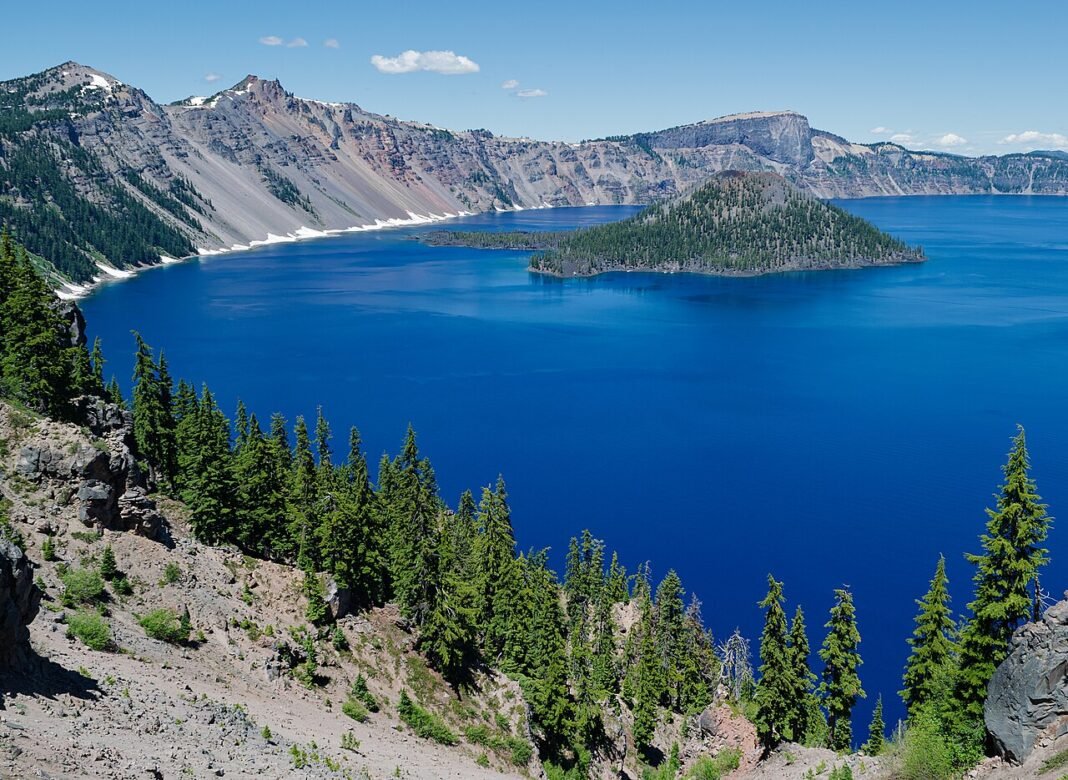
Crater Lake National Park is one of the great geological spectacles of the American West — a lake of staggering blue intensity filling the caldera left by Mount Mazama’s catastrophic eruption and collapse 7,700 years ago. The lake reaches 1,943 feet deep, making it the deepest in the United States, and its water clarity (fed only by precipitation, with no surface inflows) produces the saturated blue that photographs cannot fully capture. The 33-mile Rim Drive provides access to overlooks around the caldera rim, with Wizard Island — a cinder cone rising from the lake’s western end — framed by the western overlooks; note that the Cleetwood Cove Trail (the only path to the shoreline) and the Wizard Island boat tours are closed through the 2028 season for trail and marina reconstruction, with reopening planned for 2029. The park’s remote location in southern Oregon (the nearest major city, Medford, is 80 miles away) keeps crowds below those of more accessible national parks. The road to the rim typically opens in late June; winter visitors can access the South Rim by snowshoe or cross-country ski for a different and equally magnificent experience.

The Oregon Coast: Public Beaches and Storm Watching
Oregon’s coast is unique among Pacific states in that all 363 miles of ocean shoreline are legally accessible to the public — a 1967 Beach Bill signed by Governor Tom McCall established public ownership of all coastal areas below the vegetation line, preventing the private development that has reduced California beach access. The result is a coastline of remarkable variety and accessibility: Cannon Beach’s Haystack Rock (a 235-foot sea stack in the surf zone that serves as a protected seabird nesting colony), the sea caves and natural bridges of Samuel H. Boardman State Scenic Corridor in the south, the rugged headlands of Cape Perpetua, and the sand dunes of the Oregon Dunes National Recreation Area (the largest coastal sand dune system in North America) all provide experiences distributed across the length of the coast. The winter storm-watching season from November through February draws visitors to the coast’s headland viewpoints and oceanfront lodges for the drama of Pacific storms rolling in from the open ocean.
Columbia River Gorge: Wind, Water, and Waterfalls
The Columbia River Gorge National Scenic Area, stretching 80 miles along the Oregon-Washington border east of Portland, protects the sheer basalt canyon carved by the Columbia River through the Cascade Range — a landscape of waterfalls (Multnomah Falls, at 620 feet, is the second-tallest year-round waterfall in the United States), wind sports (the town of Hood River is the world capital of windsurfing and kiteboarding), and hiking trails that provide the most accessible wilderness from Portland’s doorstep. The Historic Columbia River Highway, the first scenic highway built in the United States (completed in 1922), threads past the waterfall corridor’s most spectacular viewpoints. The gorge’s east end transitions from the lush western rain shadow to the dry eastern plateau, passing through wine country at The Dalles and Hood River where Pinot Gris and Riesling thrive in the rain shadow’s hot summers.
Portland: Urban Culture and Food Scene
Portland is one of the most distinctive mid-sized cities in the United States — a city of 650,000 in a metro of 2.5 million that carries outsized influence in culinary, cultural, and creative industries. The food scene, driven by a culture of farm-to-table sourcing and independent restaurant ownership, has produced destinations like Le Pigeon and Ava Gene’s, along with dozens of others that pull diners well beyond the city limits — a tradition shaped earlier by the late Pok Pok, the Thai street-food restaurant that changed how Americans understood the cuisine before its 2020 closure. Powell’s Books, the country’s largest independent bookstore, occupies an entire city block in the Pearl District and is as much a Portland institution as any restaurant or museum. The Japanese American Historical Plaza, the Portland Art Museum, and the Oregon Museum of Science and Industry (OMSI) anchor the city’s cultural infrastructure.
Willamette Valley: Oregon Wine Country
The Willamette Valley — the agricultural valley stretching 150 miles south from Portland between the Coast Range and the Cascade foothills — is the heart of Oregon’s wine industry and one of the premier Pinot Noir-producing regions in the world. The volcanic red hills of Dundee in Yamhill County, where Eyrie Vineyards produced the Pinot Noir that put Oregon on the international wine map in 1979, remain the most prestigious sub-appellation. The valley’s wine towns — McMinnville, Carlton, Dundee, and Newberg — provide wine-tasting infrastructure of increasing sophistication, with farm-to-table restaurants and boutique lodgings that make the Willamette Valley both an easy weekend escape from Portland and a draw for wine travelers from outside the state.
Practical Information
Portland International Airport (PDX) is Oregon’s primary gateway, with nonstop service to most major US cities and international connections via Seattle. Rogue Valley International Airport (MFR) near Medford serves southern Oregon with connections to PDX and other hubs. Car rental is essential outside Portland — Oregon’s outdoor attractions are distributed across a large state, and the distances between Portland, Crater Lake, Bend, and the coast require driving. Oregon’s outdoor recreation is best from June through September in the high country; the coast is accessible year-round with summer and storm-watching winter both offering distinct experiences. Portland’s mild but wet winters (temperatures rarely below freezing, but consistent rain from October through May) require attitude adjustment for visitors from sunnier climates.
Frequently Asked Questions
What makes Crater Lake one of the great geological spectacles of the American West?
Crater Lake National Park is one of the most striking natural phenomena in the American West — a lake of intense blue filling the caldera left by Mount Mazama’s catastrophic eruption and collapse 7,700 years ago. The lake reaches 1,943 feet deep, making it the deepest lake in the United States, and its water clarity (fed only by precipitation and snowmelt, with no surface inflows) produces a blue color of such intensity that photographs cannot fully capture it. The 33-mile Rim Drive provides access to overlooks around the caldera rim, with Wizard Island — a cinder cone rising from the lake’s western end — best seen from the western overlooks. Note that the Cleetwood Cove Trail (the only path down to the shoreline) and the Wizard Island boat tours are closed through the 2028 season for trail and marina reconstruction, with reopening planned for 2029. The park’s remote location in southern Oregon (Medford is 80 miles away) keeps visitation below comparable national parks. The road to the rim typically opens in late June after snowmelt; winter visitors can access the South Rim by snowshoe or cross-country ski for an equally rewarding experience.
Why is Oregon’s coastline unique among Pacific states, and what makes it exceptional for visitors?
Oregon’s coast is unique among Pacific states in that all 363 miles of ocean shoreline are legally accessible to the public — a 1967 Beach Bill signed by Governor Tom McCall established public ownership of all coastal areas below the vegetation line, preventing the private beach development that has reduced California public beach access. The result is a coastline of unusual variety: Cannon Beach’s Haystack Rock (a 235-foot sea stack in the surf zone that serves as a protected seabird nesting colony), the sea caves and natural bridges of Samuel H. Boardman State Scenic Corridor in the south, the dramatic headlands of Cape Perpetua, and the Oregon Dunes National Recreation Area — the largest coastal sand dune system in North America, with open-sand terrain reaching 500 feet high between Florence and Coos Bay. The winter storm-watching season from November through February draws visitors to headland viewpoints for the drama of Pacific storms rolling in from the open ocean.
Why is the Columbia River Gorge one of Oregon’s most accessible and varied outdoor destinations?
The Columbia River Gorge National Scenic Area stretches 80 miles along the Oregon-Washington border east of Portland — a dramatic basalt canyon carved by the Columbia River through the Cascade Range and shaped by the catastrophic Missoula Floods at the end of the last ice age. Multnomah Falls, at 620 feet, is the second-tallest year-round waterfall in the United States. The Historic Columbia River Highway — the first scenic highway built in the United States, completed in 1922 — provides access to the waterfall corridor. Hood River, at the gorge’s widest point, is the world capital of windsurfing and kiteboarding, where the steady Columbia River winds that funnel through the Cascades create conditions that attract the sports’ international elite. The gorge’s east end transitions from rain shadow forest to dry wine country at The Dalles and Hood River, where Pinot Gris and Riesling thrive in the hot, dry summers.
What makes Portland one of the most distinctive mid-sized cities in the United States?
Portland is one of the most distinctive mid-sized cities in the United States — a city of 650,000 in a metro of 2.5 million that outperforms its size in culinary, cultural, and creative industries. The food scene, driven by farm-to-table sourcing and independent restaurant ownership, has produced destinations like Le Pigeon and Ava Gene’s and dozens of others that draw diners from far beyond the city — building on a tradition the late Pok Pok established, the Thai street-food restaurant that changed how Americans understood the cuisine before it closed in 2020. Powell’s Books — the country’s largest independent bookstore, occupying an entire city block in the Pearl District — is as much a Portland institution as any museum or restaurant. The Portland Art Museum and the Japanese American Historical Plaza provide cultural anchors. The city’s extensive urban forest, the 150-mile 40-Mile Loop trail network, and proximity to Mount Hood (60 miles east) and the Oregon Coast (80 miles west) define a relationship between urban culture and outdoor access that is the city’s defining quality.
Why is the Willamette Valley considered one of the world’s great wine regions?
The Willamette Valley — stretching 150 miles south from Portland between the Coast Range and the Cascade foothills — is the heart of Oregon’s wine industry and one of the premier Pinot Noir-producing regions in the world. The volcanic red hills of Dundee in Yamhill County, where Eyrie Vineyards produced the Pinot Noir that put Oregon on the international wine map in 1979 by placing among the top Pinot Noirs ahead of esteemed Burgundies at the Gault-Millau Wine Olympics in Paris, remain the most prestigious sub-appellation. The valley’s wine towns — McMinnville, Carlton, Dundee, and Newberg — provide tasting infrastructure of increasing sophistication, with farm-to-table restaurants and boutique lodgings that make the Willamette Valley a serious wine-travel region for out-of-state visitors and a reliable weekend escape from Portland. The International Pinot Noir Celebration, held annually in McMinnville, is one of the most respected wine events in North America.
, 363 miles of public coast, Columbia Gorge waterfalls, Portland food, and Willamette wine country.)