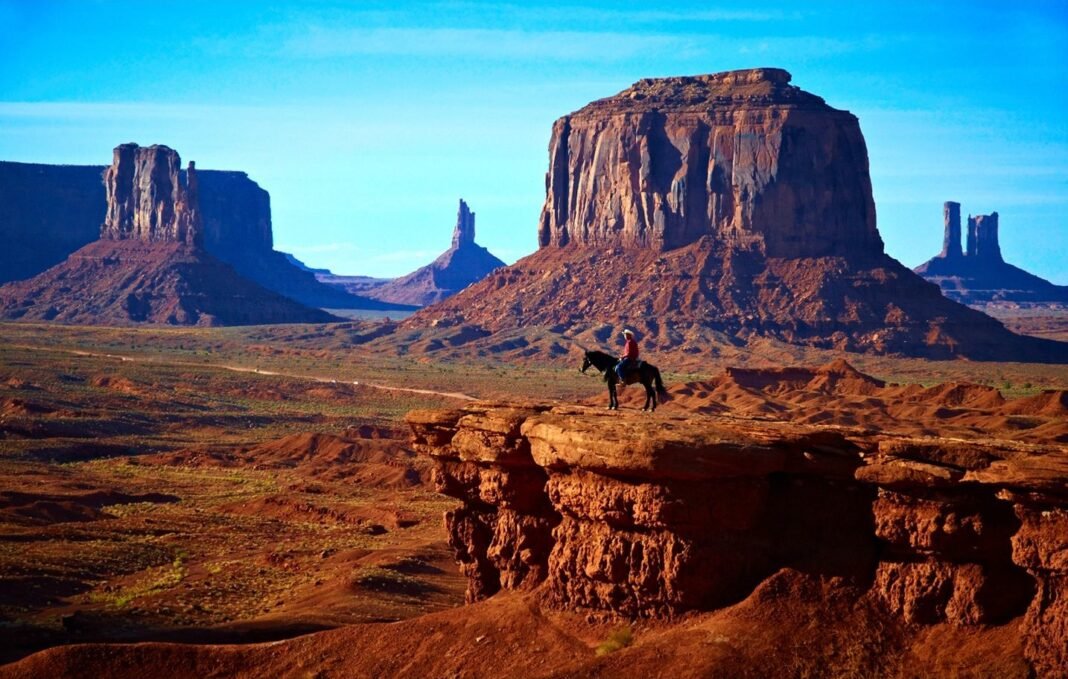


New Mexico is one of the most consistently underestimated states in the American travel landscape — a place whose official nickname (“Land of Enchantment”) undersells the case. Native American cultural heritage of extraordinary depth (19 pueblos, three Apache nations, and the Navajo Nation collectively maintain living traditions spanning more than a thousand years of continuous Southwest habitation), Spanish colonial architecture and art of genuine historic weight (Santa Fe was founded in 1610, a decade before the Pilgrims landed at Plymouth Rock), and a landscape that runs from the gypsum desert of White Sands to the alpine forests of the Sangre de Cristo Mountains to the ancient lava fields of El Malpais combine into a cultural and natural experience available nowhere else in the country. The state’s art scene — centered on Santa Fe’s Canyon Road galleries and the Taos artist colony — has produced the densest sustained concentration of visual arts activity in the American Southwest since the Taos Society of Artists formed in 1915, and the contemporary arts infrastructure of the Georgia O’Keeffe Museum and the Museum of International Folk Art carries that tradition into the present.

Santa Fe: Art, History, and the Oldest Capital
Santa Fe, the capital of New Mexico and the oldest state capital in the United States (founded in 1610 by Spanish colonial governor Pedro de Peralta), is among the most architecturally coherent and culturally rich small cities in North America — a town of roughly 90,000 that holds four world-class museums, more art galleries per capita than any other city in the country, a culinary scene that has defined New Mexican cuisine as a distinctive American regional cooking tradition, and an adobe building heritage enforced by city ordinance that keeps the entire downtown visually consistent with its Pueblo Revival character. The Plaza — the central square that has anchored Santa Fe’s civic life since the Spanish colonial period — is ringed by the Palace of the Governors (the oldest continuously occupied public building in the United States, now a history museum), the St. Francis Cathedral Basilica (an incongruously French Romanesque structure built by Archbishop Jean-Baptiste Lamy in 1886 amid the adobe skyline), and the portal beneath the Palace where Native American artists sell directly to the public each morning.
Canyon Road — the mile-long gallery corridor that runs from the Guadalupe district to the foothills of the Sangre de Cristo Mountains — packs more than 80 galleries and studios into adobe compounds that were once the residential heart of Santa Fe’s Hispanic community. The concentration of painting, sculpture, ceramics, and jewelry, at quality levels from established international names to emerging local talent, makes Canyon Road the leading commercial art district between New York and Los Angeles. The Georgia O’Keeffe Museum, the only museum in the world devoted to a single American female artist, displays the largest collection of O’Keeffe’s work and traces the painter’s shift from New York abstractionist to the iconic interpreter of New Mexico’s desert landscapes and skull-and-flower iconography that defined her mature career.

Taos: The Artist’s Colony and the Ancient Pueblo
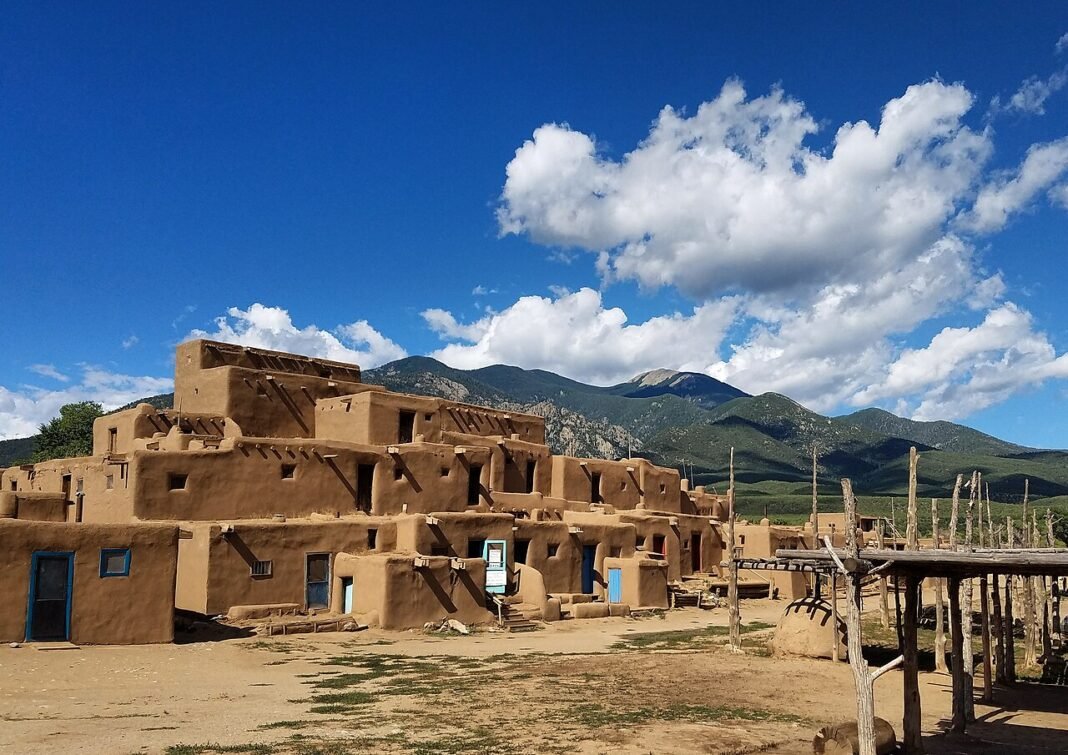
Taos, 70 miles north of Santa Fe at 6,969 feet elevation in the Sangre de Cristo Mountains, gathers two of New Mexico’s defining cultural sites within a few miles of each other. Taos Pueblo — a UNESCO World Heritage Site continuously inhabited for more than a thousand years, where the multi-story adobe buildings of the North House and South House rank among the oldest continuously occupied structures in North America — offers the country’s most authentic living Native American architectural heritage. The pueblo’s Tiwa-speaking residents have kept their traditional ceremonies, community governance, and building practices alive through Spanish colonialism, Mexican rule, and American sovereignty, and guided tours of the accessible portions give visitors a direct encounter with Pueblo culture.
Taos’s artist colony — founded after Bert Phillips and Ernest Blumenschein’s wagon wheel broke near the pueblo in 1898 and the two stayed to paint — has sustained more than a century of artistic production in a community where the landscape, the light, and the three-culture (Native American, Hispanic, Anglo) confluence keep drawing painters, sculptors, writers, and filmmakers. The Taos Art Museum at the Fechin House, the Harwood Museum of Art, and the Millicent Rogers Museum (with the finest collection of Native American and Hispanic art in northern New Mexico) supply institutional context for the town’s artistic tradition. The Rio Grande Gorge Bridge — a 1,280-foot span crossing the Rio Grande about 650 feet above the river — is one of the most dramatic road bridges in the Southwest and gives the clearest overview of the Rio Grande Rift geology that shapes northern New Mexico.
White Sands National Park
White Sands National Park, in the Tularosa Basin of southern New Mexico between Alamogordo and Las Cruces, holds a geologically singular landscape — a field of white gypsum dunes that, at roughly 275 square miles, forms the largest gypsum dune field on earth. (Congress redesignated the site from national monument to national park in December 2019; the park protects part of that dune field, with the rest lying north inside White Sands Missile Range.) The gypsum — calcium sulfate dihydrate, the same mineral that forms the wallboard in most American homes — dissolves out of the surrounding Sacramento and San Andres Mountains, washes into the sealed Tularosa Basin (which has no drainage outlet to the sea), and precipitates in Lake Lucero when the water evaporates. Wind then erodes the selenite crystals and carries the grains northeast, building dunes that creep steadily across the basin floor. The result is a scene of blinding white sand, deep blue sky, and the silence of a basin closed to the outside world — terrain that yields photographs of unusual contrast and simplicity.
The Alkali Flat Trail (5 miles round trip, no shade, navigated by marker posts across the dune field) reaches the remotest, most pristine stretch of dunes — immersion without road or facility intrusion. The Dune Life Nature Trail (1 mile, interpretive) shows how plants and animals survive in the extreme gypsum environment. Sledding the dunes on plastic saucers sold at the visitor center is one of the more unusual recreational activities in any national park, and families with children find it genuinely memorable. Because the park sits next to the White Sands Missile Range, Dunes Drive can close for up to a few hours on military test days — and the schedule shifts with operations and weather rather than following a fixed weekly pattern — so checking the park website’s current closure information before visiting is essential.
Carlsbad Caverns and the Guadalupe Mountains
Carlsbad Caverns National Park, in the Guadalupe Mountains of southeastern New Mexico near the Texas border, holds among the most accessible and spectacular cave systems on the continent — the Big Room, a 357,000-square-foot chamber 755 feet below the surface, is the largest readily accessible cave chamber in North America by area. The self-guided tour of the Big Room (1.25 miles, reached by elevator or via the Natural Entrance trail that descends 750 feet through the cave’s entrance formation) winds past stalactites, stalagmites, cave popcorn, cave bacon, and the massive columns formed where stalactites and stalagmites met over millions of years of cave development. The evening bat flight — when roughly 400,000 Brazilian free-tailed bats spiral out of the natural entrance at sunset from late May through October — ranks among the great wildlife spectacles of the Southwest and needs no cave tour to witness.
Albuquerque: Balloons and the Old Town
Albuquerque, New Mexico’s largest city with about 560,000 residents in the Rio Grande valley, is known worldwide for the Albuquerque International Balloon Fiesta — the world’s largest hot air balloon festival, held each October, when as many as 600 balloons rise from Balloon Fiesta Park in a daily mass ascension that produces the most-photographed event on New Mexico’s calendar. The Old Town Plaza — the original 1706 Spanish colonial settlement around which modern Albuquerque grew — surrounds the San Felipe de Neri Church (founded 1706, reconstructed 1793, still an active parish), adobe galleries, and the Albuquerque Museum of Art and History. The Sandia Mountains, rising 5,000 feet above the city to the 10,678-foot Sandia Crest in fewer than 12 miles of horizontal distance, form the most dramatic urban mountain backdrop in New Mexico and are reachable via the Sandia Peak Aerial Tramway (the longest aerial tramway in the Americas at 2.7 miles) for summit hiking and skiing.
Frequently Asked Questions
What makes Santa Fe one of the most culturally significant small cities in North America?
Santa Fe, the oldest state capital in the United States (founded 1610), is among the most architecturally coherent and culturally rich small cities in North America — a town of roughly 90,000 with four world-class museums, more art galleries per capita than any other city in the country, a culinary scene that has defined New Mexican cuisine as a distinctive American regional tradition, and an adobe building heritage enforced by city ordinance that keeps the entire downtown visually consistent with its Pueblo Revival character. The Plaza — the central square that has anchored Santa Fe’s civic life since the Spanish colonial period — is ringed by the Palace of the Governors (the oldest continuously occupied public building in the United States), the St. Francis Cathedral Basilica, and the portal where Native American artists sell directly to the public. Canyon Road, a mile-long gallery corridor with more than 80 galleries and studios in adobe compounds, is the leading commercial art district between New York and Los Angeles. The Georgia O’Keeffe Museum is the only museum in the world devoted to a single American female artist.
What makes Taos Pueblo a significant cultural and historical site?
Taos Pueblo is a UNESCO World Heritage Site continuously inhabited for more than a thousand years — the multi-story adobe buildings of the North House and South House rank among the oldest continuously occupied structures in North America. The pueblo’s Tiwa-speaking residents have kept their traditional ceremonies, community governance, and building practices alive through Spanish colonialism, Mexican rule, and American sovereignty. Guided tours of the accessible portions give visitors a direct encounter with living Pueblo culture. Taos itself grew into an artist colony after Bert Phillips and Ernest Blumenschein’s wagon wheel broke near the pueblo in 1898 and they stayed to paint — more than a century of artistic production has produced the Taos Art Museum at the Fechin House, the Harwood Museum of Art, and the Millicent Rogers Museum (with the finest collection of Native American and Hispanic art in northern New Mexico). The Rio Grande Gorge Bridge — a 1,280-foot span crossing the Rio Grande about 650 feet above the river — offers one of the most dramatic road-bridge views in the American Southwest.
What makes White Sands National Park one of the most distinctive landscapes in North America?
White Sands National Park in the Tularosa Basin of southern New Mexico centers on a field of white gypsum dunes that, at roughly 275 square miles, is the largest gypsum dune field on earth. Congress redesignated it from national monument to national park in December 2019. The gypsum dissolves out of the surrounding Sacramento and San Andres Mountains, washes into the sealed Tularosa Basin (which has no drainage outlet to the sea), and precipitates in Lake Lucero when water evaporates. Wind then carries the gypsum grains northeast, building dunes of blinding white sand that creep across the basin in a scene of extraordinary contrast and simplicity. The Alkali Flat Trail (5 miles round trip, navigated by marker posts across the dune field) reaches the remotest, most pristine stretch. Dune sledding on plastic saucers sold at the visitor center is one of the more unusual activities in any national park. Because the park sits beside the White Sands Missile Range, Dunes Drive can close for up to a few hours on military test days on a schedule that shifts with operations and weather — so check the park website’s closure information before visiting.
What does Carlsbad Caverns National Park offer visitors?
Carlsbad Caverns National Park in the Guadalupe Mountains of southeastern New Mexico holds among the most accessible and spectacular cave systems on the continent. The Big Room — a 357,000-square-foot chamber 755 feet below the surface — is the largest readily accessible cave chamber in North America by area. The self-guided Big Room tour (1.25 miles, reached by elevator or via the Natural Entrance trail descending 750 feet through the cave’s entrance formation) passes stalactites, stalagmites, cave popcorn, cave bacon, and massive columns formed over millions of years. The evening bat flight — when roughly 400,000 Brazilian free-tailed bats spiral out of the natural entrance at sunset from late May through October — ranks among the great wildlife spectacles of the Southwest and needs no cave tour to witness. The adjacent Guadalupe Mountains National Park in Texas adds further wilderness hiking.
What makes Albuquerque and the Balloon Fiesta significant travel destinations?
Albuquerque, New Mexico’s largest city with about 560,000 residents, is known worldwide for the Albuquerque International Balloon Fiesta — the world’s largest hot air balloon festival, held each October, when as many as 600 balloons rise from Balloon Fiesta Park in a daily mass ascension that is the most-photographed event on New Mexico’s calendar. The Old Town Plaza — the original 1706 Spanish colonial settlement — surrounds the San Felipe de Neri Church (founded 1706, reconstructed 1793, still an active parish) and the Albuquerque Museum of Art and History. The Sandia Mountains rise 5,000 feet above the city to the 10,678-foot Sandia Crest in fewer than 12 miles, forming the most dramatic urban mountain backdrop in New Mexico. The Sandia Peak Aerial Tramway — the longest aerial tramway in the Americas at 2.7 miles — carries visitors to the summit for hiking and skiing. Breaking Bad and Better Call Saul filming locations across Albuquerque have built a sizable tourism following among fans of those shows.